
Russia Condemns France's Deportation of RT Journalist
Russia condemned France's deportation of former RT France chief Ksenia Fedorova as unacceptable persecution, after a Paris court rejected her appeal over allegations she spread Kremlin disinformation ahead of the 2027 presidential election, exposing divisions across the French right.
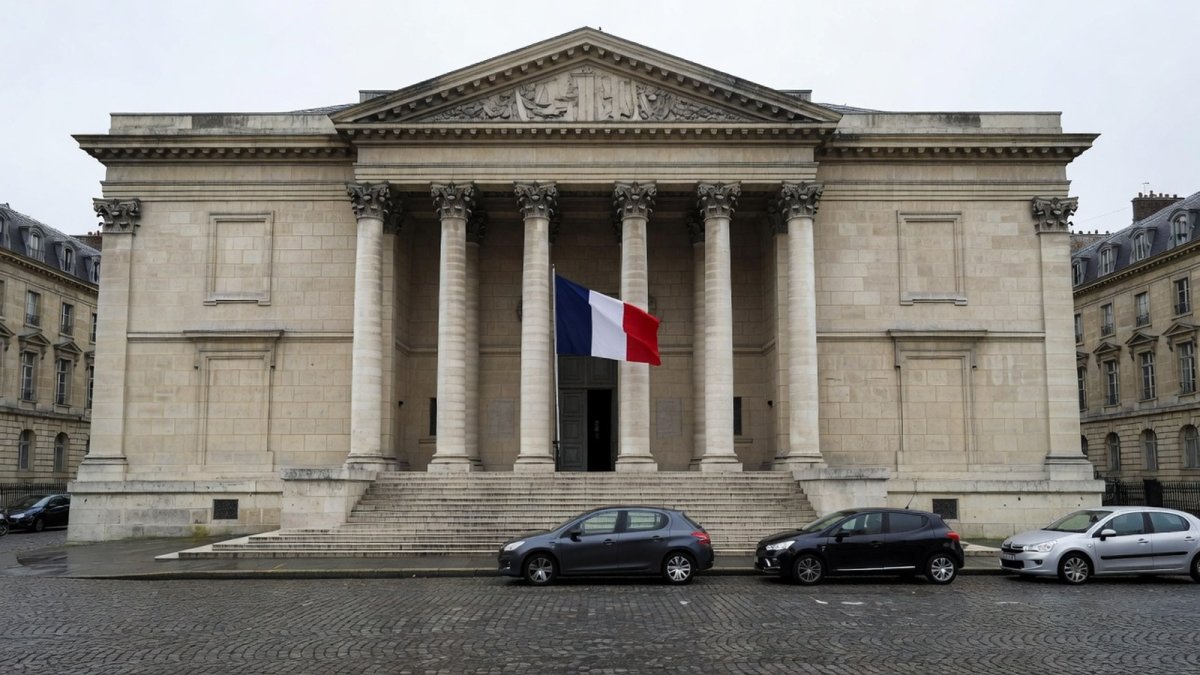
Russia's Foreign Ministry has strongly condemned France's decision to deport former RT France chief Ksenia Fedorova, labeling the move as unacceptable persecution of a journalist. French authorities issued the expulsion order last month, accusing her of spreading Kremlin-linked disinformation and acting as an agent of influence ahead of the 2027 presidential election. A Paris court rejected her appeal on Monday, clearing the path for enforcement.
Russian Foreign Ministry Condemns France's Order to Deport Former RT Journalist
Moscow, Russia – this week — Russia's Foreign Ministry on Thursday condemned France's decision to deport high-profile Russian media personality Ksenia Fedorova, calling the move "unacceptable." French authorities issued a deportation order last month for Fedorova, the former head of state broadcaster RT France. Fedorova has recently emerged as a prominent commentator on conservative French outlets, including CNews, Europe 1 and Le Journal du Dimanche.
Background on the Expulsion Order
France ordered Russian journalist Ksenia Fedorova to leave the country over allegations that she spreads Kremlin propaganda across French television and radio, the Interior Ministry stated last month. French newspaper Libération cited the expulsion order, which accused Fedorova of acting "as a conduit for disinformation campaigns orchestrated by the Russian authorities" aimed at "destabilizing public order" in France. The order also revoked her residency permit and froze her assets, citing a grave threat to public order and the fundamental interests of the State.
Accusations from French Officials
French Foreign Minister Jean-Noël Barrot has accused Fedorova of acting as an "agent of influence," while Interior Minister Laurent Nuñez accused her of spreading Russian disinformation aimed at undermining France's "fundamental interests." According to French authorities, the "behavior" of Fedorova, whose real name is Ksenia Borchik, "undermines the fundamental interests of the State," and her presence in France "therefore constitutes a particularly serious and current threat to public order," according to the detailed official order. Officials raised the alarm about Fedorova's influence as France faces elections next year, with the far right eyeing presidential power.
The Russian Foreign Ministry's Condemnation
Russian Foreign Ministry spokesman Alexei Fadyev strongly denounced the order on Thursday. "We consider the persecution of journalists on trumped-up charges to be unacceptable and strongly condemn it," Fadyev said. "The expulsion of Ksenia Fedorova, as an act of reprisal against a rebellious journalist, came as no surprise to us, as we have long been observing the actions of the French leadership, which obsessively attributes a 'Russian connection' to every problem in the country," Fadyev added. Russia's Foreign Ministry on Thursday criticised the deportation order issued against Fedorova, saying the action reflected what it called France's intolerance of dissenting voices amid heightened tensions over the war in Ukraine.
Fedorova's Media Role Post-RT
Fedorova used to serve as editor-in-chief of RT France, part of the Kremlin-funded RT news network. RT France went off air in March 2022, when the EU sanctioned the Kremlin-funded broadcaster over Russia's full-scale invasion of Ukraine. However, Fedorova remained in France and secured roles as a commentator within conservative billionaire Vincent Bolloré's media empire. She has regularly appeared on the CNews television network and Europe 1 radio station, while also writing a column for Le Journal du Dimanche, frequently echoing the Kremlin's positions on Ukraine and the West.
Court Ruling and Legal Challenge
Fedorova, who has denounced the deportation order as state censorship, lost a legal challenge to block the move on Monday after a Paris court rejected her appeal. The 45-year-old, a former journalist for Russia's state-run RT television channel, failed to show that being ordered to leave France would have "serious personal consequences," the Paris administrative court said. Her lawyer, Emmanuel Piwnica, announced that his client would immediately file an appeal against "a serious violation of the freedom of expression of a journalist who has always carried out her work in the most proper manner possible." Her lawyer told Agence France-Presse that she was abroad when the expulsion order was issued, adding she will not return to France unless it is suspended or overturned.
Broader Political Landscape in France
Officials accused her of relaying Kremlin disinformation and taking part in Russian influence operations ahead of the 2027 presidential election. In her book "Bannie" ("Banned"), published last year, Fedorova portrays herself as a victim of state censorship. Le Monde had reported on 22 July that Fedorova had avoided the EU's latest sanctions round despite her public profile. France did not wait for further EU action, and on 29 July, the French Interior Ministry ordered her immediate expulsion on national security grounds.
French officials raised the alarm over Fedorova's activities precisely because they viewed her commentary on CNews and other Bolloré outlets as extending Kremlin influence operations into the run-up to the 2027 presidential election. The Interior Ministry order of 29 July explicitly tied her presence to a threat against public order and state interests at a moment when far-right forces are positioned to challenge for power.
France therefore acted unilaterally on national security grounds rather than waiting for Brussels to act, following the 2022 EU ban on RT France that had already silenced the state-funded channel after the full-scale invasion of Ukraine. Authorities framed her continued access to French airwaves as a conduit for disinformation aimed at destabilizing domestic politics, underscoring Paris's willingness to treat individual Kremlin-linked commentators as security risks independent of broader EU measures.
Divisions Within the French Right
The response exposed a fault line running straight through the French right. Marine Le Pen and Jordan Bardella of the Rassemblement National (RN) themselves said nothing publicly. But RN's Assembly spokesperson, Thomas Ménagé, backed the expulsion outright, saying that Fedorova had simply "met the criteria" for it. Thierry Mariani, however, a Le Pen-aligned MEP, took the opposite view, warning the decision might "finally succeed in silencing one of the rare dissenting voices in the French press that wasn't repeating the officially sanctioned narrative on the Ukraine conflict." Elsewhere on the right, Bolloré-linked commentary sites and figures close to Éric Zemmour and Marion Maréchal framed the expulsion as an assault on free expression.
The expulsion laid bare the same fracture in sharper relief: while the party's leadership stayed silent, its parliamentary ranks split openly, and the episode exposed how Moscow-aligned sympathies persist below the surface of a party that has spent years rebranding itself. National Rally has spent years attempting to distance itself from its earlier Moscow ties, including a Russian bank loan and Le Pen's past praise for Putin. The party's internal split over Fedorova illustrates the lingering tension between that history and its current efforts to appear untainted by Kremlin associations ahead of 2027.
Figures linked to Éric Zemmour and Marion Maréchal, along with Bolloré commentary platforms, portrayed the move as an attack on free expression, further highlighting how the case divided conservative circles between those prioritizing national security and those defending media dissent.
Impact on Bilateral Relations
The episode highlights ongoing strains in Russia-France relations, as Moscow views the action as politically motivated reprisal against dissenting voices. Fedorova has consistently rejected the allegations against her, describing the deportation proceedings as an act of censorship. Her current whereabouts are unknown.
The deportation has intensified strains in Russia-France relations amid the ongoing war in Ukraine. Moscow regards the action as consistent with its broader pattern of condemning Western restrictions on Russian state media outlets and their personnel, and the Foreign Ministry's rhetoric on Thursday echoed that familiar playbook.
Fedorova's case is expected to further complicate already limited diplomatic channels between Moscow and Paris, as the Kremlin uses the episode to portray France as intolerant of voices that challenge the official Western narrative on Ukraine.
Analysis and Implications
This could indicate France's determination to counter perceived Russian influence operations independently of broader EU sanctions, particularly with the 2027 presidential election approaching. Analysts suggest this signals heightened vigilance by French authorities toward media figures linked to Kremlin narratives, even after RT France's shutdown. The move may further complicate diplomatic channels between Moscow and Paris while exposing fractures on the French right over how to address such cases. It underscores the intersection of media regulation, national security concerns, and electoral politics in the current climate.
The deportation order and its fallout point to sustained tensions that could shape Russia-France interactions in the months ahead, especially as political stakes rise in both countries.
The official French finding that a Kremlin-linked commentator's regular presence on a billionaire-owned network constituted a grave and current threat to public order sets a notable precedent. It demonstrates Paris's readiness to act against individual media figures even after the 2022 shutdown of RT France, treating their influence operations as matters of national security rather than solely EU-wide sanctions issues.
The case is likely to serve as a template for future proceedings against other commentators perceived as advancing Russian narratives ahead of the 2027 election. French authorities have signaled heightened vigilance toward such figures regardless of their formal ties to sanctioned entities.
The Kremlin is positioned to weaponize the expulsion in its propaganda, presenting Fedorova as further evidence of Western suppression of dissenting journalism and using the episode to reinforce narratives of political persecution against Russian voices in Europe.
This article was produced with AI-assisted research and editorial support. Sources: The Moscow Times, Le Monde, AFP, Libération, Searchlight Magazine.
By Irina Volkov, Staff Writer
What's Your Reaction?
 Like
0
Like
0
 Dislike
0
Dislike
0
 Love
0
Love
0
 Funny
0
Funny
0
 Wow
0
Wow
0
 Sad
0
Sad
0
 Angry
0
Angry
0
Russia/Eastern Europe Correspondent at Global1.News. Covering Russian politics, energy, security, and the shifting dynamics of the post-Soviet space. Provides clear-eyed analysis on one of the world's most opaque regions.













Comments (0)