
Moderna-Merck mRNA Cancer Vaccine Succeeds in Landmark Phase 3 Melanoma Trial
Moderna and Merck's personalised mRNA cancer vaccine intismeran, with Keytruda, cut melanoma recurrence in the Phase 3 INTerpath-001 trial of 1,137 patients - a first for neoantigen and mRNA cancer therapy. India's cancer incidence rose nearly 10 per cent over 2021-2025.
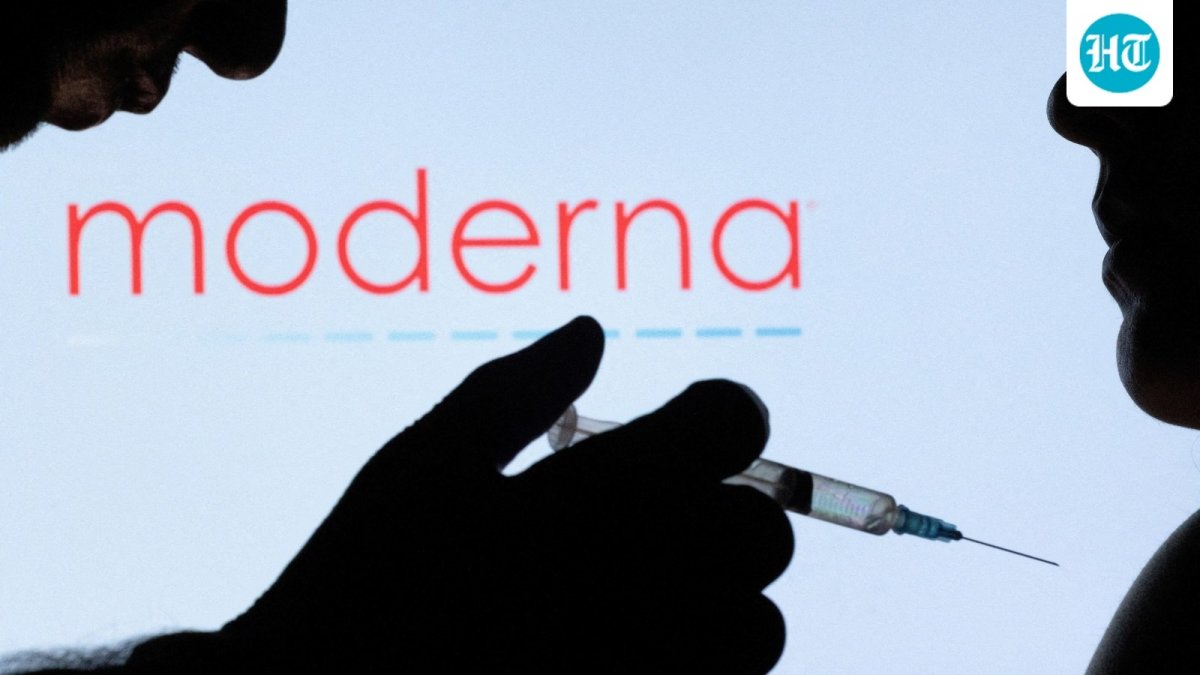
On Wednesday, August 19, 2026, Moderna and Merck & Co announced a breakthrough that oncologists have awaited for decades: their personalized mRNA cancer vaccine, intismeran (mRNA-4157/V940), combined with the immunotherapy Keytruda (pembrolizumab), succeeded in a Phase 3 trial for high-risk melanoma. This marks the first positive late-stage trial of an individualized neoantigen therapy and the first successful Phase 3 study of an mRNA-based cancer treatment. For India, where cancer incidence is projected to approach 2.5 million new cases annually by 2045, this validates a platform that could eventually reshape treatment for far more common malignancies.
Moderna-Merck mRNA Cancer Vaccine Achieves First-Ever Phase 3 Success in Melanoma, Opening a New Era in Personalized Oncology
New Delhi, August 20, 2026 — The results are definitive. In the INTerpath-001 trial, 1,137 patients with high-risk stage IIB-IV melanoma whose tumors were completely surgically removed were randomized 2:1 to receive either the personalized mRNA vaccine plus Keytruda or Keytruda alone. The trial met its primary endpoint of recurrence-free survival (RFS) and its main secondary endpoint of distant metastasis-free survival (DMFS), both with statistical significance and clinical meaningfulness. An independent monitoring committee stopped the trial for efficacy at a planned interim analysis. No new safety signals emerged; the regimen was well tolerated, with side effects similar to ordinary vaccines.
A Pivotal Moment for Cancer Research
Moderna CEO Stephane Bancel called the announcement "a pivotal moment for the field of cancer research," telling CNBC, "It's a big moment for medicine, a big moment for patients." Trial lead Georgina Long described the results as "a landmark moment" with "potential to establish a new treatment paradigm." Dr. Dean Li, president of Merck Research Laboratories, said the findings "reinforce the promise of a more personalized approach to cancer treatment." The companies will likely begin discussions with regulatory agencies "in the next few months," Li added. Moderna president Stephen Hoge noted that because intismeran holds breakthrough therapy designation from the US FDA, it could potentially become available as early as next year, subject to regulatory approval.
The market response was seismic. Merck shares rose approximately 12-13% on August 19, while Moderna shares soared roughly 177% — a record single-day move. Entering Wednesday, Merck's market capitalization stood near $333 billion; Moderna's was close to $25 billion. Leerink Partners analyst Daina Graybosch estimates intismeran could generate average revenue of $1.4 billion by 2032. The financial stakes are amplified by Keytruda's patent cliff: the world's best-selling prescription drug loses US patent protection in 2028, opening a roughly $30 billion annual sales gap to biosimilars. This combination strategy is, in part, defensive — anchoring Keytruda's future to a novel platform.
How the Personalized mRNA Vaccine Works
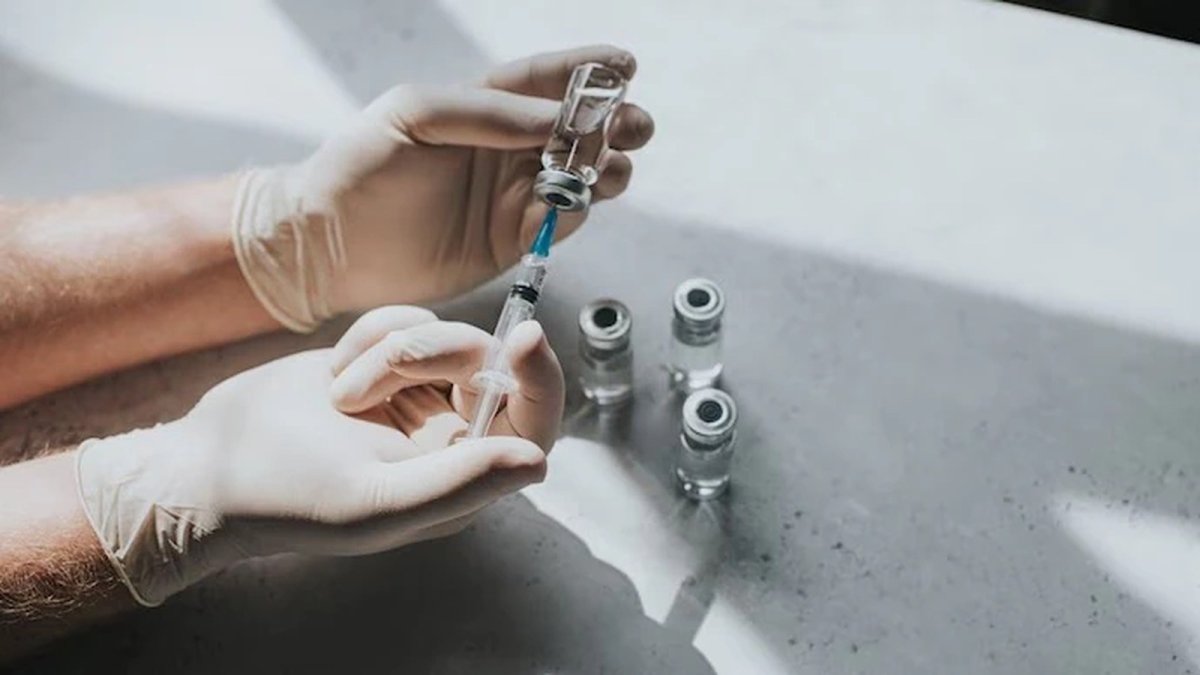
The science is elegant. Neoantigens are mutant protein fragments unique to a patient's tumor — immunologists call them "molecular mugshots." Intismeran is a strand of synthetic mRNA coding for up to 34 of the patient's own tumor neoantigens. The process begins with a biopsy: the tumor's DNA and RNA are sequenced, computational algorithms predict which mutant peptides best trigger T-cells, mRNA is synthesized, packaged in a lipid nanoparticle, and injected. The body's own cells read the mRNA instructions and produce the neoantigen proteins, teaching the immune system to recognize and attack cancer cells.
Keytruda, a checkpoint inhibitor, blocks the PD-1 "friend, not foe" handshake that cancer cells use to switch off T-cells. The vaccine teaches the immune system what the tumor looks like; Keytruda prevents the tumor from silencing those T-cells. The platform is identical to Moderna's COVID-19 vaccine technology. Critically, the entire manufacturing process must fit within a 6-8 week window after surgery, when micro-metastases are most vulnerable.
Earlier data from the Phase 2b trial KEYNOTE-942, which enrolled 157 patients, set the stage. Five-year results presented at the American Society of Clinical Oncology (ASCO) meeting in June 2026 showed the combination reduced the risk of recurrence or death by 49% and the risk of distant metastasis or death by 59% versus Keytruda alone. At the 2.5-year readout, recurrence-free survival was 74.8% with the combination versus 55.6% with Keytruda alone — a 44% reduction in risk.
What This Means for India
Melanoma is uncommon in India — largely a disease of fair-skinned populations with high UV vulnerability. Indian incidence is in the low thousands of cases annually, versus the 112,000 projected in the US for 2026. Direct benefit to Indian patients from this specific approval will be modest. The broader significance lies in the platform. The INTerpath programme spans nine trials testing individualized mRNA neoantigen therapies in non-small cell lung cancer (two Phase 3 trials already enrolling), bladder, renal cell, pancreatic, and gastric cancers — several of which are among the largest disease burdens in Indian oncology.
India's cancer burden is rising sharply. The ICMR's National Cancer Registry Programme estimates incidence is up roughly 10% over the 2021-2025 period, and the Global Cancer Observatory projects India could approach 25 lakh (2.5 million) new cancer cases a year by 2045. A therapy requiring tumor sequencing, computational neoantigen prediction, mRNA synthesis, and cold-chain distribution inside a six-to-eight-week window per patient carries a cost structure that, by industry estimates, sits well into six figures in US dollars per course.
Indian mRNA manufacturing capacity grew during the pandemic through Gennova Biopharmaceuticals' indigenous mRNA platform (Gemcovac) and Bharat Biotech's collaborations. Whether that capacity can eventually localize this class of therapy will determine whether personalized cancer treatment reaches Indian oncology as an imported premium product or, eventually, a domestic one. Keytruda is already widely used in Indian oncology across several indications; any India launch would require approval from India's Central Drugs Standard Control Organisation (CDSCO) and a pricing decision that will be intensely scrutinized.
A Graveyard of Failed Promises, Now Redeemed
Cancer vaccine history is littered with failures. Melacine, GVAX, Stimuvax, rindopepimut, and tergenpumatucel each failed at Phase 3 between the 1990s and 2010s. Only Provenge (2010, prostate cancer) and T-VEC (2015, oncolytic virus) were approved, with modest impact. The COVID-19 vaccines of December 2020 proved mRNA could be manufactured at planetary scale, but the open question was whether the platform could do anything therapeutically important beyond infectious disease. Moderna's revenues collapsed as pandemic demand receded.
INTerpath-001 is the first controlled, randomized, adequately powered Phase 3 study to answer that question in the affirmative for cancer. The FDA approved Moderna's mRNA-based flu vaccine for adults 50 and up earlier in August 2026, even as the US HHS announced last year it would stop funding mRNA vaccine research. The juxtaposition underscores both the platform's versatility and the policy turbulence surrounding it.
Expert Perspectives and Remaining Questions
Dr. Jane Healy, Merck's head of oncology early development, noted that melanoma patients are "stuck having to deal with the new gravity of that diagnosis," calling the result "very exciting" and a "clinically meaningful improvement" over Keytruda, with good tolerability. Karen Knudsen, CEO of the Parker Institute for Cancer Immunotherapy, said the findings could mark the beginning of a new phase in immunotherapy for solid tumors.
Dr. Lennard Lee of the University of Oxford struck a cautious note: "This is the first positive Phase III trial of an individualized neoantigen therapy and an mRNA-based cancer treatment... Within six years of the pandemic, we have mRNA vaccines to treat cancer." However, he cautioned that the magnitude of benefit, subgroup analyses, quality-of-life data, and mature overall-survival results are still unknown. Detailed data — including hazard ratios and subgroup analyses — have not yet been released and will be presented at an upcoming international medical meeting. Overall survival data remain pending.
Melanoma accounts for only about 1% of skin cancers but causes the large majority of skin cancer deaths. About 112,000 people are diagnosed in the US annually, and about 8,500 die, according to the American Cancer Society. Most recurrences develop in the first 2-3 years after initial treatment. Keytruda has been the adjuvant standard of care after high-risk melanoma surgery since the KEYNOTE-054 trial in 2019. A queue of experimental combinations — LAG-3 inhibitors, TIGIT blockers, IDO inhibitors, oncolytic viruses — previously failed to add statistically significant benefit on top of Keytruda. This is the first to succeed.
The Bottom Line
The INTerpath-001 result is a watershed. For the first time, a therapy tailored to an individual patient's tumor genome has demonstrated clear, statistically significant benefit in a late-stage randomized trial. The Moderna-Merck partnership, formalized in 2018 with profit-sharing, has delivered what the field has sought for three decades. For Indian oncologists and patients, the immediate impact is limited by melanoma's rarity and the therapy's cost structure. But the platform's expansion into lung, pancreatic, and gastric cancers — diseases that dominate Indian oncology — signals a future where personalized cancer treatment may become a domestic manufacturing priority. The question is no longer whether mRNA can treat cancer. It is whether India's regulatory and manufacturing ecosystem can move quickly enough to make it accessible.
This article was produced with AI-assisted research and editorial support. Sources: India Today, Ars Technica, CNBC, Hindustan Times, Chemical & Engineering News, STAT.
— By Dr. Raj Patel, Staff Writer
What's Your Reaction?
 Like
0
Like
0
 Dislike
0
Dislike
0
 Love
0
Love
0
 Funny
0
Funny
0
 Wow
0
Wow
0
 Sad
0
Sad
0
 Angry
0
Angry
0

India/South Asia Correspondent at Global1.News. Analytical voice with a background in science and health journalism. Based in New Delhi, covering Indian politics, education, healthcare, technology, and policy. Breaks down complex data into clear, actionable reporting.













Comments (0)