
Ayushmann Khurrana Spotlights Children Affected by Seasonal Migration, Calls for Care
UNICEF ambassador Ayushmann Khurrana's Jalna visit spotlights India's 93 million migrant children — and a community-led kinship care model that has kept over 5,800 children in school and out of child labour in one year.
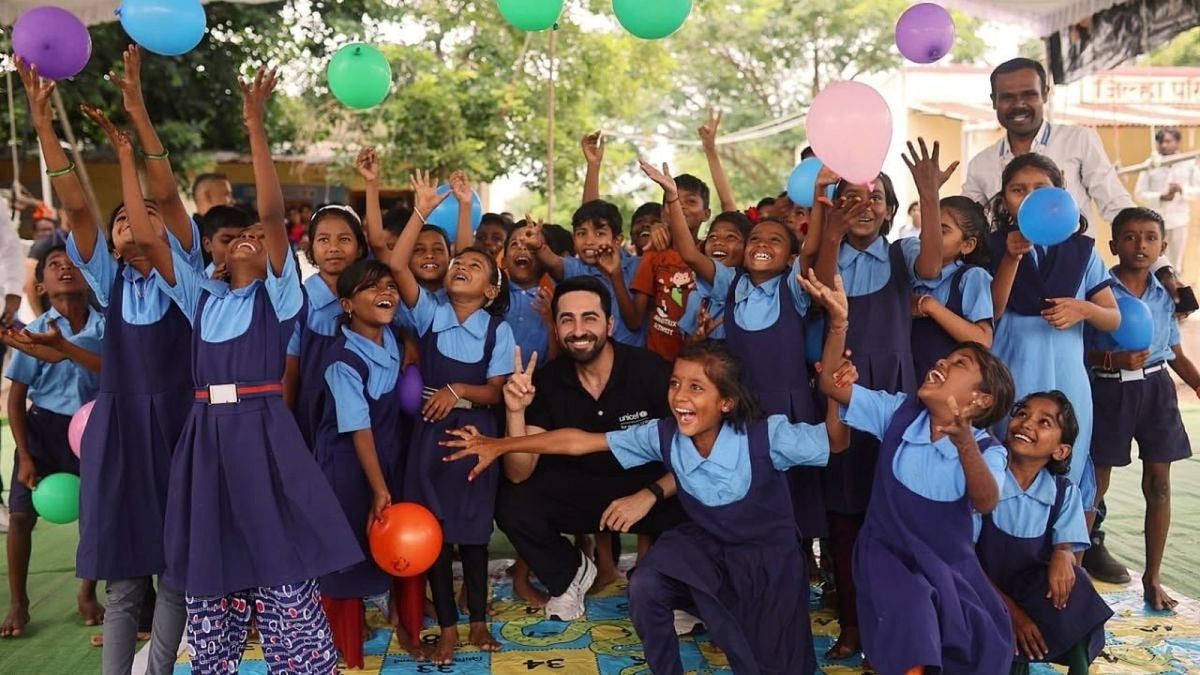
Ayushmann Khurrana’s Jalna Visit Puts Spotlight on India’s 93 Million Migrant Children — and a Community-Led Fix That Works
Jalna, Maharashtra – August 20, 2026 — On a Wednesday morning in Chandai Tepli village, Bhokardan tehsil, actor and UNICEF India National Ambassador Ayushmann Khurrana sat on the floor of a government school, surrounded by children whose parents had left for sugarcane fields and brick kilns hundreds of kilometres away. The visit, part of a UNICEF-supported Kinship and Community Care programme, was not a photo opportunity. It was a pointed intervention in one of India’s most persistent and under-reported crises: the fate of children left behind by seasonal migration.
Khurrana’s message was unambiguous. “Seasonal distress driven migration is not a choice. It is the stark reality for many families. No child should have to lose their childhood because of circumstances beyond their control,” he said, after interacting with schoolchildren, adolescent girls, relatives, and a cadre of trained youth volunteers known as Balmitras. The actor’s presence, amplified by his national platform, has thrust a local Maharashtra experiment into the centre of a policy conversation that affects an estimated 93 million migrant children across India.
The Jalna Model: A Decade of Data-Driven Kinship Care
The numbers from Jalna district are not anecdotal; they are the product of a decade-long, UNICEF-supported intervention that began in 2014. The district, located in central Marathwada, is among Maharashtra’s most agrarian-distressed regions. Chronic drought, poor irrigation infrastructure, and repeated crop failures have pushed families — particularly those from Scheduled Castes and Scheduled Tribes — into a brutal cycle of seasonal migration. Parents move to sugarcane farms, brick kilns, or construction sites, often taking children along. The consequences are severe: unsafe living conditions, disrupted schooling, lack of healthcare and nutrition, and in the worst cases, child labour and early marriage.
The programme’s core innovation is simple but radical: instead of uprooting children, keep them in their villages under family-based alternative care. Children stay with grandparents, relatives, or trusted community members while parents migrate. The results, verified by district administration data, are striking. In 258 pilot villages, the percentage of children staying back in family-based care during migration seasons has reached 60.23 per cent. In 2024-25 alone, over 5,800 children remained in kinship care — the vast majority cared for by grandparents, with others under extended family or trusted community members. A small number lived independently in child-headed households, a category that demands continued vigilance.
The model has now been scaled to 198 additional villages, led by the Jalna District Collector and the State Migration Committee of the Department of Women and Child Development. This is not a pilot that will die in a PowerPoint presentation; it is a government-backed, data-monitored programme with measurable outcomes.
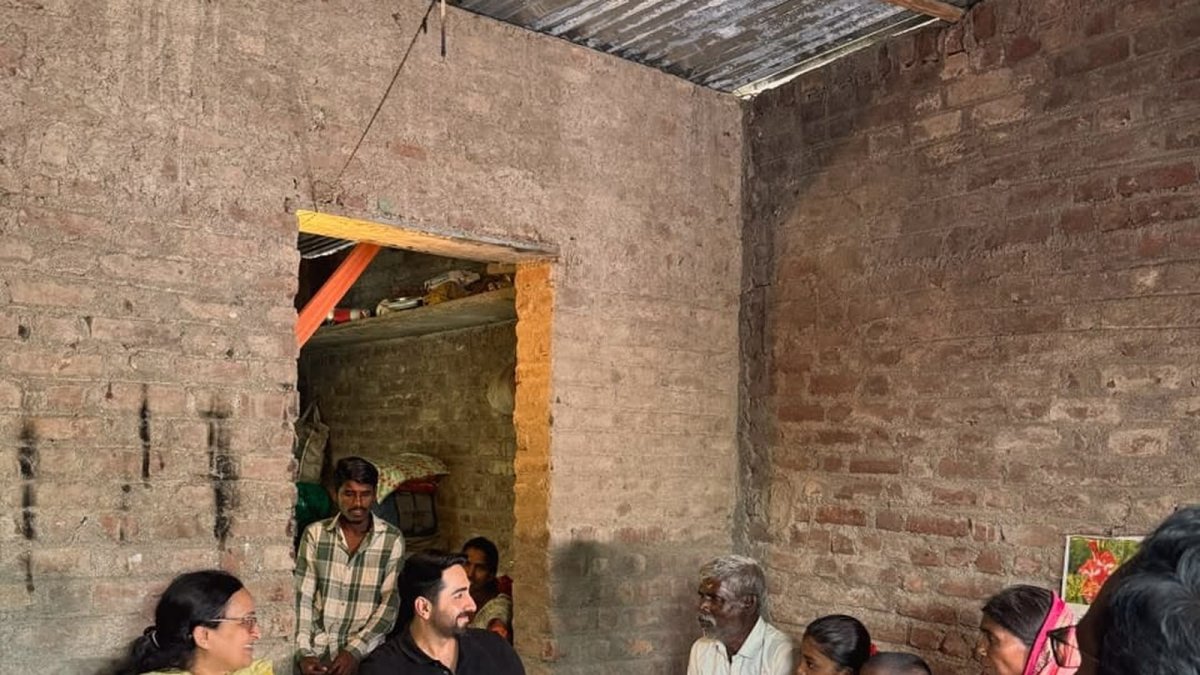
Balmitras: The Unpaid Backbone of Child Protection
At the heart of the initiative are 649 Balmitras — youth volunteers aged 18 to 29, drawn from the same communities they serve. They receive no monetary compensation. What they gain is skills, confidence, and purpose. Their work is threefold: raise awareness about the risks of unsafe migration, counsel parents on the benefits of kinship care, and run after-school programmes three times a week offering academic support, games, life skills, and psychosocial care.
Bhimrao Tambe, a 30-year-old Master Balmitra who has worked in the initiative for two years, articulated the human impact with a clarity that data cannot capture. “When a girl refuses child marriage and chooses to continue her education, it feels like I've done something truly meaningful,” he said. The Jalna Collector has begun felicitating Balmitras for their contribution to child education and protection — a symbolic but important recognition of unpaid community labour that the state cannot or will not fund.
The programme’s outcomes are not aspirational. District-level data shows low school dropout rates, continued access to nutrition and health services, and a measurable reduction in child labour, early marriage, and teen pregnancies. The model has been implemented with local partners SACRED and Swaraj Gramin Vikas Pratishthan, alongside the district administration and UNICEF. Jesper Moller, Deputy Representative of UNICEF India, who accompanied Khurrana, stressed the importance of identifying risks to children at an early stage, connecting families with essential services, and strengthening social protection systems. This is not charity; it is systems-building.
The National Scale: 45.3 Crore Migrants and a Policy Gap
Jalna is a microcosm of a national phenomenon that India has failed to fully confront. The Census of India 2011 recorded 453 million internal migrants — approximately 37 per cent of the population — up from 31.45 crore in 2001. Roughly one in every five migrants is a child, an estimated 93 million migrant children. Short-term circular migration estimates vary widely; the India Human Development Survey 2011-12 estimated up to 200 million short-term circular migrants. These are not abstract figures. They represent families who move because staying put is economically impossible.
The policy framework has been slow to catch up. The Right of Children to Free and Compulsory Education (RTE) Act, 2009, was the first law to explicitly address children of migrant workers aged six to fourteen. But implementation remains patchy. Experts note that children of seasonal migrants have lower nutritional outcomes, often drop out of school, and unaccompanied child migrants are at the highest risk of child labour. The Jalna model offers a template, but it is not yet a national strategy.
What the Jalna Data Means for Indian Policy
The implications of the Jalna experiment extend far beyond Maharashtra. For Indian taxpayers, the cost-benefit analysis is compelling. Every child who stays in school and avoids child marriage or child labour is a child who will not require remedial state intervention later — in the form of welfare payments, health crises, or criminal justice involvement. The Balmitra model, which relies on unpaid youth volunteers, is extraordinarily cost-effective. But it also raises uncomfortable questions about the state’s willingness to invest in child protection infrastructure.
The programme’s success in reducing school absenteeism and dropout rates is particularly significant in the context of India’s learning crisis. The Annual Status of Education Report (ASER) has repeatedly shown that even children in school are not learning at grade-appropriate levels. For migrant children, the disruption is far worse. The Jalna model’s after-school programmes, run three times a week, provide academic support that partially compensates for the absence of parents who cannot help with homework because they are working 12-hour shifts in sugarcane fields.
The reduction in child marriage and adolescent pregnancy is equally critical. While Maharashtra's state-wide child marriage rate is below the national average, the practice remains stubbornly concentrated in drought-stressed regions like Marathwada, where economic distress historically accelerates early marriage. The Jalna data suggests that when children are kept in a stable, supervised environment, the risk of early marriage drops. This is not a coincidence; it is a direct outcome of the Balmitras’ counselling and the community’s collective vigilance.
The Emotional Economy of Migration
Khurrana’s visit highlighted a dimension of migration that is often lost in policy discussions: the emotional cost. “In Jalna, I saw communities coming together to protect children affected by migration and keep them connected to family, care and support,” he said. The actor called for collective efforts to prevent child labour, child marriage, and adolescent pregnancy, framing the protection of childhood as a collective responsibility of society.
This framing is important. The Jalna model is not just about keeping children in school; it is about preserving the emotional bonds that sustain families across distances. Grandparents who take on caregiving roles are not just babysitters; they are the custodians of cultural continuity. The Balmitras, drawn from the same communities, provide role models that children can aspire to. Some former Balmitras have gone on to become Sarpanch — village heads. This is not just social work; it is leadership development.
A Model That Demands Scaling — and Funding
The Jalna initiative has been running since 2014, and its results are now undeniable. The percentage of children staying back in family-based care has grown steadily, reaching 60.23 per cent in pilot villages. The model has been scaled to 198 more villages, led by the district administration and the State Migration Committee. But scaling is not the same as institutionalising. The Balmitras receive no monetary compensation, which raises questions about sustainability. How long can a programme rely on unpaid volunteers, however motivated?
The answer lies in the state’s willingness to invest. The Department of Women and Child Development has taken ownership, and the Jalna Collector has begun felicitating Balmitras. But recognition is not remuneration. If India is serious about protecting its 93 million migrant children, it must move beyond pilot projects and celebrity endorsements. The Jalna model works because it is community-led, data-driven, and locally owned. It is not a blueprint that can be copy-pasted across the country without adaptation. But it is a proof of concept that demands attention.
Khurrana’s visit, and Moller’s accompanying presence, signal that UNICEF is committed to the model. But the ultimate responsibility lies with the Indian state. The RTE Act, 2009, was a start. The Jalna experiment shows what is possible when policy is translated into practice. The question now is whether India will scale this model nationally — or continue to let millions of children pay the price of a migration economy that treats their childhood as collateral damage.
This article was produced with AI-assisted research and editorial support. Sources: NDTV, ANI, Free Press Journal, CNBC-TV18, UNICEF India.
— By Dr. Raj Patel, Staff Writer
What's Your Reaction?
 Like
0
Like
0
 Dislike
0
Dislike
0
 Love
0
Love
0
 Funny
0
Funny
0
 Wow
0
Wow
0
 Sad
0
Sad
0
 Angry
0
Angry
0

India/South Asia Correspondent at Global1.News. Analytical voice with a background in science and health journalism. Based in New Delhi, covering Indian politics, education, healthcare, technology, and policy. Breaks down complex data into clear, actionable reporting.














Comments (0)