
Putin's Eastern Odyssey: A Tour of Power, Elections, and Regional Pain
Putin's three-week tour of Siberia and the Far East, capped by a first-ever visit to the disputed Kuril Islands that sparked a diplomatic row with Japan, was a calibrated bid to manage domestic discontent and shore up regional elites before September's State Duma elections.
President Vladimir Putin’s three-week tour of Siberia and the Far East, which concluded last week with a provocative first-ever visit to the disputed Kuril Islands, was far more than a simple administrative review of the regions. According to experts in Russian regional politics, the carefully calibrated itinerary was a multi-layered operation designed to manage domestic discontent ahead of next month’s State Duma elections, project strength to foreign adversaries, and shore up the loyalty of regional elites who have borne a disproportionate share of the war’s costs.
The tour, which began in Irkutsk on July 24 and included stops in Omsk, Krasnoyarsk, Ulan-Ude, and Novosibirsk, marked the first time this year that Putin visited a city other than his native St. Petersburg or Kazan. The Kremlin’s choice of destinations was not accidental, analysts say, but a calculated response to the dual pressures of security concerns over long-range Ukrainian attacks and the need to energize the ruling United Russia party’s base before the September elections.
The Kuril Islands Gambit: Muscle-Flexing with Calculated Costs
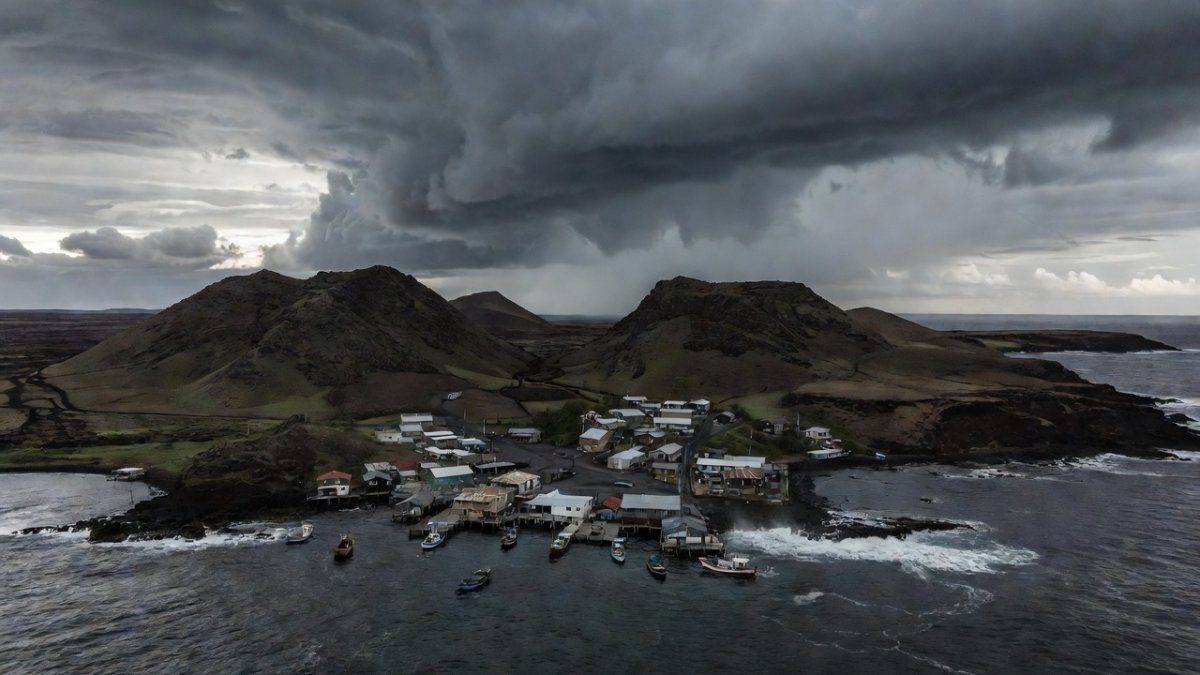
The final leg of the tour—Putin’s visit to the town of Kurilsk on the island of Iturup last Thursday—triggered an immediate diplomatic firestorm. Japanese Prime Minister Sanae Takaichi slammed the visit as “offensive” and “unacceptable,” reiterating Tokyo’s long-standing claim that the Soviet Union illegally seized the four islands during World War II. The visit came after Putin oversaw naval exercises of the Russian Pacific Fleet off the coast of Sakhalin, a display of military readiness that Moscow clearly intended as a signal.
András Tóth-Czifra, an expert on Russia’s domestic politics and political economy, argues that the Iturup visit should be analyzed separately from the rest of the tour. “This was a legitimation-focused tour,” Tóth-Czifra told The Moscow Times. “I think we need to separate Iturup from the rest of the trip. To me, the Iturup visit seemed like muscle-flexing with relatively low associated costs.” The Kremlin likely calculated that the diplomatic fallout with Japan was an acceptable price for a domestic audience hungry for displays of national strength, particularly in the resource-rich but war-weary regions of the Russian East.
A Tour Born of Security Fears and Electoral Calculus
Putin’s previous reluctance to travel beyond Moscow and his two preferred cities has been linked to an alleged fear of assassination, according to a European intelligence report cited by CNN and the Financial Times. His sudden willingness to embark on a three-week regional odyssey suggests that the political imperative to campaign for United Russia has outweighed those security concerns, at least for now.
Irina Busygina, a researcher at Harvard University’s Davis Center for Russian and Eurasian Studies and an expert in comparative federalism, said Putin “must have had reasons” to resume regional travel after largely avoiding the duty since the Covid-marred spring of 2020. “I think the idea originated in the presidential administration, and they then convinced Putin of its usefulness,” Busygina said. She noted that United Russia rolled out its “main weapon” at this year’s party congress, declaring itself the “party of the president.” Putin’s visit to the regions is intended to strengthen United Russia’s electoral position, she added.
Targeting the Protest-Prone Regions
Tóth-Czifra said the presidential administration focused Putin’s visit on the protest-prone regions of Siberia and the Far East—areas that have suffered disproportionate economic and human losses in the Ukraine war. The goal, he said, was to diffuse potential discontent ahead of the State Duma elections. Doubts “about the limits of loyalty of local elites” could also have played a role in the selection of cities, he added.
Busygina believes the cities were chosen based on the number of potential voters and their relative importance for the upcoming elections, while the republic of Buryatia played the mandatory role of an “ethnic” addition to the tour. The choice of Buryatia, a Mongolia-bordering republic with a population of less than 1 million, is particularly telling given its outsized sacrifice in the war.
Buryatia: The Human Cost of the Kremlin’s War
Buryatia has more than 5,200 verified war casualties and has ranked in the top 10 regions by war deaths per capita since 2022. The resource-rich republic has long faced some of the highest levels of poverty and unemployment in the country. A lack of job opportunities pushed some Buryatians to join the Russian military in search of income, though many were sent to the front lines in Ukraine by force during the nationwide mobilization campaign.
This disproportionate call-up helped fuel an unprecedented rise of Indigenous-led anti-war and pro-democracy movements in the region, though most of them were pushed into exile and outlawed as “terrorist” or “extremist” by the Kremlin. Instead of addressing these war-related grievances, Putin’s visit to Ulan-Ude largely focused on urban planning and public transport accessibility—a choice that may ring with irony for residents of a city known for its poor environmental record and infrastructural problems.
Déjà Vu in Ulan-Ude: The Gap Between Rhetoric and Reality
Anna Zueva, a now-exiled veteran journalist from Ulan-Ude, said local officials’ reports about a “comfortable urban environment” couldn’t be farther from the truth. The city consistently suffers from a lack of urban green spaces, poor water drainage systems, and dilapidated roads. “While a meeting with Putin was underway, a minibus from Ulan-Ude was unable to reach the village of Bagdarin some 70 kilometers (43 miles) away because rain had washed out the stretch of road with no settlements or mobile service within a 150-kilometer (93-mile) radius,” Zueva said. “Five people were unable to leave the scene and were forced to spend the night in the stuck minibus.”
For Zueva, the most notable part of Putin’s visit was the opening of the beryllium mining and processing plant some 160 kilometers (99 miles) south of Ulan-Ude, which the president attended via videoconference. “Beryllium is an important strategic metal used in the defense, aviation, space and nuclear industries,” Zueva explained. “It saddens me that Buryatia’s unique natural resources will continue to be barbarically extracted from the earth solely to serve the Russian dictatorship, fuel the war and line the pockets of the elite.”
The Brezhnev-Era Spectacle of Orchestrated Appearances
To maintain his image as a strongman of the people, Putin’s trip was laden with carefully orchestrated meetings with war veterans, schoolchildren, factory workers, and young scientists. Zueva said that Putin’s latest visit to her home region “gave a persistent feeling of déjà vu,” reminding her of the president’s April 2013 tour that she covered as part of a local press pool. “I was young, just 26, didn’t yet fully understand how the system worked, and was thrilled to be sent to such an event. I thought I’d get to see the president with my own eyes,” Zueva recalled. “Ultimately, we journalists were locked in a separate building, simply watching Putin on a live TV screen for hours. No questions were allowed, and no one ever saw Putin himself.”
To expert Busygina, the “meaningless format” of Putin’s tour is “very reminiscent of Soviet practices of the Brezhnev era,” when the country’s leader also “loved to take pictures while sitting surrounded by pioneers.” Putin has already spent more time in office than Brezhnev, but whether he has been equally successful at pacifying the masses and orchestrating elections is up for debate.
Will the Tour Deliver at the Ballot Box?
The central question for the Kremlin is whether this carefully staged tour will translate into electoral gains for United Russia in September. Tóth-Czifra is skeptical. “The purpose of such tours is usually to narrow the gap between the popularity of the ruling party and the president,” he said. “But judging from popular reactions to the visits…it is questionable whether these will have any major organic positive impact on United Russia’s result in September.”
The tour’s long-term consequences may extend beyond the elections. The diplomatic row with Japan over the Kuril Islands has further isolated Moscow on the international stage, while the stark contrast between the Kremlin’s carefully curated image of regional prosperity and the lived reality of residents in places like Ulan-Ude risks deepening public cynicism. For ordinary Russians in the regions, the tour offered a familiar spectacle: a distant leader, a tightly controlled script, and little evidence that their daily struggles—washed-out roads, poverty, and the relentless toll of war—are a priority for the Kremlin.
By Irina Volkov, Staff Writer
This article was produced with AI-assisted research and editorial support. Sources: The Moscow Times
What's Your Reaction?
 Like
0
Like
0
 Dislike
0
Dislike
0
 Love
0
Love
0
 Funny
0
Funny
0
 Wow
0
Wow
0
 Sad
0
Sad
0
 Angry
0
Angry
0
Russia/Eastern Europe Correspondent at Global1.News. Covering Russian politics, energy, security, and the shifting dynamics of the post-Soviet space. Provides clear-eyed analysis on one of the world's most opaque regions.









Comments (0)