
Bárcena presents bill to put environmental justice at heart of Mexican law
The Ministry of Environment and Natural Resources (Semarnat) presented an initiative on Wednesday to reform the General Law of Ecological Balance and Environmental Protection (LGEEPA), Mexico's principal environmental legal framework since 1988.
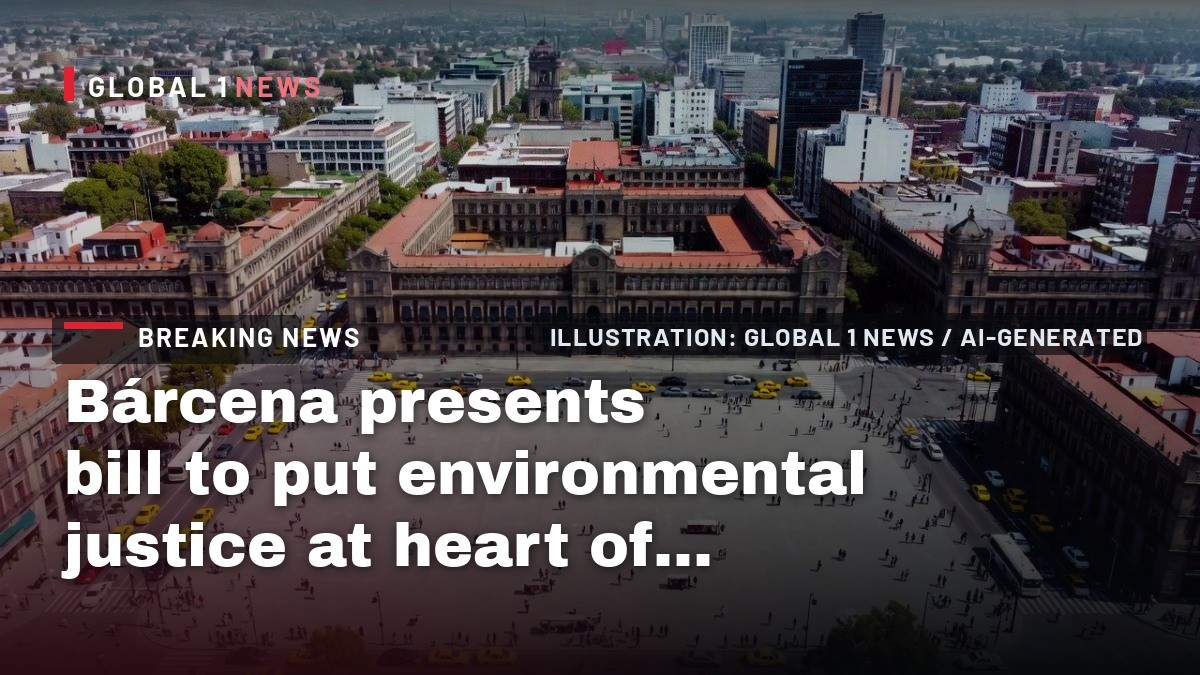
Bárcena presents bill to put environmental justice at heart of Mexican law
The Ministry of Environment and Natural Resources (Semarnat) presented an initiative on Wednesday to reform the General Law of Ecological Balance and Environmental Protection (LGEEPA), Mexico's principal environmental legal framework since 1988. Minister Alicia Bárcena Ibarra unveiled the proposal during President Claudia Sheinbaum's morning press conference at the Palacio Nacional, marking what she called "a historic moment" in the nation's approach to balancing development with nature.
The bill, which has been presented to the Congress of the Union for consideration, introduces 10 policy principles designed to prevent and repair ecological damage while protecting communities across Mexico. According to President Sheinbaum, the objective is "to strengthen the capacities of the Mexican state to protect, care for, conserve and restore the environment and natural resources." The initiative responds to challenges that have deepened over nearly four decades, including climate change, biodiversity loss, pollution, pressure on water resources, and conflicts arising from infrastructure, industry, and urban development projects.
"This is a new relationship between development and well-being, productivity and nature, and above all, a relationship based on environmental justice," Bárcena said during the presentation. The reform represents a significant departure from the original 1988 framework, which was crafted in a different era before climate change became an urgent national priority and before communities demanded a stronger voice in decisions affecting their territories.
Environmental justice at the center of a new legal framework
The initiative places environmental justice as its central pillar, seeking to deepen the connection between ecosystem protection and social well-being. Semarnat aims to strengthen citizen participation and respect for the rights of Mexico's Indigenous, Afro-Mexican, rural, and urban communities — groups that have historically borne the heaviest burdens of environmental degradation while receiving the fewest benefits from development projects.
Bárcena emphasized that the environmental policy promoted by the Sheinbaum administration places people, communities, Indigenous peoples, and Afro-Mexican communities at the center of decision-making. "Before, we did this — we conserved, we preserved — but without the people. We created large reserves. Yes, that's fine, but now we do it with the participation of the people," she stated during the Mañanera del Pueblo.
The reform also proposes a dedicated chapter for those who defend the environment and public goods, offering legal recognition and protection for environmental defenders who face risks across many regions of Mexico. This provision acknowledges the dangerous reality that many community leaders, particularly in rural and Indigenous areas, confront when they oppose projects that threaten their lands, water, and traditional ways of life.
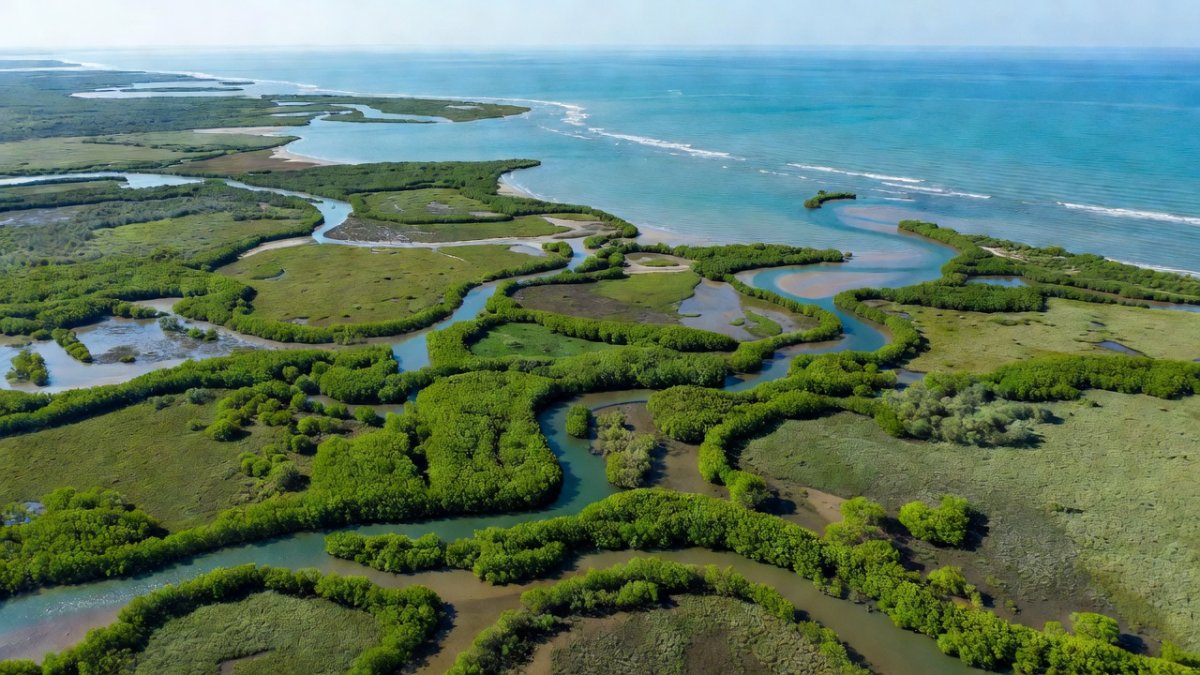
The initiative also incorporates a program of ecological restoration, measures to strengthen the circular economy, reduce waste and increase recycling, alongside actions for the sanitation of rivers, the protection of coasts and mangroves, territorial planning, and the recovery of ecosystems. These tools recognize that ejidos, Indigenous communities, and small farming families often serve as the de facto guardians of forests, watersheds, and biodiversity — and that their stewardship, grounded in what the initiative calls Mexico's "biocultural patrimony," deserves legal recognition, not just gratitude.
A proactive approach to environmental impact assessment
One of the most significant changes proposed in the initiative involves how environmental impacts are evaluated before development projects begin. Currently, a company can request an Environmental Impact Assessment (MIA) at any time prior to the onset of construction, a flexibility that critics have long argued allows developers to minimize or obscure their true ecological footprint.
The reform takes what Bárcena described as a "proactive" approach by requiring developers of large-scale projects to carry out a strategic environmental assessment over a longer time frame. The bill would also prohibit the fragmentation of projects — a practice where developers divide a large undertaking into smaller pieces to avoid comprehensive regional impact analysis. This change would force a more honest accounting of how projects affect entire watersheds, ecosystems, and communities, not just individual construction sites.
The proposal also suggests that authorities, in collaboration with private companies, assess the possible ecological consequences of works and productive activities further in advance. Companies would assume partial responsibility if and when their work causes eventual environmental deterioration, shifting the framework from one that primarily sanctions damage after the fact to one that prevents harm before it occurs.
Bárcena noted that one of the central objectives is to move from a policy based mainly on sanctioning to one that privileges prevention. This philosophical shift reflects a broader understanding that punishing environmental damage, while necessary, cannot restore what has already been lost — and that communities cannot be compensated for the destruction of resources that sustain their livelihoods and cultural identities.
New tools for restoration, climate action, and species protection
The bill incorporates new tools designed to address contemporary environmental challenges that did not exist or were not fully understood when the original law was written in 1988. These include an ecological restoration program, new mechanisms to address climate change, and strengthened provisions for the prevention, repair, and remediation of environmental damage.
Ecological restoration efforts would focus on rivers, mangroves, coastlines, forest ecosystems, and other degraded areas across Mexico. This emphasis recognizes that conservation alone is insufficient — that decades of damage from industrial activity, deforestation, and pollution require active intervention to restore the health of ecosystems that communities depend on for water, food, and economic opportunity.
The enhanced protection of native species will be paramount, according to Bárcena, with specific attention to the Mexican wolf, the condor, the blue whale, and dolphins. These species represent not only ecological treasures but cultural symbols deeply woven into Mexico's identity — the wolf in northern traditions, the condor in the rugged sierras, and the whales and dolphins that draw visitors to Baja California's coasts and support coastal economies.
The initiative also incorporates scientific advances, innovation, and new technologies as tools for environmental protection. However, Bárcena was careful to emphasize that science alone is not sufficient. "We cannot do science without recognizing the wisdom of our Indigenous peoples," she said, acknowledging that ancestral knowledge systems developed over centuries of intimate relationship with specific landscapes offer insights that Western science is only beginning to appreciate.
Legal certainty for communities and investments alike
The Semarnat chief highlighted that the proposal seeks to provide greater legal certainty both to communities and to investments, particularly in regions where development projects can generate socio-environmental conflicts. This dual focus reflects an understanding that uncertainty harms everyone — communities cannot plan their futures when their lands and waters are threatened, and investors cannot responsibly commit capital when projects face the risk of community opposition and legal challenges.
By establishing clearer rules for environmental assessment, community consultation, and shared responsibility, the bill aims to reduce the conflicts that have plagued major infrastructure and industrial projects across Mexico. From wind farms in Oaxaca's Isthmus of Tehuantepec to mining operations in the northern sierra, disputes over environmental impacts and community consent have repeatedly stalled development and damaged trust between companies, governments, and local populations.
The reform also contemplates strengthening access to environmental information and justice, as well as promoting citizen participation in decisions related to territory and natural resources. This provision would empower communities to understand what is happening in their regions and to hold authorities and companies accountable when environmental laws are violated.
For ordinary Mexicans — families in colonias, campesinos working their ejidos, fishers along the coasts, and Indigenous communities in the mountains — this initiative represents an acknowledgment that environmental policy cannot be imposed from above. The bill recognizes that the people who live closest to the land, water, and forests are often the best stewards of those resources, and that their knowledge and participation are essential to any successful conservation strategy.
The road ahead: From initiative to law
The initiative now begins its journey through the Congress of the Union, where it must be analyzed, debated, and approved by both the Cámara de Diputados and the Senado. While the Morena majority and its allies control both chambers, the legislative process will involve hearings, consultations, and negotiations that could modify the proposal before it reaches a final vote.
The timing of the presentation — during the Mañanera del Pueblo, the daily morning press conference that has become a defining feature of the Sheinbaum administration — signals the priority the federal government places on this reform. It also reflects the continuity with the legacy of former President Andrés Manuel López Obrador, whose administration emphasized the rights of Indigenous peoples and the protection of Mexico's natural heritage.
Bárcena's proposal arrives at a moment when Mexico faces significant environmental challenges: prolonged droughts in the north, water scarcity in the Valley of Mexico, deforestation in the southeast, and the ongoing impacts of climate change on agriculture, fisheries, and coastal communities. The reform of LGEEPA, if approved, would provide the legal framework for addressing these challenges in a way that centers the well-being of communities rather than treating them as obstacles to development.
The bill's emphasis on environmental justice, community participation, and the recognition of ancestral knowledge represents a distinctly Mexican approach to environmental law — one that draws on the country's Indigenous heritage, its history of communal land tenure, and its vibrant civil society. As the initiative moves through Congress, communities across Mexico will be watching closely to see whether the promises made at the Mañanera del Pueblo become the law of the land.
Tags: Semarnat, Alicia Bárcena, LGEEPA, environmental justice, Claudia Sheinbaum, Mañanera del Pueblo, Indigenous communities, ecological restoration, climate change, Mexico Congress, environmental law reform, biodiversity protection
By Rosa Martinez, Staff Writer
This article was produced with AI-assisted research and editorial support. Sources: Mexico News Daily, El Universal.
What's Your Reaction?
 Like
0
Like
0
 Dislike
0
Dislike
0
 Love
0
Love
0
 Funny
0
Funny
0
 Wow
0
Wow
0
 Sad
0
Sad
0
 Angry
0
Angry
0

Latin America/Andes Correspondent at Global1.News. Based in Bogota, covering politics, environment, energy, and social movements across the Andean region. Passionate about environmental journalism and communities protecting their land.















Comments (0)