
Cleveland School Students Tour Lerner College of Medicine
Meta Title: Cleveland School Students Tour Lerner College of Medicine Meta Description: Students from Cleveland School of Science & Medicine visited Lerner College of Medicine, exploring labs, meeting...
Why a High‑School Visit to a Medical School Matters
When you hear “high‑school students visiting a medical college,” you might picture a quick hallway walk‑through. In reality, it’s a chance for curious teens to peek behind the curtain of a world that usually feels a few steps beyond their reach. The recent video posted by the Cleveland Clinic shows exactly that: a group of eager learners from the Cleveland School of Science & Medicine (CSSM) on the John Hay Campus stepping onto the Lerner College of Medicine (LCM) campus to discover what a career in medicine looks like up close.
Who’s Who: CSSM and Lerner College of Medicine
CSSM is a magnet high school that blends rigorous academics with a strong emphasis on science, technology, engineering, and math (STEM). Its students spend a lot of time in labs, doing research projects, and exploring health‑related topics—often with the support of Cleveland Clinic physicians who serve as mentors. The John Hay Campus, where the school is located, sits right next to the Cleveland Clinic’s main campus, giving students a unique “real‑world” backdrop for their studies.
Lerner College of Medicine, on the other hand, is the graduate medical school of the Cleveland Clinic Lerner College of Medicine at Case Western Reserve University. It’s known for an innovative curriculum that blends early clinical exposure with research opportunities. In short, it’s a place where future doctors learn not just how to treat patients, but also how to ask the right questions that drive medical breakthroughs.
What the Students Got to See (and Do)
The video opens with a bus pulling up to the sleek Lerner College building, and you can almost feel the buzz of anticipation in the air. While the transcript isn’t available, the visual cues tell a clear story. First, the students are greeted by faculty members—most likely faculty who specialize in introductory courses for first‑year medical students. A quick handshake, a smile, and the group is ushered into a series of short, interactive stations.
One of the first stops appears to be a modern anatomy lab. Here, the students can see cadaveric specimens, 3‑D models, and even virtual reality headsets that let you “walk through” a human heart. For a teenager who’s only ever seen a textbook diagram, watching a professor point out the branching of coronary arteries on a VR screen is a mind‑blowing moment. It turns abstract concepts into something you can actually visualize.
Next, the tour moves into a research lab where graduate students are working on projects ranging from biomedical engineering to clinical trials. You can spot a microscope, a set of pipettes, and a whiteboard covered in equations and flowcharts. The CSSM students get a chance to ask questions like, “How do you turn a lab discovery into a treatment?” and “What does a day in the life of a research scientist look like?” Those are the kinds of questions that help them connect the dots between high‑school science fairs and real‑world medical research.
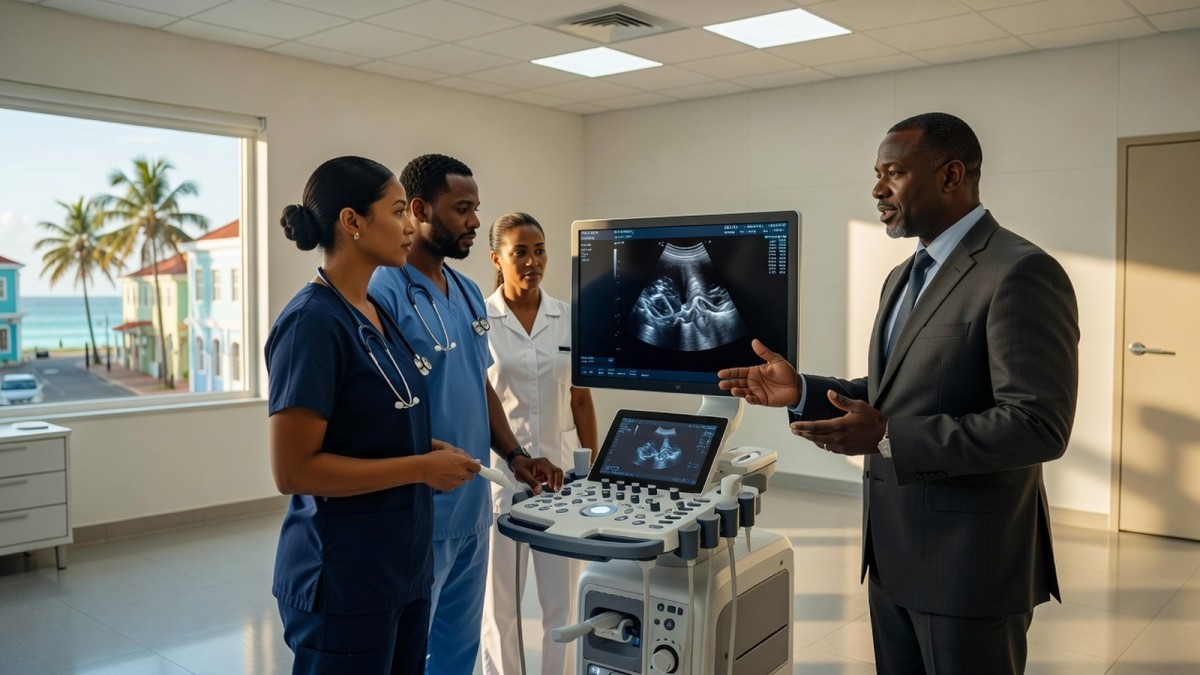
Another highlight is a brief shadowing session in a simulated patient room. A faculty member demonstrates how to take a patient history, how to listen to lung sounds with a stethoscope, and how to interpret basic vital signs. The students get to practice the “bedside manner” that doctors learn over years, but in a low‑stakes environment where a mistake is just a learning point.
Throughout the visit, the video shows moments of genuine excitement—students leaning in, taking notes, and even laughing when a faculty member shares a light‑hearted anecdote about a tricky anatomy exam. Those small interactions are the real glue that turns a simple campus tour into a memorable learning experience.
Why This Kind of Outreach Is a Win‑Win
For the Cleveland Clinic and Lerner College, inviting high‑school students onto campus serves a strategic purpose. It builds a pipeline of future physicians, researchers, and health‑care leaders who already feel a connection to the institution. When a student walks away thinking, “I could see myself here,” that’s a seed planted for years of potential collaboration, mentorship, and even enrollment down the line.
From the students’ perspective, the visit demystifies the path to a medical career. Many high‑schoolers think becoming a doctor is a distant, almost mythical goal reserved for a select few. By seeing the day‑to‑day reality—labs, lectures, patient interactions—they realize it’s a series of steps they can start taking now, like focusing on biology classes, seeking volunteer opportunities, or applying for summer research programs.
Parents and teachers also benefit. The video provides a concrete example they can point to when encouraging students to pursue STEM pathways. It shows that the community has resources right at its doorstep, making the idea of a “medical career” feel less like a distant dream and more like a reachable destination.
Putting the Visit in a Bigger Context
Outreach trips like this one are part of a broader trend in medical education: early exposure. Schools across the country are recognizing that the earlier students see what medicine looks like, the more diverse and prepared the future workforce will be. Cleveland Clinic’s partnership with CSSM is a textbook case of how a health system can leverage its proximity to a magnet school to create a mutually beneficial ecosystem.
Moreover, the visit aligns with the Cleveland Clinic’s mission to improve community health. By inspiring the next generation of health professionals, the institution indirectly invests in the long‑term health of the region. A future doctor who grew up in Cleveland and trained at Lerner College is more likely to stay and practice locally, addressing physician shortages and contributing to community health initiatives.
Finally, the video itself serves as a digital outreach tool. Even if you didn’t watch it, the article captures the essence of the experience, making the content accessible to anyone who prefers reading. That’s an important point: not everyone can attend a campus tour, but a well‑produced video (and a clear write‑up) can bring the experience into homes across the city, sparking curiosity in a wider audience.
What’s Next for the Students?
After the tour, most of the CSSM students will return to their regular classes with a fresh set of ideas. Some may decide to join the school’s health‑science clubs, sign up for volunteer shifts at the Cleveland Clinic, or apply for summer research internships at Lerner College. Others might simply carry the memory of that VR heart model as a reminder that science can be both fascinating and tangible.
What’s clear is that the visit isn’t a one‑off event. The Cleveland Clinic and CSSM have a history of collaborative programs—guest lectures, mentorship pairings, and joint community health projects. This particular tour is likely one piece of a larger, ongoing partnership that will continue to open doors for students eager to explore health careers.
In short, the video captures more than just a campus walk‑through; it showcases a living bridge between education and professional practice. For anyone interested in how high‑school students can get a head start on a medical career, the Lerner College visit is a shining example of what happens when a top‑tier health system invests in its future talent pool.
By Allan Ali, PublisherWhat's Your Reaction?
 Like
0
Like
0
 Dislike
0
Dislike
0
 Love
0
Love
0
 Funny
0
Funny
0
 Wow
0
Wow
0
 Sad
0
Sad
0
 Angry
0
Angry
0

Publisher of Global1.News. Automation architect, systems builder, and the guy making sure the truth gets published.












Comments (0)