
Did you receive $90 from Social Security? Who qualifies for Trump’s Medicare rebate and when it will arrive
Across the United States, a sudden $90 credit has begun appearing in the bank accounts of many seniors, prompting a flurry of questions about its origin and eligibility.
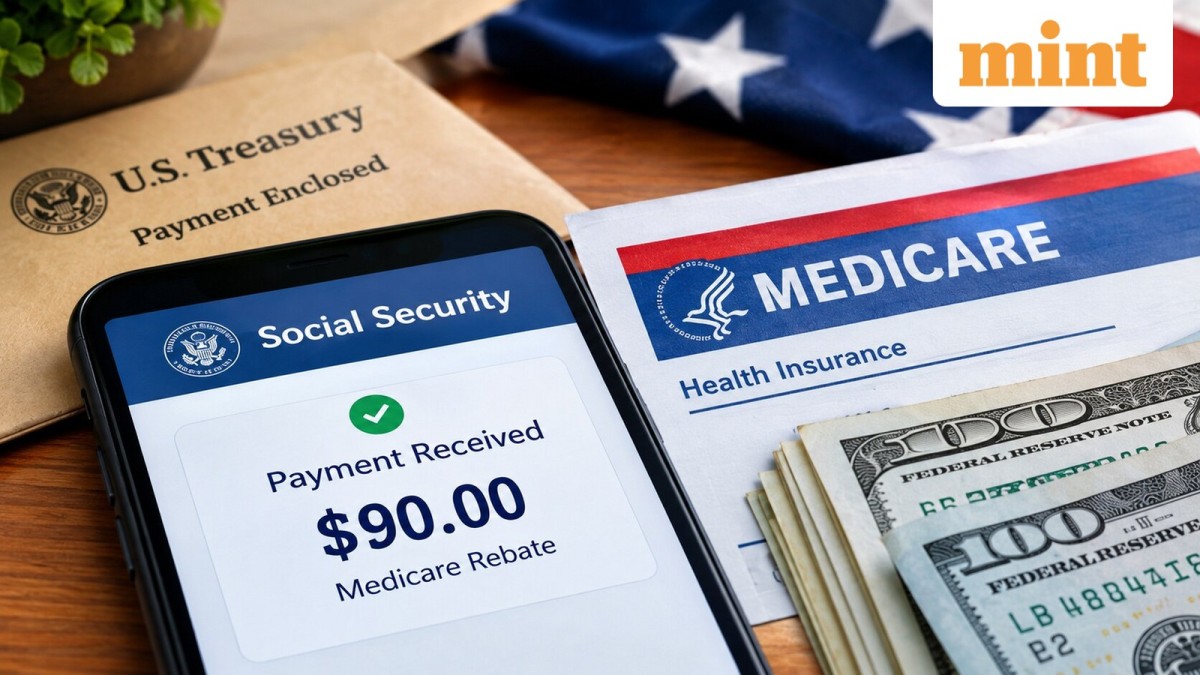
Across the United States, a sudden $90 credit has begun appearing in the bank accounts of many seniors, prompting a flurry of questions about its origin and eligibility. The payment, while modest, is not a new Social Security benefit but a one‑time Medicare rebate announced by the Trump administration. It is intended to offset the October Part B premium for a specific segment of Medicare beneficiaries. Understanding who qualifies, why the rebate was introduced at this moment, and how it fits into broader health‑policy frameworks offers valuable perspective for Indian policymakers grappling with similar challenges of financing ageing populations.
What the rebate is and how it reaches beneficiaries
The $90 credit is a direct payment from the Medicare Improvement Fund, a congressional pool created to support enhancements to the original fee‑for‑service Medicare programme. According to the Centres for Medicare & Medicaid Services (CMS), roughly 20.8 million beneficiaries meet the criteria for the rebate. Most will see the amount as a direct deposit from the Social Security Administration, mirroring a routine benefit payment. For those without direct‑deposit arrangements, a paper cheque will be mailed later in October, clearly marked as coming from the Medicare Improvement Fund and designated to offset the October Part B premium.
CMS has advised recipients to verify eligibility by calling the Medicare helpline at 1‑800‑633‑4227, while the Social Security Administration will field payment‑status enquiries from 15 October at 1‑800‑772‑1213. This dual‑channel approach reflects the administrative overlap between Social Security and Medicare, a complexity that Indian agencies such as the National Health Authority must also navigate when integrating cash‑transfer schemes with health insurance programmes.
Eligibility criteria: who receives the $90
To qualify, seniors must be enrolled in Original Medicare Part B, reside within the United States, and neither receive Medicaid premium assistance nor pay an income‑related monthly adjustment amount (IRMAA). The rebate explicitly excludes beneficiaries enrolled in Medicare Advantage plans, those receiving Medicaid assistance, and anyone subject to IRMAA, which is levied on higher‑income earners. Roughly 40 million Part B enrollees fall outside the eligibility window for these reasons.
The focus on Original Medicare mirrors India’s ongoing debate over the balance between public fee‑for‑service schemes and private or hybrid models. As the government expands the Ayushman Bharat Pradhan Mantri Jan Arogya Yojana (PM‑JAY), the delineation of benefits between direct cash assistance and insurance‑based coverage will be critical to avoid duplication and ensure that the most vulnerable receive targeted support.
Financial context: size of the fund and premium trends
The rebate draws from a Medicare Improvement Fund that the White House estimates contains about $2 billion. While $90 per beneficiary may appear modest against the backdrop of rising health‑care costs, it is a tangible reduction in the October Part B premium, which CBS News notes has risen by more than $200 in 2026 and is projected to increase again in 2027. The rebate therefore represents roughly a 20 percent offset of the latest premium hike for eligible seniors.
In India, premium escalations in private health‑insurance products have similarly strained household budgets, especially for retirees. The Indian insurance regulator, IRDAI, has been urged to consider premium caps or indexed adjustments to protect senior citizens, a discussion that gains relevance when juxtaposed with the US approach of a targeted rebate funded through a dedicated improvement pool.
Political timing and its implications
The rebate’s rollout aligns closely with the 3 November 2026 mid‑term elections, a timing highlighted by both the White House and Reuters. President Trump announced the payments weeks before the vote, framing them as direct assistance for older Americans confronting escalating health‑care costs. This strategy underscores how health‑policy levers can be employed for electoral advantage, a phenomenon not unfamiliar to Indian politics where welfare announcements often precede elections.
For Indian policymakers, the episode serves as a reminder to safeguard health‑policy decisions from overt politicisation. While political will is essential for expanding senior benefits, the credibility of programmes like the National Programme for Health Care of the Elderly (NPHE) depends on consistent, evidence‑based funding rather than election‑cycle spikes.
Administrative overlap: Social Security and Medicare
The rebate’s delivery through the Social Security Administration illustrates the intertwined nature of US social‑protection systems. Direct deposits appear alongside regular Social Security benefits, potentially causing confusion among recipients. CMS’s coordination with the Social Security Administration to handle enquiries from 15 October reflects an attempt to streamline communication, yet the dual‑agency involvement can also complicate accountability.
India faces a comparable challenge as the Ministry of Finance, Ministry of Health, and state welfare departments converge on senior‑focused schemes. Harmonising data platforms and establishing clear points of contact will be crucial to avoid the bureaucratic friction evident in the US example, where seniors may need to navigate two separate helplines to confirm a single payment.
Impact on seniors and broader health‑system considerations
For the 20.8 million qualifying seniors, the $90 rebate offers a modest but welcome relief against the backdrop of rising Part B premiums. While the amount does not fundamentally alter affordability, it signals a targeted acknowledgement of cost pressures on older adults. The exclusion of Medicare Advantage enrollees, however, raises questions about equity, as those in private‑managed plans miss out on the rebate despite facing comparable premium burdens.
In India, the equity dimension is equally salient. As the government pushes for greater enrolment in the Ayushman Bharat scheme, it must ensure that parallel private‑sector initiatives do not inadvertently create a two‑tier system where only certain seniors receive additional financial relief. Data‑driven monitoring of enrolment patterns and premium impacts will be essential to maintain fairness.
Looking ahead: lessons for Indian health policy
The US $90 Medicare rebate underscores several strategic takeaways for India. First, earmarked funds such as the Medicare Improvement Fund can provide a transparent financing source for targeted senior benefits, reducing reliance on ad‑hoc budgetary allocations. Second, clear eligibility criteria and robust communication channels are vital to minimise confusion and ensure that benefits reach intended recipients efficiently. Third, the political utilisation of health payments highlights the need for institutional safeguards that keep senior support programmes insulated from electoral cycles.
As India continues to expand its health‑security net for an ageing population, integrating these lessons could help shape a more resilient, equitable system. By aligning cash‑transfer mechanisms with insurance‑based coverage, establishing dedicated improvement funds, and fostering inter‑agency coordination, policymakers can deliver tangible relief to seniors while preserving the fiscal sustainability of the broader health ecosystem.
This article was produced with AI-assisted research and editorial support. Reporting is based on the source material cited below. Sources: Livemint; livemint.com; Global1.News (07 October 2026).
By Dr. Raj Patel, Staff Writer
What's Your Reaction?
 Like
0
Like
0
 Dislike
0
Dislike
0
 Love
0
Love
0
 Funny
0
Funny
0
 Wow
0
Wow
0
 Sad
0
Sad
0
 Angry
0
Angry
0

India/South Asia Correspondent at Global1.News. Analytical voice with a background in science and health journalism. Based in New Delhi, covering Indian politics, education, healthcare, technology, and policy. Breaks down complex data into clear, actionable reporting.















Comments (0)