
Trinidad's Special Operations Act Takes Effect as Its Journalists Demand Protection
Trinidad and Tobago's Special Operations Act, 2026 took effect on 6 October after President Christine Kangaloo's proclamation. Journalists are calling for Clause 15 to be amended to shield their devices, notes and confidential sources from warrantless police seizure.
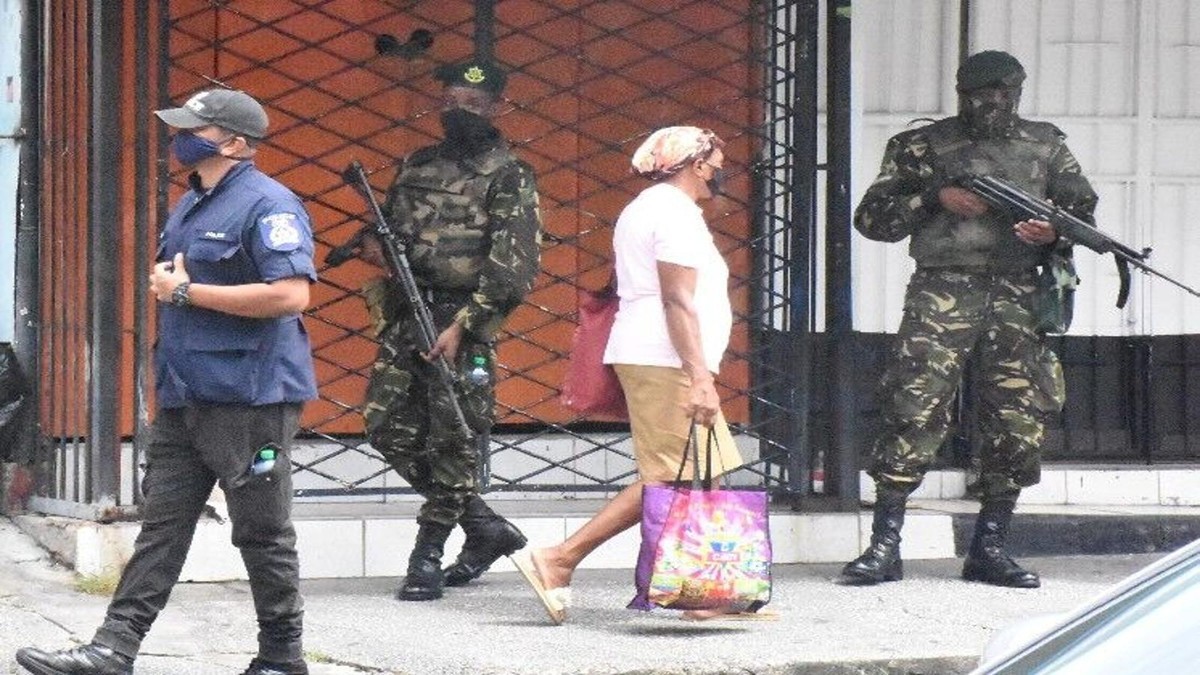
Trinidad and Tobago's Special Operations Act, 2026 became enforceable law on 6 October 2026, when President Christine Carla Kangaloo issued the proclamation bringing all sections of the legislation into operation. The Act lets police search without a warrant, seize documents, impose curfews and seal off "closed areas" across seven policing districts. No closed area has yet been declared.
On the same day, journalists in Trinidad and Tobago called for an urgent amendment to the law they had spent weeks warning about. Clause 15 shields "a tool of a lawful trade or business" from police seizure. It does not name journalism. That leaves the phones, laptops, notebooks and recording equipment of reporters in Trinidad and Tobago outside the protection the country's courts have upheld for journalistic material.
Trinidad's Special Operations Act Takes Effect as Its Journalists Demand Protection
Port of Spain, Trinidad — The proclamation was reported by Trinidadian news outlets on 6 October. It closes a passage that began in the House of Representatives on 16 September, ran through a 13-hour debate, and ended in the Senate on a single casting vote after a 15-15 deadlock. The Media Association of Trinidad and Tobago, the press freedom organisation Article 19 and independent journalists have all objected to the search-and-seizure clause.
What the Act Actually Does
The Special Operations Bill, 2026 was introduced by Attorney General John Jeremie on 16 September 2026. It was the Government's second attempt at a special-operations framework this year. An earlier bill, the Law Reform (Zones of Special Operations) Bill, 2026, failed in the Senate in January after 15 votes for, 14 against and one abstention, short of the three-fifths majority it required. The replacement was drafted to need only a simple majority.
The Act divides Trinidad and Tobago into seven policing districts — six in Trinidad, one in Tobago — and lets the President declare any area within them a "closed area" where escalating violent crime, illegal firearms or gang control threaten public safety and ordinary policing is judged insufficient. Inside a closed area, residents need a permit to come and go, cordons and curfews can be imposed, and breaching a permit condition carries a TT$50,000 fine and a year in prison. Failing to give an officer your name carries a TT$20,000 fine.
The Clause the Press Is Asking About
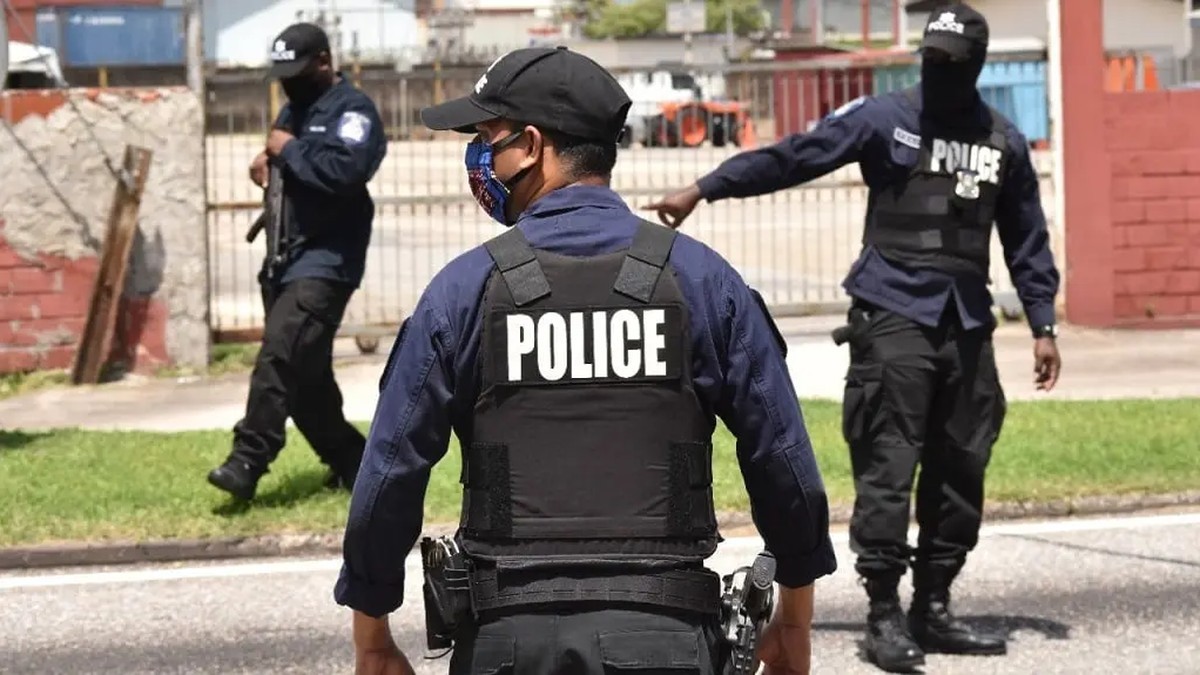
Under the Act's search-and-seizure provisions, police officers may search any place, vehicle or person inside a closed area without a warrant if they suspect an offence is being or has been committed. Clause 15(3) empowers them to seize any vehicle, article or document deemed "likely to be of substantial value" to an investigation. Clause 15(4) creates the exception: an officer shall not seize "any tool of a lawful trade or business," or anything covered by legal professional privilege.
The Media Association of Trinidad and Tobago, in a statement dated 18 September, said that exception does not reach journalists. The association wants Clause 15(4) amended "to expressly name journalism as a protected lawful trade and explicitly shield journalists' devices, materials, and confidential source information from standard police seizure," and a specific procedure inserted for confidential journalistic material found in a search, subject to immediate High Court oversight. "Without ironclad, explicit safeguards," it warned, "these everyday tools of our trade remain exposed to sweeping operational seizures under the broad umbrella of public disorder investigations."
A Newsroom Raid, a Six-Year Wait, and a Ruling
MATT's argument rests on a case Trinidad and Tobago has already litigated. In March 2020, police officers entered the offices of a national newspaper and removed four flash drives from the editor's desk. They were not looking for evidence that the newspaper had committed an offence. They were looking for the person who had told a reporter about the suspicious finances of a senior police officer.
The High Court ruled the raid unconstitutional on 13 January 2021. The State appealed, and on 29 April 2026 the Court of Appeal upheld the finding, awarding TT$25,000 in compensation. Justices Bereaux and Rajkumar formed the majority; Justice Aboud dissented. Justice Bereaux put the sanctity of journalistic sources at the centre of the judgment. Six years passed between the raid and the final ruling. MATT cites the case — One Caribbean Media Group Ltd & Ors v The Attorney General — for the proposition that broad search and seizure powers aimed at media organisations cause an impermissible "chilling effect" on the public's right to know.
15-15: How It Became Law
The House of Representatives passed the bill in the early hours of Saturday 19 September, after a debate the Trinidad Express reported ran some 13 hours. The Senate took it up on Wednesday 23 September and voted in the early hours of Thursday 24 September. All 15 Government senators voted in favour. All six Opposition senators and all nine Independent senators voted against. The chamber was deadlocked at 15-15.
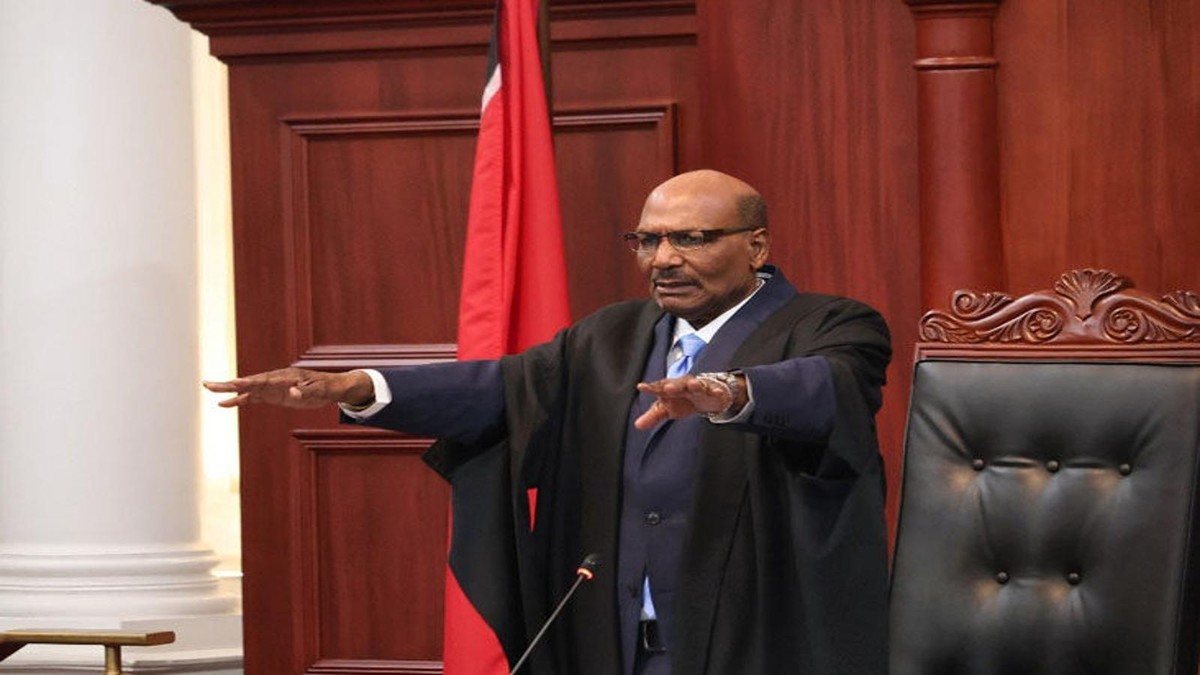
Senate President Wade Mark then used his casting vote to pass the bill. "There is no settled practice in this Parliament based on my research on this issue of the status quo re casting vote," he told senators, before declaring the result as 16 votes in favour and 15 against. Opposition Senator Faris Al-Rawi repeatedly tried to raise a Standing Order; Mark ruled the vote had already been taken. "The vote has been taken. The Bill has been passed," he said. The bill passed without amendment, the Government having rejected the Independent senators' committee-stage proposals.
"Worse Than a State of Emergency"
Opposition Leader Pennelope Beckles called the passage "a travesty of parliamentary democracy," and noted the timing: it came on the morning of the 50th anniversary of the country's republicanism. She questioned whether the President of the Senate should have used his casting vote "to provide the Government with the majority it could not otherwise obtain," arguing that the chair "bears a special responsibility to preserve the dignity, credibility and independence of that institution."
Beckles had already described the bill as "worse than the state of emergency." She pressed the Government on what its emergency powers had produced, citing official figures showing 240 people had been charged: "of those 240 persons who were charged, how many were convicted?" She also raised the treatment of people detained during the state of emergency, including at Tetron, without access to lawyers or tribunals. Port-of-Spain South MP Keith Scotland called the legislation a "sprawling assault" on constitutional rights.
The Question of Where the Powers Land
On Monday 21 September, Prime Minister Kamla Persad-Bissessar said she would authorise special operations only in the 26 constituencies held by her United National Congress, the 70 UNC-held local government electoral districts, and the two Tobago People's Party-held constituencies, the last after consulting Tobago House of Assembly Chief Secretary Farley Augustine. She was in New York for the United Nations General Assembly.
"The PNM-represented constituencies clearly prefer to be controlled by violent criminal gangs and the local drug mafia instead of being protected by law enforcement," she said. "Therefore, I will only authorise special operations" in those seats. Of the rest: "They can continue to allow their hardcore constituencies to be destroyed from within. I'm not bothered." PNM chairman Marvin Gonzales replied: "So she will decide where and how that racist law will apply???? She is the CoP or she controls the CoP????" Former prime minister Stuart Young called the remarks "unhinged" and grounded "in continued racial and social segregation." Police Commissioner Allister Guevarro said simply: "I am commissioner for all of T&T."
The Language the Debate Turned On
After the vote, the Prime Minister attacked the Independent bench directly. "The vote went well," she said. "The Government voted for the bill and Satan's helpers voted against it." She called the senators who opposed the bill "satanic and vile," and in other remarks "demons" and "Luciferian monsters," and said her Government would no longer accept amendments from them: "Going forward, we will not take a single amendment from that bench on any bill."
Independent Senator Anthony Vieira answered in the Senate with sarcasm. "A benefit of being satanic and demonic is that I have insight into the souls of men," he said, adding that he understood "the seven deadly sins, in particular, greed." He said the Prime Minister's refusal to accept amendments from his bench had influenced his decision not to draft amendments to another bill, noting that on the special zones legislation he had spent two days on amendments "to no avail."
Jamaica Tried This First
The Government's abandoned first bill drew on Jamaica's Zones of Special Operations law, enacted in 2017, which paired security measures with a social intervention structure. A Social Intervention Committee in each zone assessed infrastructure, health, housing and social amenities and drew up a development plan covering education, the environment and economic development.
In June 2026 the Jamaican government announced a comprehensive evaluation of its seven ZOSOs, examining financial costs and benefits, social value, unintended consequences and longer-term social and environmental outcomes, and informing a possible transition to "zones of peace and opportunity." Global Voices, writing about the Trinidadian bill, pointed to the Inter-American Development Bank's 2024 guide on hot spot policing, which stresses evaluation, the risk of displacement, and the need to pair policing with other approaches if crime reductions are to hold.
What the Government Says
Minister of Defence Wayne Sturge, speaking on State media after the House passage, said restrictions would apply to specific pockets within communities rather than broad areas, and that curfews would be "an exception," not a matter of course. Asked how officers would establish the reasonable suspicion needed to stop movement, he said: "Common sense." To citizens who asked whether the measures moved the country towards a police state, he replied: "What do they rather, a bandit state?"
The Act carries safeguards the Government has pointed to: training in human rights, use of force and de-escalation; monthly reports to the Prime Minister and the relevant ministers; an annual report to Parliament; and a two-year sunset, after which the law expires unless Parliament renews it. Body-worn cameras are required only "as far as is possible having regard to available resources." In Guardian Media reporting on 26 September, the Prime Minister, asked when assent would come, said: "Soon," and promised "minimal inconvenience" to law-abiding citizens. The Office of the Prime Minister did not respond to The Guardian's request for comment.
What Happens Next
Journalists are asking for the change now, before the powers are used. MATT president Prior Beharry said the clause must "explicitly shield our devices and materials … and confidential source information from standard police seizure," warning that in a digital era "the tools of a journalist is … usually [a] cell phone." Independent journalist Pearce Robinson said the mix of surveillance capability, wider search powers and shrinking access to ministers created a "concrete" threat: "If your phone, your laptop and your notes can be searched or seized without explicit protection for journalistic material, that raises serious constitutional concerns."
Robinson pointed to a Trinidad and Tobago Guardian investigation which found that judges approved 314 warrants to intercept communications between 2020 and May 2026. Pedro Cárdenas of Article 19 called the seizure power "vague," saying it "opens up to discussion what is substantial value or not" and "might directly counter" international human rights law. Reporters Without Borders ranked Trinidad and Tobago 32nd of 180 countries in its 2026 index, down 13 places from 19th in 2025. The Act runs for two years. MATT's amendment request now sits with a Government that has said it will not take a single amendment from the Independent bench.
By Jessica Ali, Staff Writer
This article was produced with AI-assisted research and editorial support. Sources: The Guardian, the Trinidad and Tobago Guardian, the Trinidad Express, the Media Association of Trinidad and Tobago, Article 19, Reporters Without Borders, ttt.live, Global Voices, TNT Crime Watch (I.A.N News), pearcerobinson.com and the Parliament of the Republic of Trinidad and Tobago.
What's Your Reaction?
 Like
0
Like
0
 Dislike
0
Dislike
0
 Love
0
Love
0
 Funny
0
Funny
0
 Wow
0
Wow
0
 Sad
0
Sad
0
 Angry
0
Angry
0

Editor-in-Chief at Global1.News. Atlanta-based journalist who cuts through the BS and tells it like it is. Lead anchor, host, and the voice you hear when the spin stops and the truth starts.











Comments (0)