
Flavio Bolsonaro Leads Lula Into a Brazil Runoff Nobody Polled For
Flavio Bolsonaro finished ahead of President Lula in Brazil's first round with 47.03 percent of valid votes to 45.16 percent, forcing a runoff on 25 October after the polls predicted the opposite.
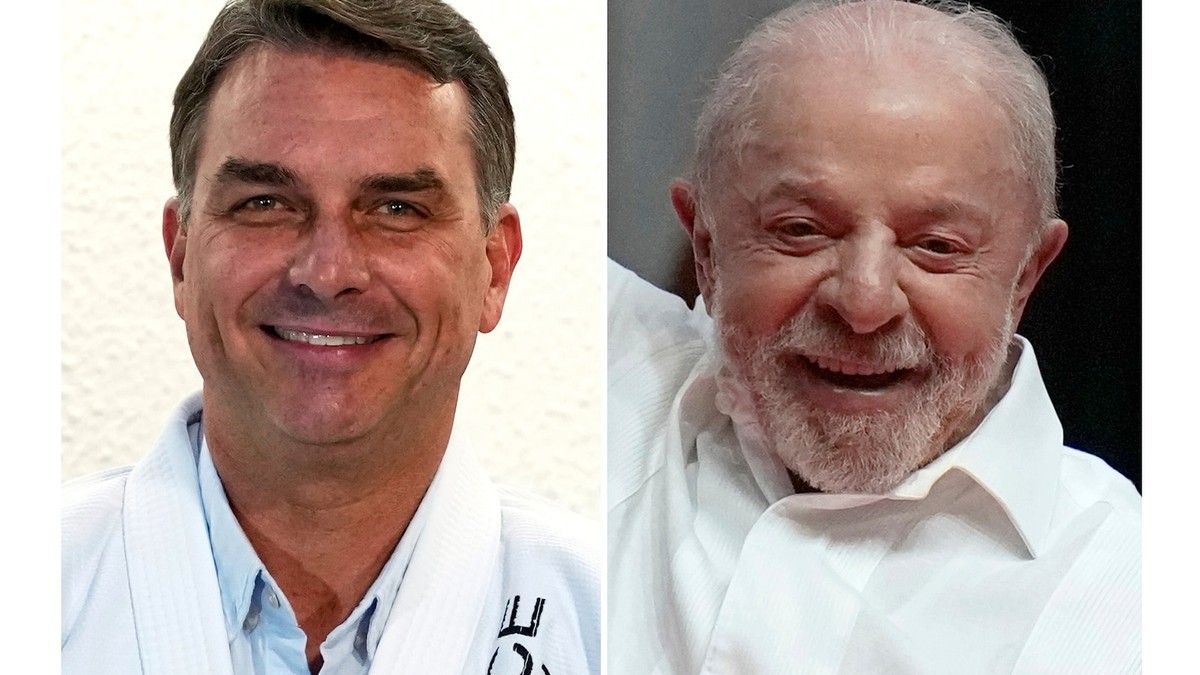
Brazil's presidential election is headed to a runoff after Senator Flavio Bolsonaro finished ahead of incumbent President Luiz Inacio Lula da Silva in Sunday's first round but fell short of the majority needed to win outright. With 99.99 percent of polling stations counted, the Superior Electoral Court put Flavio Bolsonaro at 47.03 percent of valid votes and Lula at 45.16 percent. The two will meet again on Sunday, 25 October.
Flavio Bolsonaro Leads Lula Into a Brazil Runoff Nobody Polled For
Brasilia, Brazil — The first round of Brazil's presidential election ended without a winner on Sunday night, sending the country into a three-week runoff campaign that few in the polling industry saw coming.
What the First Round Decided
Twelve candidates contested Sunday's vote, and none of them crossed the threshold that Brazilian law requires to take the presidency outright. A candidate needs more than half of all valid votes, and with the count complete, neither of the two frontrunners reached it.
Flavio Bolsonaro, a senator from the Liberal Party and the son of former president Jair Bolsonaro, finished first with 47.03 percent of valid votes. President Lula, of the Workers' Party, finished second with 45.16 percent. The gap between them was roughly 2.2 million votes.
Because no candidate cleared 50 percent, the top two advance to a second round on Sunday, 25 October. The result formally ends Lula's attempt to close out the race in a single round and gives Flavio Bolsonaro, who has never held executive office, a direct shot at the presidency.
The Count, and Why the Numbers Diverged
The percentages moved as the night went on, and different outlets published different figures at different hours. At 97 percent counted, Al Jazeera's liveblog had Flavio at 47.45 percent and Lula at 44.66 percent. At 98.2 percent, the pair stood at 44.85 and 44.70. CTC News reported 47.26 and 44.89 at 98.69 percent. Globo, in one aggregation, had 47.12 and 45.05 at 99.55 percent.
The Rio Times, citing the electoral court, reported 47.06 percent for Flavio and 45.12 percent for Lula at 99.87 percent counted. The New York Times reported 47.3 and 44.8 at one stage, according to one aggregation. The near-final court figures were 47.03 percent for Flavio and 45.16 percent for Lula.
The reason for the drift is geographic. Early returns came mostly from the South, a region that leans right, and the picture shifted as votes from the Northeast arrived. The final court numbers are the ones that count.
A Result That Defied the Polls
Datafolha's last survey before the vote had Lula at 45 percent of valid votes and Flavio at 40 percent. The count put Flavio ahead instead, and multiple outlets described the outcome as a surprise.
The miss was not a matter of a point or two. The polling leader lost the first round, and the candidate the surveys placed second finished first. That reversal now hangs over every number published between Sunday night and 25 October.
Lula himself called the outcome unexpected. Speaking after the count, he said a new campaign would begin the next day and urged those who stayed home to turn out. "Voting is necessary right now to define the future of this country," he said. Flavio's response was shorter. "Brazil wants change," he said.
The Map: The Northeast Against the South
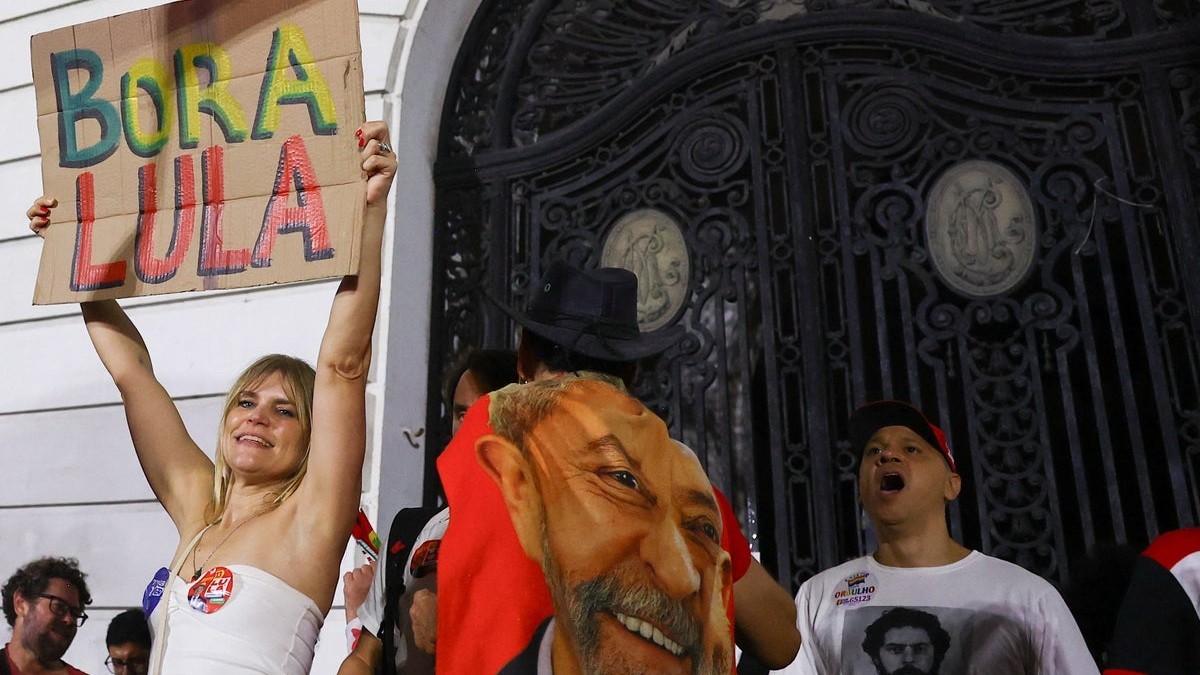
The regional split that decided the first round is the same one that has shaped Brazilian politics for years, and Sunday sharpened it. Lula held the Northeast by large margins, carrying Bahia, Pernambuco and Ceara. Flavio led across much of the South, the Southeast and the Center-West.
State samples from one aggregation put Flavio at 52 percent in Sao Paulo against Lula's 38, at 53 percent in Rio de Janeiro against 39, and at 48 percent in Minas Gerais against 43. Those three states alone account for a large share of the national electorate.
Among Brazilians voting abroad, the split ran in both directions. Lula led in China, Australia and New Zealand. Flavio led in the United Arab Emirates, the Philippines and Thailand. The overseas vote is small, but it echoed the domestic divide.
The Far Right's Other Victories
The presidential race was not the only contest that went the Liberal Party's way. The PL won the most seats in both chambers of Congress so far, according to results reported through the night. Courthouse News reported the party secured at least 18 Senate seats and won five governorships.
In Sao Paulo, Tarcisio de Freitas of Republicanos won the governorship with 62.65 percent against Fernando Haddad of the Workers' Party at 36.42 percent. The state's two Senate seats went to Guilherme Derrite of Progressistas at 30.59 percent and Andre do Prado of the PL at 29.28 percent, ahead of Simone Tebet at 19.23 and Marina Silva at 18.12.
Elsewhere, Renan Calheiros of the MDB, a former Senate president, finished third in Alagoas at 22.25 percent. In Rio de Janeiro, Benedita da Silva of the PT placed third for the Senate at 20.22 percent. In Parana, Gleisi Hoffmann of the PT finished fourth at 13.35 percent.
Two Visions, Three Weeks Apart
The runoff now sets two distinct governing projects against each other. Flavio Bolsonaro, 45, is a senator and the son of former president Jair Bolsonaro, who was barred from running and is serving a 27-year sentence over a coup attempt. Flavio has never held executive office. His platform draws on Argentina's Javier Milei for economic policy and El Salvador's Nayib Bukele for security. He promises a leaner government with fewer ministries and changes at the Supreme Federal Court. The Associated Press describes him as an ally of US President Donald Trump.
Lula, 80, is seeking a fourth non-consecutive term. He governed from 2003 to 2011 and has held the office again since 2023. He says he will centre the runoff campaign on education, research, technology and industrial policy.
The choice is not simply between two men. It is between a candidate promising to shrink the state and one promising to direct it toward industry and research, and voters will make it in three weeks.
The 33 Million Who Stayed Home
Turnout was 78.92 percent, with 125.1 million ballots cast out of 158.7 million registered voters, according to the electoral court at 10:16 p.m. Brasilia time. Abstention reached 21.08 percent, about 33.4 million people. Courthouse News put the figure at about 33.2 million, roughly 21 percent.
That is the highest first-round abstention since 1998. In 2022, abstention was 20.95 percent. Blank ballots accounted for 1.84 percent and null ballots 2.93 percent. Voting is compulsory in Brazil, but the rate edged up from 20.95 percent in 2022.
The geography of abstention matters for the runoff. The lowest rate was in Ceara, at 15.52 percent. The highest was in Mato Grosso do Sul, at 23.87 percent. Rio de Janeiro recorded 23.32 percent, Minas Gerais 22.81 percent and Sao Paulo 22.54 percent, all above the national rate. Those are the states with the most votes to gain.
Markets, Alliances and the Fight for Third-Place Votes
Reuters reported on 5 October that Brazilian markets were expected to jump on Monday after Flavio outperformed private polls. No index level was reported.
The bigger prize in the coming weeks is the pool of voters who backed the candidates now out of the race. Augusto Cury finished at 2.9 percent, Renan Santos at 2.24 percent and Ronaldo Caiado at 2.18 percent. Their votes, added to the 33 million who abstained, are the raw material of the second round.
None of the three has announced an endorsement, and none is expected to do so immediately. Both campaigns will spend the next three weeks courting them, along with the abstainers Lula explicitly asked to return to the polls.
What Is Still Unknown
Several things are not yet settled. There is no official turnout figure for the runoff and no polling for the second round, and no statement has come from Jair Bolsonaro.
There is no basis for describing the second round as decided in either direction. The first round produced a leader, not a winner.
What is known is narrower and more useful. Flavio Bolsonaro enters the runoff with a lead of less than two points and the momentum of a result that surprised the polling industry. Lula enters it with the incumbency, the Northeast and a call for abstainers to return.
What Comes Next on 25 October
The second round will be held on Sunday, 25 October, the last Sunday of the month, as Brazilian law provides. In the first round, polls closed at 5 p.m. local time and the electoral court began releasing official bulletins within hours.
The runoff will also decide governorships in six states plus the Federal District. Those races include Acre, where Mailza Assis faces Alan Rick; Amazonas, where Omar Aziz faces Maria do Carmo; and the Federal District, where Celina Leao faces Leandro Grass.
For context, the 1.87-point gap between first and second place was the smallest in a first-round presidential vote since direct elections resumed in 1989, according to Poder360. In 2022, Lula reached the runoff with a 5.23-point lead over Jair Bolsonaro and won it 50.90 percent to 49.10 percent, the closest final result in Brazil's history. Both campaigns begin the three-week sprint from here.
By Jessica Ali, Staff Writer
This article was produced with AI-assisted research and editorial support. Sources: Superior Electoral Court (TSE), Al Jazeera, CTC News, Globo, Rio Times, New York Times, Datafolha, Quaest, Poder360, Agencia Senado, Courthouse News, Reuters, Associated Press.
What's Your Reaction?
 Like
0
Like
0
 Dislike
0
Dislike
0
 Love
0
Love
0
 Funny
0
Funny
0
 Wow
0
Wow
0
 Sad
0
Sad
0
 Angry
0
Angry
0

Editor-in-Chief at Global1.News. Atlanta-based journalist who cuts through the BS and tells it like it is. Lead anchor, host, and the voice you hear when the spin stops and the truth starts.















Comments (0)