
Chinese state firms remitted P319 million to Sara Duterte-linked company — Hontiveros
During the impeachment trial on October 6, 2026, Senator Risa Hontiveros disclosed that Chinese state‑owned enterprises have funneled roughly three hundred and nineteen million pesos into Cale88 Foods Corp., a firm linked to Vice President Sara Duterte.
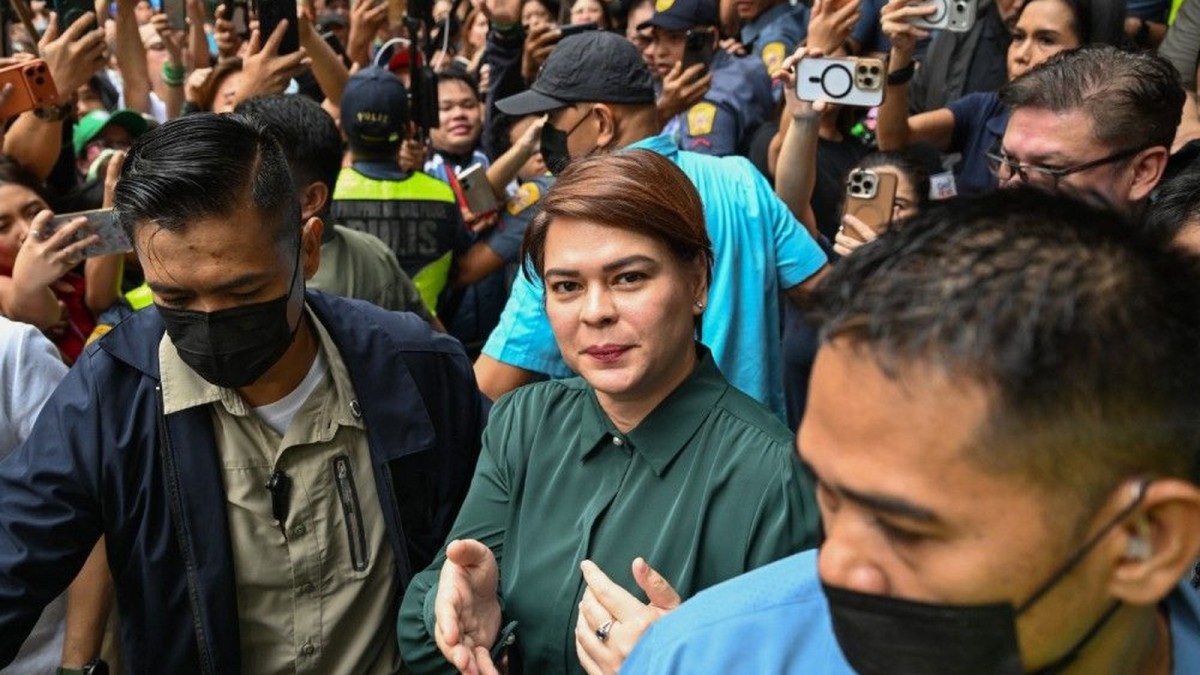
During the impeachment trial on October 6, 2026, Senator Risa Hontiveros disclosed that Chinese state‑owned enterprises have funneled roughly three hundred and nineteen million pesos into Cale88 Foods Corp., a firm linked to Vice President Sara Duterte. The revelation has sparked fresh concerns about foreign influence in Philippine business and politics, especially as the Anti‑Money Laundering Council (AMLC) previously flagged the transfers as “covered and suspicious” because they lacked a clear commercial basis. For ordinary Filipinos, the story is more than a headline; it touches the everyday reality of barangay markets, sari‑sari stores, and the livelihood of families that depend on transparent trade and honest governance.
How the money arrived: Chinese state firms and Cale88
According to Senator Hontiveros, two Chinese entities were identified as the sources of the P319 million that entered Cale88. The first, China National Township Enterprises, was once directly under China’s Ministry of Agriculture before becoming a large state‑owned agricultural enterprise overseen by the State‑owned Assets Supervision and Administration Commission of the State Council. Its public profile emphasizes a commitment to the Belt and Road Initiative and to furthering China’s foreign policy goals.
The second conduit was Beijing Jianweifang Food Co., which is owned by the Xinjiang Fruit Industry Group. The Xinjiang group acts as a Series A investor in Cale88 and has maintained a strategic cooperation agreement with the Beijing firm since 2019. Senator Hontiveros stressed that the Xinjiang Fruit Industry Group is “not an ordinary company” but a Chinese state‑owned enterprise that embeds a Chinese Communist Party (CCP) organization within its corporate governance structure, thereby advancing the interests of the CCP abroad.
AMLC’s role and the limits of its investigation
The Anti‑Money Laundering Council had already flagged the transfers as suspicious, citing a lack of legitimate underlying transactions. When pressed for details, AMLC Executive Director Ronel Buenaventura said the agency could only provide the summary and financial investigation reports that had been subpoenaed. He did not confirm whether a deeper probe into the Chinese firms’ geopolitical ties was underway, leaving a gap in accountability that many Filipinos find unsettling.
For the average citizen, the AMLC’s limited disclosure raises questions about the effectiveness of existing safeguards. The council’s mandate is to monitor suspicious financial flows, yet the opacity surrounding the source of these funds underscores the challenges of tracing money that moves through state‑linked entities with diplomatic cover.
Political connections: Sara Duterte, her husband, and Cale88
Cale88 Foods Corp. appeared in Vice President Sara Duterte’s 2022–2025 Statements of Assets, Liabilities and Net Worth, linking the company directly to the vice‑president’s financial disclosures. Further scrutiny of corporate records from the Securities and Exchange Commission revealed that Duterte’s husband, Manases Carpio, served as incorporator, director, and shareholder of Cale88 from 2021 to 2024. His stake reportedly peaked at 47.5 percent in 2024, though his name vanished from the shareholder list by 2025.
This timeline suggests a close familial involvement in the firm during the period when the Chinese funds were received. While the Senate hearing did not allege wrongdoing on the part of the vice‑president or her husband, the overlap of political influence, family business interests, and foreign money has ignited public debate about the need for stricter conflict‑of‑interest rules for public officials.
China’s foreign influence apparatus and the Belt and Road context
The entities identified by Senator Hontiveros are not merely commercial actors; they are components of Beijing’s broader foreign influence strategy. China National Township Enterprises explicitly cites its role in implementing the Belt and Road Initiative, a massive infrastructure and investment program that seeks to expand China’s economic reach across Asia and beyond. By channeling funds into a Philippine company linked to a senior government official, the enterprise potentially leverages economic ties to cultivate political goodwill.
Similarly, the Xinjiang Fruit Industry Group’s embedded CCP structure points to a deliberate effort to align corporate actions with party objectives. The presence of an institutional CCP organization within its governance suggests that decisions may be guided by political directives rather than purely commercial considerations, a factor that heightens concerns for Philippine sovereignty and the integrity of local markets.
Implications for local businesses and the Filipino consumer
For the barangay vendor or the owner of a sari‑sari store, the infusion of foreign state money into a domestic food company can have tangible effects. If Cale88 uses the capital to expand production, lower prices, or secure supply chains, consumers might benefit in the short term. However, the long‑term risk lies in the potential for market distortion if foreign state actors gain undue influence over pricing, distribution, or product standards.
Moreover, the episode underscores the vulnerability of Philippine businesses to covert foreign investment that may bypass ordinary regulatory scrutiny. Small enterprises lacking the resources to conduct thorough due diligence could inadvertently become conduits for foreign political agendas, compromising the principle of fair competition that underpins the local economy.
Government response and the road ahead
In the wake of the Senate revelation, the Chinese Embassy issued a statement on October 5 denying any ties between Beijing and a “Philippine political faction.” The denial, however, does little to assuage public concern, especially given the documented links between the Chinese firms and the CCP. Meanwhile, the Senate’s impeachment trial has placed the issue in the national spotlight, prompting calls for a more robust investigative framework.
Legislators and civil‑society groups are urging the Senate and the House of Representatives to consider amendments to the Anti‑Money Laundering Act that would require greater transparency for foreign state‑owned investors. There is also a push for the Commission on Elections to tighten disclosure requirements for candidates and their immediate families, ensuring that any foreign financial ties are fully declared before a public office is assumed.
What ordinary Filipinos can do
Amid the political drama, the story resonates most with everyday Filipinos who value transparency and accountability. Community groups can organize information sessions in barangays to explain how foreign money flows can affect local economies and democratic processes. NGOs focused on good governance can file citizen’s petitions urging the Ombudsman to investigate possible conflicts of interest involving public officials and their relatives.
At the same time, consumers can exercise informed choice by supporting locally owned brands that demonstrate clear, transparent ownership structures. By demanding accountability from both the government and the private sector, ordinary citizens can help ensure that foreign investments serve the public good rather than covert geopolitical agendas.
This article was produced with AI-assisted research and editorial support. Reporting is based on the source material cited below. Sources: Philstar.com; Global1.News (07 October 2026).
By Bella Reyes, Staff Writer
What's Your Reaction?
 Like
0
Like
0
 Dislike
0
Dislike
0
 Love
0
Love
0
 Funny
0
Funny
0
 Wow
0
Wow
0
 Sad
0
Sad
0
 Angry
0
Angry
0

Philippines/Southeast Asia Correspondent at Global1.News. Manila-based journalist covering Philippine politics, environment, maritime security, and social issues. Passionate about marine conservation and the communities protecting the Philippines' natural heritage.











Comments (0)