
Singapore Minister Highlights US‑China Tension and AI Risks at Milken Asia Summit
At the Milken Institute Asia Summit on 7 October 2026, Singapore’s Foreign Affairs Minister Vivian Balakrishnan addressed the intensifying rivalry between the United States and China, underscoring the delicate diplomatic balance required of smaller Asian states.
At the Milken Institute Asia Summit on 7 October 2026, Singapore’s Foreign Affairs Minister Vivian Balakrishnan addressed the intensifying rivalry between the United States and China, underscoring the delicate diplomatic balance required of smaller Asian states. In a dialogue that was recorded and posted by CNA, Balakrishnan also warned of the emerging threat posed by loss of control over autonomous artificial‑intelligence agents. His remarks, delivered to an audience of regional policymakers, business leaders and technology experts, carry significant implications for Japan, which is navigating its own strategic positioning between the two great powers while advancing a national AI strategy.
Balakrishnan’s Assessment of the US‑China Rivalry
Balakrishnan characterised the current US‑China relationship as a “growing rivalry” that is reshaping the strategic environment of the Asia‑Pacific. He emphasized that Singapore intends to “maintain trust with both powers and handle our relationships very, very carefully,” signalling a classic hedging approach that many smaller economies are adopting amid great‑power competition.
The minister’s remarks echo concerns expressed by Japan’s Ministry of Foreign Affairs, which has repeatedly highlighted the need for a stable Indo‑Pacific order. While the video does not detail specific policy measures, the emphasis on trust suggests that Singapore, like Japan, will likely pursue confidence‑building measures, such as transparent communication channels and participation in multilateral forums, to avoid being forced to choose sides.
For Japan, the message is a reminder that regional stability depends on the ability of middle powers to act as buffers. The Japanese government, through the Ministry of Economy, Trade and Industry (METI), has been promoting “strategic autonomy” in technology and supply chains, a policy that aligns with Balakrishnan’s call for careful relationship management.
Implications for ASEAN and Regional Cooperation
Balakrishnan’s reference to ASEAN, although brief, underscores the bloc’s role as a platform for collective diplomatic balancing. Singapore’s stance suggests that ASEAN will continue to serve as a venue where member states can articulate a common position that mitigates the pressure from the US‑China rivalry.
Japan’s long‑standing partnership with ASEAN, formalised through the Japan‑ASEAN Comprehensive Economic Partnership, positions it to support the bloc’s diplomatic efforts. The Japanese Ministry of Economy, Trade and Industry has been deepening economic ties with ASEAN, and the minister’s comments reinforce the strategic value of these linkages as a counterweight to great‑power friction.
In practice, Japan may seek to align its diplomatic outreach with Singapore’s approach by reinforcing joint statements on the rule of law, freedom of navigation and the peaceful resolution of disputes, thereby presenting a united front that encourages restraint from both Washington and Beijing.
AI Governance: The Threat of Losing Control
Balakrishnan shifted the discussion to a pressing technological concern: the loss of control over autonomous AI agents. He warned that “anyone who tells you I’ve got absolute control over my autonomous agent … obviously doesn’t know what he’s talking about,” highlighting the inherent unpredictability of advanced AI systems.
This caution resonates with Japan’s own AI governance agenda, which is being shaped by the Ministry of Economy, Trade and Industry and the Cabinet Office’s AI Strategy Council. Japan has been advocating for a risk‑based regulatory framework that balances innovation with safety, and Balakrishnan’s remarks reinforce the urgency of establishing robust oversight mechanisms.
The minister’s personal experience with building and interacting with AI agents adds credibility to his warning. It suggests that even policymakers who are intimately familiar with the technology recognise the limits of current control methods, a perspective that may influence Japan’s forthcoming revisions to its AI guidelines.
Strategic Implications for Japan’s Defence and Security Policies
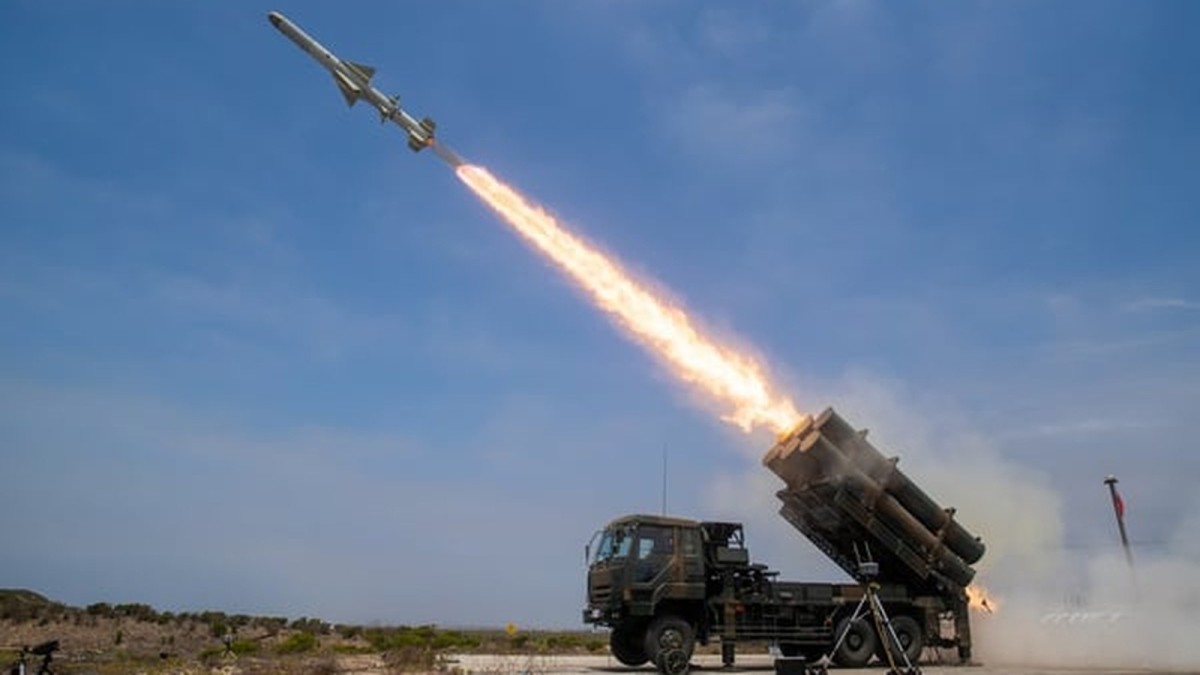
While the video does not directly address defence, the themes of US‑China rivalry and AI risk have clear security ramifications. Japan’s Ministry of Defense has been modernising its force structure, including the acquisition of autonomous systems. Balakrishnan’s caution about loss of control underscores the need for stringent command‑and‑control protocols.
In the context of the US‑Japan security alliance, Japan must ensure that any autonomous capabilities it develops remain interoperable with US systems while retaining independent oversight. The minister’s emphasis on “very, very carefully” handling relationships suggests that Japan will continue to calibrate its defence posture to avoid escalation, especially in contested maritime zones.
Moreover, the AI control issue may prompt Japan to collaborate more closely with regional partners, including Singapore, on standards for safe autonomous operation. Joint research initiatives, possibly coordinated through the Japan‑Singapore Economic Partnership, could become a conduit for sharing best practices and developing common safety benchmarks.
Economic Dimensions: Technology Collaboration and Supply Chains
Balakrishnan’s remarks were delivered at a summit that also serves as a marketplace for technology investment. The underlying message—that trust and careful management are essential—has implications for cross‑border tech collaborations involving Japan.
Japan’s semiconductor and robotics industries, overseen by METI, are heavily integrated into global supply chains that are increasingly caught in US‑China tensions. Singapore’s call for balanced relations may encourage Japanese firms to diversify partnerships, seeking both US and Chinese markets while also expanding ties with ASEAN economies.
In addition, the AI control concern may stimulate demand for Japanese expertise in safety‑critical AI development. Companies such as Fujitsu and NEC, which are active in AI governance research, could find new opportunities to provide verification tools and certification services to regional partners seeking to mitigate loss‑of‑control risks.
Future Outlook: Aligning Policy, Technology and Diplomacy
The Milken Institute Asia Summit highlighted two interlinked challenges for Japan: navigating a deepening US‑China rivalry and managing the risks associated with autonomous AI. Balakrishnan’s articulation of these issues reinforces the need for a coordinated policy response that integrates diplomatic, security and technological dimensions.
Japan is likely to continue its strategy of “strategic autonomy,” as articulated by METI and the Ministry of Foreign Affairs, by strengthening alliances with like‑minded regional actors such as Singapore. This may involve joint statements on AI safety, coordinated diplomatic outreach to both Washington and Beijing, and collaborative research projects that address the loss‑of‑control problem.
In the coming months, the Japanese government is expected to refine its AI regulatory framework, taking into account the practical insights shared by Balakrishnan. Simultaneously, Japan’s defence planners will need to ensure that autonomous systems are deployed under strict command structures, thereby reducing the risk of unintended escalation.
Overall, the minister’s remarks at the summit serve as a timely reminder that the twin pressures of great‑power rivalry and rapid AI advancement require a nuanced, multi‑layered response. For Japan, the challenge will be to translate these high‑level cautions into concrete policies that safeguard national interests while contributing to a stable, rules‑based order in the Asia‑Pacific.
By Kenji Tanaka, Staff Writer
This article was produced with AI-assisted research and editorial support. Reporting is based on the source material cited below. Sources: CNA video report (07 October 2026); CNA; Global1.News
What's Your Reaction?
 Like
0
Like
0
 Dislike
0
Dislike
0
 Love
0
Love
0
 Funny
0
Funny
0
 Wow
0
Wow
0
 Sad
0
Sad
0
 Angry
0
Angry
0
Japan Correspondent at Global1.News. Tokyo-based voice covering Japanese politics, technology, economy, and culture. Tracks the intersection of tradition and innovation in one of the world's most dynamic societies.












Comments (0)