
Marcos Admits Neglect of Family's P203B Estate Tax
In a recent ANC 24/7 report, President Ferdinand "Bongbong" Marcos Jr. admitted before foreign correspondents that he has been too preoccupied with running the country to personally attend to his family's unpaid estate taxes — a liability that has ballooned from P23 billion to a staggering P203 billion over nearly three decades.
In a recent ANC 24/7 report, President Ferdinand "Bongbong" Marcos Jr. admitted before foreign correspondents that he has been too preoccupied with running the country to personally attend to his family's unpaid estate taxes — a liability that has ballooned from P23 billion to a staggering P203 billion over nearly three decades. For millions of Filipino taxpayers who settle their obligations at the Bureau of Internal Revenue (BIR) every year, often at great personal sacrifice, the President's casual dismissal of a debt that could fund entire provinces raises uncomfortable questions about accountability at the highest level of government.
Marcos Says Too Busy with Presidency to Attend to Family's Unpaid Estate Taxes
Manila, Philippines — President Ferdinand "Bongbong" Marcos Jr. told members of the Foreign Correspondents Association of the Philippines (FOCAP) on Friday that the demands of his office have taken precedence over his duties as co-executor of his late father's estate, which includes settling a tax obligation that has grown to over P200 billion with penalties and interest.
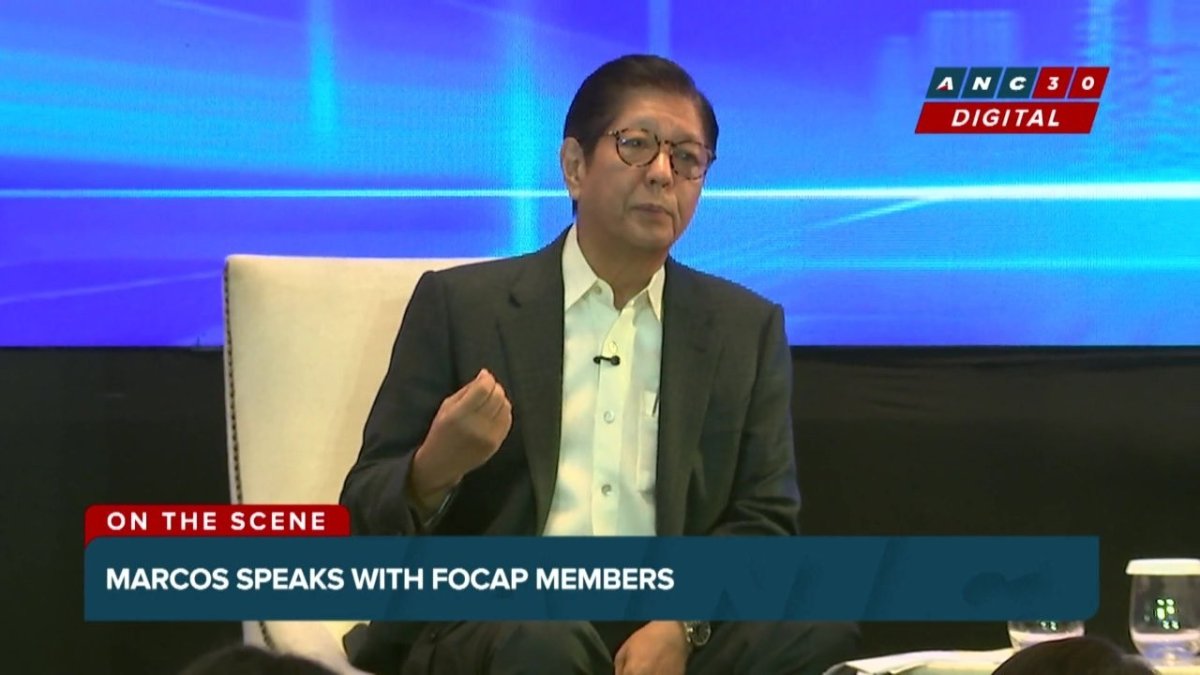
The FOCAP Luncheon Admission
Speaking at the FOCAP Presidential Luncheon held at the Diamond Hotel Manila along Roxas Boulevard in Malate, President Marcos Jr. fielded a question about the status of the estate tax settlement for the estate left by his late father, former President Ferdinand Marcos Sr. As co-executor alongside his mother, former First Lady Imelda Marcos, the President acknowledged that he has not been actively involved in the proceedings.
"The reason we won those civil cases is because they were proven to be not ill-gotten wealth... kaya nga kami nanalo dahil napatunayan namin na hindi ito ill-gotten wealth (we won precisely because we proved that this was not ill-gotten wealth)," Marcos said, defending the family's legal victories in asset forfeiture cases.
The President admitted he has "neglected" some of his responsibilities as co-executor because he has been "very busy with all the things a President is busy with." He framed his prioritization in stark terms: "The matters of state and governance are a thousand times more important than any family matter—in fact, 113 million times more important than any family matter."
Marcos said he has delegated the matter entirely to his family's lawyers and to his mother, Imelda Marcos, who serves as the other co-executor. "I hear about it in passing, but I don't really sit in on meetings, and I don't really concern myself with that so much. I believe that I have some very good legal advisors, and I leave it up to them. First of all, I'm not a lawyer, so that legal advice is not something that I fully understand," he told the assembled journalists.
Arelma Assets and the President's Knowledge Gap
When pressed about the Arelma assets — a portfolio subject to litigation between the Marcos family and the Philippine government — President Marcos Jr. made a striking admission. "I was going to thank you for all the information that you have provided us here today because I don't know these details," he said, responding to the journalist's specific questions about the assets.
He explained that even during the family's exile in the United States following the 1986 People Power Revolution, he remained detached from legal proceedings. "Even when we were in the States, in exile, I was not involved in any of these legal proceedings. Those cases again, I don't know what happened to them anymore, quite frankly," Marcos said. He agreed to provide his legal representatives' contact information to the journalist after the luncheon, directing further inquiries to his advisors.
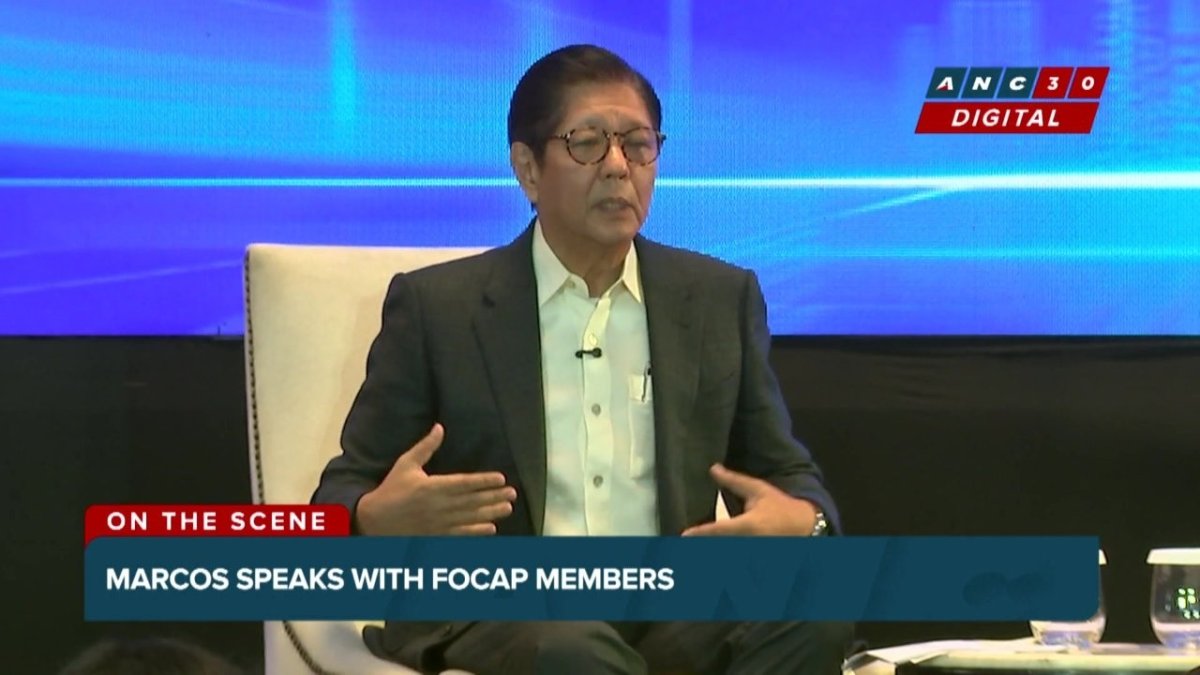
The Legal Labyrinth: From P23 Billion to P203 Billion
The estate tax issue has deep roots in Philippine legal history. In 1997, the Supreme Court ruled that the family of the late President Ferdinand Marcos Sr. owed P23.29 billion in estate tax. That decision became final and executory in 1999, yet the amount has never been paid. According to retired Supreme Court Justice Antonio Carpio, the liability has since ballooned to approximately P203 billion due to accumulated penalties and interest over more than two decades of non-payment.
The broader asset recovery effort has a complex legal trail. In 2003, the Supreme Court ordered the forfeiture of $658.18 million — approximately P40.46 billion — in Swiss deposits linked to the Marcos family. In 2012, the Court affirmed a Sandiganbayan ruling forfeiting the Arelma assets, valued at about $3.37 million (roughly P207.1 million) in 1983. These recoveries were pursued by the Presidential Commission on Good Government (PCGG), the agency created in the immediate aftermath of the 1986 People Power Revolution to recover assets allegedly accumulated under Ferdinand Marcos Sr.'s two-decade rule.
This year, the recovery effort has effectively wound down, closing a chapter that began within days of the 1986 ouster that sent the Marcos family into Hawaiian exile. For many Filipinos who lived through martial law and the dictatorship years, the winding down of the PCGG's work — combined with the President's admission of detachment from the estate tax matter — feels like an unfinished reckoning.
ATOM's Sharp Rebuke
The August Twenty-One Movement (ATOM), the civic organization associated with slain former Senator Benigno "Ninoy" Aquino Jr., immediately disputed President Marcos Jr.'s characterization of the family's legal victories. In a statement, ATOM called the President's claim "untrue and absolute fake news," declaring, "We will not just let this pass without disputing this new claim of his."
ATOM's statement was pointed and personal: "Getting to Malacañang does not entitle him to distort Philippine history." The group added, "A Marcos has lied again — why are we not surprised?" The organization, which traces its roots to the anti-martial law movement and commemorates the assassination of Ninoy Aquino every August 21, has long been a vocal critic of the Marcos family's historical revisionism and legal maneuvering.
What This Means for Ordinary Filipinos
For the average Filipino worker who diligently files income tax returns each year, or the small business owner in a sari-sari store in Quezon City who pays percentage taxes to the BIR, the President's admission carries symbolic weight. The P203 billion estate tax liability represents more than three times the annual budget of the Department of Health, or enough to build thousands of classrooms in public schools across the Visayas and Mindanao. It is a sum that could fund the government's feeding programs for malnourished children for years, or provide cash assistance to millions of senior citizens in the provinces.
The contrast is stark: while ordinary Filipinos face penalties and even criminal charges for failing to file taxes on time, the estate of a former president has gone nearly three decades without settling its obligation — and the current President, who is also a co-executor of that estate, says he has been too busy to attend to it. The statement that matters of state are "113 million times more important" than family matters, while rhetorically effective, does not address the legal obligation that remains unpaid.
There is also a governance dimension. The President's admission that he does not know the details of the Arelma assets case, and that he was not involved in legal proceedings even during the family's exile, raises questions about the depth of his engagement with issues that directly affect public trust in the rule of law. If the chief executive of the Republic cannot or will not attend to a court-ordered obligation involving his own family, critics ask, what message does that send to ordinary citizens about the importance of complying with legal and tax requirements?
The Estate Tax Issue and Historical Memory
The estate tax case is not merely a financial matter; it is intertwined with the Philippines' ongoing reckoning with the martial law era. The PCGG was established in 1986 with a mandate to recover the ill-gotten wealth of the Marcos family and their cronies. Over the decades, the commission recovered billions of pesos in assets, but the estate tax — a separate obligation owed to the state regardless of the source of the wealth — has remained unsettled.
President Marcos Jr.'s assertion that the family won civil cases because the assets were "proven to be not ill-gotten wealth" is a contested interpretation. The Supreme Court's forfeiture rulings on the Swiss deposits and the Arelma assets suggest otherwise, at least in those specific cases. The distinction matters because the estate tax obligation is not contingent on a finding of ill-gotten wealth; it is a tax owed on the transfer of the estate, period. The failure to pay it for 27 years, with interest compounding annually, has created a debt that now rivals the annual budgets of entire government departments.
What to Watch For
The President's promise to provide his legal representatives' contact information to the journalist who asked the question may or may not materialize. More significantly, the question of whether the estate tax will ever be paid remains open. With the PCGG's recovery efforts winding down this year, the pressure on the Marcos family to settle the estate tax may diminish further — unless civil society groups, opposition lawmakers, or the BIR itself take renewed action.
There is also the matter of public perception. The President's approval ratings have remained relatively stable, but issues of historical accountability and family wealth have a way of resurfacing at politically inconvenient moments. The ATOM statement, with its sharp language about lying and historical distortion, signals that the anti-Marcos movement retains its capacity to mobilize public sentiment, particularly around the anniversary of Ninoy Aquino's assassination on August 21.
For now, the estate tax question remains in legal limbo — a P203 billion shadow over a presidency that has promised economic transformation and good governance. The President may be too busy to attend to his family's obligations, but for the millions of Filipinos who pay their taxes, file their returns, and comply with the law, the matter is far from settled. The gap between the President's stated priorities and the legal obligations of his family's estate is a reminder that in the Philippines, some debts are not just financial — they are historical, moral, and political.
As the nation moves forward, the question is not whether President Marcos Jr. is too busy to attend to the estate tax. The question is whether the Republic itself is too busy to demand accountability from those who owe it — regardless of their surname or their position in Malacañang.
By Bella Reyes, Staff Writer
This article was produced with AI-assisted research and editorial support. Reporting is based on sources cited in the article.
What's Your Reaction?
 Like
0
Like
0
 Dislike
0
Dislike
0
 Love
0
Love
0
 Funny
0
Funny
0
 Wow
0
Wow
0
 Sad
0
Sad
0
 Angry
0
Angry
0

Philippines/Southeast Asia Correspondent at Global1.News. Manila-based journalist covering Philippine politics, environment, maritime security, and social issues. Passionate about marine conservation and the communities protecting the Philippines' natural heritage.














Comments (0)