
Red rainfall warning raised over Metro Manila as habagat floods streets, suspends classes
PAGASA raised the red rainfall warning over Metro Manila and Bataan on Monday as the southwest monsoon brought serious flooding, with chest-deep water in Quezon City barangays. Malacañang suspended classes and shifted government work arrangements in Metro Manila and 12 provinces.
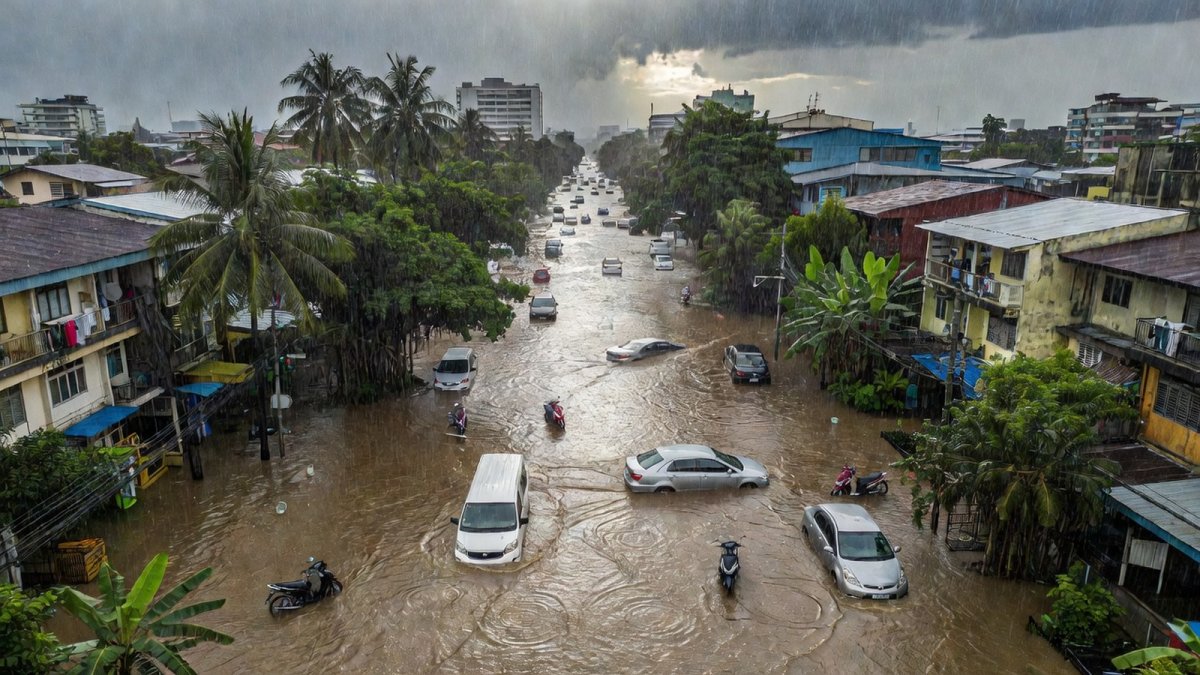
The southwest monsoon unleashed its fury on Metro Manila and 12 provinces Monday afternoon, forcing the state weather bureau to raise the highest rainfall alert and prompting Malacañang to suspend classes and adjust government work as floodwaters swallowed streets and communities.
Red Rainfall Warning Up Over Metro Manila, Bataan as Habagat Brings Serious Flooding
Manila, Philippines — The Philippine Atmospheric, Geophysical and Astronomical Services Administration (PAGASA) raised the red rainfall warning at 12:47 p.m. on Monday, August 17, over Metro Manila, signaling that serious flooding is expected in flood-prone areas. The alert came barely two hours after a yellow warning was in effect, as the enhanced southwest monsoon, or habagat, dumped relentless rain across the capital region.
Bataan was also placed under the red warning, along with parts of Zambales, Pampanga, Bulacan, Rizal, and Cavite. PAGASA advised residents and local disaster offices to monitor conditions closely and await the next rainfall warning bulletin scheduled for 2 p.m. The red warning is the highest in PAGASA's three-tier rainfall alert system, indicating that flooding is not just possible but imminent in low-lying communities.
What the Red Warning Means for Families on the Ground
For ordinary Filipinos, a red rainfall warning is not just a weather bulletin — it is a call to action. It means that floodwaters are expected to rise quickly, that jeepney routes may become impassable, and that families in flood-prone barangays must be ready to move their belongings, their sari-sari store goods, and their loved ones to higher ground. PAGASA's warning system is designed to give communities precious lead time, but in many urban poor areas, the reality is that evacuation is often a scramble against rising water.
The red warning over Metro Manila and Bataan, with orange and yellow warnings covering a wide swath of Luzon, reflects the intensity of the habagat, which PAGASA said is expected to persist over Luzon and parts of Visayas for the next five days. This means that even after the rain lets up, the threat of flooding and landslides remains, particularly in mountainous and low-lying areas.
Flooded Barangays in Quezon City: Chest-Deep Waters and Stranded Residents
By 1:30 p.m., the Metropolitan Manila Development Authority (MMDA) and local government units had already reported serious flooding in several Quezon City barangays. In Barangay Del Monte, the corner of W Riverside and Pat Senador was submerged in more than 60 inches of water — above head level. Barangay Masambong, particularly near Masambong Elementary School, also recorded above-head-level flooding, making roads impassable and forcing residents to wade through dangerous waters.
In Barangay Roxas, both Gumamela Street and Waling-Waling Street were chest-deep (45 inches). Barangay South Triangle, along 77 Sct. Tuazon, and Barangay Damayang Lagi, covering Blocks 1 to 6, also reported chest-deep flooding. Barangay Kalusugan along 19th Street Tulay was similarly submerged. In Barangay Damayan, Caragay Street and Dulo Interior West River Side were waist-deep (37 inches).
These are not just statistics — these are the streets where children walk to school, where vendors set up their stalls, and where families have built their lives. For residents in these barangays, Monday's flooding meant another day of hauling furniture to higher shelves, carrying children on shoulders, and hoping that the rain would stop before their homes took on more water.
Malacañang Suspends Classes, Adjusts Government Work in 12 Provinces
Recognizing the severity of the situation, Malacañang suspended face-to-face classes in all levels for public and private schools in Metro Manila and 12 provinces starting at 12 p.m. on Monday, August 17. The Palace order covered Zambales, Bataan, Bulacan, Pampanga, Tarlac, Nueva Ecija, Cavite, Batangas, Rizal, Laguna, Quezon, and Occidental Mindoro.
Government offices in Metro Manila and the same 12 provinces were also directed to shift to alternative work arrangements, allowing employees to work from home or report on a flexible schedule. This move was crucial for workers who would otherwise have to brave flooded streets and disrupted public transportation to reach their offices.
Several Metro Manila cities had already taken the initiative to suspend classes earlier in the day. Caloocan City suspended classes in all levels for both public and private schools, as did Las Piñas City, among others. These preemptive suspensions spared students and parents from the danger of commuting through rising floodwaters.
Why the Rain Is Falling: Habagat, LPAs, and the Five-Day Outlook
The rain drenching Luzon is the result of the southwest monsoon, which PAGASA said is expected to bring occasional rains over Ilocos Sur, La Union, Pangasinan, Zambales, and Bataan. Cloudy skies with scattered rains and thunderstorms are expected over Metro Manila, the Cordillera Administrative Region, Ilocos Norte, Batanes, Cagayan, Nueva Vizcaya, Nueva Ecija, Tarlac, Pampanga, Bulacan, Cavite, Laguna, Batangas, Rizal, and Occidental Mindoro.
Adding to the complexity of the weather situation, PAGASA is monitoring two Low Pressure Areas (LPAs) outside the Philippine Area of Responsibility. As of 2 p.m., LPA 08e was estimated at 2,395 kilometers east-northeast of Extreme Northern Luzon and was unlikely to develop into a tropical depression within the next 24 hours. LPA 08f, located 1,385 kilometers east of Central Luzon, had a medium chance of developing into a tropical depression within the same period.
PAGASA warned that moderate to at times heavy rain may trigger flash floods or landslides in affected areas. The agency also reported moderate to strong winds and moderate to rough coastal waters in the northern and western sections of Luzon, with waves reaching 1.5 meters to 2.8 meters. At the PAGASA Science Garden weather station in Diliman, Quezon City, the highest temperature on Sunday reached 30.5 degrees Celsius at 11 a.m., while the lowest was 27.3 degrees Celsius at 2 a.m. Sunrise in Metro Manila on Monday was at 5:42 a.m.
Mindanao, meanwhile, may experience partly cloudy to cloudy skies with isolated rain showers or thunderstorms due to localized thunderstorms, according to PAGASA.
How Families and Commuters Are Coping With the Floods
For many Metro Manila residents, Monday's flooding was a grim reminder of the August 9 red rainfall warning event, when the enhanced southwest monsoon brought widespread flooding, blocked roads, and disrupted travel across the capital. Recent storms Luis and Maymay, combined with the monsoon, have already affected millions across the country earlier this month, stretching the resources of local governments and disaster response agencies.
Commuters faced another difficult day as flash floods hit some roads and made driving difficult for motorists. The earlier yellow warning, in effect until 12:45 p.m., had already signaled trouble, and the upgrade to red at 12:47 p.m. confirmed the worst fears of those stuck in traffic or waiting for jeepneys that could not pass through submerged streets.
In flooded barangays, the spirit of bayanihan was on full display. Neighbors helped neighbors move belongings to higher ground, while others carried children and guided elderly family members to safety. Sari-sari store owners scrambled to protect their goods, knowing that a day of flooding could mean a significant loss of income for their families.
What Residents Should Do Next: Stay Vigilant, Follow LGU Advisories
PAGASA has advised residents and local disaster offices to monitor conditions and await the next rainfall warning scheduled at 2 p.m. For families in flood-prone areas, the agency's guidance is clear: stay alert, prepare emergency kits, and be ready to evacuate if local authorities issue the order.
Local government units, barangay captains, and disaster risk reduction and management offices are on the ground, monitoring water levels and coordinating evacuation efforts. Residents are urged to cooperate with these authorities and to avoid crossing flooded streets or rivers, as even shallow-looking water can hide dangerous currents, open manholes, or debris.
For those in areas under orange and yellow warnings, the threat of flooding remains. PAGASA's orange warning indicates that flooding is threatening, while a yellow warning means possible flooding in low-lying and flood-prone areas. Residents in these zones should not let their guard down, as conditions can change rapidly.
As the habagat continues to drench Luzon, the next five days will be critical. Families should stay informed through official channels, check on elderly neighbors and relatives, and ensure that children are safe and accounted for. The rain may be relentless, but with vigilance and community cooperation, Filipinos have always found ways to weather the storm together.
This article was produced with AI-assisted research and editorial support. Sources: PhilStar, Rappler, GMA News, Manila Bulletin, Inquirer.
By Bella Reyes, Staff Writer
What's Your Reaction?
 Like
0
Like
0
 Dislike
0
Dislike
0
 Love
0
Love
0
 Funny
0
Funny
0
 Wow
0
Wow
0
 Sad
0
Sad
0
 Angry
0
Angry
0

Philippines/Southeast Asia Correspondent at Global1.News. Manila-based journalist covering Philippine politics, environment, maritime security, and social issues. Passionate about marine conservation and the communities protecting the Philippines' natural heritage.














Comments (0)