
Korea's Obesity Drug Craze Fuels 3.5-Fold Surge in Illegal Imports
SEOUL — The Korea Customs Service (KCS) has detected a dramatic surge in the illegal importation of blockbuster obesity medications, recording 4,155 instances of unauthorized shipments of Mounjaro, Wegovy, and similar drugs between January and June 2026. This figure represents a nearly 3.5-fold increase over the 1,189 cases documented for the entirety of 2025, signaling a profound shift in how South Korean consumers are accessing these treatments outside the regulated healthcare system.
SEOUL — The Korea Customs Service (KCS) has detected a dramatic surge in the illegal importation of blockbuster obesity medications, recording 4,155 instances of unauthorized shipments of Mounjaro, Wegovy, and similar drugs between January and June 2026. This figure represents a nearly 3.5-fold increase over the 1,189 cases documented for the entirety of 2025, signaling a profound shift in how South Korean consumers are accessing these treatments outside the regulated healthcare system.
Korea's Obesity Drug Craze Fuels 3.5-Fold Surge in Illegal Imports
Seoul, South Korea – August 25, 2026 — The data, which underscores a growing regulatory and public health challenge, reveals a trajectory that has moved from isolated incidents to a systemic phenomenon. In 2024, customs authorities identified a mere 4 cases of illegal importation. That number escalated to 1,189 in 2025, before exploding to more than 4,000 in just the first six months of 2026. This exponential growth highlights the intense domestic demand for GLP-1 receptor agonists, which have become cultural touchstones for weight management in South Korea.

The Scale of the Enforcement Gap
The contrast between legal and illegal channels is stark. Over the same cumulative period, only 596 cases were formally cleared through customs via licensed import companies—14 in 2024, 191 in 2025, and 391 in the first half of 2026. This disparity suggests that the informal market now dwarfs the legitimate import pipeline, raising questions about the effectiveness of current enforcement mechanisms and the accessibility of approved treatment pathways.
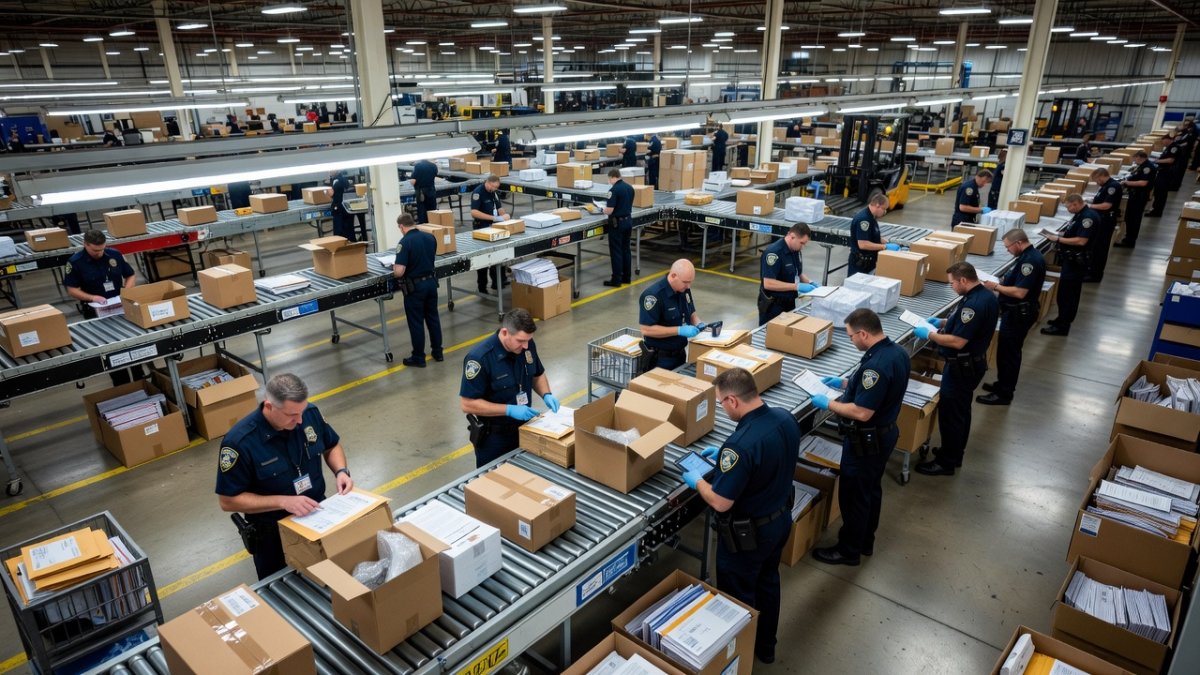
International mail has emerged as the dominant conduit for these illicit transactions, accounting for a staggering 84.8 percent of all illegal cases in the first half of 2026. The volume of mail-based seizures has grown from a negligible 2 cases in 2024 to 1,046 in 2025, and a further 3,489 in the first half of 2026 alone. Concurrently, imports through travelers' personal belongings have also risen sharply, from a single case in 2024 to 134 in 2025 and 656 in H1 2026, indicating that individual travelers are increasingly acting as couriers for these medications.
Price Disparity and the Driver of Illicit Trade
The primary catalyst for this surge is economic. A one-month supply of these injectable obesity treatments can be purchased through overseas websites for approximately 150,000 won ($109). This price point is less than half the cost of obtaining the same supply through a legitimate prescription at a domestic clinic, where consultation fees and the full retail price of the medication apply. This significant cost differential creates a powerful incentive for consumers to bypass the regulated healthcare system, despite the associated legal and health risks.
This price sensitivity is particularly acute among younger demographics, who are driving the demand. According to drug utilization review data submitted by the Health Insurance Review and Assessment Service (HIRA) to Rep. Han Zee-a of the People Power Party in July 2026, Mounjaro was prescribed more than 1.5 million times between its domestic launch in August 2025 and May 2026. The age distribution of these prescriptions is telling: individuals in their 30s accounted for the largest share at 36 percent, followed by those in their 40s at 27.1 percent, those in their 20s at 16.9 percent, and those in their 50s at 14.6 percent.
Teenage Prescriptions and the "Hyper-Fixation" on Weight
Perhaps the most concerning trend is the rise in prescriptions for teenagers. Monthly prescriptions for this age group stood at just 82 at the time of Mounjaro's launch. This number surpassed 1,000 in December 2025 and continued its upward trajectory, rising from 1,739 in January 2026 to 2,594 in May 2026. This data point has fueled public discourse, with outlets like KOREA NOW reporting on the "hyper-fixation on weight loss in S. Korea" and the corresponding abuse and illicit imports of these drugs.
The regulatory framework is clear, yet the enforcement challenge is immense. Under KCS notices, general medications can be brought into the country for personal use in limited quantities, up to six bottles or a three-month supply. However, Mounjaro and Wegovy occupy a different legal category. They are designated as "harmful drugs" by the Ministry of Food and Drug Safety (MFDS) and cannot be brought into the country without a letter certifying an exemption from import requirements. This designation places them in a stricter control regime than standard pharmaceuticals, yet the volume of seizures indicates that this classification is not acting as a sufficient deterrent.
Regulatory Response and Industry Dynamics
The MFDS has signaled its intent to tighten controls further. On June 5, 2026, the ministry announced a proposed regulatory change to classify medicines containing liraglutide, semaglutide, and tirzepatide—the active ingredients in these weight-loss drugs—as substances requiring heightened controls. This move is a direct response to concerns over misuse for weight loss outside approved treatment purposes. Subsequent MFDS guidance issued in July 2026 reiterated that these medicines are prescription drugs intended for adults meeting specified obesity or overweight criteria and should be used under medical supervision and according to approved indications.
The commercial stakes are considerable. IQVIA data released in June 2026 showed that Mounjaro generated 323.2 billion won ($234 million) in South Korean sales during Q1 2026, making it the country's leading obesity treatment by sales. Wegovy, manufactured by Novo Nordisk, generated 104 billion won in Q1 2026 sales. These figures illustrate the immense market value of these therapies, which have become a major revenue stream for pharmaceutical companies operating in Korea. Wegovy launched in Korea in 2024, with Mounjaro following in 2025, and both have rapidly become household names.
Enforcement, Public Health, and the Path Forward
A customs official underscored the seriousness of the situation, stating: "Unauthorised imports of Wegovy and Mounjaro are a serious violation of the Customs Act and are subject to punishment." This statement reflects the official position, but the sheer volume of cases suggests that enforcement alone may be insufficient to curb the demand. The KCS is likely to face resource constraints in inspecting the vast volume of international mail, and the low weight and small size of these injectable pens make them relatively easy to conceal.
From a public health perspective, the surge in illegal imports presents multiple risks. Consumers purchasing these drugs online have no guarantee of product authenticity, proper cold-chain handling, or correct dosing. The drugs are biologics that require refrigeration, and improper storage during transit could render them ineffective or potentially harmful. Furthermore, the lack of medical supervision means that individuals may use these potent medications without screening for contraindications, such as a personal or family history of medullary thyroid carcinoma or pancreatitis.
The Korean context is critical here. South Korea has a highly competitive and appearance-conscious society, where weight and body image are significant social pressures. The rapid adoption of these drugs, particularly among younger age groups, reflects a broader societal trend toward medicalized solutions for weight management. The HIRA data showing high prescription rates among those in their 20s and 30s, coupled with the rise in teenage prescriptions, suggests that these drugs are being used not just for clinical obesity but also for aesthetic purposes, a pattern that regulators are struggling to address.
The proposed MFDS reclassification is a step toward stricter control, but it will likely face pushback from patients and physicians who argue that these drugs are safe and effective when used appropriately. The challenge for Korean policymakers is to balance the legitimate medical needs of patients with obesity against the risks of widespread misuse. This will require a multi-pronged approach that includes public education on the risks of unregulated imports, enhanced customs screening technologies, and potentially a review of domestic pricing to reduce the incentive for cross-border purchasing.
As the second half of 2026 unfolds, the KCS and MFDS will be under pressure to demonstrate that their enforcement and regulatory measures can keep pace with the demand. The data from the first half of the year paints a picture of a market that is expanding rapidly, driven by price, social pressure, and the ease of online purchasing. Whether the regulatory framework can adapt quickly enough to protect public health while ensuring access to legitimate treatments remains an open and pressing question for South Korea's healthcare system.
By Prof. David Park, Staff Writer
This article was produced with AI-assisted research and editorial support. Reporting is based on sources cited in the article.
What's Your Reaction?
 Like
0
Like
0
 Dislike
0
Dislike
0
 Love
0
Love
0
 Funny
0
Funny
0
 Wow
0
Wow
0
 Sad
0
Sad
0
 Angry
0
Angry
0

East Asia/Technology Correspondent at Global1.News. Seoul-based voice covering Korean politics, technology, business, and culture. Analyzes how technology and geopolitics intersect across East Asia.















Comments (0)