
Portugal prosecutors probe legality of US use of Lajes base in Iran war
Portuguese prosecutors have opened a formal investigation into the legality of the Portuguese government’s decision to permit United States aircraft to use the Lajes Air Base in the Azores during the ongoing Iran conflict.
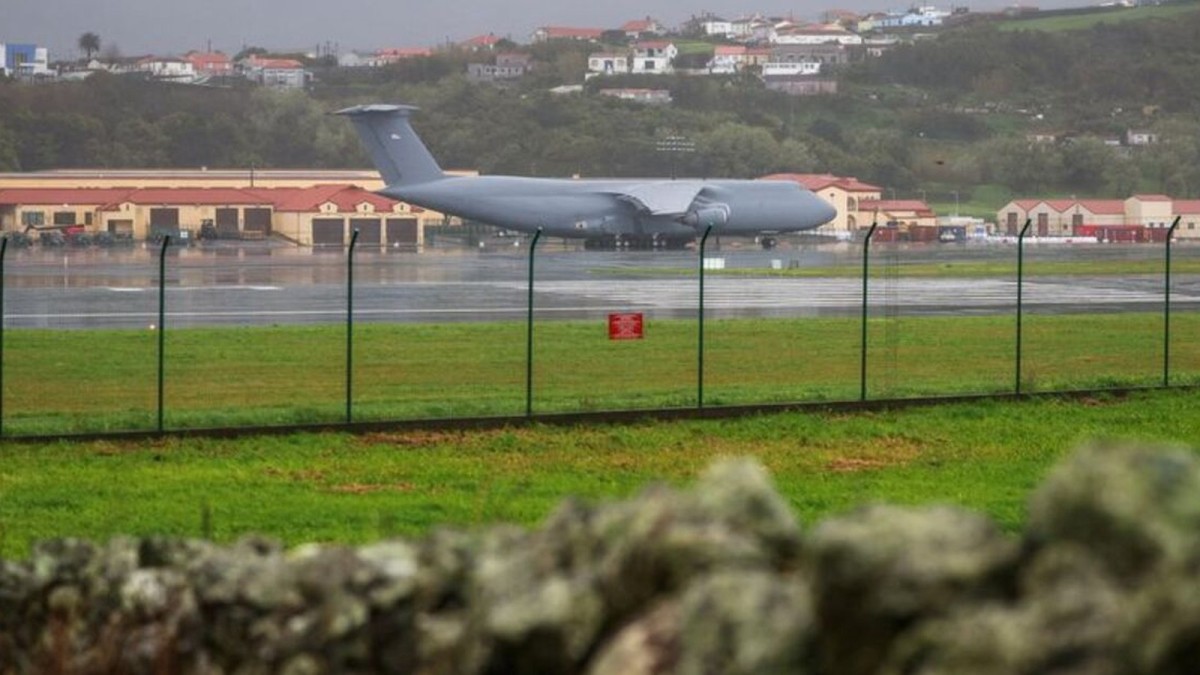
Portuguese prosecutors have opened a formal investigation into the legality of the Portuguese government’s decision to permit United States aircraft to use the Lajes Air Base in the Azores during the ongoing Iran conflict. The probe follows a complaint lodged by members of the Left Bloc, a left‑wing opposition party, and raises questions about Lisbon’s role in a war that, while geographically distant, reverberates across Europe, the Middle East and the broader Atlantic alliance that underpins Israel’s security and technology partnerships.
Legal framework and the trigger of the investigation
The Lajes Air Base operates under a bilateral defence treaty dating back to 1951, which grants the United States the right to use the facility without prior Portuguese authorisation during peacetime. However, the agreement also stipulates that once hostilities commence, Portugal must give explicit approval for any US operations launched from the base. This clause became the focal point of the current controversy.
According to the Prosecutor General’s Office, the investigation was opened “following a complaint filed by members of the Left Bloc party.” The statement did not disclose further details, but it underscores the legal principle that Portuguese prosecutors must act when “there are sufficient grounds to do so,” a standard that differs from jurisdictions where prosecutors enjoy broader discretionary powers to dismiss cases outright.
Political fallout within Portugal
The decision to authorize several US transit flights through Lajes has sparked a sharp political debate. While the centre‑right government defended the move as compliant with international law, left‑wing opposition parties, led by the Left Bloc, have condemned it as a “gross violation of international law.” Their criticism mirrors broader European concerns about the legal and moral implications of supporting US military actions in the Middle East, especially as the conflict with Iran escalates.
Foreign Minister Paulo Rangel has publicly asserted that Portugal was not a party to the conflict and that the use of the base was limited to “defensive, necessary and proportionate” operations targeting military objectives. This diplomatic framing aims to reassure both domestic audiences and international partners that Portugal’s involvement remains strictly procedural and limited in scope.
Strategic significance of Lajes for the United States and NATO
Lajes Air Base, situated in the Atlantic Azores archipelago, serves as a critical transit hub for US forces. It hosts the 65th Air Base Wing of the US Air Force, providing logistical support for operations across Europe, the Middle East and Africa. The base’s location enables rapid refuelling and maintenance for aircraft transiting between the United States and theatres of operation, reinforcing the strategic depth of the NATO alliance.
For Israel, the continued viability of such trans‑Atlantic hubs is essential. Israeli defense and technology firms rely on the US‑led logistical network for the export of military hardware, joint training exercises, and the rapid deployment of intelligence assets. Any disruption to Lajes could reverberate through Israel’s own security supply chains, highlighting why Israeli observers watch Portuguese legal debates with keen interest.
Implications for Israel‑US defence cooperation
The investigation arrives at a moment when Israel’s defence industry is deeply intertwined with US procurement programs. Companies such as Israel Aerospace Industries (IAI) and Elbit Systems regularly coordinate with US counterparts for the integration of Israeli technology into American platforms that may transit through Lajes. While the source material does not mention Israel directly, the broader context of US‑European logistics underscores the indirect stakes for Israeli firms that depend on seamless trans‑Atlantic movement of equipment.
Moreover, Israel’s own strategic air bases, like those in the Negev desert, benefit from the same treaty‑based framework that allows allied forces to operate across borders under mutually recognised legal regimes. The Portuguese case therefore serves as a reminder of how treaty nuances can become flashpoints when geopolitical tensions flare, potentially prompting Israeli officials to reassess the robustness of similar agreements worldwide.
International law and the definition of “hostilities”
The crux of the Left Bloc’s complaint rests on whether the Iran conflict qualifies as “hostilities” that trigger the treaty’s approval clause. International law traditionally defines hostilities as the use of armed force between states or non‑state actors, a definition that many legal scholars argue applies to the current Iran situation, given the exchange of missile strikes and aerial operations.
Portugal’s foreign ministry argues that the US obtained “assurances” that any operation conducted from Lajes would be defensive, necessary and proportionate, and limited to military targets. This language mirrors the legal standards often invoked in NATO’s own rules of engagement, suggesting that Lisbon is positioning its decision within an established framework of lawful use of force. Nonetheless, the prosecutors’ mandate to examine the legality of the authorisation indicates that the matter is not settled and may set a precedent for how European allies interpret treaty obligations during future conflicts.
Regional dynamics and the broader Middle East context
The Iran conflict has reshaped regional calculations across the Middle East, prompting heightened alertness among Israel’s security establishment. Israeli officials have repeatedly warned that any escalation could spill over into neighboring theatres, affecting the security environment in the Eastern Mediterranean and the Red Sea. While Portugal’s legal debate is geographically distant, the underlying issue—how allies support US operations against Iran—directly influences Israel’s strategic assessments.
Israel’s Ministry of Economy and the Israel Innovation Authority have recently accelerated projects aimed at enhancing resilience in supply chains for critical technologies, including satellite communications and cyber‑defence tools. The scrutiny of Lajes underscores the importance of diversified logistical pathways, a factor that Israeli policymakers are likely to factor into future planning for both civilian and defence sectors.
Potential outcomes and next steps
The investigation’s findings could lead to several possible outcomes. If prosecutors determine that the Portuguese government breached the treaty’s approval requirement, Lisbon may face diplomatic pressure to halt further US transits through Lajes until a new legal framework is negotiated. Conversely, a ruling that the authorisation was lawful could reinforce the existing arrangement and signal to other NATO members that similar approvals are permissible under current treaty language.
Regardless of the legal verdict, the episode highlights the delicate balance that small European states must strike between honoring long‑standing defence agreements and responding to domestic political pressures. For Israel, the case serves as a reminder that the stability of the trans‑Atlantic logistics chain—critical for both commercial innovation and security cooperation—depends on the continued alignment of legal interpretations among allied nations.
This article was produced with AI-assisted research and editorial support. Reporting is based on the source material cited below. Sources: Al-Monitor; al-monitor.com; Global1.News (04 October 2026).
By Hannah Berg, Staff Writer
What's Your Reaction?
 Like
0
Like
0
 Dislike
0
Dislike
0
 Love
0
Love
0
 Funny
0
Funny
0
 Wow
0
Wow
0
 Sad
0
Sad
0
 Angry
0
Angry
0

Israel Correspondent at Global1.News. Based in Tel Aviv, covering Israeli politics, security, technology, and society. Provides balanced, deeply-sourced reporting on one of the most closely-watched regions in the world.














Comments (0)