
Central Asia’s Diplomatic Balancing Act on Display from Bishkek to New York
Central Asia’s diplomatic choreography was on full display during the recent United Nations General Assembly (UNGA) and the Shanghai Cooperation Organization (SCO) summit.
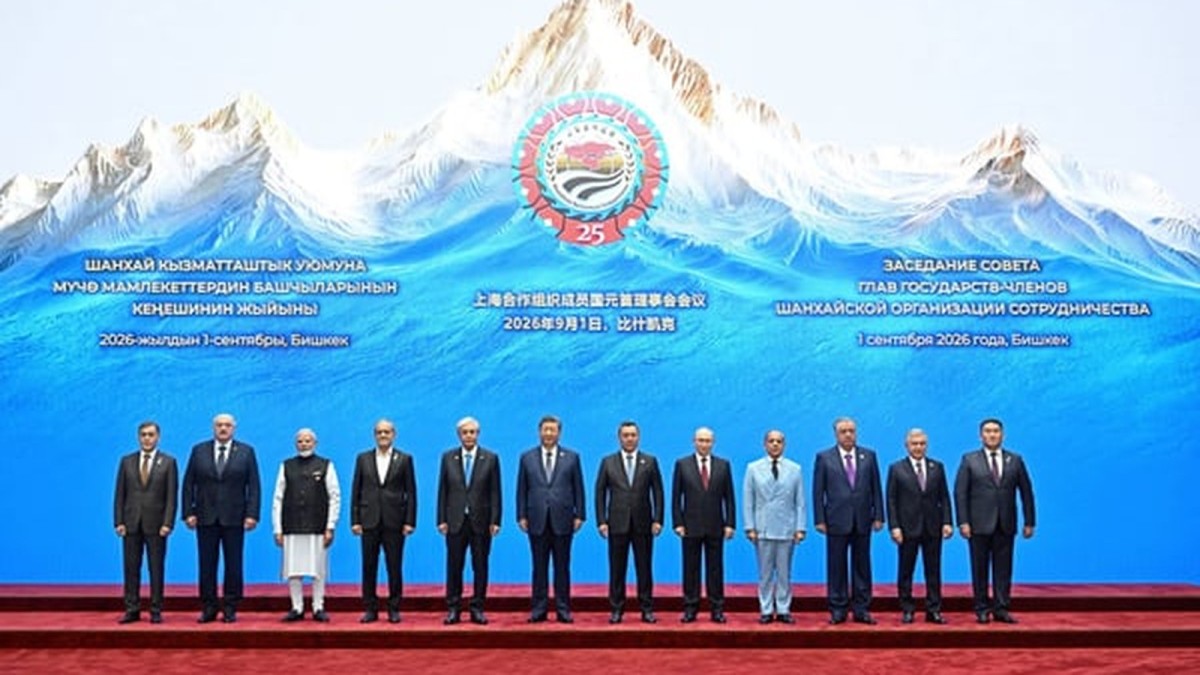
Central Asia’s diplomatic choreography was on full display during the recent United Nations General Assembly (UNGA) and the Shanghai Cooperation Organization (SCO) summit. The five states of the region—Kazakhstan, Kyrgyzstan, Tajikistan, Turkmenistan and Uzbekistan—are navigating a complex multivector strategy that requires them to echo Beijing and Moscow in multilateral forums, strike concrete deals with Washington, and maintain a neutral stance at the UN. This balancing act reflects the broader shift toward a multipolar world order, where the Central Asian capitals must constantly calibrate their rhetoric and actions to avoid alienating any of the three major powers.
From Bishkek to New York: The diplomatic itinerary
The SCO’s 25th‑anniversary summit in Bishkek on August 31 and September 1 brought together the presidents of four Central Asian states—Kazakhstan, Kyrgyzstan, Tajikistan and Uzbekistan—alongside Chinese President Xi Jinping, Russian President Vladimir Putin and India’s Narendra Modi. The summit’s Bishkek Declaration, which condemned military strikes on Iran and denounced “unilateral coercive measures,” signalled a clear alignment with Beijing and Moscow on geopolitical grievances.
Three weeks later, only Kyrgyzstan’s President Sadyr Japarov travelled to New York for the UNGA, making a brief stop in Utah on the way. The other four heads of state remained in their capitals, underscoring the divergent diplomatic tracks: a high‑profile presence in the SCO, a limited but strategic representation at the UN, and a separate, business‑focused outreach to Washington.
Rhetorical alignment in regional groupings
In the SCO, the Central Asian leaders echoed the positions of China and Russia, reinforcing a shared narrative that rejects Western “bloc‑based and confrontational” approaches. The Bishkek Declaration’s language mirrored Beijing’s and Moscow’s grievances, particularly regarding sanctions and Western pressure on Iran. This rhetorical alignment is reinforced by the fact that Turkmenistan, while formally neutral, participates as a guest, indicating the region’s collective inclination toward the SCO as a platform for coordinated messaging.
Beyond the SCO, the UNGA podium was used sparingly. President Japarov’s speech carried the SCO’s complaint about Western sanctions but also included a thank‑you to former President Donald Trump for cutting U.S. funding to foreign NGOs. This careful wording illustrates the region’s attempt to avoid overtly antagonising any major power while still signaling solidarity with its traditional partners.
Material cooperation with Washington
Despite the rhetorical tilt toward Beijing and Moscow, Central Asian states continue to pursue material cooperation with the United States. Kazakhstan’s support for Security Council Resolution 2803—a November 2025 measure endorsing Trump’s Gaza peace plan and his Board of Peace—demonstrates a willingness to side with Washington on specific issues, even as Russia and China abstained. Kazakhstan’s president, Kassym‑Jomart Tokayev, also sits on the Board of Peace, linking the country directly to U.S.‑led peace initiatives.
In mid‑October, U.S. Secretary of State Marco Rubio will lead a delegation of more than 100 American companies to Samarkand for a C5+1 ministerial meeting, marking his first trip to the region. This high‑level commercial outreach underscores Washington’s interest in securing critical mineral supplies, while offering Central Asian capitals a lucrative avenue for economic partnership that complements their diplomatic balancing.
China’s economic leverage and technology partnership
China remains the region’s largest trading partner, with China‑Central Asia goods trade reaching a record $106 billion last year. During the Bishkek summit, President Xi pledged an SCO centre for artificial‑intelligence cooperation and announced 100 joint technology projects over three years. All four SCO‑member Central Asian states also reaffirmed support for the Belt and Road Initiative, signalling continued economic alignment with Beijing.
The scale of Chinese trade and technology investment provides Central Asian governments with a powerful bargaining chip. By juxtaposing Chinese offers with U.S. commercial overtures, the capitals can extract favourable terms from both sides, reinforcing their multivector strategy without committing exclusively to either power.
United Nations ambitions and emerging influence
Central Asian states are also seeking to raise their profile within the UN system. Kyrgyzstan secured a seat on the Security Council in January, having been elected with 142 votes in June. Tajikistan announced its first‑ever bid for a Security Council seat for the 2028‑2029 term, while Uzbekistan declared its candidacy for the 2035‑2036 cycle and will chair the Non‑Aligned Movement next year. Turkmenistan is set to chair the group of landlocked developing countries.
These diplomatic moves reflect a broader ambition to translate great‑power competition over mineral wealth into greater leverage within multilateral institutions. By occupying key UN positions, the Central Asian states can shape agendas, attract development assistance, and project a more independent foreign‑policy identity.
Balancing rhetoric, deals and neutrality
Uzbekistan’s UNGA address, delivered by President Shavkat Mirziyoyev’s daughter Saida Mirziyoyeva, encapsulated the region’s balancing act. When asked which side the country would choose, she responded with “human dignity” rather than aligning with any bloc, echoing the Bishkek Declaration’s rejection of confrontational approaches. This diplomatic phrasing underscores a strategic ambiguity that allows Uzbekistan—and the region as a whole—to maintain flexibility amid intensifying great‑power rivalry.
The multivector approach is not static. While rhetoric in the SCO aligns with Beijing and Moscow, material cooperation with Washington proceeds through bilateral deals, and UN participation remains deliberately non‑committal. This tri‑layered strategy enables Central Asian capitals to extract economic benefits, preserve security ties, and avoid being forced into a binary geopolitical choice.
Future prospects and challenges
As the United States and China race to secure critical minerals, Central Asia’s leverage will likely increase, but so will the pressure to pick sides. The region’s ability to sustain its current balancing act will depend on several factors: the durability of the SCO as a platform for coordinated messaging, the depth of U.S. commercial engagement beyond one‑off delegations, and the capacity of Central Asian governments to manage domestic expectations while navigating external demands.
In the coming years, the question will shift from “how can we balance?” to “how long can we sustain this balance without compromising core national interests?” The answers will shape not only Central Asia’s foreign‑policy trajectory but also the broader architecture of a multipolar world where smaller states seek to maximise agency amid great‑power competition.
This article was produced with AI-assisted research and editorial support. Reporting is based on the source material cited below. Sources: The Diplomat; thediplomat.com; Global1.News (04 October 2026).
By Kenji Tanaka, Staff Writer
What's Your Reaction?
 Like
0
Like
0
 Dislike
0
Dislike
0
 Love
0
Love
0
 Funny
0
Funny
0
 Wow
0
Wow
0
 Sad
0
Sad
0
 Angry
0
Angry
0

Japan Correspondent at Global1.News. Tokyo-based voice covering Japanese politics, technology, economy, and culture. Tracks the intersection of tradition and innovation in one of the world's most dynamic societies.










Comments (0)