
Yemen's Government Announces Campaign to Retake All Houthi-Held Territory
Yemen's internationally recognised government announced on Sunday that it has begun military operations to retake all remaining Houthi-held territory, hours after Houthi fighters cut the main road linking the besieged city of Taiz to Aden.
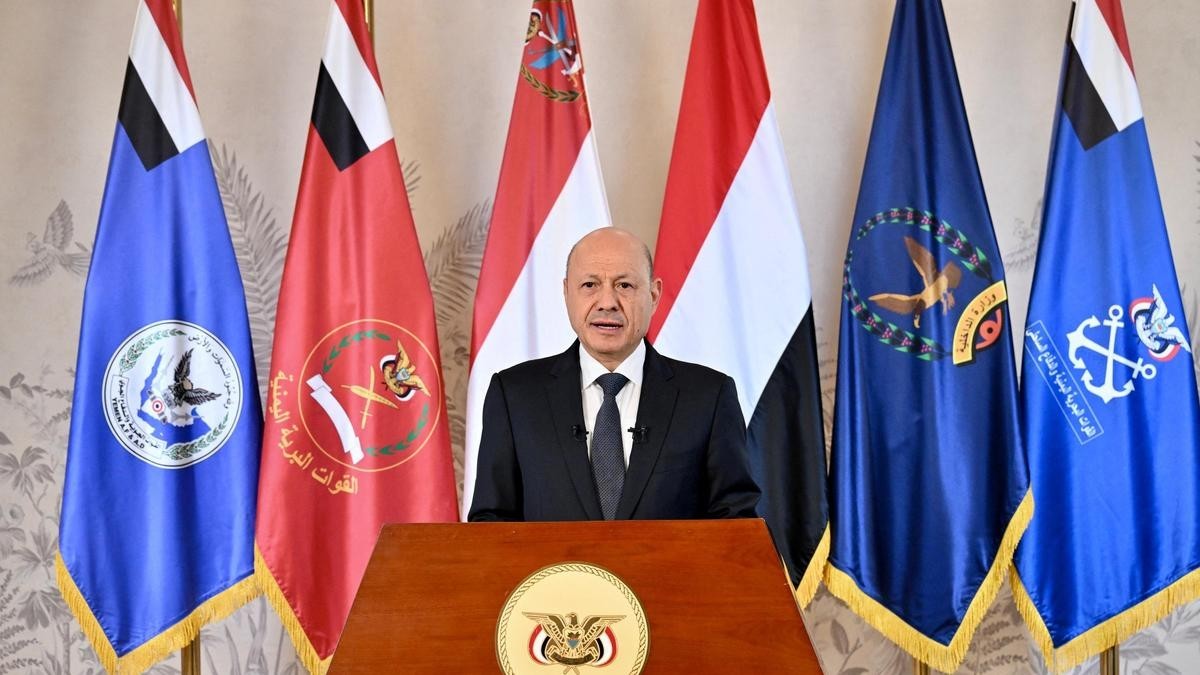
Yemen's internationally recognised government announced on Sunday the start of military operations to retake all remaining territory held by the Houthi movement, opening a new phase in a war that reignited in July. Rashad al-Alimi, head of the Presidential Leadership Council and commander-in-chief of the armed forces, delivered the announcement in a televised address from the Saudi capital, Riyadh — not from Yemeni soil — carried by the country's state television. The decision, he said, followed resolutions by the National Defence Council. It came hours after Houthi fighters cut the main road linking the besieged, government-held city of Taiz to Aden, the government's interim capital: the clearest sign yet of the gap between the government's stated ambition and the ground it actually controls.
Yemen's Government Announces Campaign to Retake All Houthi-Held Territory
Aden, Yemen — The promise to retake the whole country arrives at a moment when the government has been losing it. Its forces now hold a shrinking corner of a state that has been at war since 2014, while the Houthis have taken Yemen's Red Sea coast and the Bab al-Mandeb Strait. The air power behind the campaign al-Alimi announced is Saudi, and the casualty figures the government has published in support of it are its own, unconfirmed by any independent monitor. The Houthis have issued no statement on the announcement itself. What follows is what is established, what is claimed, and what remains unanswered.
The Announcement
"I announce today the start of military operations to retake the remaining territories of the republic and extend the authority of the state and its institutions across the entire national territory," al-Alimi said, in the account carried by France 24 and The Hindu. He called on "the armed forces, security forces and all military formations to begin carrying out their assigned tasks under an approved plan until the country is liberated from the Houthis," according to Al Jazeera. Agence France-Presse rendered the same passage as a call on the armed forces and all military formations "to begin carrying out their assigned missions, in accordance with the approved plans, until the country is liberated from the grip of the Houthi terrorist militia". Al-Alimi said all state institutions would be placed on full alert "until the mission is completed and victory is achieved". Xinhua reported that he described the move as a shift "from the preparation phase to the action phase".
From Preparation to Action
Al-Alimi framed the decision as a last resort. According to Xinhua, he said the government had exhausted the opportunities for de-escalation, and accused the Houthis of using the period of restraint to mobilise more fighters and expand their attacks. "Today we are embarking on a decisive phase in the history of our nation," he said, adding that the state had made "great sacrifices" in choosing the path of peace, Arab News reported. He said the operations aimed at restoring security, rights and dignity to citizens in Houthi-controlled areas, and insisted those citizens were not the target. "The military operations we are about to launch are not a war against our people in Sanaa, Hodeidah, and Sa'ada," he said. "They are not a war against any sect or tribe." Residents should stay away from Houthi gathering places and military positions, he said, and keep their children out of the fighting.
Taiz: The Road Cut Hours Before the Speech
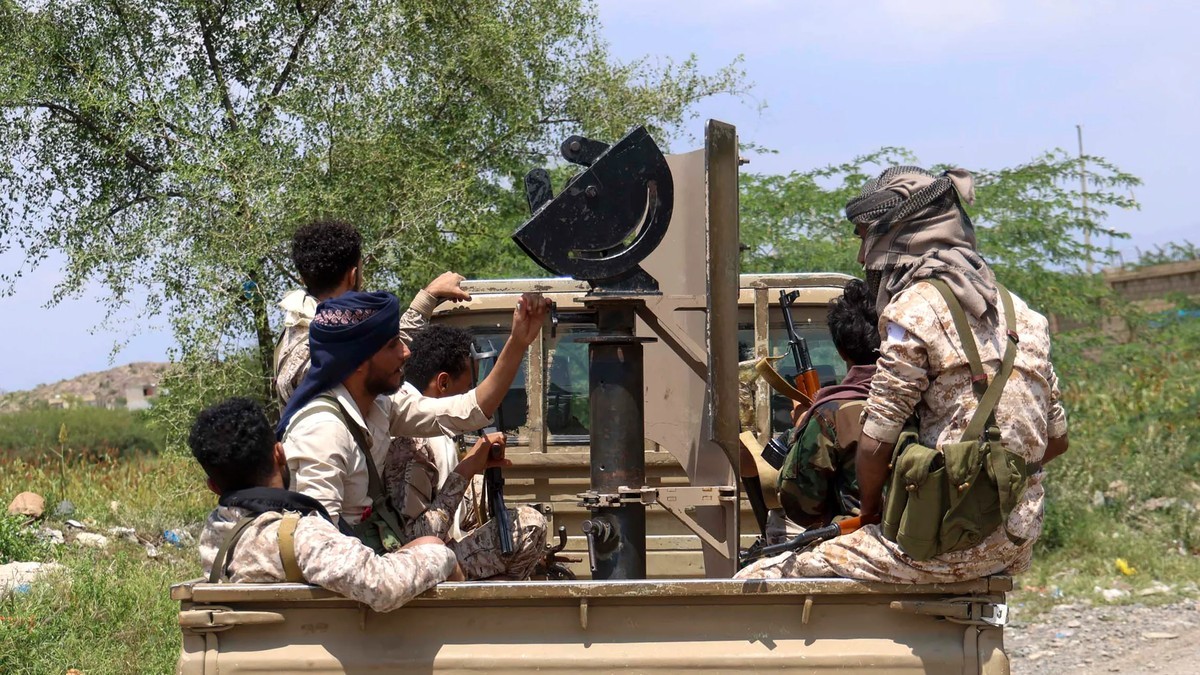
The announcement came hours after Houthi forces cut a vital supply route linking Taiz with Aden. Four security sources told AFP that the Houthis had taken control of the al-Safiya area, cut the main road and seized the police station there; three Yemeni military sources and a police source gave France 24 the same account. Traffic along the road was halted and fighting in the area was ongoing. Taiz itself remains under the control of government forces, but has long been besieged from the north, east and west by Houthi fighters and remains one of the main fronts in Yemen's civil war. A Yemeni military official told Xinhua that Houthi fighters had advanced through parts of Ash Shamayatayn and neighbouring Al-Ma'afer districts in Taiz province, capturing several positions and forcing government forces to retreat.
The Casualty Claims
The spokesman for Yemen's government forces said Yemeni forces "executed 257 precision targeting operations" against Houthi sites, movements and military capabilities on Saturday, and that initial estimates indicated the operations killed at least 700 Houthi rebels, Al Jazeera reported. That figure is a claim by one side and has not been independently confirmed. Al Jazeera also reported on 3 October that the Yemeni army said there had been over 1,500 Houthi casualties in the previous 24 hours — again a government claim, not independently verified. The Saudi-led coalition said earlier on Sunday that its forces had carried out 97 "precise targeting operations" against Houthi reinforcements on the Tor al-Baha front and the Taiz axis, using warplanes, drones, artillery, missiles and snipers. The coalition's spokesman, Turki al-Malik, said on Saturday that the Houthis' "ties to external agendas" had brought "chaos and devastation to Yemen".
How the Houthis Took the Red Sea Coast
The Houthis seized the capital, Sanaa, in 2014, forcing the internationally recognised government to retreat to Aden. A Saudi-led coalition intervened in March 2015 in support of that government. After several years of relative calm, the war reignited in July against the backdrop of a widening Middle East conflict, after a fragile 2022 truce collapsed. In September the Houthis launched a lightning offensive that saw them seize Yemen's entire Red Sea coast, including the historic port city of Mocha on 10 September, and reach the Red Sea islands of Hanish, putting them astride the Bab al-Mandeb Strait, a chokepoint for international shipping. The group also captured the Hays and Al Khawkhah districts of Al-Hudaydah governorate and the Mocha and Dhubab districts of Taiz governorate. The Presidential Leadership Council says its own forces captured the Al-Yatma and Labanat military camp in Al-Jawf governorate.
Saudi Air Power, and Washington's Distance
The Yemeni government's own air capability remains limited. Since the coalition intervened in 2015, it has primarily been Riyadh's forces that have carried out airstrikes against the Houthis, and experts believe the recent operations were most likely flown by Saudi warplanes rather than the Yemeni air force. Axios reported on 2 October that the Saudis were planning a major offensive against the Houthis but that the United States would not join it for now, and that the operation would include ground forces loyal to the internationally recognised government with Saudi air cover. Axios also reported that, the previous week, President Donald Trump had been close to ordering a strike on the Houthis after a request from Saudi Crown Prince Mohammed bin Salman, but had decided to hold off — caught between wanting to help the kingdom and avoiding entanglement in a new front in the Middle East.
The Amnesty Offer and the Message to Sanaa
Al-Alimi renewed an offer of amnesty and safe return for Houthi fighters who lay down their weapons and stop fighting. He said every city reclaimed by the state would enter a phase of "stability, recovery and reconstruction", and that the success of the battle would be measured by the number of citizens who had regained a sense of security. He called on Yemen's "brothers and friends in the international community" to stand by the country, and described Saudi Arabia as "a true partner in our shared destiny and security", expressing deep gratitude to the kingdom's leadership and people. Colonel Majid Al-Nuzaili — rendered in Al Jazeera's report as Colonel Majed Abdullah al-Nazili — a spokesman for the government forces, said the operations aimed to relieve the "suffering of the Yemeni people" and to ensure that "no authority prevails except the constitution and the rule of law".
The Strikes on Saudi Arabia
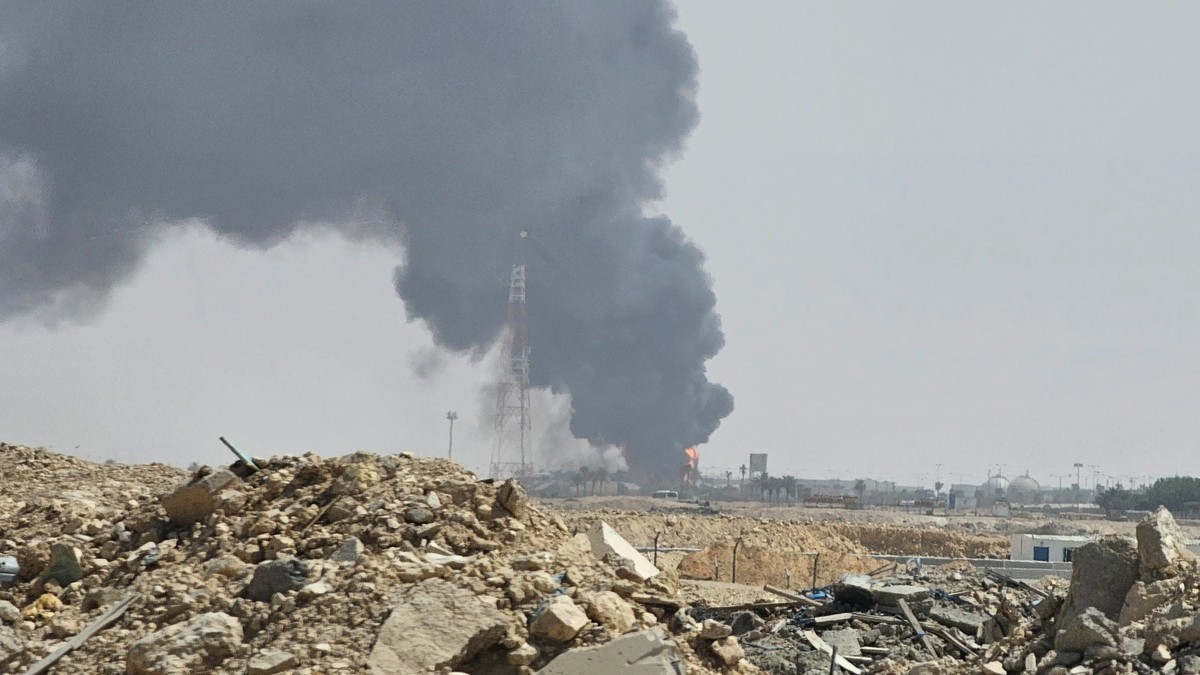
The Houthis have in parallel launched a blockade on Saudi energy exports, already squeezed by Iran's closure of the Strait of Hormuz. The group struck the Medina power station and said it had attacked oil infrastructure in the Saudi capital, Riyadh, on both 3 and 4 October; the Saudi-led coalition dismissed the Houthi claim of a Riyadh attack as "misleading". The Houthis' Al-Masirah television channel reported Saudi strikes in the northern governorates of al-Jawf and Saada, saying at least two people had been wounded. Those strikes came a day after Yemen's government said its forces had hit Houthi targets around the country, including in Sanaa, Saada and near Taiz in the south-west. Two Iranian sources told Reuters last month that Tehran had told the Houthis to carry out attacks on Saudi Arabia, promising additional funding and weapons, while several Islamic Revolutionary Guard Corps commanders had travelled to Yemen to help coordinate them.
What the Campaign Would Have to Do
The stated objective — the recovery of all territory still held by the Houthis — would require ground forces loyal to the internationally recognised government to advance under Saudi air cover, the arrangement Axios described. Al-Alimi did not announce a start date for ground operations, or a target list beyond his description of the campaign's purpose, and his address drew no Houthi response. Farea Al-Muslimi, a research fellow at Chatham House, told AFP that the Houthis had "achieved the military objective of isolating Taiz from Aden, even if they haven't fully taken control of it", and he downplayed expectations over what the coming government offensive might accomplish — a judgment that sits awkwardly beside a campaign defined by the recapture of everything the government has lost.
What Comes Next
Several questions remain open, and the announcements so far do not answer them. There is no timetable, and no announced plan for reopening the Taiz–Aden road. There is no indication of whether the United States will stay out — only Axios's reporting that it will not join "for now". There is no Houthi response to the speech itself. And there is no independent verification of the government's casualty figures, which remain one-sided. What is established is the direction of travel: a government whose leader addressed the nation from Riyadh, whose air power belongs to Saudi Arabia, and whose first advertised objective is the recovery of the Red Sea coast the Houthis took in September.
By Jessica Ali, Staff Writer
This article was produced with AI-assisted research and editorial support. Sources: Xinhua, Al Jazeera, France 24/AFP, The Hindu/AFP, Arab News, Reuters, Axios.
What's Your Reaction?
 Like
0
Like
0
 Dislike
0
Dislike
0
 Love
0
Love
0
 Funny
0
Funny
0
 Wow
0
Wow
0
 Sad
0
Sad
0
 Angry
0
Angry
0

Editor-in-Chief at Global1.News. Atlanta-based journalist who cuts through the BS and tells it like it is. Lead anchor, host, and the voice you hear when the spin stops and the truth starts.













Comments (0)