
Israel top court restores Arab party to election ballot
Israel’s political landscape entered another volatile phase on 2 October 2026, when the Supreme Court overturned a parliamentary committee’s decision to bar an Arab party from the forthcoming 27 October election.
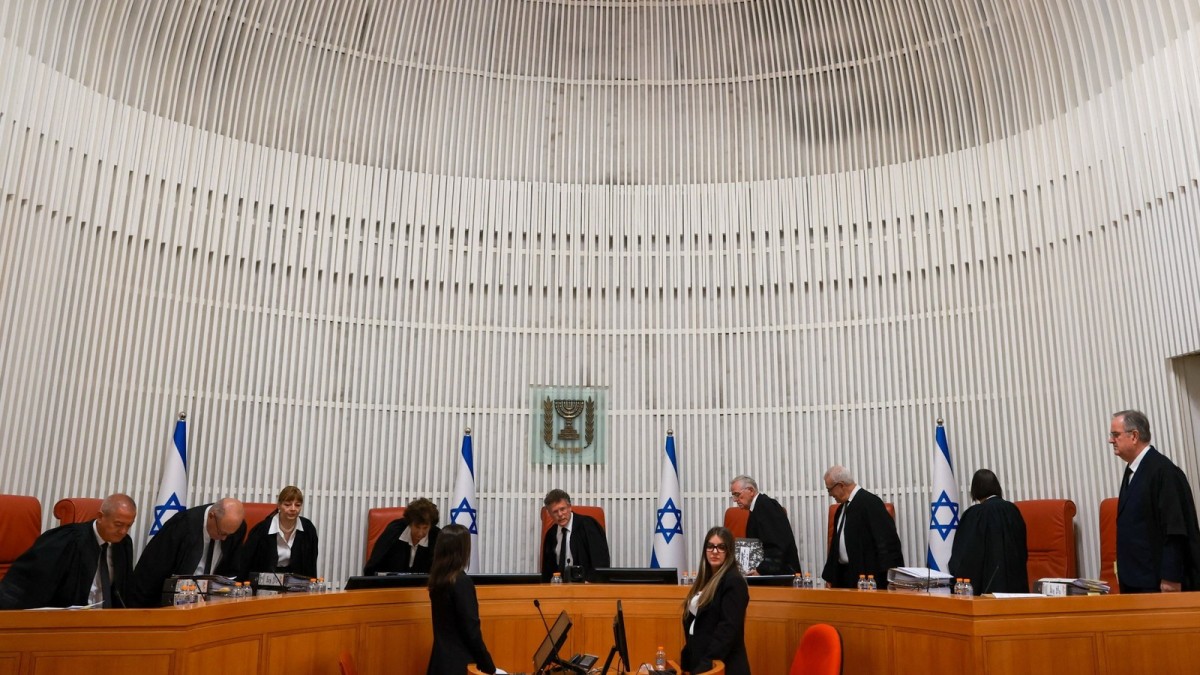
Israel’s political landscape entered another volatile phase on 2 October 2026, when the Supreme Court overturned a parliamentary committee’s decision to bar an Arab party from the forthcoming 27 October election. The ruling not only reinstated the United Arab List (Ra’am) but also restored the candidacy of a far‑left Jewish MP, Ofer Cassif, while a separate court battle forced Sami Abu Shehadeh, leader of the Balad Party, to withdraw his own bid. These developments underscore the persistent tension between Israel’s democratic institutions and the deep‑seated Sunni‑Shia and Arab‑Jewish cleavages that shape its electoral calculus, especially as the country grapples with the lingering fallout of the 2023 Hamas onslaught.
Supreme Court’s decisive intervention
The Supreme Court’s unanimous decision to reinstate the United Arab List came after a September vote by an electoral committee of lawmakers that had sought to disqualify the party from the ballot. The committee’s move reflected a broader pattern of attempts to marginalise Arab political forces that have, since 2021, begun to play a more visible role in coalition politics. By overturning the committee’s ruling, the Court reaffirmed a long‑standing judicial tendency to side with the electoral authority when lawmakers move to bar candidates, a trend that has repeatedly shaped Israel’s electoral outcomes.
In a separate but related judgment, the justices also voted 7‑2 to restore Ofer Cassif, a Jewish MP known for his outspoken criticism of Israel’s treatment of Palestinians. The two dissenting judges argued that Cassif’s alleged support for “armed struggle against the state of Israel” warranted disqualification, highlighting the fine line the judiciary walks between safeguarding democratic participation and addressing security‑related concerns.
The United Arab List’s strategic evolution
Ra’am’s re‑entry onto the ballot marks a continuation of the party’s gradual integration into mainstream Israeli politics. Having entered a coalition government in 2021—a coalition that briefly unseated Prime Minister Benjamin Netanyahu—the party demonstrated its willingness to engage in power‑sharing arrangements that transcend traditional sectarian boundaries. This election, however, sees Ra’am taking an unprecedented step by fielding a Jewish Zionist candidate, Yoav Segalovitz, whose reputation for curbing crime in Arab communities earned him cross‑community appeal.
The inclusion of Segalovitz signals a tactical shift: by presenting a candidate who bridges Arab and Jewish constituencies, Ra’am aims to broaden its electoral base and potentially secure a pivotal role in a fragmented Knesset. Given that Israeli‑Arabs constitute roughly one‑fifth of the population and have historically abstained from coalition politics, Ra’am’s strategy could reshape the balance of power, especially if the election yields a narrow parliamentary majority.
Balad Party’s legal setback and its implications
While Ra’am benefitted from the Court’s reversal, the Balad Party faced an opposite outcome. A far‑right ally of Netanyahu had pushed for the disqualification of Balad’s leader, Sami Abu Shehadeh, citing an article he authored after the October 7 2023 Hamas attack. In that piece, Abu Shehadeh described the assault as an “important historical event,” a phrasing that provoked accusations of implicit endorsement.
Confronted with the prospect of a near‑certain court defeat, Abu Shehadeh withdrew his candidacy on the Thursday before the Supreme Court’s ruling. Balad’s statement warned that a court‑ordered removal would have “grave consequences for the country’s political and parliamentary life,” underscoring the party’s view that judicial interventions risk undermining democratic representation for Arab Israelis.
Arab Israeli demographics and political participation
Arab Israelis—descendants of Palestinians displaced or expelled during the 1948 war—make up about 20 percent of Israel’s citizenry. The majority identify as Palestinians and, until the 2021 elections, largely remained outside the core of coalition negotiations. Their gradual entry into parliamentary politics reflects a broader regional trend where minority groups seek leverage within dominant political systems, a dynamic that is amplified in Israel by the ongoing Israeli‑Palestinian conflict and the broader Sunni‑Shia competition across the Middle East.
The re‑instatement of Arab parties on the ballot may therefore be read not only as a domestic legal matter but also as a signal to regional actors that Israel’s democratic institutions retain a degree of openness, even as security concerns dominate the political agenda. This nuance matters for Gulf states and Turkey, whose diplomatic calculations often hinge on Israel’s internal cohesion and its handling of minority rights.
Security considerations and the legacy of the 2023 Hamas attack
The 2023 Hamas onslaught, described in the source as the deadliest attack in Israel’s history, continues to cast a long shadow over electoral politics. The massive Israeli offensive in Gaza that followed intensified domestic debates over security, national identity, and the limits of political dissent. Abu Shehadeh’s article, which referenced the attack as a historical milestone, became a flashpoint for accusations that political speech could be construed as tacit support for violence.
These security concerns have been weaponised by right‑wing factions to justify the exclusion of Arab candidates, arguing that certain rhetoric threatens national cohesion. The Supreme Court’s willingness to overturn disqualifications, however, suggests a judicial check on such politicised security narratives, preserving a space for contested political expression within the democratic framework.
Potential electoral outcomes and coalition calculus
With the United Arab List back on the ballot and the Balad Party’s leader out of the race, the composition of the Knesset remains uncertain. Israel’s fragmented party system often necessitates coalition building, and Arab parties have historically held the balance of power in closely contested elections. Ra’am’s decision to run a Jewish candidate could be a calculated move to make itself an indispensable partner for centrist or right‑leaning blocs seeking to broaden their appeal among Arab voters.
If Ra’am secures a modest share of seats, its support could become decisive in forming a government, especially if Netanyahu’s right‑wing bloc fails to secure an outright majority. In such a scenario, the party could leverage its position to extract policy concessions on issues ranging from budget allocations for Arab municipalities to broader discussions on the status of Palestinian residents within Israel.
Broader regional implications and future trajectories
The Supreme Court’s rulings arrive at a moment when great‑power rivalry—particularly between the United States and an increasingly assertive China—intersects with Middle Eastern realignments. Gulf states, observing Israel’s internal handling of minority representation, may calibrate their diplomatic engagement based on perceived stability and democratic resilience. Likewise, Turkey’s foreign policy, which often highlights the plight of Arab minorities, could find new talking points in the court’s decisions.
In the longer term, the evolution of Arab parties within Israel’s parliamentary system will likely continue to reflect the tug‑of‑war between integration and marginalisation. The 2026 election, shaped by judicial interventions, party strategies, and the lingering trauma of the 2023 conflict, will serve as a barometer for how Israel balances its democratic ideals against security imperatives—a balance that remains central to the broader Middle Eastern strategic landscape.
This article was produced with AI-assisted research and editorial support. Reporting is based on the source material cited below. Sources: Daily Sabah Middle East; dailysabah.com; Global1.News (04 October 2026).
By Malik Hassan, Staff Writer
What's Your Reaction?
 Like
0
Like
0
 Dislike
0
Dislike
0
 Love
0
Love
0
 Funny
0
Funny
0
 Wow
0
Wow
0
 Sad
0
Sad
0
 Angry
0
Angry
0

Middle East Correspondent at Global1.News. Based in Beirut, covering politics, conflict, energy, and society across the Middle East. Brings context and depth to a region often reduced to headlines.











Comments (0)