
Vessev built an electric ferry that almost flies
Vessev’s VS‑9 hydrofoil ferry may not have given me the sensation of soaring, but it did feel like a sports car on water – a reminder that the hype around “flying boats” often masks the gritty engineering trade‑offs that matter to anyone running a fleet.
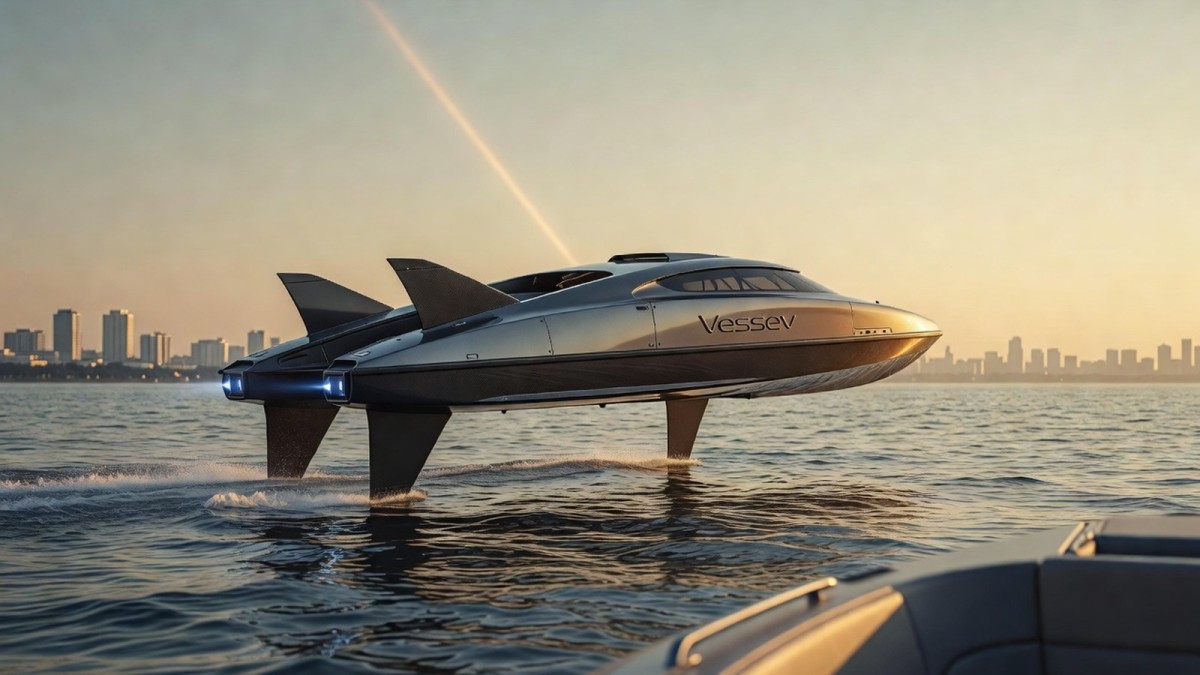
Vessev’s VS‑9 hydrofoil ferry may not have given me the sensation of soaring, but it did feel like a sports car on water – a reminder that the hype around “flying boats” often masks the gritty engineering trade‑offs that matter to anyone running a fleet. As a founder who has spent a decade wrestling with real‑world servers and hardware, I’m quick to spot where a startup’s tech promise meets the cold hard reality of operating costs, maintenance headaches, and the thin line between a novelty and a viable service.
Hydrofoil mechanics: the real advantage, not the marketing fluff
The VS‑9 is a 30‑foot catamaran‑style hull, but the magic lives under the waterline. Two wing‑like foils lift the hull, with the front foil doing the bulk of the work and the rear handling roughly 20 % of the lift. This split‑lift design means the boat can skim just above the water, slashing drag and, crucially for an electric vessel, conserving every kilowatt‑hour.
In practice, the lift clears about two and a half feet of water. That’s enough to smooth out the slap‑and‑bounce you get on a conventional hull at speed, but it also sets a hard limit: any wave taller than that will slam the hull, wreck the ride and bleed efficiency. For operators, that translates to a very specific operating envelope – calm rivers, bays or lakes – and it’s a factor that can’t be ignored when you’re budgeting for a fleet.
In‑house motor production: a cost‑saving gamble
Vessev builds its own electric motor and mounts it in the rear foil. Laakmann’s rationale is simple: keep costs in line now, and avoid the painful transition to in‑house production later. From a founder’s perspective, that’s a sensible move – you own the critical component, you control margins, and you aren’t at the mercy of a supplier’s lead times or price hikes.
The only part they outsource is the battery, which Laakmann calls “commoditized.” That’s a fair assessment; battery packs are becoming a commodity with multiple vendors and falling prices. Still, even a commoditized component can become a choke point if you don’t lock in volume discounts early. The lesson for independent operators is clear: own the parts that drive your cost structure, but don’t reinvent the wheel where the market already offers scale.
Target markets: transit, tourism, and the “toy” crowd
Vessev’s go‑to market is transit operations, positioning the VS‑9 as a low‑cost, comfortable supplement to urban mass transit. The idea is to zip commuters across waterways without the massive infrastructure outlay of bridges or tunnels. In a city like New York, that could mean shuttling riders between Brooklyn and Queens, or linking waterfront districts with a few minutes’ travel time.
Beyond transit, Laakmann mentions hotels, tour operators and wealthy early adopters. Those are classic “early‑adopter” segments for many green tech startups – they provide cash flow and publicity while the core product matures. The risk, however, is over‑reliance on a niche that may not scale. For a founder, the key is to balance these high‑margin, low‑volume sales with a pipeline of repeatable, high‑volume contracts that can sustain a production line.
Production scaling: from one‑off to kits
Today the VS‑9 is a one‑off prototype, but Vessev plans to move into small‑batch production and eventually sell hydrofoil kits to other boatbuilders. That’s a smart way to leverage the core technology without bearing the full cost of building complete vessels. Kit sales can generate revenue while you perfect the manufacturing process for the full boat.
However, kit markets come with their own set of challenges – you need robust documentation, support channels, and a supply chain that can handle diverse customer builds. From my own experience running hosting infrastructure, a poorly supported kit can quickly become a brand‑damaging nightmare when customers hit snags and blame the original designer.
Financial backdrop: a $19 million Series A and the cost‑pressure reality
Vessev raised $19 million in a Series A round in August. That’s a respectable sum for a hardware‑focused startup, but it’s also a finite runway. The capital will need to cover tooling for motor production, hull fabrication, testing, and the inevitable cost overruns that come with scaling a novel marine platform.
For independent operators watching the space, the takeaway is that venture funding can accelerate development, but it also brings pressure to hit growth milestones. If the market adoption curve flattens – for instance, if wave conditions limit deployment in many cities – the company could find itself scrambling for additional cash or forced to pivot.
Operational risk: wave limits and maintenance headaches
The hydrofoil’s performance hinges on water conditions. With a clearance of just 0.75 meters, any swell beyond that knocks the boat out of its sweet spot. That means routes have to be carefully mapped, and service reliability can be weather‑dependent. For a transit operator, that translates to schedule disruptions and the need for contingency vessels.
Maintenance is another hidden cost. The foils and the motor are exposed to saltwater, debris and constant vibration. Even with in‑house motor expertise, you’ll need a maintenance regime that can keep the foils aligned and the motor cooled. In my own world of server farms, neglecting cooling leads to catastrophic failures – the same principle applies on water.
Actionable takeaways for founders and operators
First, focus on the parts that drive your cost structure. Vessev’s decision to build the motor in‑house is a blueprint: own the critical IP, outsource the commoditized pieces. Second, validate the operating envelope early. A hydrofoil that can’t handle modest waves will be stuck in niche routes, limiting revenue potential.
Third, diversify your market approach. While the “transit” story is compelling, you need parallel revenue streams – tourism, kit sales, or even licensing – to smooth cash flow. Fourth, plan for a robust maintenance ecosystem. The moment you ignore wear‑and‑tear, you’ll see the same downtime that plagues under‑funded data centers.
Finally, keep an eye on the funding horizon. A $19 million Series A gives you a runway, but it also sets expectations for growth. Align your product roadmap with realistic deployment scenarios, and you’ll avoid the classic hype‑to‑reality crash that haunts many VC‑fuelled hardware startups.
— Allan Ali, Founder
This article was produced with AI-assisted research and editorial support. Reporting is based on the source material cited below. Sources: TechCrunch; techcrunch.com; Global1.News (04 October 2026).
By Allan Ali, Global1.News
What's Your Reaction?
 Like
0
Like
0
 Dislike
0
Dislike
0
 Love
0
Love
0
 Funny
0
Funny
0
 Wow
0
Wow
0
 Sad
0
Sad
0
 Angry
0
Angry
0

Publisher of Global1.News. Automation architect, systems builder, and the guy making sure the truth gets published.














Comments (0)