
Cheikh Hamidou Kane, the Senegalese Writer Who Gave Africa L'Aventure ambiguë, Dies at 98
Cheikh Hamidou Kane, the Senegalese writer whose 1961 novel L'Aventure ambiguë became a classic of African literature and who later served as a government minister, has died at 98.
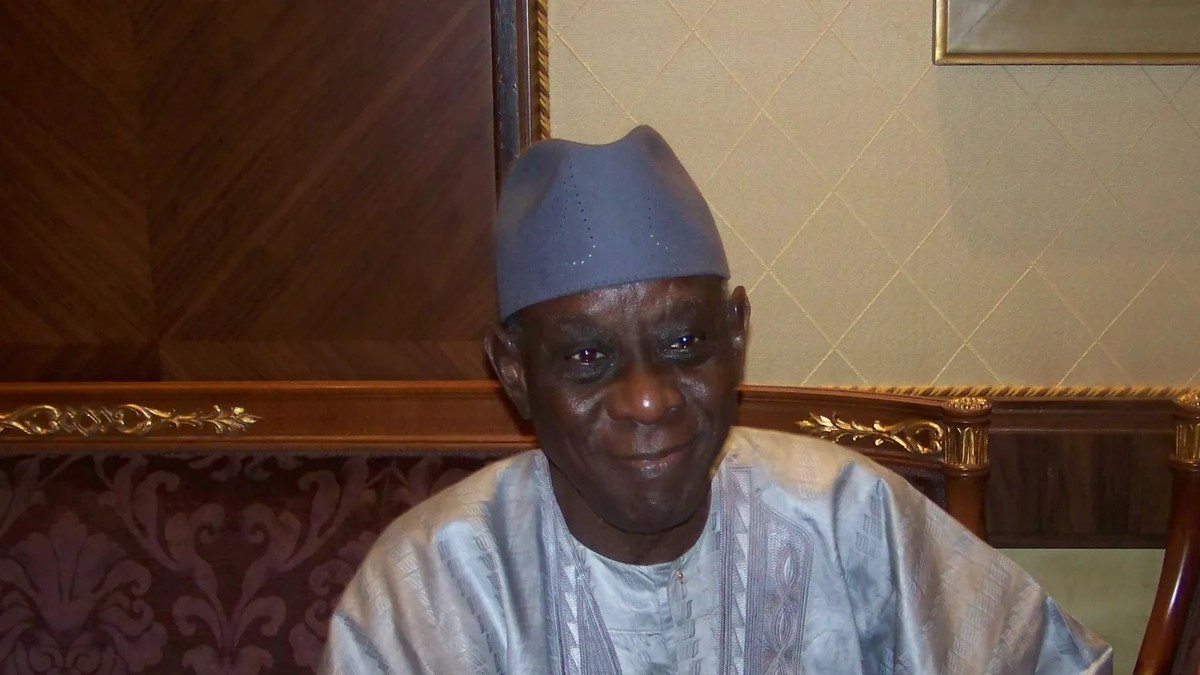
Cheikh Hamidou Kane, the Senegalese writer and former government minister whose 1961 novel L'Aventure ambiguë gave generations of Africans a language for the wound of colonisation and its aftermath, has died at the age of 98. He was regarded as a major figure of French-language African literature, a man who moved between the Koranic school and the Sorbonne, between the study and the state house. His death was announced by the press and by Senegal's President Bassirou Diomaye Faye.
Cheikh Hamidou Kane, the Senegalese Writer Who Gave Africa L'Aventure ambiguë, Dies at 98
Dakar, Senegal - The reporting does not agree on the exact date of his death. Agence France-Presse, Le Monde, franceinfo and the Agence de Presse Africaine all place it on Saturday evening, 3 October, in Dakar. Senegal's public broadcaster RTS and the national daily Le Soleil date it to 4 October. One encyclopaedia entry lists 2 October. What is not disputed is that the announcement was made on Sunday, and that his body was to be taken from Fann Hospital that afternoon for burial at Yoff cemetery.
A Voice That Carried a Continent
For more than six decades, Cheikh Hamidou Kane was one of the clearest voices to come out of French-language African writing. He was born on 2 April 1928 in Matam, in north-eastern Senegal, into a Fulani family, the second son of Mamadou Lamine Kane and Yéya Racine Kane. As a younger son he was given the name Samba. A minority of reference works give his birth date as 3 April 1928, but four news sources and Le Soleil's own obituary give 2 April. Two novels, a long stretch of ministerial files and one question he never stopped asking were the whole of his public life. What made him singular was not the volume of what he wrote. It was the precision of what he asked.
Two Schools, One Childhood
The facts of his education read like the plot of his most famous book. He began at the Koranic school, then entered the French school at around ten years old. At the Sorbonne in Paris he took degrees in law, letters and philosophy, then entered the École nationale de la France d'Outre-mer, graduating in 1956. He returned to Senegal in 1959, on the eve of independence. That trajectory - from a childhood of Islamic instruction in northern Senegal to the institutions of the French state - was not merely a biography. It was the lived question at the centre of his work. Le Monde and franceinfo both note that this double formation, at once Islamic and Western, deeply shaped his writing. He did not resolve the tension. He made it the subject.
The Novel That Named the Wound
He began L'Aventure ambiguë in 1952 while he was in Paris. It was published in 1961. The novel is a partly autobiographical roman d'apprentissage - a story of apprenticeship - about the life, Islam and the values of the Diallobé country of northern Senegal, and above all about the encounter with otherness and with the West. It follows Samba Diallo, a young pupil of a Koranic school who is sent to France to continue his studies in philosophy, and who is torn between the values inherited from African and Islamic tradition and those of Western civilisation. In the novel, the hero's pragmatic cousin, the Grande Royale, takes the difficult decision to send the children to the new school. The book won the Grand Prix littéraire d'Afrique noire in 1962. It has been translated into about forty languages and is studied in secondary schools, colleges and universities across Africa. An English edition appeared under the title Ambiguous Adventure.
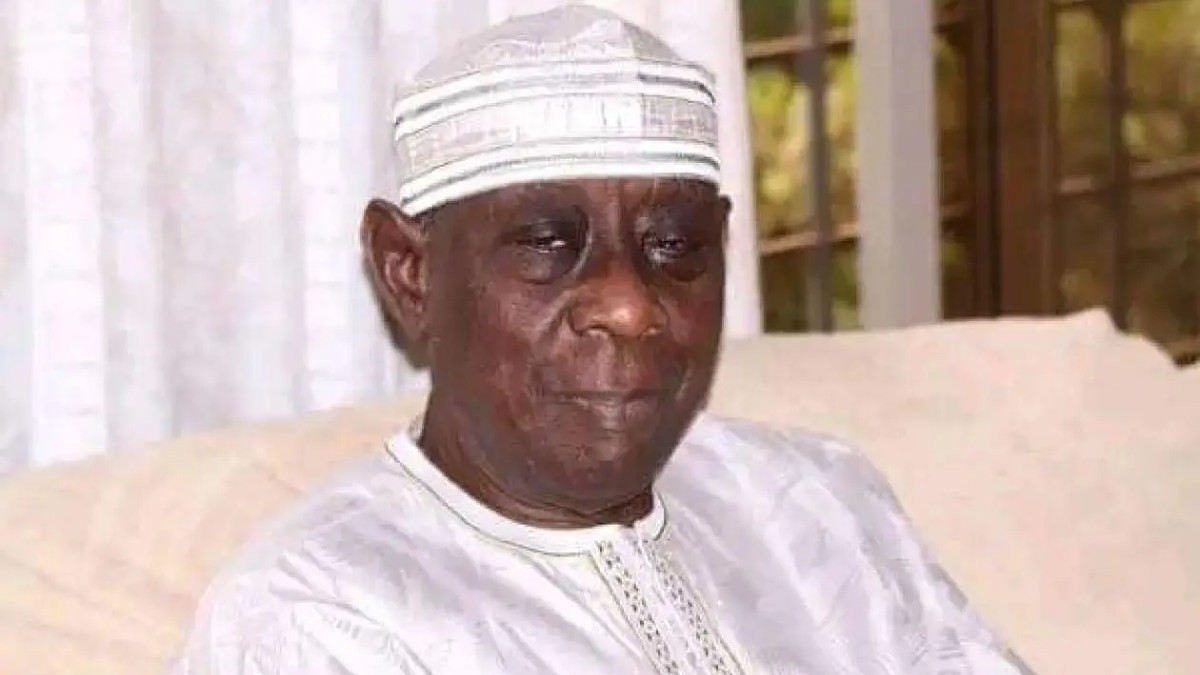
What Samba Diallo Was Really Asking
The novel's power was never only literary. Le Monde describes it as a story of apprenticeship, but what it apprenticed its readers into was a question about identity and the price of borrowed knowledge. That is the question Samba Diallo lives and cannot escape. He is not a hero who resolves his dilemma. He is a young man caught between two systems of value, each with its own claim on him, and the book refuses to let him - or the reader - off the hook. The Grande Royale's decision to hand the children to the new school is not presented as a betrayal or a triumph. It is a necessity, and it costs something. Chinua Achebe praised the novel; the Italian edition's jacket note calls it a great African novel and one of the most powerful stories of European colonisation of Africa.
From the Study to the State House
Kane was not only a writer. He was named governor of the Thiès region in western Senegal, and served as commissioner of the Plan under the president of the council, Mamadou Dia. He also served as principal private secretary to the minister of planning and development. He was Minister of Industrial Development and Handicrafts in 1978, and Minister of Planning and Cooperation from 1981 to 1988. Le Monde records that he was governor of Thiès and then minister of planning and cooperation in the 1980s. He also worked for UNICEF in Lagos and in Abidjan. President Faye, in his tribute, noted this side of the man: "Ministre de la République, il a aussi servi le Sénégal avec dévouement" - as a minister of the Republic, he also served Senegal with devotion.
The Long Silence and the Second Novel
After L'Aventure ambiguë, Kane fell silent as a novelist for nearly three decades. That silence ended in 1995, when he published a second novel, Les Gardiens du temple, with Éditions Stock. The book continued his reflection on African societies facing post-colonial change, exploring the tension between preserving tradition, self-assertion and Western influence. It did not carry the same canonical weight as the first, but it confirmed that the question had not gone away for him. In 2019 he was awarded the Grand Prix des Mécènes, crowning his whole body of work. The recognition came late, but it was total. He had spent his public life inside institutions of the state and his inner life inside the problem of what it means to meet another world without losing your own.
What Senegal Said on Sunday
The tributes crossed the political spectrum. Former prime minister Ousmane Sonko wrote on X: "Avec lui s'éteint une voix majeure de notre littérature et de notre pensée" - with him, a major voice of our literature and our thought goes out. Former president Macky Sall, also on X, said: "Son parcours au service de l'État et son engagement intellectuel resteront également gravés dans notre mémoire collective" - his career in the service of the state and his intellectual commitment will remain engraved in our collective memory. President Bassirou Diomaye Faye wrote on Facebook that he had learned with profound sadness of Kane's passing, and said: "Avec L'Aventure ambiguë, il a donné à des générations d'Africains les mots pour penser une question qui nous habite encore, celle de s'ouvrir au savoir du monde sans rien perdre de ce que nous sommes." He added: "Son œuvre appartient désormais au patrimoine de notre nation et de toute l'Afrique."
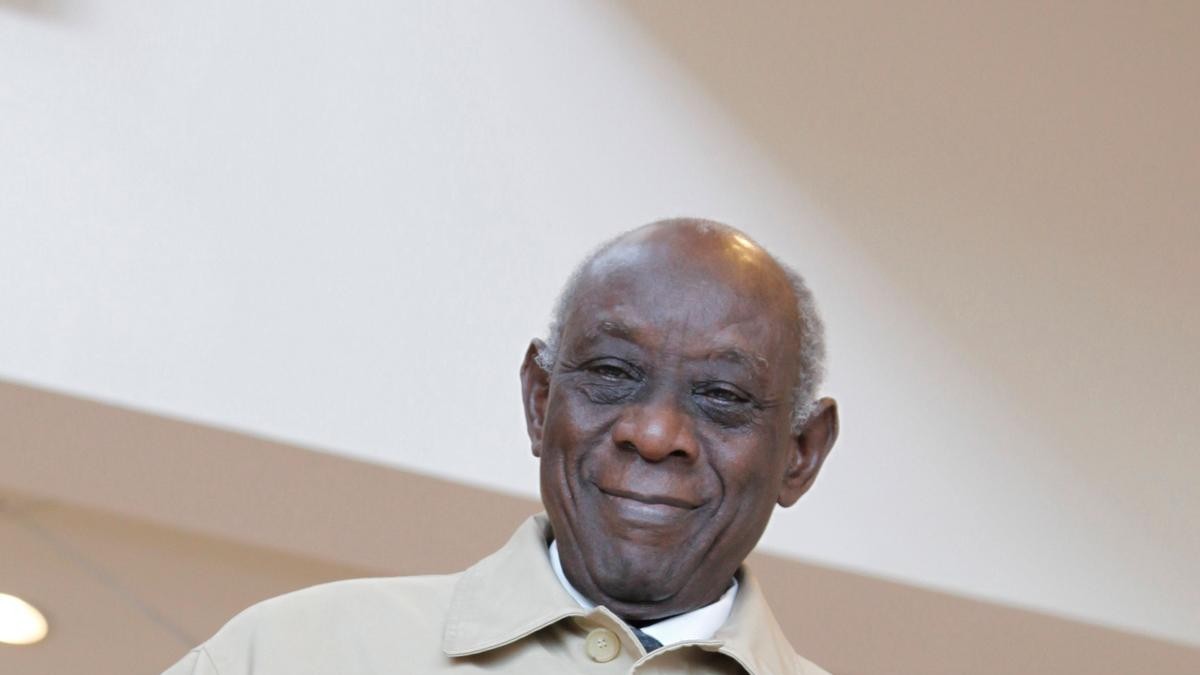
The Institution That Carries His Name
Since January 2023, the Université virtuelle du Sénégal has officially been the Université numérique Cheikh Hamidou KANE, under a presidential decree taken during Macky Sall's presidency. It is a rare honour, and it places his name on an institution built for the digital age rather than the colonial classroom. The Université Cheikh Anta Diop de Dakar, in its own tribute on Facebook, said: "À travers son œuvre, sa pensée et son engagement, Cheikh Hamidou Kane laisse un héritage intellectuel et culturel majeur, qui continuera à nourrir la réflexion de générations de lecteurs, d'étudiants et de chercheurs." In March 2025, the theatrical adaptation of L'Aventure ambiguë was performed at national level for the first time, at the Théâtre Daniel Sorano in Dakar, in front of a full house - a collaboration between the national theatre and the association Globe.
The Question He Left Behind
What Kane leaves is not a doctrine but a question, and it is a question that has not aged. RTS framed it as the heart of his legacy: what remains of you when you learn to know and understand the world of others? He asked it from inside the experience of a child who moved from the Koranic school to the French school, from Matam to Paris, from philosophy to government. He did not pretend the answer was simple, and he did not pretend the encounter with the West was only loss or only gain. That refusal to simplify is why the novel outlasted the argument it was born into. Senegal buried him on Sunday. The question he asked is not being buried with him.
The Work That Remains
The body of work is small and its reach is enormous. One novel begun in Paris in 1952 and published in 1961. A second novel in 1995, after nearly thirty years of silence. A place on school and university syllabuses across Africa, and an institution that carries his name. A play staged at the Théâtre Daniel Sorano in March 2025. And a funeral at Yoff cemetery on Sunday. The reporting still does not agree on the exact date of his death, and it may never. What the record does agree on is the shape of what he built: a single, careful question, asked in a language that could travel, about how to take the world in without giving yourself away.
By Jessica Ali, Staff Writer
This article was produced with AI-assisted research and editorial support. Sources: Le Monde, franceinfo, Agence France-Presse, Agence de Presse Africaine, Radio Télévision Sénégalaise (RTS), Le Soleil and Benin Web TV.
What's Your Reaction?
 Like
0
Like
0
 Dislike
0
Dislike
0
 Love
0
Love
0
 Funny
0
Funny
0
 Wow
0
Wow
0
 Sad
0
Sad
0
 Angry
0
Angry
0

Editor-in-Chief at Global1.News. Atlanta-based journalist who cuts through the BS and tells it like it is. Lead anchor, host, and the voice you hear when the spin stops and the truth starts.












Comments (0)