
Pyongyang’s Cold Rejection: What Kim Yo Jong’s Dismissal Means for Trump’s Summit Gambit
The diplomatic rhythm of the Korean Peninsula has once again shifted from the promise of dialogue to the reality of provocation with startling speed. On Thursday, August 20, 2026, North Korea launched more than ten short-range ballistic missiles from the Pyongyang area toward the East Sea, a move detected and tracked by both South Korea’s Joint Chiefs of Staff (JCS) and Japanese authorities. This launch, occurring just eight days after a similar test from the Wonsan area on August 12, serves as
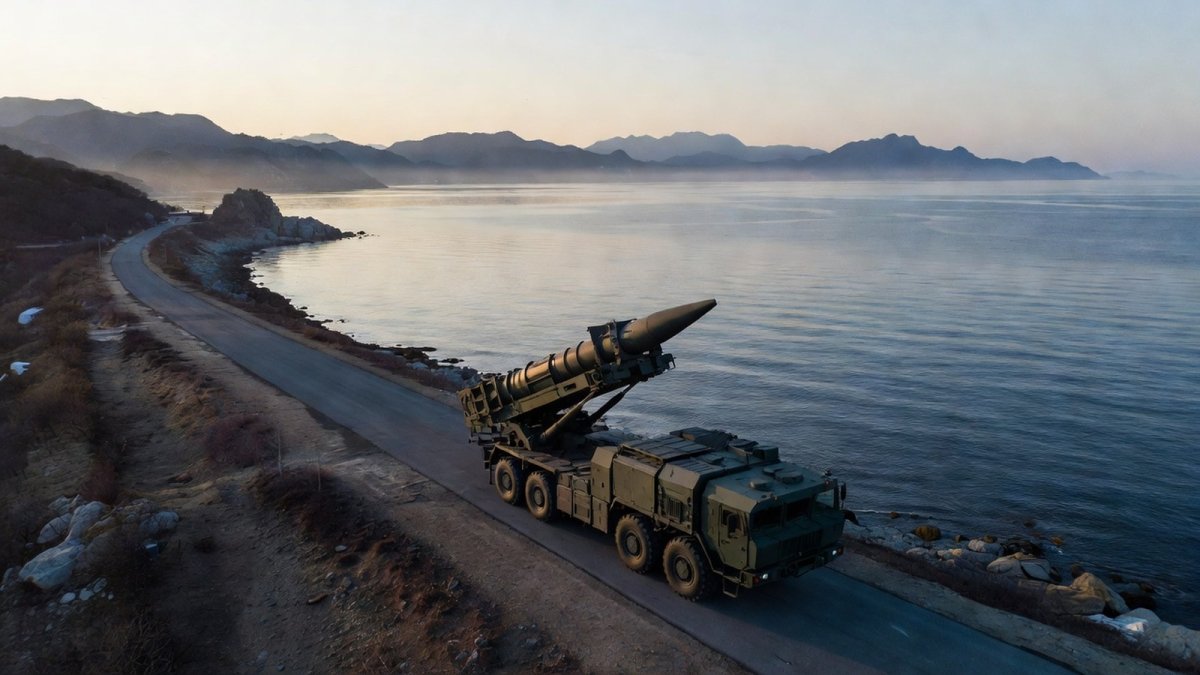
The diplomatic rhythm of the Korean Peninsula has once again shifted from the promise of dialogue to the reality of provocation with startling speed. On Thursday, August 20, 2026, North Korea launched more than ten short-range ballistic missiles from the Pyongyang area toward the East Sea, a move detected and tracked by both South Korea’s Joint Chiefs of Staff (JCS) and Japanese authorities. This launch, occurring just eight days after a similar test from the Wonsan area on August 12, serves as the physical exclamation point to a rhetorical dismissal delivered a day earlier by Kim Yo Jong, the influential sister of North Korean leader Kim Jong Un. Her statement, which characterized President Donald Trump’s recent overtures as "not even worthy of comment," effectively dismantled the narrative of a potential diplomatic thaw that Washington had begun to cultivate. This sequence of events—a scaled-back military exercise, a public offer of dialogue, a scathing rejection, and a missile salvo—constitutes a coherent, if contradictory, message from Pyongyang that demands careful scholarly analysis.
The Anatomy of a Diplomatic Rebuff
To understand the significance of Kim Yo Jong’s dismissal, one must first reconstruct the timeline of Washington’s overture. On Sunday, August 16, 2026, President Trump ordered the Pentagon to "substantially reduce" joint military exercises with South Korea, a move framed by the President as a concession to North Korean sensitivities. This directive came just as the annual Ulchi Freedom Shield exercise was set to begin on Monday, August 17. Initially scheduled for an 11-day run, the exercise was abruptly scaled back on Wednesday, August 19, with Seoul announcing a reduction in duration to five days and a significant shift of live-fire drills to computer simulations. The diplomatic track ran parallel to this military recalibration. On Tuesday, August 18, President Trump stated that talking to North Korea’s Kim "makes the south safer" and claimed that Kim had responded to his request for a conversation. This was followed by a Wednesday announcement that the President planned to meet Kim Jong Un later in the year, though he declined to specify whether direct contact had been established. Kim Yo Jong’s response, delivered through state media on Wednesday, was a masterclass in strategic dismissal. Beyond calling the overture "not even worthy of comment," she explicitly stated she was "completely unaware" of any talks between Trump and her brother. This is a critical detail; it directly contradicts the President’s implication of a channel of communication. Furthermore, she asserted that "the provocative, aggressive nature of the drills won't change even though their duration and size were reduced," and reiterated that Washington remains Pyongyang’s enemy. This is not merely a rejection of a specific proposal; it is a rejection of the very premise that the United States can alter its "hostile policy" through tactical military adjustments.The Ulchi Freedom Shield Calculus
The decision to scale back Ulchi Freedom Shield is a significant inflection point in the U.S.-South Korea alliance, one that carries profound implications for Seoul’s security calculus. The exercise, named after the ancient Korean general Eulji Mundeok, is a cornerstone of the combined defense posture, designed to test the allies’ ability to respond to a full-scale conflict. The reduction from 11 days to five, with a heavy reliance on computer simulation, represents a tangible shift in the operational readiness paradigm that has governed the peninsula for decades. For South Korea’s government, the alliance and these exercises are not merely symbolic; they are the bedrock of deterrence against a nuclear-armed adversary. The mutual defense treaty of 1953 and the presence of roughly 28,500 U.S. troops provide the security guarantee that underpins South Korea’s prosperity and stability. By unilaterally ordering a reduction, President Trump has introduced a variable of uncertainty into this equation. While Seoul has historically accommodated U.S. preferences to maintain alliance cohesion, the public nature of this scaling back—announced by the President before the exercise even began—places South Korea in a precarious position. It suggests that the U.S. commitment to the alliance’s military posture is negotiable, a perception that Pyongyang is likely to exploit. The JCS’s subsequent condemnation of the missile launch and order to maintain full readiness underscores Seoul’s determination to project strength, even as its primary military exercise is being curtailed.Kim Yo Jong: The Gatekeeper of U.S. Policy
Kim Yo Jong’s role in this episode is not incidental; it is central to understanding North Korea’s strategic communications. Since the failed Hanoi summit in February 2019, she has increasingly served as Pyongyang’s chief messenger on U.S. and inter-Korean affairs. Her statements are carefully calibrated to signal the regime’s position without committing the supreme leader to a specific course of action. By having Kim Yo Jong, rather than Kim Jong Un himself, deliver the rejection, Pyongyang achieves several objectives. First, it allows the regime to maintain a degree of plausible deniability regarding the supreme leader’s personal intentions. Second, it elevates the stakes by framing the rejection as a collective leadership decision rather than a personal whim. Third, and most importantly, it establishes a clear hierarchy in the negotiation process. By stating she was "completely unaware" of any talks, Kim Yo Jong is effectively telling Washington that any back-channel communications are not being taken seriously at the highest levels. This is a deliberate tactic to force the United States to either escalate its engagement or abandon the effort, all while maintaining the narrative that North Korea is the aggrieved party responding to U.S. aggression.Historical Precedents and the Summit Mirage
The current situation must be viewed through the lens of the historical precedents set during President Trump’s first term. The three summits—Singapore in June 2018, Hanoi in February 2019, and the impromptu meeting at Panmunjom in June 2019—were historic in their symbolism but ultimately barren in their outcomes. The Singapore summit produced a vague commitment to "denuclearization" without a definition or a timeline. The Hanoi summit collapsed over disagreements regarding sanctions relief and the scope of denuclearization. The Panmunjom meeting was a photo opportunity that yielded little more than a handshake across the Military Demarcation Line. The lesson Pyongyang learned from these encounters is that summits with a U.S. President confer legitimacy and international attention without requiring substantive concessions. The current situation suggests that North Korea is not interested in repeating this pattern. The missile launches on August 20 are a clear signal that the regime views the current U.S. overture as a sign of weakness, not an opportunity for engagement. By rejecting the overture before a summit could even be scheduled, Kim Jong Un is attempting to reset the terms of engagement, demanding that Washington offer something more concrete than a reduction in military exercises.Alliance Management and the Path Forward
The immediate challenge for Seoul is managing the alliance in the face of Washington’s unpredictable diplomacy. South Korea’s government has historically viewed the alliance and joint exercises as essential to deterrence. The scaling back of Ulchi Freedom Shield, coupled with the North’s aggressive response, places Seoul in a difficult position. It must reassure its domestic audience of its security while navigating a U.S. administration that appears willing to make unilateral concessions to Pyongyang. The missile launches themselves, while short-range and not directly threatening the U.S. homeland, are a direct challenge to the credibility of the U.S. security umbrella. They demonstrate that North Korea can and will test the limits of the new, reduced exercise posture. For South Korea, this means that the burden of deterrence may increasingly fall on its own military capabilities, a prospect that carries significant financial and strategic implications. The alliance is not broken, but it is being stress-tested in a manner not seen since the early days of the Trump administration.Denuclearization Diplomacy at a Crossroads
Looking forward, this episode signals a definitive end to the "grand bargain" approach to denuclearization. North Korea has consistently rejected the concept of complete, verifiable, and irreversible denuclearization (CVID) in exchange for sanctions relief. The current rejection of Trump’s overture suggests that Pyongyang is now operating under a different strategic calculus, one that views the U.S. as an enduring enemy and its nuclear arsenal as a permanent feature of its national security. The path forward for denuclearization diplomacy appears to be one of managed stalemate rather than breakthrough. The U.S. may continue to offer summits, but Pyongyang has demonstrated that it will only engage on its own terms, which likely include the cessation of all joint exercises and a fundamental shift in U.S. policy toward the region. For the international community, the focus must shift from seeking a grand resolution to managing the risks of escalation. The August 20 missile launch is a reminder that the status quo, while undesirable, is preferable to a conflict that neither side truly wants. The challenge for Seoul, Washington, and Tokyo is to maintain a credible deterrent while keeping the door open for a future, more realistic form of engagement. This article was produced with AI-assisted research and editorial support. Sources: The Diplomat, Reuters, The Guardian, Yonhap, Korea Herald, Al Jazeera. By Prof. David Park, Staff WriterWhat's Your Reaction?
 Like
0
Like
0
 Dislike
0
Dislike
0
 Love
0
Love
0
 Funny
0
Funny
0
 Wow
0
Wow
0
 Sad
0
Sad
0
 Angry
0
Angry
0

Prof. David Park
East Asia/Technology Correspondent at Global1.News. Seoul-based voice covering Korean politics, technology, business, and culture. Analyzes how technology and geopolitics intersect across East Asia.













Comments (0)