
John Legend Honoured With Quincy Jones Humanitarian Award at BMAC Gala
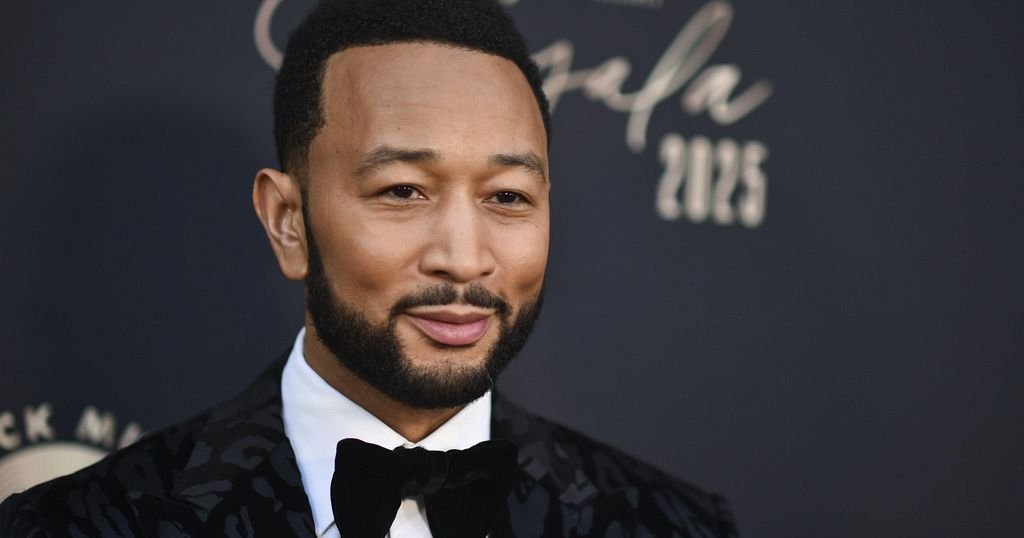
On a glittering September night in Beverly Hills, John Legend added another honour to a career already marked by history: the Quincy Jones Humanitarian Award from the Black Music Action Coalition, a recognition that lands as the organisation celebrates five years of fighting for equity in the music industry.
On a glittering September night in Beverly Hills, John Legend added another honour to a career already marked by history: the Quincy Jones Humanitarian Award from the Black Music Action Coalition, a recognition that lands as the organisation celebrates five years of fighting for equity in the music industry. For African readers, the moment carries extra weight — a reminder that the soul, gospel and R&B traditions that made Legend a global star all trace their roots back to the continent.
John Legend Honoured With Quincy Jones Humanitarian Award as BMAC Marks Five Years of Fighting for Music Equity
Los Angeles, USA — The 46-year-old "All of Me" singer received the award at the Beverly Hilton on September 18, and used the platform to champion the underrepresented voices BMAC exists to lift. The night honoured not just a superstar, but the enduring power of Black music — a power African audiences know intimately.
A Humanitarian Award Named for a Mentor
When John Legend walked onto the stage at The Beverly Hilton in Beverly Hills, California, he carried with him the weight of a name that has defined Black music for seven decades. The Quincy Jones Humanitarian Award is not just another trophy; it is a torch passed from one generation of excellence to another. Legend, born John Roger Stephens on December 28, 1978, in Springfield, Ohio, has long spoken of Jones with reverence, and on this night he called the legendary producer "my friend and my mentor" — words that carried the warmth of a relationship built on shared purpose rather than mere industry acquaintance.
The acceptance speech was vintage Legend: humble, deliberate, and pointed. "I really appreciate the work that BMAC does to advocate for us and our industry," he told the room, his voice steady against the applause. But he did not stop at gratitude. "I always think about all the people who we work with, people who we try to collaborate with and listen to and uplift their voices," he continued, redirecting the spotlight toward the behind-the-scenes workers, the session musicians, the songwriters, the producers — the invisible hands that build the music industry's grandest monuments.
For those of us watching from the continent, the significance of a music icon being honoured for activism rather than album sales is profound. In an era where streaming numbers dominate headlines, BMAC's choice to celebrate Legend's humanitarian work sends a clear message: artistry and advocacy are inseparable. Legend has spent two decades weaving social justice into his public life, from criminal justice reform to education initiatives, and this award cements that legacy as equal to his musical one.
The honour fits neatly into a career that has already achieved the extraordinary. Legend became the first Black man to reach EGOT status — Emmy, Grammy, Oscar, Tony — a feat that places him in rarefied air. But on this September evening, the EGOT winner seemed less interested in his own accomplishments than in the collective struggle of Black music professionals. His philanthropy has included work with FreeAmerica, his organisation fighting mass incarceration, and his ongoing support for arts education in underfunded schools.
Quincy Jones himself, now in his ninth decade, has set the template for what this award represents. From producing Michael Jackson's "Thriller" to composing film scores and mentoring generations of artists, Jones has shown that Black excellence in music must extend beyond the studio. Legend, in accepting this award, positioned himself as the natural heir to that tradition — a man who understands that the music is only the beginning of the work.
BMAC at Five: The Fight for Equity in Music
The Black Music Action Coalition marked its fifth anniversary in 2025, and the gala was as much a celebration of survival as it was of achievement. Founded in the wake of the racial reckoning of 2020, BMAC has carved out a unique space in the industry — not as a trade organisation or a charity, but as a force for structural change. The coalition's president hailed the organisation's "steadfast" commitment to "equity and inclusion within the music industry," words that resonated deeply in a room full of executives, artists, and advocates who have seen too many promises broken.
BMAC's work has been concrete rather than symbolic. The organisation runs music industry pipeline programs designed to open doors for young Black professionals, from internships to executive training. It also administers music maker grants that put money directly into the hands of independent artists who might otherwise be locked out of the system. These programs address the fundamental inequity that has plagued the industry for generations: the gap between Black creativity and Black ownership.
The coalition's recent actions have spoken louder than its mission statements. Earlier in 2025, BMAC committed $500,000 to those affected by the Altadena fires, a devastating blaze that displaced hundreds of families in the Los Angeles area. The move demonstrated that the organisation's advocacy extends beyond boardrooms and recording studios into the communities where Black music professionals actually live. It was a reminder that equity is not an abstract concept but a material reality that must be fought for daily.
The gala honoured a diverse slate of figures who have advanced BMAC's mission. Irving Azoff, the legendary manager, received recognition for his decades of artist advocacy. Kai Cenat, the streaming phenomenon, was honoured for his cultural impact and his ability to mobilise millions of young fans. Sherrese Clarke, a rising executive, represented the next generation of Black leadership in the industry. Apple & Apple Music and Primary Wave Music were also recognised for their commitments to equitable practices.
For African observers, BMAC's five-year journey offers a blueprint. The coalition has shown that collective action can produce tangible results — that artists, executives, and workers can organise across the industry to demand fair treatment. The fight is far from over, but the anniversary marked a milestone worth celebrating. The gala followed BMAC's years of advocacy for fair treatment of Black music industry professionals, a record that includes everything from contract transparency to mental health support.
A Night of Celebration at the Beverly Hilton
The Beverly Hilton has hosted its share of historic moments, but few have carried the electric energy of this September evening. The gala was hosted by Mickey Guyton and Kenny Burns, a pairing that bridged country and hip-hop, two genres with complicated relationships to Black identity. Guyton, who has broken barriers as a Black woman in country music, opened the night with a powerful rendition of her song "Black Like Me" — a performance that silenced the room and set the tone for the evening's blend of celebration and resolve.
On the red carpet, the atmosphere was thick with the particular glamour that only Los Angeles can produce. Flavor Flav, the iconic hype man, stopped to praise Legend with characteristic energy. "A lot of us Black artists... really want to stay recognised for the work that we put in," he told reporters, his words carrying the weight of someone who has watched the industry from every angle. The moment captured the evening's dual nature: a celebration of individual achievement and a collective demand for recognition.
The star-studded guest list read like a who's who of Black music's current power structure. Artists, producers, executives, and activists mingled under the chandeliers, trading stories and making connections that would shape the industry's future. But the glamour never obscured the mission. Every speech, every award, every performance circled back to the work that remains — the work of ensuring that Black music's creators receive their due.
There was a palpable contrast between the opulence of the setting and the seriousness of the advocacy mission. The Beverly Hilton, with its marble floors and crystal glassware, could easily have hosted a hollow industry party. Instead, it hosted a gathering that felt more like a war council — a meeting of minds committed to restructuring an industry that has too often treated Black creativity as a resource to be extracted rather than a gift to be nurtured.
Los Angeles was the fitting venue for such a gathering. The city has been the epicentre of Black music's global expansion, from the Motown migration to the rise of West Coast hip-hop. Holding the gala here was a reminder that the industry's power structures are concentrated in a few cities, and that change must happen where power resides. For African artists watching from afar, the message was clear: the fight for equity is happening in the corridors of power, and it is a fight that belongs to the entire diaspora.
From Springfield, Ohio to EGOT Glory: A Diaspora Journey
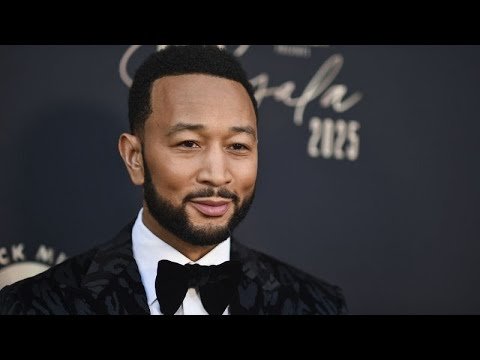
John Legend's journey from Springfield, Ohio to global superstardom is a story that resonates across the African diaspora. Born John Roger Stephens on December 28, 1978, in Springfield, Ohio, he grew up in a family where music was both refuge and calling. His early talent was evident — a child prodigy who sang in the church choir and taught himself piano, absorbing the gospel traditions that would later infuse his secular work with spiritual depth.
The path to stardom was not direct. Legend played piano on Lauryn Hill's "Everything Is Everything," a track that introduced him to the industry's inner circles. He worked with Jay-Z's "Encore" and Alicia Keys' "You Don't Know My Name," building a reputation as a session musician with extraordinary range. These early collaborations were apprenticeships in the truest sense — learning from the masters while developing a voice that was unmistakably his own.
The breakthrough came with "Glory," the Oscar-winning song he recorded with Common for the film Selma. The track, which won the Academy Award for Best Original Song in 2015, was more than a cinematic tie-in; it was a statement of purpose. Legend and Common channelled the civil rights movement's spirit into a contemporary anthem, proving that Black music could be both commercially successful and politically urgent. The song's success opened doors that had long been closed to politically engaged artists.
Legend's historic EGOT status — the first Black man to achieve the feat — was not merely a personal triumph but a collective one. Every Emmy, Grammy, Oscar, and Tony he won represented a barrier broken for the artists who would follow. His ten Grammy Awards and a Golden Globe are testaments to his artistic range, from the tender balladry of "All of Me," which became a Billboard Hot 100 number-one hit, to the social commentary of his more political work.
His journey mirrors the broader African-American experience — a story of roots in African heritage, survival through centuries of oppression, and the relentless pursuit of excellence against all odds. From Springfield's churches to the world's biggest stages, Legend's path is a reminder that Black excellence is not an exception but a tradition, one that stretches back to the continent and forward to future generations.
Black Music's African Roots, Global Reach
To understand the significance of John Legend's honour, one must understand the deep roots of Black music in African soil. Soul, gospel, blues, and R&B all trace their foundations to African musical traditions — the call-and-response patterns, the polyrhythmic structures, the spiritual depth that transformed suffering into art. These traditions travelled across the Atlantic in the holds of slave ships, survived the horrors of the Middle Passage, and emerged transformed in the fields and churches of the American South.
The rhythmic heritage that defines Black American music is unmistakably African. The syncopated beats of gospel, the improvisational freedom of jazz, the emotional directness of soul — all echo the musical practices of West and Central Africa. When Legend sings, he carries within his voice the accumulated memory of generations who used music as both survival and resistance. This is not romantic nostalgia; it is a living tradition that continues to evolve.
Today, the flow of influence has become a two-way street. African artists from Burna Boy and Tyla to Angélique Kidjo now shape the same global conversation that American Black music once dominated. Afrobeats has become a global phenomenon, Amapiano has conquered dance floors worldwide, and African artists are winning Grammys and topping charts. The relationship between American Black music and contemporary African genres is not one of imitation but of dialogue — a conversation between cousins who share a common ancestor.
BMAC's equity mission resonates across the diaspora because the struggles are shared. African artists face many of the same challenges as their American counterparts: unfair contracts, exploitation by labels, lack of ownership over their masters, and underrepresentation in decision-making roles. The specific contexts differ, but the fundamental issues are the same. When BMAC fights for fair treatment of Black music professionals in America, it sends a signal to artists in Lagos, Nairobi, Dakar, and Johannesburg that the fight is global.
The recognition of Legend's humanitarian work is thus not just an American story. It is a diaspora story — a reminder that Black music's power lies not only in its sound but in its ability to mobilise, to heal, and to demand justice. The roots may be African, but the branches now span the globe, and the fruit belongs to all of us.
What African Artists and Audiences Can Learn
There is a lesson in John Legend's career that African artists would do well to study: the power of using fame for advocacy. Legend has never separated his artistry from his activism. From his earliest days in the industry, he understood that his platform was a tool for change, not just a vehicle for personal success. This integration of art and advocacy is a model that African stars are increasingly adopting, from Burna Boy's outspoken politics to Angélique Kidjo's humanitarian work.
African stars are also building their own industry institutions and unions, recognising that collective action is necessary to counterbalance the power of global labels and streaming platforms. In Nigeria, the Performing Musicians Association of Nigeria continues to fight for better conditions. In South Africa, artists have organised around issues of royalty payments and ownership. These efforts mirror BMAC's work, adapting its strategies to local contexts.
The push for fair pay and credit in African music is gaining momentum. Too many African artists have signed away their rights in exchange for exposure, only to watch their work generate wealth for others. The growing awareness of these issues — driven by social media, by the success of artists like Burna Boy and Wizkid, and by the example of organisations like BMAC — is leading to more demanding negotiations and more equitable deals.
The parallels between BMAC's mission and conversations happening in Lagos, Nairobi, Dakar, and Johannesburg are striking. In every major African music hub, artists are asking the same questions: Who owns the music? Who profits from it? Who gets to decide what gets heard? These questions are not new, but they are being asked with new urgency, and organisations across the continent are beginning to provide answers.
African artists can borrow Legend's playbook of blending art with activism. His approach is not heavy-handed or didactic; it is integrated into his music, his public statements, and his behind-the-scenes work. He has shown that it is possible to be commercially successful while remaining politically engaged, to be a global superstar while staying rooted in community. This is a model that translates across borders.
Legend's global reach endures, as evidenced by his upcoming "An Evening of Songs & Stories" shows in Manila on September 3-4, 2026, at the Proscenium Theater, Rockwell Center. The Manila shows were announced on June 29, 2026, with tickets from July 5, and they demonstrate that his appeal extends far beyond the Western markets. For African audiences, this is proof that the diaspora's music continues to travel, to connect, and to inspire.
What to Watch For
John Legend's continuing international touring through 2026 suggests that his influence shows no signs of waning. The Manila shows are just one stop on a global itinerary that will likely include African dates, given his growing fanbase on the continent. For African audiences, the prospect of seeing Legend perform live is not just entertainment; it is a connection to a shared heritage and a shared future.
The growing institutional power of Black music advocacy groups is another trend to watch. BMAC's fifth anniversary is not an endpoint but a launching pad. The coalition has proven that it can deliver results, and its influence is likely to grow in the coming years. Similar organisations are emerging in other countries, creating a global network of advocacy that can challenge the industry's entrenched power structures.
The next generation of African artists breaking globally will benefit from the groundwork laid by pioneers like Legend and the organisations that support them. Artists like Tyla, who has already achieved international success, represent a new wave of African talent that is unapologetic about its roots and ambitious about its reach. These artists are not waiting for permission; they are building their own platforms and demanding their own terms.
Upcoming awards-season recognition will likely continue to feature African and diaspora artists prominently. The success of African music at the Grammys, the BET Awards, and other ceremonies has opened doors that were once closed. As the industry becomes more global, the definition of "Black music" is expanding to include sounds and artists from across the diaspora, and this expansion is being reflected in awards and honours.
The long-term impact of the Quincy Jones award on Legend's philanthropy remains to be seen, but the signs are encouraging. Legend has always treated awards as platforms rather than endpoints, and this honour is likely to intensify his advocacy work. Whether through his criminal justice reform efforts, his education initiatives, or his support for emerging artists, Legend is positioned to be a transformative figure for years to come.
For African creatives building their own careers, the message is clear: the music is only the beginning. The industry's structures must be understood, challenged, and ultimately reshaped. The work of organisations like BMAC, the example of artists like John Legend, and the growing power of African music itself all point toward a future where Black creativity is not just celebrated but fairly compensated, not just heard but heeded. The journey from Springfield to the Beverly Hilton is long, but it is a journey that African artists are now equipped to make themselves.
By Amara Diop, Staff Writer
This article was produced with AI-assisted research and editorial support. Reporting is based on sources cited in the article.
What's Your Reaction?
 Like
0
Like
0
 Dislike
0
Dislike
0
 Love
0
Love
0
 Funny
0
Funny
0
 Wow
0
Wow
0
 Sad
0
Sad
0
 Angry
0
Angry
0

West Africa/Sahel Correspondent at Global1.News. Dakar-based journalist covering politics, security, climate, and development across Francophone and Anglophone West Africa. Tells the stories of a region undergoing profound transformation.












Comments (0)