
Federal Judge Orders 48-Hour Notice Before Work on Trump's 250-Foot Arch Near Arlington
A federal judge on Friday ordered the Trump administration to provide 48 hours’ notice before beginning any work on its proposed 250-foot “Great Triumphal Arch” near Arlington National Cemetery, a ruling that temporarily halts the Interior Department’s plan to break ground within two weeks on a...
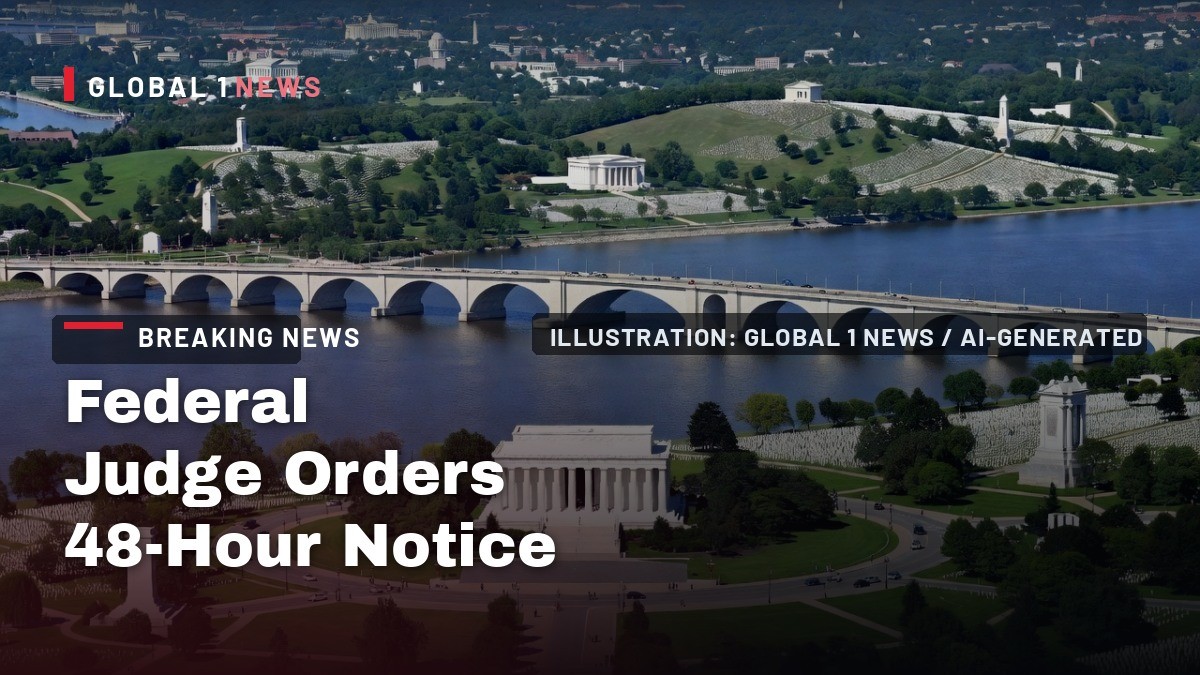
A federal judge on Friday ordered the Trump administration to provide 48 hours’ notice before beginning any work on its proposed 250-foot “Great Triumphal Arch” near Arlington National Cemetery, a ruling that temporarily halts the Interior Department’s plan to break ground within two weeks on a project that has not received final approval from the federal planning commission and faces an active lawsuit from Vietnam War veterans.
U.S. District Judge Tanya Chutkan’s order requires the administration to inform the court at least 48 hours before “engaging in any activity” on Memorial Circle, the traffic island on the Arlington Memorial Bridge between the Lincoln Memorial and Arlington National Cemetery. The ruling comes just one day after Interior Secretary Doug Burgum announced on X that excavation work could begin within the next two weeks, despite the ongoing legal challenge and the National Capital Planning Commission’s (NCPC) failure to sign off on the project.
The arch, which would stand more than twice the height of the Lincoln Memorial and sit less than two miles from the final approach path of Ronald Reagan Washington National Airport, has become one of the most contentious public works projects in modern Washington history. With the NCPC not scheduled to meet again until early October, and with a federal lawsuit filed in February still unresolved, Friday’s ruling injects a new layer of legal scrutiny into a project that critics say has bypassed standard review processes.
The 48-Hour Ruling
Judge Chutkan’s order, issued Friday, Sept. 4, 2026, explicitly states that the administration must provide 48 hours’ notice before engaging in any activity on Memorial Circle, with one narrow exception: on-site information gathering to identify underground cultural artifacts under the National Historic Preservation Act. The judge reiterated that any construction or demolition in preparation for construction before the National Park Service issues final authorization — or without providing 14 days’ notice — would violate Friday’s order and her earlier consent order from April.
In April, Chutkan sharply questioned Trump’s authority to build the arch, prompting the government to agree to a 14-day notice requirement before starting construction. Friday’s ruling tightens that requirement further, adding a 48-hour notification window that gives plaintiffs and the court time to respond to any sudden moves by the administration.
The government, in a court filing Friday, maintained that the planned work is “not construction, or demolition in preparation for construction, of an arch.” Instead, the administration said it intends to dig four “test pits” to assess artifacts and cultural materials, with work starting on or after Sept. 21. The distinction matters legally: if the work is classified as mere site assessment rather than construction, the administration may argue it falls outside the scope of Chutkan’s earlier orders.
Plaintiffs’ attorney Nicolas Sansone of Public Citizen dismissed that framing. “We have no sense of why the administration believes it’s authorized to begin work on the arch,” Sansone told NPR. He called the preparatory work “premature and has no legal basis,” noting that the government “has acknowledged the authority of the federal planning commission — which hasn’t approved the arch and doesn’t meet again until early October.”
A 250-Foot Arch at the Gates of Arlington
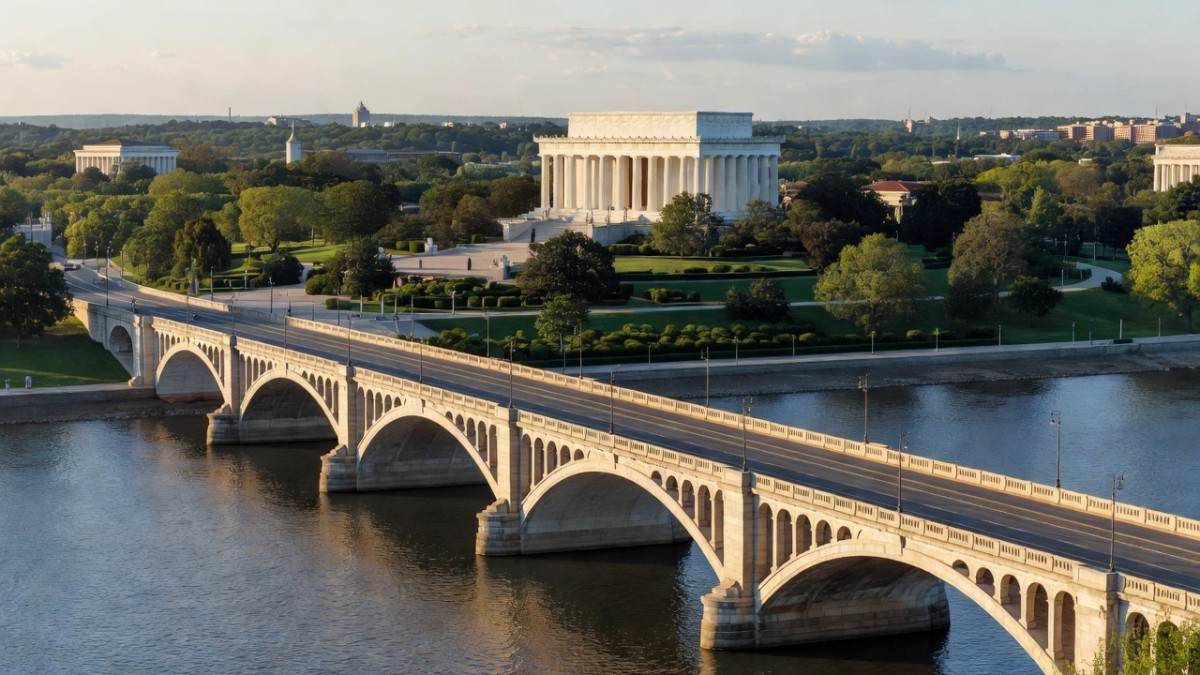
The proposed structure, which Burgum has described as “one of the Great Pieces of American Architecture, honoring the history and significance of Arlington Cemetery and befitting the most powerful Capital in the World,” would rise 250 feet above Memorial Circle. Renderings released by the administration depict a white-and-gold structure topped with three large gilded statues, standing between the nation’s most prominent military cemetery and the Lincoln Memorial.
Memorial Circle is not an empty plot of land. It is the traffic hub connecting the Arlington Memorial Bridge to the cemetery, a route used by funeral processions, daily commuters, and tourists traveling between two of the most visited sites in the capital region. The circle sits on Columbia Island, a narrow strip of land that also falls within the flight path for aircraft approaching Reagan National Airport.
The arch would be more than twice the height of the Lincoln Memorial, which stands at 99 feet. It would disrupt the iconic view between Arlington National Cemetery and the Lincoln Memorial, a sightline designed after the Civil War to represent national reconciliation. Critics have also cited the project’s cost, its impact on funeral processions, vehicle and pedestrian safety concerns, aviation hazards, and the fact that it would violate Washington’s 130-foot building height limit that applies to most of the city.
The National Park Service (NPS) released a report last week confirming that the arch would disrupt the historical significance of dozens of nearby sites. Yet the agency concluded that the “purpose and need for the undertaking require the proposed Arch to be located at Memorial Circle.” That finding has drawn sharp criticism from preservation groups, who argue the NPS has effectively predetermined the outcome of its own review.
The Veterans’ Lawsuit
The legal challenge at the center of Friday’s ruling was filed in February 2026 by three Vietnam War veterans and an architectural historian, backed by the nonprofit Public Citizen. The case, Lemmon v. Trump, argues that the arch would desecrate Arlington National Cemetery and requires congressional approval — approval the administration has neither sought nor received.
On Friday, the plaintiffs asked Chutkan for a 14-day temporary restraining order blocking any steps to construct any structure on Memorial Circle. The request came in direct response to Burgum’s Thursday announcement that excavation could begin within two weeks, a timeline that would put ground-breaking activity before the NCPC’s next scheduled meeting in early October.
Sansone argued that the veterans have standing to sue because they regularly visit Arlington National Cemetery, a point he says distinguishes their case from the Supreme Court’s recent ruling on the White House ballroom. “The Supreme Court’s decision in the ballroom case has made clear that once construction starts, it’s very hard to walk it back,” Sansone warned.
The veterans have attested to “far more than mere offense at the government’s action,” Sansone said. They have described the arch as a physical intrusion on a space they consider sacred, a place where they have buried comrades and visited fallen friends. The lawsuit argues that building a 250-foot monument at the cemetery’s gateway would fundamentally alter the character of the site and dishonor those interred there.
An Approval Process Under Pressure
The arch has not received final approval from the NCPC, the federal agency responsible for planning and reviewing major projects in the capital region. The commission is weighing whether to grant an exception to the 130-foot height limit that applies to most of Washington, a limit that the proposed arch would exceed by nearly double.
The NCPC does not meet again until early October, meaning any excavation work starting on or after Sept. 21 would occur before the commission has rendered a decision. That sequencing has alarmed preservationists and legal experts, who say the administration is attempting to create facts on the ground before the review process concludes.
Ed Stierli, vice president of government affairs at the National Parks Conservation Association, said the review process “feels like more of a box-checking than an actual, legitimate process.” Stierli’s criticism reflects a broader concern that federal panels packed with Trump allies have greenlit the arch despite unanswered questions and thousands of overwhelmingly negative public comments.
The NPS report, while acknowledging harm to dozens of historic sites, nonetheless insisted on Memorial Circle as the only acceptable location. That conclusion has been met with skepticism by opponents who note that the administration has not seriously considered alternative sites or designs that would preserve the view corridor between Arlington and the Lincoln Memorial.
The White House Ballroom Shadow
Thursday’s court filings in the arch case came just one day after the Supreme Court ruled that construction of Trump’s White House ballroom could continue, finding that the historic-preservation group that sued lacked standing. Chief Justice John Roberts, in a dissent joined by the liberal justices, wrote that the ballroom is likely unlawful without Congress’ approval.
The administration moved Thursday to dismiss the arch case on the same grounds, arguing in court filings that “plaintiffs’ distaste for the perceived symbolism of the proposed arch does not establish a concrete and particularized injury.” Government lawyers are seeking to apply the ballroom ruling’s standing analysis to the veterans’ lawsuit, a move that would effectively end the challenge before it reaches the merits.
Sansone pushed back, arguing that the ballroom ruling actually strengthens the veterans’ case. Unlike the historic-preservation group in the ballroom case, the veterans have personal, ongoing connections to Arlington National Cemetery. They visit the site regularly, attend funerals there, and have a direct stake in how the space is used and honored.
The ballroom ruling has nonetheless created a legal environment favorable to the administration, which has cited it in multiple cases involving Trump’s capital projects. The arch is one of several such projects reshaping Washington: the White House ballroom, renovations of the Reflecting Pool at the Lincoln Memorial, and the proposed “National Garden of American Heroes” with 250 statues have all moved forward through expedited or unconventional approval processes.
Politics and the Midterm Clock
The arch project is unfolding against a politically volatile backdrop. With midterm elections approximately nine weeks away, control of the House of Representatives hangs in the balance, and the arch has become a flashpoint in races across the Washington region.
Rep. Don Beyer (D-Va.), whose district includes parts of Arlington and the area around the cemetery, told NPR that he has “not met a single constituent in my inside-the-Beltway district, Democrat or Republican, who wants this arch.” Beyer called it “an illegal, gridlock-increasing, narcissistic arch” and predicted that Republicans may lose the House majority in the midterms.
If Democrats take control of the House, Beyer said, the project could face new congressional scrutiny and funding challenges. He expects “massive protests” if construction begins and doubts any structure would last long. “I don’t imagine that will even stay that long because subsequent presidents, Democratic and Republican, would be so shamed by that, they would bring it down,” Beyer said.
The political calculus is not lost on the administration, which has moved rapidly to begin excavation before the NCPC meets and before voters go to the polls. Burgum’s Thursday announcement, timed to coincide with the Supreme Court’s ballroom ruling, suggests the administration is seeking to build momentum while the legal and political winds are favorable.
What Happens Next
Judge Chutkan’s 48-hour notice order provides a temporary brake on the administration’s timeline, but it does not resolve the underlying legal questions. The plaintiffs’ request for a 14-day temporary restraining order remains pending, and the NCPC has yet to rule on the height exception that the arch would require.
The government has indicated it will proceed with the four test pits starting on or after Sept. 21, a date that falls within the two-week window Burgum announced Thursday. Whether that work constitutes “construction” or “demolition in preparation for construction” under Chutkan’s orders is a question the court may need to resolve in the coming days.
Sansone said the administration’s approach should trouble all Americans, regardless of their views on the president. “Irrespective of one’s sympathies for the president or antagonism toward the president, a system where the executive branch essentially gets to build first and answer later the question of whether that building is lawful should trouble all of us,” he said.
For now, the arch remains a rendering on a screen and a legal dispute in federal court. But with Burgum’s announcement and the administration’s stated intention to begin excavation within two weeks, the question of whether the arch will ever rise above Memorial Circle may be answered sooner rather than later. The 48-hour notice requirement gives plaintiffs and the court a window to intervene, but it does not stop the clock entirely.
The NCPC’s October meeting will be a critical juncture. If the commission denies the height exception, the administration would face a significant legal hurdle. If it grants the exception, the project would gain a layer of procedural legitimacy it currently lacks. Either way, the veterans’ lawsuit will continue, and the Supreme Court’s ballroom ruling will loom over every subsequent motion and argument.
Trump first publicly discussed the arch in October 2025, telling journalists it was for “me,” a comment the administration later reframed as honoring the nation’s 250th anniversary. That origin story has followed the project ever since, feeding criticism that the arch is a personal monument rather than a public memorial. The renderings — white and gold, topped with gilded statues — do little to dispel that impression.
As the legal and political battles continue, one thing is clear: the ground at Memorial Circle has not yet been broken, but the fight over what will stand there is already well underway.
By Jessica Ali, Staff Writer
This article was produced with AI-assisted research and editorial support. Sources: NPR, Reuters, USA Today, The Independent.
What's Your Reaction?
 Like
0
Like
0
 Dislike
0
Dislike
0
 Love
0
Love
0
 Funny
0
Funny
0
 Wow
0
Wow
0
 Sad
0
Sad
0
 Angry
0
Angry
0

Editor-in-Chief at Global1.News. Atlanta-based journalist who cuts through the BS and tells it like it is. Lead anchor, host, and the voice you hear when the spin stops and the truth starts.











Comments (0)