
Opposing Thai views on IMF and World Bank Protests Expose a Divide in Empathy
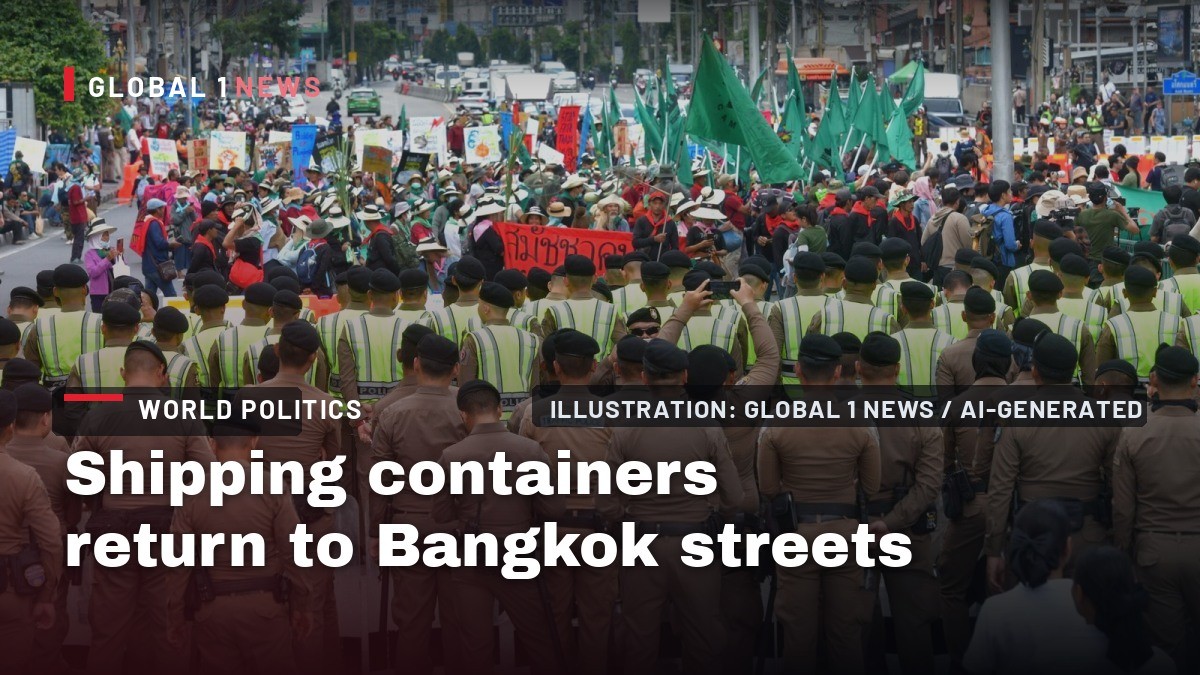
When police in Bangkok chose to confront anti‑IMF and World Bank protesters with force rather than simply stand aside, the city’s streets filled with journalists the next day.
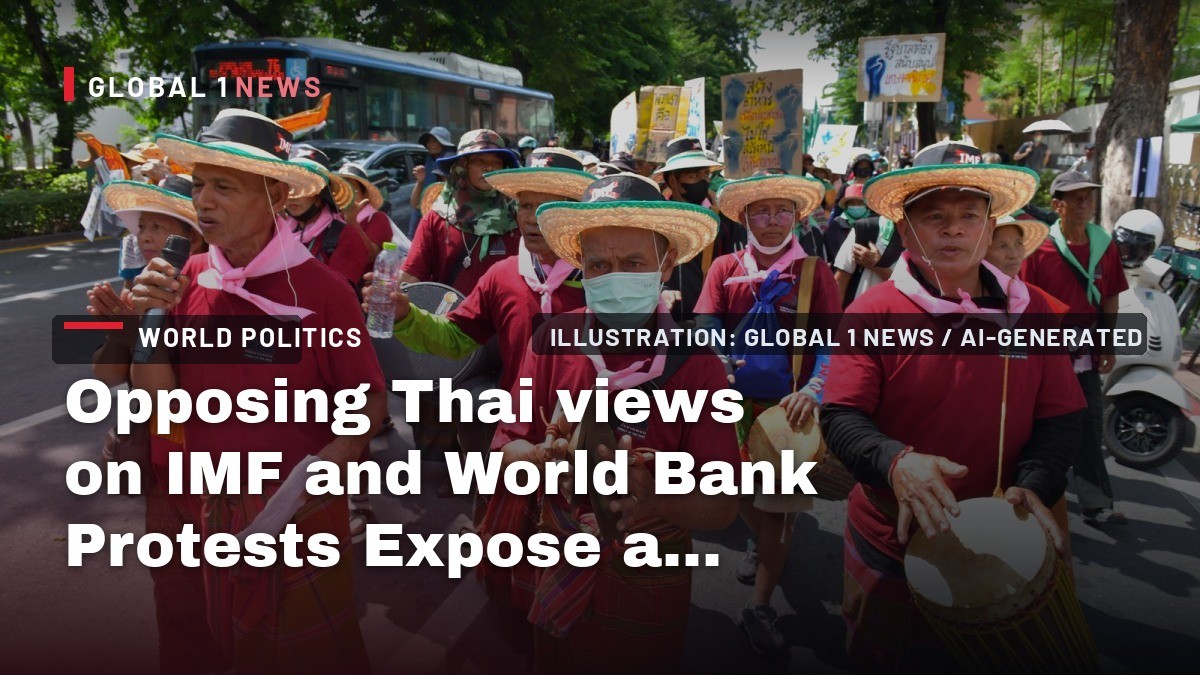
When police in Bangkok chose to confront anti‑IMF and World Bank protesters with force rather than simply stand aside, the city’s streets filled with journalists the next day. The clash, which left a few demonstrators with minor injuries, sparked a flood of social‑media commentary that laid bare a deep divide in Thai society. On one side are those who question the knowledge and motives of rural protestors; on the other are citizens who point to decades of policy outcomes that have left many Thais feeling the weight of neoliberal reforms. The debate, echoing the Thai saying “stupid, but hardworking,” reveals how class, geography and ideology shape perceptions of global financial institutions.
Police response and the surge of media attention
The police’s decision to physically confront the anti‑IMF and World Bank demonstrators on Thursday seemed driven by a fear that no reporters would be present to document the protest. Within hours, the incident went viral, prompting a “droves” of journalists to converge on the scene. This sudden media presence turned a local scuffle into a national conversation, with Facebook users quickly sharing their reactions and amplifying the clash across the country.
One commentator, writing under the name JRT Desk พาxวย, wagered “300 baht” that half of the protestors did not even know what the IMF stood for. The comment, posted just after news of the police‑protester clash spread, encapsulated a broader skepticism that many urban Thais hold toward the rural participants. Yet the same user later offered a more nuanced defence of the institutions, suggesting that the criticism was not wholly unfounded.
Social media echo chambers and the question of legitimacy
Opponents of the protest quickly raised doubts about the protesters’ authenticity. Some wondered whether the demonstrators were “paid protesters funded by foreign anti‑globalisation organisations,” while others suggested the rallies were simply attempts to embarrass the Anutin Charnvirakul government. A user calling themselves “Follow Me” asked protesters to consider the country’s reputation, and another, Aey Kittipongse Yenphosri, accused the demonstrators of seeking to “discredit the government” whenever an international meeting is held in Thailand.
These remarks highlight a familiar pattern in Thai public discourse: the tendency to cast dissenting voices as either naïve or manipulated. The divide is not merely about the IMF or World Bank; it reflects a deeper suspicion of grassroots mobilisation, especially when it threatens the image of a government eager to host global events.
The socioeconomic lens: who feels the impact?
At the heart of the disagreement lies a stark contrast in lived experience. The source material stresses that a Thai person’s view of the IMF and World Bank is heavily influenced by socioeconomic class and ideology. Those who have felt the adverse effects of neoliberal policies tend to oppose the institutions, while many middle‑class or affluent Thais remain largely unaffected and sometimes unaware of the consequences.
Big foreign businesses, for instance, can more easily enter Thai markets under the liberalisation frameworks championed by the IMF and World Bank. For many ordinary Thais, especially in rural areas, the benefits of such market openness are invisible, while the costs—higher electricity prices, reduced welfare, and the loss of traditional livelihoods—are felt directly.
The Pak Moon Dam story: a microcosm of development pain
The proposed Pak Moon Dam illustrates how World Bank‑backed projects can upend local ways of life. Villagers who have fished the Moon River’s rapids for generations face the destruction of those rapids as the dam is built to supply electricity for Bangkok’s expanding malls and urban growth. The loss of the river’s flow means the loss of income for families, forcing able‑bodied adults to migrate to the city for low‑paid jobs as labourers or taxi drivers.
Children are left behind in Ubon Ratchathani, a province ten hours away by bus, cared for by ageing grandparents. The term “virtual orphans” has been used to describe these youngsters, who grow up separated from their parents. In some cases, families borrow money against ancestral land, only to become landless when they cannot repay the loans. This narrative underscores how large‑scale development, while promising national progress, can create generational hardship for the most vulnerable.
Education under strain: the IMF’s lingering legacy
Another lasting impact of IMF‑mandated reforms is seen in Thailand’s tertiary education system. After the 1997 Asian financial crisis, the IMF imposed eleven conditions that led to reduced state funding for universities. Public institutions, losing subsidies, raised tuition fees to stay afloat. For low‑income students, the chance to secure a scholarship or studentship became increasingly slim, while wealthier families could still afford higher education.
The shift also spurred the creation of English‑language programmes that charge higher fees but often lower admission standards. These programmes have become “cash cows” for universities, turning education into a revenue source rather than a public good. The result is a widening gap in educational opportunity, reinforcing the class divide that fuels the current protests.
Privatisation of electricity and the cost to everyday Thais
Privatisation of parts of the state electricity enterprise, another policy encouraged by the IMF and World Bank, has turned citizens into consumers rather than citizens. Higher electricity costs now burden households, while private firms profit from selling power. This transformation reflects a broader trend: essential services being treated as market commodities, a shift that many protestors see as prioritising profit over public welfare.
Such changes have also amplified the sense that ordinary Thais are being asked to pay for the benefits enjoyed by large corporations and foreign investors. The feeling of being “treated as mere consumers” resonates strongly in the protest rhetoric, linking economic policy to everyday hardship.
Finding empathy across the divide
Amid the heated exchanges, some voices call for understanding. Baramee Chairat of the Assembly of the Poor reminded Bangkokians that the inconvenience of traffic disruptions caused by protests lasts only a few hours, whereas the adverse impacts of IMF and World Bank policies can span generations. This perspective invites a broader reflection on how empathy can bridge the gap between those who see protestors as uninformed and those who view them as victims of systemic policy.
Both sides of the debate share a common thread: concern for Thailand’s future. Whether questioning the knowledge of rural demonstrators or defending the role of global financial institutions, the conversation underscores a nation grappling with how to balance development, sovereignty, and social justice. As the IMF‑World Bank meetings continue, the dialogue sparked by the Bangkok scuffle may become a catalyst for deeper, more inclusive discussions about Thailand’s path forward.
This article was produced with AI-assisted research and editorial support. Reporting is based on the source material cited below. Sources: Khaosod English; khaosodenglish.com; Global1.News (17 October 2026).
By Ann Srisawat, Staff Writer
What's Your Reaction?
 Like
0
Like
0
 Dislike
0
Dislike
0
 Love
0
Love
0
 Funny
0
Funny
0
 Wow
0
Wow
0
 Sad
0
Sad
0
 Angry
0
Angry
0

Southeast Asia Correspondent at Global1.News. Based in Bangkok, covering Thai and Southeast Asian politics, economy, technology, and culture. Deep regional perspective on one of the world's most dynamic regions.











Comments (0)