
Israeli Groups, Palestinians Challenge East Jerusalem Settlement Plan
Palestinian residents and three Israeli rights groups have petitioned the Jerusalem District Court to freeze the first tender for 1,234 units of the illegal E1 settlement project east of Jerusalem, as governments including the UK, France, Germany, Egypt and Jordan condemned the plan.
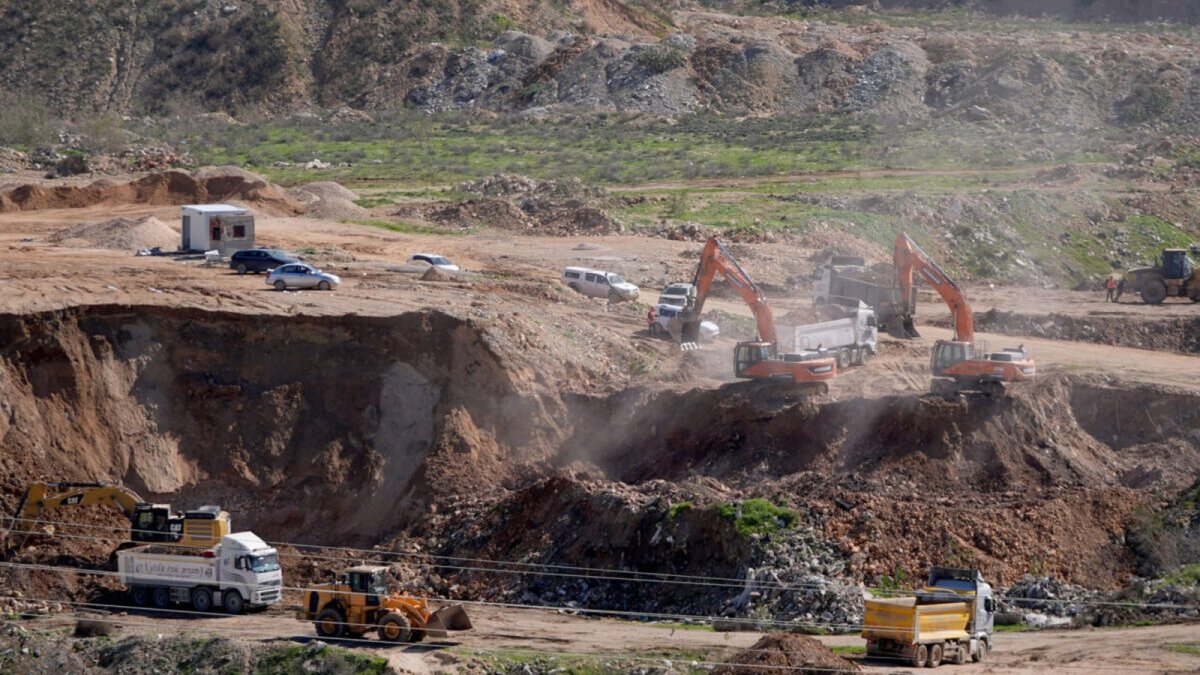
occupied East Jerusalem — Palestinian residents and three Israeli human rights organizations have filed an urgent petition with the Jerusalem District Court seeking to freeze a tender for the construction of 1,234 illegal settlement units under the controversial E1 plan, east of Jerusalem. The petition, filed Thursday, comes as international condemnation mounts over a project that critics say would effectively sever the occupied West Bank in two and bury any remaining prospect of a two-state solution.
Urgent Petition Seeks to Halt First E1 Tender
The petition, filed by the rights groups Ir Amim, Bimkom and Peace Now together with Palestinian community members, asks the court to issue an interim order suspending the first tender under the E1 plan, which was published this week for the construction of 1,234 housing units. According to a statement issued by Ir Amim, the petitioners have also requested that the court halt the publication of additional tenders, or any other steps toward the plan's implementation, until a ruling is issued.
Attorney Michael Sfard represents the petitioners in Case No. 4388-10-25. No date has yet been set for the court to hear the petition. Earlier this year, on June 15, the court rejected the State's motion to dismiss the petition and ordered the State to file a detailed response by September 1.
Tender Published Without Advance Notice
On August 18, Israel's Ministry of Housing published and opened for bidding a new, separate tender for 1,234 housing units in E1, east of East Jerusalem, according to Peace Now and Human Rights Watch. The 1,234 units represent roughly a third of the 3,401 housing units approved for the E1 plan. The bidding period closes October 19 — one week before Israeli elections scheduled for October 27.
The petitioners said they were not given advance notice and learned of the tender through the Israel Land Authority website. This contradicts an assurance given by the State Attorney's Office approximately a month earlier, in July, when petitioners were informed the tender would not be published for two months and that they would be notified in advance. Rather than opening the existing January tender (No. 460/2025) covering the entire approved number of units, the State issued this new separate tender. On December 9, 2025, the ministry published a call for tenders for the 3,401 units; it was initially scheduled to open December 29 but was postponed three times.
What Is the E1 Plan?
E1 covers more than 2,960 acres (roughly 12 square kilometres) of land east of Jerusalem — one of the largest illegal settlement projects in the occupied Palestinian territories. The project is intended to link the illegal Maale Adumim settlement, east of Jerusalem, with West Jerusalem by building thousands of new settlement units and hotels. It includes housing, roads, and industrial and commercial zones, and aims to create demographic, territorial and transportational contiguity between Jewish settlements in East Jerusalem and the West Bank.
Critics say the project will divide the occupied West Bank in two, severing the northern West Bank from the south, and further cut East Jerusalem off from its Palestinian surroundings. The E1 project was approved by the Israeli government in 2025; Finance Minister Bezalel Smotrich approved the project in August 2025 and has boasted it will "bury the idea of a Palestinian state." For decades, Israeli governments refrained from building in E1 due to concerns about its impact on the prospects for a two-state peace agreement, according to Peace Now.
International Condemnation This Week
The UK, Italy, France and Germany on Thursday condemned Israel's decision to publish construction tenders for E1, warning they threaten the chance of a two-state solution. The four governments called the expansion "unacceptable" and warned E1 would "undermine the prospect of the two-state solution by driving a wedge through the West Bank and harming the territorial contiguity of the Palestinian Territories." They stated that "International Law is clear that Israeli settlements in the West Bank are illegal" and that the position had been reaffirmed by the UN Security Council. The governments expressed concern about "unprecedented levels of violence by settlers against civilians" alongside serious restrictions on the Palestinian economy, and urged Israel to withdraw the plans immediately. They also urged businesses not to bid for construction tenders, warning of potential "legal and reputational consequences," including risk of involvement in "serious breaches of international law."
UK Foreign Secretary Ed Miliband called the move an "unacceptable and destructive act" that could undermine the prospect of a Palestinian state, and said he had told Israeli Foreign Minister Gideon Sa'ar that Israel must immediately halt the plans, withdraw the tender, and stop all settlement expansion. Israel's charge d'affaires was summoned to the Foreign, Commonwealth and Development Office. Miliband said the UK would set out measures including sanctions against those involved in illegal settlement expansion: "Britain will not stand back and accept the destruction of the two-state solution."
Egypt's Foreign Ministry "strongly condemns" the implementation of E1, which it said "aims to divide the West Bank and encircle and isolate occupied East Jerusalem from its Palestinian surroundings," reaffirming support for an independent Palestinian state along the June 4, 1967 borders with East Jerusalem as its capital. Jordan's Foreign Ministry spokesman Fuad Al-Majali said Amman "rejects absolutely" the E1 project and Israel's continued settlement plans, saying such policies amounted to "entrenching the occupation and clearly undermining international efforts toward a two-state solution." He referred to the advisory opinion of the International Court of Justice (ICJ), which affirmed the illegality of Israel's occupation and the invalidity of settlement construction and annexation measures.
French Foreign Minister Jean-Noel Barrot said in an interview in late May that "any company that responds to the call to bid on the project will expose itself to international sanctions." The European Union has repeatedly stated that implementation of the E1 plan will undermine prospects for a two-state solution and the emergence of a viable Palestinian state. A joint statement by 14 countries condemned E1 in December 2025, along with the European External Action Service.
Human Impact: Displacement and Erasure
Human Rights Watch said E1 would deliberately fragment the occupied West Bank by severing its northern part from its southern part, forcibly displace over 18 Bedouin communities, and further entrench apartheid. Sarah Sanbar, acting Israel and Palestine researcher at Human Rights Watch, said: "Behind housing units in E1 are Palestinian families facing displacement. Companies bidding to build those houses are bidding on complicity in a war crime." Sanbar also said: "The E1 project isn't just housing; it's erasure of Palestinians, their homes, and their livelihoods. Israel cannot be allowed to alter 'facts on the ground' and entrench apartheid with impunity."
Peace Now warned that implementing E1 "threatens to disconnect dozens of Bedouin communities, including Khan al-Ahmar, and to lead to their expulsion from their land." Khan al-Ahmar, a Bedouin community of about 250 people, has faced repeated threats of forced eviction since the project was first advanced in the 1990s. In May, Smotrich directed the Israeli Civil Administration in the West Bank to evict the community "as soon as possible" following media reports of a possible arrest warrant against him by the International Criminal Court. According to Amnesty International, at least 117 herding and Bedouin communities have been forcibly displaced from the West Bank since 2023.
Legal Challenge and Broader Implications
Ir Amim said even "partial implementation would create irreversible facts on the ground, fundamentally altering the geographic and strategic character of the area — severing the northern West Bank from the south and isolating East Jerusalem." Peace Now accused the "Netanyahu-Smotrich government" of "trying to bury the two-state solution" through the project: "In the midst of an election campaign, the government is trying to turn the annexation vision of the pro-settlement right into reality and to tie the hands of the next government. The move is also being carried out in violation of an explicit commitment by the state."
The Palestinian Authority's Colonization and Wall Resistance Commission warned the plans would confine Palestinians in the occupied West Bank to "disconnected enclaves surrounded by settlements." Al Jazeera's Nida Ibrahim, reporting from Hizma in the occupied West Bank, said E1 would be the "last nail in the coffin" of the two-state solution: "The ultimate goal for the Israelis is to get Palestinians to leave."
In July 2004, the ICJ concluded that Israeli settlements violate the Fourth Geneva Convention and are unlawful. In 2024, the court reaffirmed this and affirmed the illegality of the Israeli occupation of Palestinian territory, finding Israeli land policies do not conform with international law. The court affirmed Israel's obligation to halt settlement expansion, evacuate existing settlements, and provide reparations to Palestinians, and said other countries are obliged not to assist in the maintenance of the unlawful situation. Article 49 of the Fourth Geneva Convention prohibits forcible transfer of protected persons and the transfer of an occupying power's own civilian population into occupied territory; both can constitute war crimes.
As the court considers the urgent petition, the international community watches closely. The coming weeks — with the bidding period closing just days before Israeli elections — will be critical in determining whether the E1 project proceeds or is halted by judicial intervention. For the Palestinian families and Bedouin communities in the path of the plan, the stakes could not be higher.
This article was produced with AI-assisted research and editorial support. Sources: Middle East Monitor, Al Jazeera, Human Rights Watch, Peace Now, Anadolu.
By Fatima Al-Rashid, Staff Writer
What's Your Reaction?
 Like
0
Like
0
 Dislike
0
Dislike
0
 Love
0
Love
0
 Funny
0
Funny
0
 Wow
0
Wow
0
 Sad
0
Sad
0
 Angry
0
Angry
0

Gulf/MENA Correspondent at Global1.News. Based in Doha, covering Gulf politics, energy markets, diplomacy, and development across the Middle East and North Africa. Tracks the economic transformation of the Gulf states.












Comments (0)