
Detainee Recounts Killing of Gaza Doctor Adnan al-Bursh in Israeli Custody
In a recent Middle East Eye video report, released Palestinian detainee Islam Al-Hijazi recounts the final hours of Dr Adnan al-Bursh, the head of orthopaedics at Gaza's al-Shifa Hospital, who died in Israeli custody at Ofer Prison in April 2024. Al-Hijazi's testimony, published on 20 August 2026, offers the most detailed account yet of the violence that preceded the doctor's death, and of the prison system's alleged indifference as he lay dying.
In a recent Middle East Eye video report, released Palestinian detainee Islam Al-Hijazi recounts the final hours of Dr Adnan al-Bursh, the head of orthopaedics at Gaza's al-Shifa Hospital, who died in Israeli custody at Ofer Prison in April 2024. Al-Hijazi's testimony, published on 20 August 2026, offers the most detailed account yet of the violence that preceded the doctor's death, and of the prison system's alleged indifference as he lay dying.
Doctor's final hours recounted by released detainee
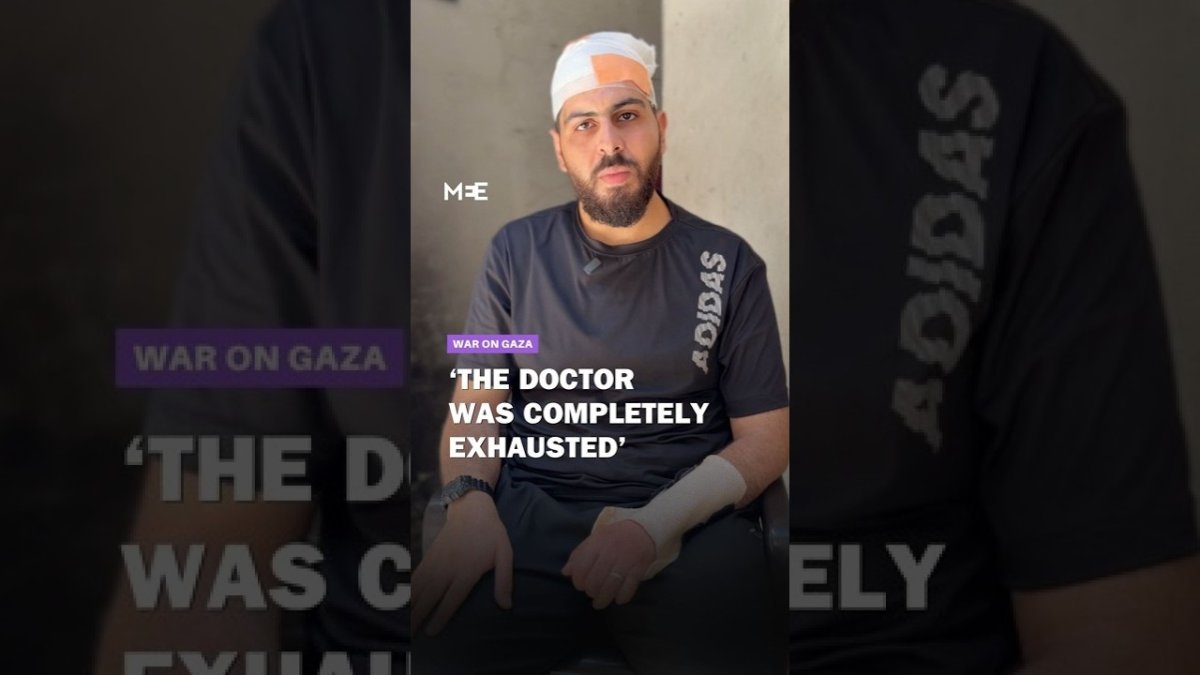
Ramallah, occupied West Bank – 20 August 2026 — Islam Al-Hijazi says he did not know Dr Adnan al-Bursh personally. But when he was transferred to Ofer Prison in the occupied West Bank months after the doctor's death, fellow prisoners pointed to the room where he had been held and told him: "This is the room where Dr Adnan died." What Al-Hijazi learned from those prisoners, and what he says he witnessed of the broader detention system, has now been shared with Middle East Eye in a video interview that has renewed calls for an international investigation into the death of one of Gaza's most respected physicians.
A Room Where a Doctor Died
Al-Hijazi, who was arrested at a hospital in Gaza City while recovering from surgery for a head injury sustained during the war, was transferred through several Israeli detention facilities before arriving at Ofer. It was there, he told Middle East Eye, that he was placed in the same cell where Dr al-Bursh had died months earlier. The room itself carried no marker, no plaque, no indication of what had occurred within its walls. But the prisoners who had been present that night in April 2024 recognised it immediately.
Their account, as relayed by Al-Hijazi, describes a scene of sustained brutality. According to the prisoners' testimony, when Dr al-Bursh arrived at the prison, a guard asked him directly: "Are you the doctor?" When he confirmed his identity, the guard responded: "We have been waiting for you." Approximately 20 guards then surrounded him and beat him for roughly half an hour — with their hands, feet, batons, boots and electric shocks. The prisoners in adjacent cells heard him calling for help. His voice weakened, then stopped. But the beating continued even after he appeared to lose consciousness.
Al-Hijazi's account aligns with earlier testimony documented by human rights organisations, but it adds a chilling detail: the sense of anticipation, the suggestion that Dr al-Bursh's arrival was expected, and that his fate may have been sealed before he ever entered the prison.
The Account: Twenty Guards and a Half-Hour Beating
After the beating, according to the prisoners' account relayed by Al-Hijazi, Dr al-Bursh was taken to Section 23 of Ofer Prison. Guards shouted insults — "Get up, you dog" — and threw him onto the floor of a cell. He was barely breathing. The prisoners began banging on their doors, demanding urgent medical care. Al-Hijazi said their appeals were ignored. At least one guard mocked them, he said, dismissing their pleas with contempt.
It was only later, Al-Hijazi said, that Dr al-Bursh was connected to a heart monitor. By then, he was already dead. His body was placed in a white bag and removed from the prison. It was taken, Al-Hijazi said, to what Palestinians call a "cemetery of numbers" — burial sites where bodies are identified by numbers rather than names, a practice that has become a grim symbol of the erasure of Palestinian identity in Israeli custody.
Dr al-Bursh's family says Israeli authorities still withhold his remains more than two years after his death. His widow, Yasmin Hamada, has renewed the family's demand for an international investigation and has appealed to the International Committee of the Red Cross to help secure the return of his body.
A Doctor Who Refused to Leave His Patients
Dr Adnan al-Bursh was 50 years old when he died. Born in Jabalia in 1974, he studied medicine in Romania and later served as an adviser to the Palestine national football team. He was married to Yasmin Hamada and was the father of five children. But it was his work as head of orthopaedics at al-Shifa Hospital, Gaza's largest medical facility, that defined his final years.
After the war began in October 2023, Dr al-Bursh worked almost continuously, sleeping at al-Shifa Hospital rather than going home. He refused to leave northern Gaza even as Israeli forces advanced, moving instead to the Indonesian Hospital when al-Shifa became untenable. In November 2023, the Indonesian Hospital was surrounded by Israeli tanks. Projectiles killed at least 12 people. Dr al-Bursh was injured but survived.
He then moved to al-Awda Hospital, where he continued to treat patients under increasingly dire conditions. In December 2023, Israeli forces surrounded the hospital and detained him alongside other medical workers. The Israeli military confirmed that Dr al-Bursh was taken to Sde Teiman military detention facility on 19 December 2023.
Corroboration: What Earlier Witnesses Said
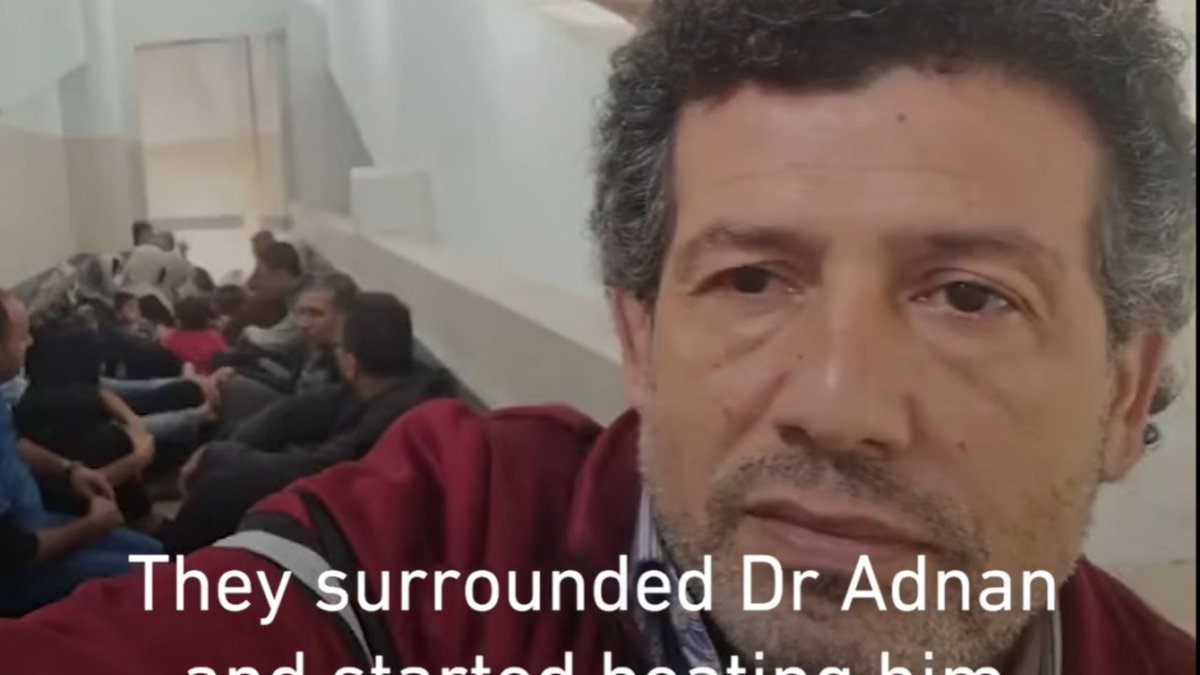
Al-Hijazi's account is not the first to describe the violence Dr al-Bursh endured. A deposition to the Israeli human rights organisation HaMoked, reported in a Sky News investigation, said al-Bursh arrived at Ofer Prison in mid-April 2024 injured, naked below the waist and unable to stand. He died shortly after being helped into a room. A March 2025 report by the UN Independent International Commission of Inquiry documented witness evidence that he was assaulted and stripped below the waist before his death.
Fellow detained doctor Khalid Hamouda, who was held with al-Bursh at Sde Teiman, said the orthopaedic surgeon arrived badly beaten, in severe pain, unable to use the toilet without help and fearing broken ribs. He was transferred to the Israel Prison Service on 20 December 2023 and later moved to Ofer Prison, where he died on 19 April 2024.
Israeli authorities have said al-Bursh was detained for national security reasons and suspected of involvement in terrorism. He was never formally charged. The Israel Prison Service has denied abuse, saying it operates according to Israeli law and was unaware of the events described. During interrogation, according to reports, al-Bursh told his interrogators: "I am a doctor. I treat any patient who comes to me. I do not look at their identity or nationality. I look at their injury."
A Widow's Search for a Body
For Yasmin Hamada, the past two years have been a relentless search for answers and for her husband's remains. In interviews with Al Jazeera and other outlets, she has described the agony of not knowing where her husband's body is, of being unable to bury him according to Islamic tradition, of having to explain to her five children that their father is gone but that his body has not been returned.
Her appeal to the International Committee of the Red Cross reflects a broader frustration among Palestinian families who say Israeli authorities have not provided adequate information about the fate of loved ones detained and killed in custody. The "cemetery of numbers" that Al-Hijazi described is a practice that human rights organisations have long condemned, arguing that it deprives families of the right to mourn and to know the fate of their relatives.
The family's demand for an international investigation has been echoed by UN experts. In June 2025, UN experts wrote to the Israeli government noting that more than 250 healthcare workers had reportedly been detained since October 2023, with almost 150 still in custody and at least four medical professionals reported to have died in detention. They called for an immediate, impartial, independent and effective investigation into these deaths.
Broader Pattern: Medical Workers and Detainees Under Fire
Al-Hijazi told Middle East Eye that Dr al-Bursh's death fits a wider pattern. He claimed to have witnessed the "execution" of two detainees at Sde Teiman and the death of another prisoner with a heart condition at Ofer Prison in 2025. He accused the prison administration, the Israeli military and National Security Minister Itamar Ben-Gvir of presiding over a system in which Palestinian detainees die without accountability.
"Prisoners are being killed in cold blood," Al-Hijazi said. "There is no responsibility and no humanity in the way they are treated."
His testimony adds to a growing body of evidence about the treatment of Palestinian detainees since October 2023. Human rights organisations, including HaMoked, B'Tselem and Amnesty International, have documented widespread abuses, including beatings, prolonged shackling, sleep deprivation and denial of medical care. The Israeli military has denied systematic abuse, saying it operates according to Israeli and international law.
For medical workers in particular, the risks have been acute. Doctors, nurses and paramedics have been detained, killed and prevented from reaching patients. The UN experts' letter in June 2025 highlighted the specific vulnerability of healthcare workers, who are protected under international humanitarian law but who have faced what the experts described as "unprecedented" attacks.
Analysis and Implications
The death of Dr Adnan al-Bursh has become a symbol of the broader assault on Gaza's healthcare system and of the treatment of Palestinian detainees. His refusal to leave his patients, his insistence that he treated anyone who came to him regardless of identity or nationality, and the circumstances of his death have resonated far beyond Palestine.
Al-Hijazi's testimony, coming more than two years after the event, serves as a reminder that the full truth about what happened to Dr al-Bursh has not yet been established. The Israeli authorities have denied abuse and said they were unaware of the events described, but they have not provided a detailed account of the doctor's final hours. They have not explained why he was never charged, why his body has not been returned, or why the prisoners' accounts of his beating have not been investigated.
The international community's response has been limited. The UN Commission of Inquiry has documented the case, and UN experts have called for an investigation, but no independent mechanism has been established to examine the deaths of detainees in Israeli custody. The families of Dr al-Bursh and others continue to wait.
For Yasmin Hamada, the wait is not just for justice but for the body of her husband. She has said she will not stop demanding answers, that she will not let his death be forgotten. Her appeal to the Red Cross is a plea for basic humanity — for the right to bury her husband, to mourn him, to give him a grave with his name on it rather than a number.
Al-Hijazi's account, and the accounts of other released detainees, suggest that the system that led to Dr al-Bursh's death remains intact. The same prisons, the same guards, the same policies. The same silence from Israeli authorities. The same absence of accountability.
As the world marks more than two years since Dr al-Bursh's death, his case remains unresolved. His family continues to demand an international investigation. His colleagues continue to work under impossible conditions in Gaza's devastated hospitals. And his body remains in a place his family does not know, identified by a number rather than a name.
The question is whether the international community will act — whether the testimony of men like Islam Al-Hijazi, the documentation of human rights organisations and the pleas of a widow will be enough to compel an independent investigation. Or whether Dr al-Bursh will remain, like so many others, a number in a cemetery, his story told only by those who were there and who survived to speak.
By Fatima Al-Rashid, Staff Writer
This article was produced with AI-assisted research and editorial support. Reporting is based on sources cited in the article.
What's Your Reaction?
 Like
0
Like
0
 Dislike
0
Dislike
0
 Love
0
Love
0
 Funny
0
Funny
0
 Wow
0
Wow
0
 Sad
0
Sad
0
 Angry
0
Angry
0

Gulf/MENA Correspondent at Global1.News. Based in Doha, covering Gulf politics, energy markets, diplomacy, and development across the Middle East and North Africa. Tracks the economic transformation of the Gulf states.











Comments (0)