
Iran Vows 'We Will Not Submit' as US Prepares Unprecedented Economic Squeeze
Iran's leadership vows it "will not submit" as the US prepares unprecedented economic sanctions. With the Strait of Hormuz at 20% of pre-war traffic, gas prices up $0.97 per gallon, and both sides refusing to blink, the crisis deepens.
The Message From Tehran: Defiance, Not Surrender
Iran's leadership is digging in. Hossein Taeb, a close ally of Supreme Leader Mojtaba Khamenei and the newly appointed head of the Basij volunteer paramilitary militia, declared over the weekend that Tehran "will not submit" to American pressure. According to Iran's semi-official Fars News Agency, Taeb dismissed President Donald Trump's current rhetoric about the war as stemming from "desperation." This is not the language of a regime looking for a way out; it is the language of a regime preparing for a long, grinding confrontation.
Taeb, a former intelligence chief who was appointed to his current post earlier this month, went further. He stated that Iran would not reopen the Strait of Hormuz unless "our conditions are fulfilled." That is a direct and unambiguous threat to the world's most critical energy chokepoint. The strait, which carried roughly 20 million barrels of oil per day before the war began, remains largely closed to normal traffic. This is not a side issue; it is the central economic battleground of this conflict.
The timing is no accident. The US is preparing to ramp up economic sanctions on Tehran, with further details set to be announced Monday, August 24. Treasury Secretary Scott Bessent has already pledged economic measures that have "never been seen," and President Trump has promised an "ECONOMIC D-DAY." Iran is responding with a clear message: you squeeze us, we squeeze the world's oil supply. This is a high-stakes game of chicken, and neither side is blinking.
Fifty Years of Sanctions and Counting
Let's be clear about what we're dealing with here. The United States has been employing sanctions against Iran for almost 50 years, dating back to the seizure of the US embassy in Tehran in 1979. A Congressional Research Service report describes US sanctions on Iran as "arguably the most extensive and comprehensive set of sanctions that the United States maintains on any country." That is not hyperbole; that is a factual assessment from the US government's own research arm.
So when President Trump promises an "ECONOMIC D-DAY," he is not starting from scratch. He is promising to escalate a pressure campaign that has been running for half a century. The question is whether there is any room left to escalate. The CRS report suggests the sanctions regime is already at its maximum extent, which raises the question of what new measures could possibly be announced on Monday that haven't already been tried.
Secretary Bessent's pledge of measures that have "never been seen" is either a bold promise of creative new financial warfare or a rhetorical flourish designed to intimidate. Given the track record of this administration, I would not bet against the former. But the reality is that Iran has survived nearly five decades of sanctions. The regime has built a shadow economy, developed domestic industries, and forged alternative trade routes. The question is whether this new round will be the one that finally breaks them.
Trump's 'Little Detour' and the Reality on the Ground
President Trump, for his part, is trying to project calm. At a rally in South Carolina Friday night, he played down the war, calling it a "little detour." His exact words: "Look, it's a Friday night. We have plenty of time, right? What the hell do I have to do? Go back, bomb Iran a little bit more?" That is the President of the United States casually discussing bombing another country as if it were a minor inconvenience.
But the reality on the ground is far from casual. The national average gas price in the US hit $4.11 per gallon on Friday, August 21. That is up $0.97 from a year ago — nearly a full dollar more per gallon. This is not a "little detour" for American families filling up their tanks. This is a direct hit to the pocketbook of every American who drives to work, takes their kids to school, or goes grocery shopping.
The disconnect between the President's rhetoric and the lived experience of Americans is stark. Trump may have plenty of time on a Friday night, but the American people are feeling the economic pain of this conflict every single day. And with ships using the Strait of Hormuz standing at just 20% of the pre-war average, according to a CNN analysis of figures from the UK's maritime agency, there is no immediate relief in sight.
The Strait of Hormuz: A Chokepoint Under Siege
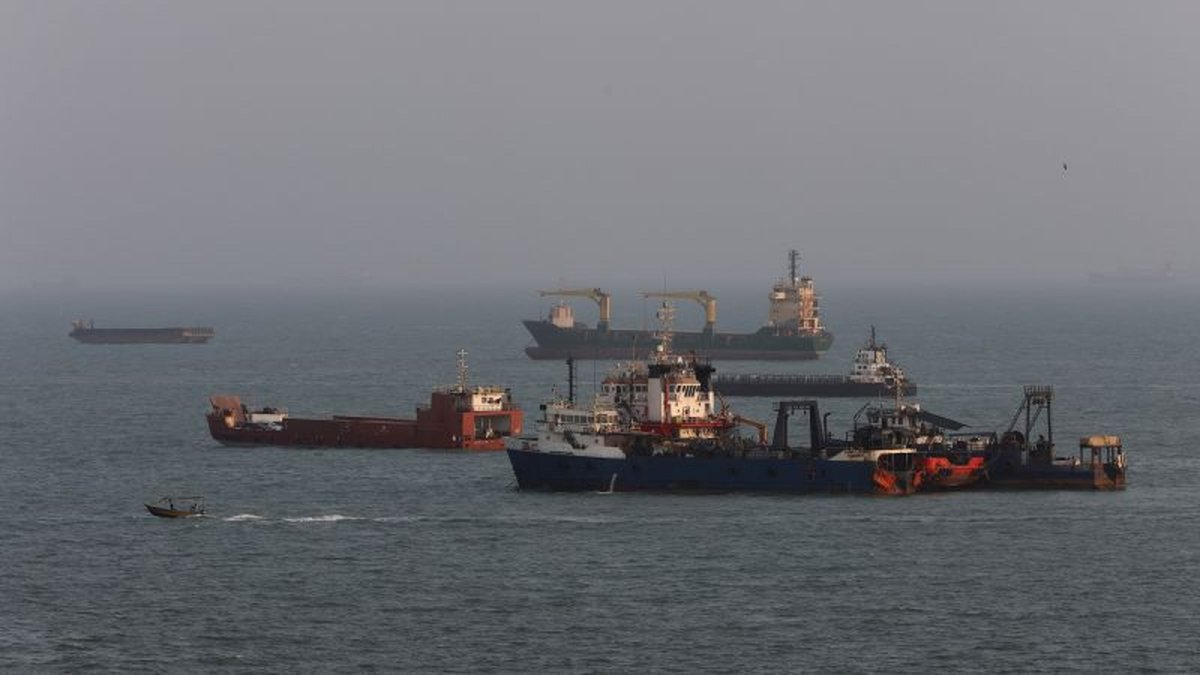
Let's talk about what is actually happening in the Strait of Hormuz. Since February 28, 2026, when the US and Israel launched an air war against Iran, the IRGC has issued warnings forbidding passage, boarded and attacked merchant ships, and laid sea mines. The strait, which before the war carried about 20 million barrels of oil per day — roughly 25% of world seaborne oil trade and 20% of world LNG trade — has become a war zone.
The numbers are staggering. Brent crude surpassed $100 per barrel on March 8, 2026, for the first time in four years, rising to $126 per barrel at its peak. The closure has become the largest disruption to world energy supply since the 1970s energy crisis. That is not an exaggeration; that is the assessment of energy analysts who have been tracking this crisis since it began.
Rezaei, secretary of Iran's Supreme National Security Council, has vowed to "neutralize the economic war" with the US and threatened to halt oil flow out of the strait entirely. Per Iran's state-affiliated Press TV, he threatened to shut down all traffic if any neighboring countries enter Trump's economic war. This is a direct threat to the Gulf states, many of whom are trying to navigate a neutral path through this conflict.
Dark Transits and the Shadow Fleet
Despite the blockade, oil is still moving. The US Department of Energy reports that oil traffic through the Strait of Hormuz has averaged between 8 million and 9 million barrels per day as ships attempt "dark transits" — tankers with transponders off, aided by the US Navy, offloading crude in the Gulf of Oman. This is a shadow fleet operating in the dark, literally and figuratively.
The Greek-owned supertanker Kiku has been seen going dark, turning off its AIS transponders and traveling at night to go undetected. This is the new reality of maritime trade in the region: ships moving like ghosts through one of the most strategically important waterways on Earth. The US Navy is escorting these vessels, but the risk remains enormous.
Iran's state media reports that the country will allow Iraqi oil tankers to travel through the waterway — selective access designed to sow division among Iran's neighbors. This is a classic divide-and-conquer strategy, and it is working. The Gulf states are not united in their response to the crisis, and Iran is exploiting those divisions.
The Diplomatic Dance: Ceasefires, Breakdowns, and Broken Promises
The timeline of this conflict is a study in diplomatic failure. April 8 saw a temporary ceasefire; April 13 saw the US Navy begin blockading Iranian ports in what has been called the "dual blockade." May 4 brought Operation Project Freedom. June 17 saw Trump and Iranian President Masoud Pezeshkian sign a memorandum of understanding to end the war. And then, on July 8, the interim truce broke down after Iran struck commercial ships in the strait.
Each breakdown has been more damaging than the last. On July 31, the Greek-controlled, Bermuda-flagged LNG tanker GasLog Shanghai, carrying Qatari gas, was struck while exiting the Strait of Hormuz off Oman. This was the second Qatari LNG tanker hit within a month — the Al Rekayyat was hit earlier — and it widened force majeure declarations across the industry. On August 13, two tankers associated with Abu Dhabi National Oil Company were attacked while transiting the strait; the UAE blamed Iranian drones and described the incidents as acts of piracy.
The data tells the story. AP data showed 95 confirmed crossings in the weekly reporting period following the ADNOC attacks, a decline of nearly 20%. Only three confirmed vessels crossed on August 16. The strait is effectively closed to normal traffic, and the world is paying the price.
Iran's Foreign Minister: No Submission, No Neighbor Attacks
Iran's Foreign Minister Abbas Araghchi has been clear about Tehran's position. On August 22, he said Iran will not submit to US pressure, demands a complete end to the conflict, and is ready to continue the struggle otherwise. He also said Tehran is convinced the US carried out an attack on a girls' school — a claim that has not been independently verified but reflects the deep mistrust between the two nations.
Araghchi was careful to reassure Iran's neighbors, saying Iran does not intend to attack neighboring countries and that any retaliatory strikes would target US forces and bases in the region. This is a calculated message: we are not a threat to you, but we will hit the Americans where it hurts. It is designed to keep the Gulf states from fully aligning with Washington.
The peace-deal deadline passed on August 18, and Iran's top negotiator said the strait will remain closed until the US lifts sanctions and its blockade. CNN has reported that Iran has lost significant control of the strait, but that does not mean the crisis is over. Oil prices rose to around a three-week high on August 19 as traders assessed tanker attacks and fading prospects for a diplomatic settlement.
What Comes Next: The Economic D-Day and Its Consequences
So where does this leave us? The US is set to announce new economic measures on Monday, August 24. Secretary Bessent has promised measures that have "never been seen," and President Trump has promised an "ECONOMIC D-DAY." But Iran has been living under sanctions for nearly 50 years. The regime has proven remarkably resilient, and its leadership is now vowing to "neutralize the economic war."
There is one bright spot worth noting. A refinery in Iran's South Pars gas field — the world's largest natural gas field, which was hit during an Israeli strike last year — is 70% repaired, according to Iran's oil ministry news agency Shana. Touraj Dehqani, CEO of Pars Oil and Gas Company, said repair work is expected to finish by the end of the Iranian calendar year in March 2027. That suggests Iran is planning for the long haul, not looking for a quick exit.
The bottom line is this: we are entering a new phase of this conflict, and it is going to be painful. American consumers are already feeling it at the pump, with gas prices nearly a dollar higher than a year ago. The global economy is bracing for further disruption. And both sides are dug in, with no obvious off-ramp. The "little detour" the President joked about on Friday night is looking more and more like a long, hard road with no end in sight.
This article was produced with AI-assisted research and editorial support. Sources: CNN, Fars News Agency, Press TV, Shana, AP, Congressional Research Service.
By Jessica Ali, Staff Writer
What's Your Reaction?
 Like
0
Like
0
 Dislike
0
Dislike
0
 Love
0
Love
0
 Funny
0
Funny
0
 Wow
0
Wow
0
 Sad
0
Sad
0
 Angry
0
Angry
0

Editor-in-Chief at Global1.News. Atlanta-based journalist who cuts through the BS and tells it like it is. Lead anchor, host, and the voice you hear when the spin stops and the truth starts.














Comments (0)