
Saturday night’s friendly with the US will provide Rafa Márquez his first true test as El Tri’s head coach
El Tri’s new chapter under former captain Rafael Márquez began with two modest 1‑1 draws against South American opponents, but the real gauge of his vision will arrive Saturday night when Mexico faces the United States on the outskirts of Phoenix, Arizona.
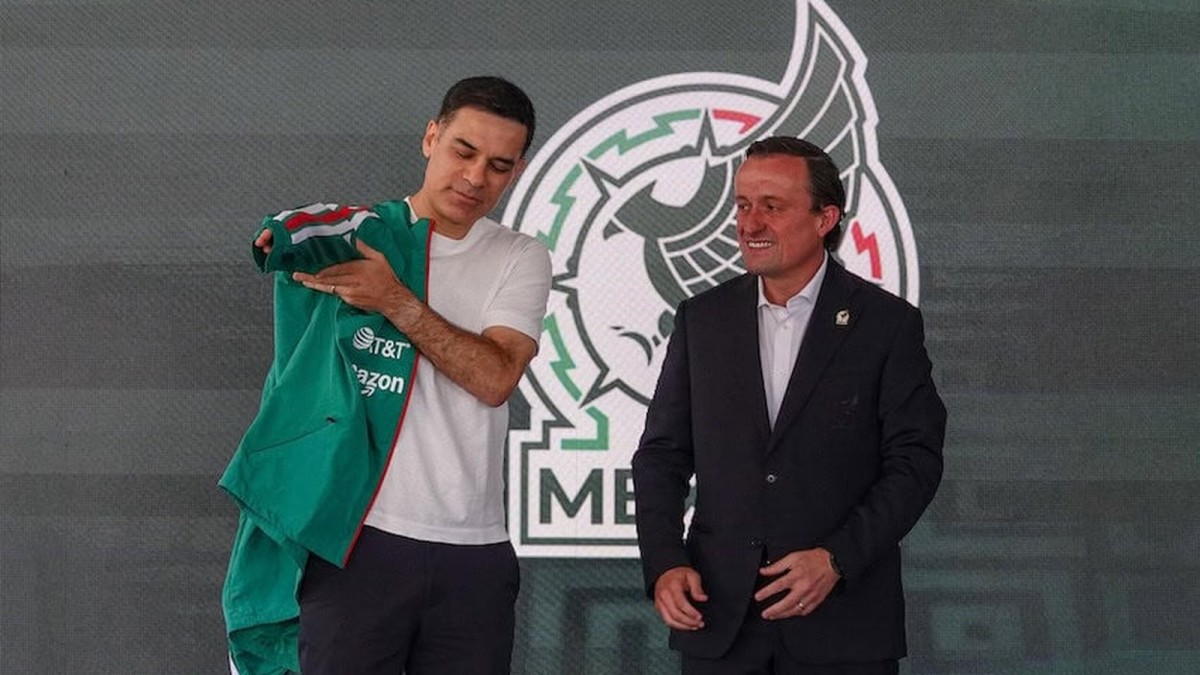
El Tri’s new chapter under former captain Rafael Márquez began with two modest 1‑1 draws against South American opponents, but the real gauge of his vision will arrive Saturday night when Mexico faces the United States on the outskirts of Phoenix, Arizona. Though the match is officially a friendly, the rivalry between the neighboring nations and the stakes of a 2030 World Cup qualification cycle give it a weight that feels more like a competitive showdown than a mere exhibition.
From the ashes of a World Cup loss to a fresh start
Rafa Márquez took the helm of El Tri shortly after the team’s thrilling yet heartbreaking 3‑2 defeat to England in the 2026 World Cup. The loss, which saw Mexico surrender a late lead, left the nation yearning for a new direction, and the former defender answered the call by replacing Javier Aguirre. His appointment signals a shift from the traditional, physically robust Mexican style toward a faster, more fluid approach that he believes will be essential for competing on the world stage in the coming decade.
Both Márquez and his American counterpart, Mauricio Pochettino, have emphasized development over immediate results. Yet the pressure to deliver is palpable. A loss to the United States, even in a friendly, would cast a shadow over Márquez’s early tenure, especially as Pochettino has fielded a youthful, largely uncapped squad—13 newcomers, including eight teenagers—showcasing a bold generational experiment.
The experimental 30‑man roster
Rafael Márquez assembled a 30‑player roster that blends veteran experience, players in their prime, and promising youngsters. This mix reflects his desire to test new combinations while retaining a core of seasoned professionals who can guide the younger talent. The squad’s composition mirrors the broader Mexican football culture: a balance of the seasoned “carnicero” work ethic with the fresh vigor of a tianguis vendor at dawn, eager to prove himself.
Unlike Pochettino, who has opted for continuity within the U.S. camp, Márquez’s approach is more experimental. He is attempting to install a faster playing style that demands repetition, trial‑and‑error, and patience. The upcoming friendly will therefore serve as a laboratory where the coach can observe how his ideas translate against a motivated, youthful opponent.
First test: Colombia in Baltimore
In the first of Márquez’s two warm‑up matches, El Tri faced Colombia in Baltimore on September 26. The Mexican side fielded an experienced lineup, reminiscent of the squad that impressed at the World Cup. Colombia, fielding a side similar to their World Cup‑ready roster, pressed early and forced Mexico to concede a goal in the ninth minute.
After the early setback, Mexico steadied itself, dominating possession for extended periods and outshooting the Cafeteros 14‑4. The game’s turning point arrived in the 62nd minute when teenage sensation Gilberto Mora scored with a splendid individual effort, securing a 1‑1 draw. Fans in the stands, many of them expatriate Mexicans, celebrated the resilience and the promise shown by the young forward, seeing a glimpse of the future they hope to nurture.
Second test: Peru in New Jersey
The second friendly took place in New Jersey on September 29, where Mexico met Peru. This time, Márquez rotated his squad, giving more minutes to less experienced players. The result was a less decisive performance: the team appeared sloppy in possession and lacked sharpness in attack against an opponent considered inferior on paper.
The match highlighted a glaring issue—Mexico’s front line appeared toothless, struggling to create clear chances. Additionally, the quality of first touches was poor, a problem that Márquez will need to address if his vision of quick ball movement is to succeed. The loss of fluidity in this game underscored the growing pains of a side in transition, reminding supporters that rebuilding is rarely a smooth road.
Key challenges for Márquez
Through the two friendlies, several themes have emerged. First, the need to invigorate the attack. While the midfield and defense showed moments of control, the forwards failed to generate consistent threats, leaving the team reliant on individual brilliance rather than a cohesive offensive plan.
Second, the emphasis on rapid ball circulation. Márquez’s desire for a faster style hinges on players executing quick passes and moving into space efficiently. The Peru match exposed gaps in this area, with misplaced passes and a lack of urgency in transitioning from defense to attack.
Third, the importance of first touches. Poor first touches against Peru resulted in lost possession and disrupted rhythm. Improving this fundamental skill will be essential for maintaining the tempo Márquez envisions, especially when facing teams that press high and aim to force errors.
Looking ahead: Nations League and the 2030 World Cup
Beyond the friendly with the United States, Márquez’s calendar includes a crucial Concacaf Nations League quarterfinal next month. This competition will be his first meaningful test in a competitive setting, where the stakes are higher and the margin for error smaller. Success there could build momentum toward the ultimate goal: qualifying for the 2030 World Cup, a tournament that will be a source of pride for a nation that cherishes its football heritage as deeply as a family cherishes its Sunday tamales.
In the weeks following the U.S. friendly, Mexico will also face Chile on October 6. Both matches will serve as barometers for how well Márquez’s ideas are taking root. The hypercritical Mexican sporting press, known for its relentless analysis, will be watching closely to see whether the narrative remains focused on long‑term development or devolves into short‑term criticism.
The broader significance of the U.S. friendly
While the match in Phoenix is officially a friendly, its symbolism runs deep. The rivalry between Mexico and the United States extends beyond the pitch, touching on cultural, economic, and migratory ties that affect families on both sides of the border. For many Mexican fans, the game is another chapter in a long story of competition and camaraderie, reminiscent of the spirited matches that once took place in the plazas of colonia neighborhoods.
If Mexico can hold its own against a youthful, energetic U.S. side, it will send a message of confidence to the nation’s footballing community—a signal that the rebuilding process under Márquez is bearing fruit. Conversely, a loss could amplify doubts and fuel the hypercritical narratives that often dominate the sports pages. Either way, the outcome will shape the conversation around El Tri’s direction as the nation looks ahead to the 2030 World Cup, a tournament that promises to be a stage where Mexico hopes to reclaim its place among the world’s elite.
This article was produced with AI-assisted research and editorial support. Reporting is based on the source material cited below. Sources: Mexico News Daily; mexiconewsdaily.com; Global1.News (02 October 2026).
By Rosa Martinez, Staff Writer
What's Your Reaction?
 Like
0
Like
0
 Dislike
0
Dislike
0
 Love
0
Love
0
 Funny
0
Funny
0
 Wow
0
Wow
0
 Sad
0
Sad
0
 Angry
0
Angry
0

Latin America/Andes Correspondent at Global1.News. Based in Bogota, covering politics, environment, energy, and social movements across the Andean region. Passionate about environmental journalism and communities protecting their land.












Comments (0)