
Drone War Reaches Russia's Economic Heartland
Ukrainian drone strikes hit an Ozon warehouse in the Orenburg region and oil refineries across Russia, killing at least six people. President Vladimir Putin warned Kyiv opened a 'Pandora's box' and threatened retaliation against Ukraine's most sensitive economic sectors.
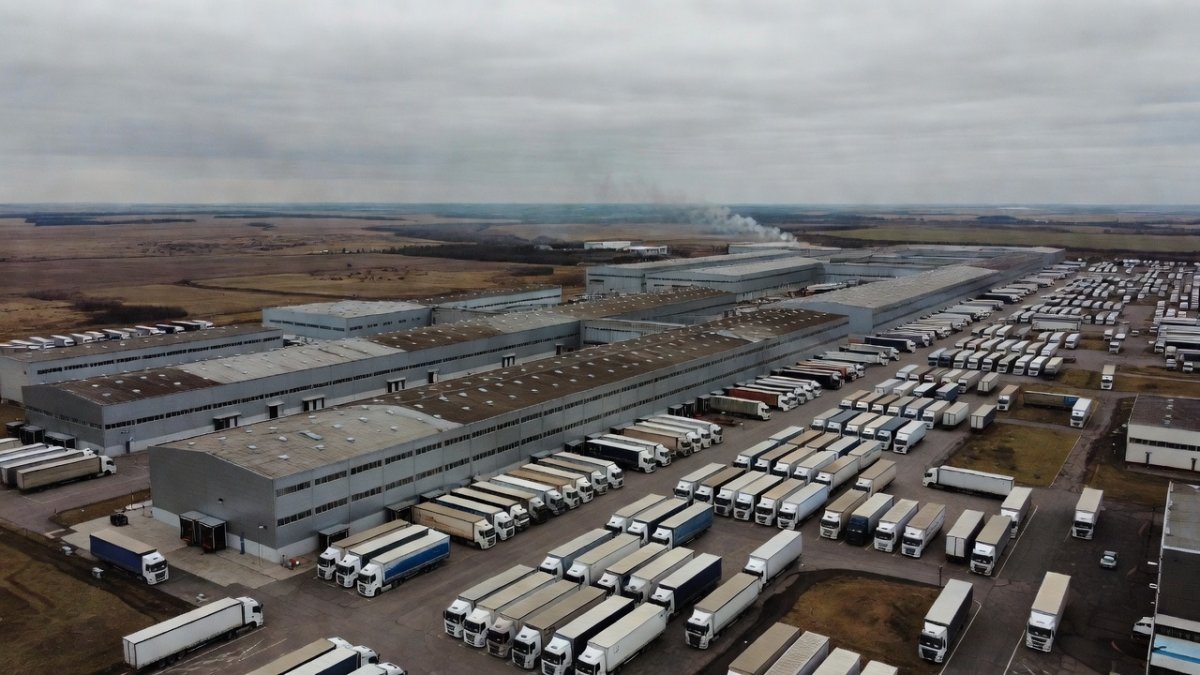
Ukrainian drone strikes have penetrated deep into Russia's economic core this week, targeting e-commerce logistics centers and oil refineries in a campaign Kyiv says is designed to disrupt the financial underpinnings of Moscow's war effort. On Sunday, Orenburg region Governor Yevgeny Solntsev confirmed that debris from a downed drone struck an Ozon warehouse, forcing the company to evacuate more than 300 employees, while the Russian Defense Ministry said it intercepted 328 drones overnight.
The strikes are not isolated incidents but part of a sustained escalation that has brought the war to the doorsteps of ordinary Russians, affecting everything from fuel availability to online shopping. At least six people were killed in a separate wave of attacks, including two children in the port town of Yeysk, underscoring the human cost of the new phase of the conflict.
Drone War Reaches Russia's Economic Heartland
Moscow — Sunday — Ukrainian drone strikes have penetrated deep into Russia's economic core this week, targeting logistics hubs and refining capacity in a campaign that has brought the war's economic toll to ordinary Russians. Regional governors from the Orenburg region to the Black Sea coast reported strikes, casualties, and supply disruptions, as the Kremlin weighed its response.
Putin's 'Pandora's Box' Warning
Russian President Vladimir Putin addressed the escalating situation in comments published on Saturday, issuing a stark warning to Kyiv. Putin stated that Ukraine had opened "Pandora's box" with its strikes on Russian economic targets, vowing a retaliatory response against what he termed Ukraine's "most sensitive economic sectors." This marks a rare, direct acknowledgment from the Kremlin that the drone campaign is causing significant concern. "The Kyiv regime set out to damage our economy. What did it do? It opened this Pandora's box itself. Well then, expect a response targeting your most sensitive economic sectors," Putin said.
The Russian leader framed the strikes as a deliberate provocation, while simultaneously attempting to downplay their broader impact. Regarding potential disruptions to global food supplies, Putin asserted that Russia would be able to replace Ukrainian exports, stating, "We do face challenges regarding the shipment of our goods, but we will resolve these issues. Consequently, there will be no shortage on the global market." He also reiterated Moscow's openness to peace talks, but only on the basis of "realities on the ground," rejecting what he called "exotic" proposals from Ukraine via intermediaries. The rhetoric underscores a hardening stance, suggesting that Moscow views the economic war as a zero-sum game.
E-Commerce Logistics in the Crosshairs
The targeting of Ozon warehouses marks a notable expansion of Ukraine's strike list. For weeks, Ukrainian forces have focused on facilities belonging to Wildberries, Russia's largest online retailer. The strike on Ozon's Samara region logistics center in Chapayevsk on Saturday, which caused injuries and halted work, represents the first direct hit on the company. On Sunday, the Orenburg facility was also struck, indicating a deliberate strategy to disrupt the backbone of Russian consumer supply chains. These e-commerce hubs are not merely commercial entities; they are vital arteries for the distribution of goods across the vast country.
Analysts suggest this pattern could indicate a Ukrainian effort to target the "social contract" between the Kremlin and its citizens. By disrupting the convenience and availability of consumer goods, Kyiv aims to demonstrate that the war has tangible consequences for the Russian populace, not just the military. Ozon confirmed it halted work at its Orenburg region logistics center after the drone debris strike, while the company also reported the shutdown of its Chapayevsk facility. The operational impact on these massive fulfillment centers, which employ thousands and serve millions of customers, is a direct challenge to the stability of Russia's domestic market.
Refining Capacity Under Pressure
Beyond logistics, the campaign has systematically targeted Russia's oil refining industry, a cornerstone of its economy. Ukraine's military confirmed it struck the Novokuibyshevsk refinery in the Samara region on Saturday, causing a fire, according to regional governor Vyacheslav Fedorishchev. This attack is part of a broader effort that has reportedly compromised a significant portion of Russia's processing capabilities. Wire reports indicate that Ukrainian drone strikes have hit approximately 54% of Russian refining capacity, a staggering figure that has crippled domestic fuel production.
The strikes have extended deep into Russian territory, with the Ufa Oil Refining Hub in Bashkortostan—a complex of three refineries located about 1,200 kilometers from the Ukrainian border—targeted in recent days. These facilities are crucial for converting crude oil into gasoline, diesel, and jet fuel. The cumulative effect of these attacks has created a severe bottleneck in the supply chain, as refineries are forced to shut down for repairs or operate at reduced capacity. This has led to a paradoxical situation where Russia, a major oil producer, is struggling to meet its own domestic fuel demand.
Fuel Queues and Rationing Across the Regions
The consequences of the refinery strikes are being felt acutely by ordinary Russians. Reports indicate that petrol is now available at only roughly 28% of filling stations across the country, a dramatic shortage that has led to long queues and panic buying. Fuel rationing has been reported in more than 50 Russian regions, with even Moscow experiencing significant queues at gas stations. This second wave of fuel shortages, which has spread to most regions following the late-July and early-August refinery strikes, is a stark reminder of the war's economic blowback.
The shortages are not merely an inconvenience; they threaten to paralyze key sectors of the economy, including agriculture and transportation. For the average citizen, the inability to fill a car with petrol is a daily reminder that the conflict is not confined to the front lines. The Kremlin's attempts to stabilize the market have so far proven insufficient, and the sight of fuel queues in major cities is a politically sensitive issue for the leadership. The situation is fluid, and analysts suggest that if the strikes on refineries continue, the shortages could become even more acute, potentially leading to further social discontent.
Civilian Toll: Orenburg, Yeysk, Belgorod, Bryansk
While the focus has been on economic targets, the human cost of the drone campaign has been severe. In the Krasnodar region, governor Veniamin Kondratyev reported a tragic incident in the Sea of Azov port town of Yeysk, where two children were killed and two adults wounded in a strike. A fire also broke out at an unnamed facility at the port. The Belgorod region, which borders Ukraine, has been particularly hard hit, with governor Vyacheslav Gladkov reporting two people killed and 13 wounded in the latest attacks. In the Bryansk region, four people were wounded, according to local officials.
The strikes have also affected areas under Russian occupation. In the partially occupied Luhansk region, Kremlin-installed officials said two civilians, including a 16-year-old boy, had been killed and nine more wounded. The Russian Defense Ministry claimed to have intercepted a massive 457 Ukrainian drones between Friday night and Saturday morning, a figure that underscores the scale of the assault. While Moscow insists its air defenses are effective, the debris from intercepted drones is causing casualties and damage on the ground, as seen in Orenburg. The civilian toll is a grim reminder that the war continues to exact a heavy price on non-combatants.
The Black Sea Grain Dimension
President Putin's threat to target Ukraine's "most sensitive economic sectors" has already materialized in the Black Sea, where Russia has intensified strikes on Ukrainian grain export infrastructure. This is a direct response to Ukraine's drone campaign, creating a dangerous cycle of retaliation. Russia exited the Turkish-brokered Black Sea grain deal in 2023, and has since sought to undermine Ukraine's ability to ship agricultural products to global markets. Putin has dismissed concerns about a global food crisis, insisting that Russia can fill the void left by Ukrainian exports.
However, this assertion is met with skepticism by Western analysts, who point out that Russia's own shipping and insurance challenges have hampered its export capabilities. The strikes on Ukrainian ports and grain silos are designed to cripple a key revenue stream for Kyiv, which relies heavily on agricultural exports for foreign currency. This economic warfare has global implications, as disruptions to Ukrainian grain supplies could exacerbate food insecurity in developing nations that depend on these imports. The situation remains a volatile flashpoint, with the potential to escalate further as both sides seek to inflict economic damage on the other.
Analysis and Implications
The current escalation represents a significant shift in the conflict's dynamics, moving beyond the battlefield to target the economic resilience of both nations. Analysts suggest that Ukraine's strategy is to make the war too costly for the Russian public and economy to sustain, hoping to create internal pressure on the Kremlin. The strikes on e-commerce and refining capacity are designed to disrupt daily life and erode confidence in the government's ability to protect its citizens. The pattern could indicate a long-term campaign aimed at degrading Russia's war-fighting capability by choking off the resources needed to fund it.
For Russia, the challenge is twofold: it must defend its vast territory against an ever-expanding drone threat while also mitigating the economic fallout. The fuel shortages and supply chain disruptions are a direct consequence of the strikes, and the Kremlin's response has been to threaten further retaliation against Ukraine. This tit-for-tat escalation risks spiraling into a broader economic war with no clear end. The international community watches with concern, as the collateral damage to global markets and food security becomes an increasingly pressing issue. The coming weeks will be critical in determining whether this new phase of economic warfare can be contained or if it will lead to further destabilization across the region.
This article was produced with AI-assisted research and editorial support. Sources: The Moscow Times, Reuters.
By Irina Volkov, Staff Writer
What's Your Reaction?
 Like
0
Like
0
 Dislike
0
Dislike
0
 Love
0
Love
0
 Funny
0
Funny
0
 Wow
0
Wow
0
 Sad
0
Sad
0
 Angry
0
Angry
0

Russia/Eastern Europe Correspondent at Global1.News. Covering Russian politics, energy, security, and the shifting dynamics of the post-Soviet space. Provides clear-eyed analysis on one of the world's most opaque regions.














Comments (0)