
PM expresses gratitude to former prime minister and MP for St George North-West
In a solemn yet hopeful session of Grenada’s Parliament on 1 October 2026, Prime Minister Honourable Dickon Mitchell paid tribute to a figure whose name has become almost synonymous with the island’s modern political landscape.
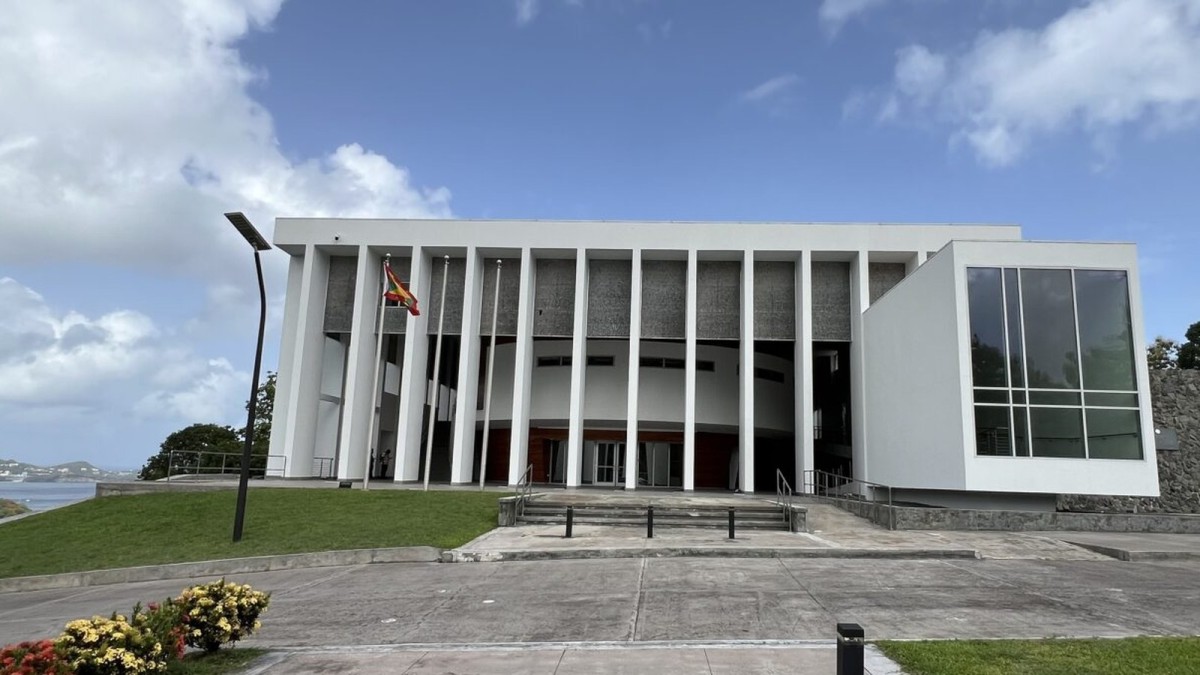
In a solemn yet hopeful session of Grenada’s Parliament on 1 October 2026, Prime Minister Honourable Dickon Mitchell paid tribute to a figure whose name has become almost synonymous with the island’s modern political landscape. Dr The Rt Honourable Keith Mitchell, former Prime Minister and long‑serving Member of Parliament for St George North‑West, was honoured for a career that began in the mid‑1980s and stretched across decades of public service. The ceremony, though steeped in political formality, resonated with a distinctly Caribbean sense of community, reminding us that the threads of governance are woven through the everyday lives of citizens across the twin islands of the Caribbean.
Reflecting on a Political Journey that Began in 1984
The special sitting of Parliament marked a rare moment when the nation collectively looked back on the origins of a political career that started in 1984. That year, a young Keith Mitchell entered the House of Representatives, representing the constituency of St George North‑West, a region that has long been a microcosm of Grenada’s broader social and economic challenges. From the outset, his role was not merely that of a legislator but also of a community advocate, navigating the post‑revolutionary era and the attendant pressures of rebuilding a nation still healing from the 1983 upheavals.
Prime Minister Mitchell’s remarks underscored the significance of that early entry point, noting that the former prime minister’s service “began in 1984” and has since become part of “our history.” The reference to the year serves as a reminder that many of today’s political actors in the Caribbean trace their roots to the turbulent 1980s, a period that reshaped governance structures across the region.
The Longest‑Serving Prime Minister and the Weight of Sacrifice
One of the most striking acknowledgements during the session was the recognition of Keith Mitchell as Grenada’s longest‑serving prime minister. While the exact number of years in office was not enumerated, the description of his tenure as “decades‑long” conveys the depth of his involvement in national leadership. Prime Minister Mitchell highlighted that this extensive service came with “enormous sacrifice,” a phrase that resonates strongly in a Caribbean context where public office often demands personal and familial compromises.
In particular, the Prime Minister noted that Dr Mitchell “offered himself to serve immediately after the collapse of the People’s Revolutionary Government.” This reference situates his entry into high office within a pivotal moment in Grenadian history, when the nation was transitioning from a period of revolutionary governance to the restoration of parliamentary democracy. The acknowledgement of this timing underscores the role that seasoned politicians play in stabilising societies after periods of upheaval, a pattern observable in other CARICOM states that have navigated similar political transitions.
Parliamentary Democracy Restored: A Regional Perspective
The restoration of parliamentary democracy in Grenada, as highlighted by Prime Minister Mitchell, is not an isolated story but part of a broader Caribbean narrative. Following the 1983 intervention that ended the revolutionary government, Grenada, like many of its neighbours, embarked on a journey to rebuild democratic institutions. The former prime minister’s involvement “helped restore Grenadian parliamentary democracy,” a testament to the importance of experienced political actors in guiding nations through post‑conflict reconstruction.
From a regional standpoint, the Caribbean has often looked to its senior statesmen for guidance during periods of institutional rebuilding. The emphasis on “tremendous commitment required to dedicate decades of one’s life to public service” echoes the sentiment expressed in other CARICOM forums, where veteran leaders are celebrated for their roles in safeguarding democratic continuity amidst economic and social pressures.
Recognition of Women in Politics: Honouring Clarice Modeste Curwin
Alongside the tribute to Keith Mitchell, the parliamentary session also shone a light on the contributions of women in Grenadian politics. Honourable Philip Telesford, Leader of Government Business, extended gratitude to Honourable Clarice Modeste Curwin, MP for St Mark, for her service to her constituency, her advocacy for women in politics, and her work across various ministries. This acknowledgment aligns with a growing regional emphasis on gender inclusion within governance structures.
While the source material does not detail specific legislative achievements of Ms Curwin, the very act of publicly recognising her contributions signals a shift towards greater visibility for female politicians in the Caribbean. Such gestures are part of a wider movement across CARICOM nations to amplify women’s voices in decision‑making, reflecting the evolving social fabric of the region.
The Role of Parliamentarians in National Development
Prime Minister Mitchell’s concluding remarks placed the service of all parliamentarians—past and present—at the heart of Grenada’s democratic journey and national development. By framing parliamentary work as an “essential part” of the nation’s progress, the Prime Minister reinforced the idea that legislative bodies are not merely procedural entities but are integral to shaping policy outcomes that affect everyday life, from cost‑of‑living pressures to infrastructure development.
This perspective resonates strongly within the Caribbean context, where small island economies often rely on cohesive parliamentary action to navigate challenges such as climate change, tourism fluctuations, and energy security. The emphasis on collective contribution underscores a community‑oriented approach to governance, a hallmark of Caribbean political culture.
Community Reflections: The Human Side of Political Service
Beyond the formal accolades, the session offered a moment for Grenadians to reflect on the human dimension of political service. The Prime Minister’s acknowledgment that “regardless of where we may differ politically, we must acknowledge and respect the tremendous commitment required” invites citizens to consider the personal sacrifices behind public office. In a region where political discourse can be passionate, such reminders foster a culture of respect and civility.
For many in St George North‑West, the former prime minister’s decades of representation likely intersected with local concerns ranging from agricultural livelihoods to the cost of living—a recurring theme across Trinidad and Tobago, where rising expenses have become a daily reality for families. By highlighting the continuity of service, the parliamentary tribute subtly connects national leadership with the lived experiences of ordinary Caribbean people.
Looking Forward: Lessons for Future Leaders
As Grenada moves forward, the ceremony serves as both a commemoration and a lesson for emerging political figures. The narrative of Keith Mitchell’s career—marked by early entry into Parliament, a lengthy tenure as prime minister, and a role in democratic restoration—offers a blueprint for dedication, resilience, and adaptability. Future leaders can draw from his example the importance of aligning personal sacrifice with national interest, especially in a region where external shocks—such as natural disasters or global energy price fluctuations—frequently test governance capacities.
In the broader Caribbean arena, the tribute underscores a shared heritage of public service that transcends island borders. As CARICOM nations continue to collaborate on issues ranging from energy security, exemplified by initiatives like Atlantic LNG, to cultural celebrations such as Carnival, the stories of seasoned politicians like Keith Mitchell remind us that the strength of the region lies in the collective commitment of its leaders to the well‑being of their peoples.
This article was produced with AI-assisted research and editorial support. Reporting is based on the source material cited below. Sources: Now Grenada; nowgrenada.com; Global1.News (03 October 2026).
By Sharon Sahatoo, Staff Writer
What's Your Reaction?
 Like
0
Like
0
 Dislike
0
Dislike
0
 Love
0
Love
0
 Funny
0
Funny
0
 Wow
0
Wow
0
 Sad
0
Sad
0
 Angry
0
Angry
0

Caribbean Correspondent at Global1.News. Based in Port of Spain, Trinidad, covering Caribbean politics, economy, energy, climate, and culture. Amplifying the voices and stories of the Caribbean region.












Comments (0)