
Crew-13 Reaches ISS in Record Time on the Last Dragon SpaceX Will Ever Build
NASA's SpaceX Crew-13 docked at the International Space Station just seven hours and 55 minutes after liftoff on 1 October, the fastest trip by a US spacecraft. The mission flew aboard Grace, the fifth and final Crew Dragon capsule SpaceX will ever build.
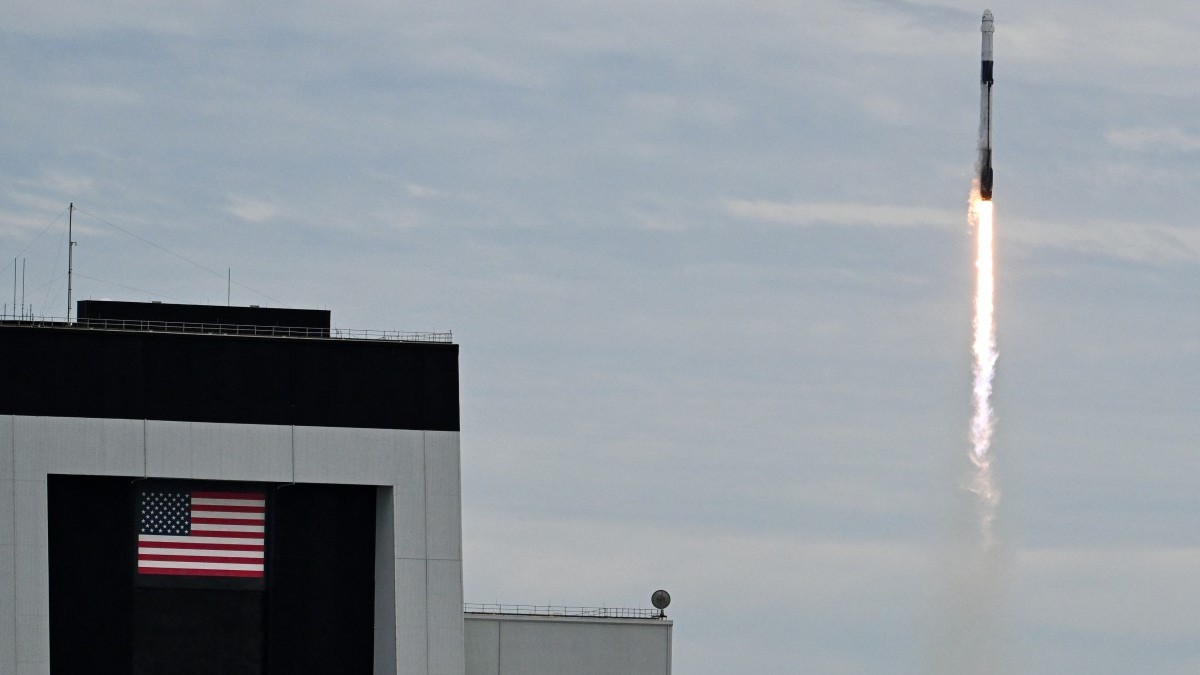
Folks, look up. At 11:10 a.m. EDT on Thursday, 1 October 2026, a Falcon 9 roared off Space Launch Complex 40 at Cape Canaveral Space Force Station in Florida, carrying four people and a capsule named Grace. By dinner time, they were parked at the International Space Station. Seven hours and 55 minutes, door to door - a record-breaking dash. Here is what matters: this was not just a smooth ride. It was a record, a farewell to an era of spacecraft building, and a family story that will break your heart a little.
The Record Ride
The numbers tell the story fast. Liftoff came at 11:10 a.m. EDT, which is 1510 GMT. Dragon autonomously docked with the International Space Station at 7:05 p.m. ET the same day, seven hours and 55 minutes after leaving the pad. NASA and AFP both call it a record: the fastest trip by a US spacecraft to the outpost. On the NASA TV broadcast, AFP reported, the capsule "appeared to glide gently toward a stationary ISS as both hurtled through space at some 17,500 miles (28,163 km) per hour." Ground control came over the loop with the words every crew wants to hear: "Dragon SpaceX on the big loop. Hard capture is complete." The docking target was the forward port of the station's Harmony module, and NASA said hatch opening was planned for around 8:45 p.m. after post-docking preparations. That is a full day's work compressed into an afternoon.
How a Seven-Hour Trip Became Possible
So why so fast? AFP put it plainly: "The duration of the journey depends greatly on the distance between the ISS and the spacecraft at the time of launch. It took more than 30 hours for the last crew that launched from American soil to reach the station." SpaceX vice president Bill Gerstenmaier said the station and the Dragon happened to line up unusually close in orbit. A recent adjustment to the station's orbit helped set it up, and he said SpaceX simply got lucky. Rolling Out reported the flight plan called for about eight hours and 50 minutes of free flight before Grace docked itself to the Harmony module. Most Dragon flights take around 15 to 24 hours. Crew-11 held the previous US record at just under 15 hours. This one cut that roughly in half. Sometimes luck and preparation show up on the same day.
Who Is Riding Up
Meet the four people on board. NASA commander Jessica Watkins. NASA pilot Luke Delaney. Canadian Space Agency astronaut Joshua Kutryk, mission specialist. Roscosmos cosmonaut Sergey Teteryatnikov, mission specialist. Spaceflight Now reports that Delaney and Kutryk are both former military test pilots, and Teteryatnikov served in the Russian submarine force before becoming a cosmonaut. The three rookies are the 296th, 297th and 298th astronauts to fly aboard the ISS. The four will spend about six months on the station as part of Expedition 75/76. Their mission patch honours Apollo 13, and they rode to the pad in Teslas with license plates reading "Lucky 13," according to Rolling Out. That is a crew with test-pilot hands, submarine discipline and a sense of humour about the number thirteen. They will need all three. This was SpaceX's 13th crew rotation mission for NASA and its 14th flight carrying NASA astronauts, counting the 2020 Demo-2 test flight.
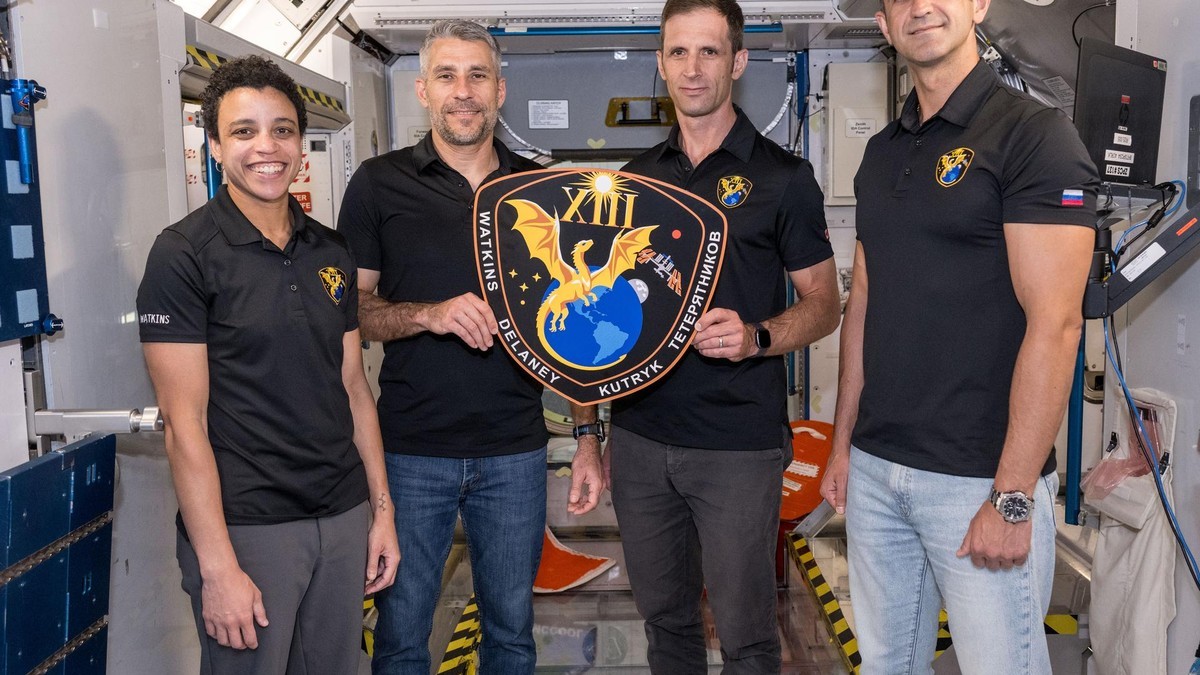
Watkins and the Dragon Double
Keep your eyes on Jessica Watkins. Spaceflight Now reports she holds a Ph.D. in geology, flew to space aboard a Crew Dragon in 2022, and is now making her second trip to space. Here is the line that matters: she will become the first active NASA astronaut to fly twice onboard a Dragon spacecraft. That is a quiet milestone, but a real one. It says the Dragon is no longer a new ship proving itself. It is a workhorse, and NASA is putting its people back inside it again and again. Watkins is also the commander this time, leading a crew of three first-timers to the outpost. A geologist who studies rocks on Earth now runs a laboratory in orbit. Not a bad career arc, folks. Not bad at all.
A Baby Due While Dad Is in Orbit
Now the part that gets you. Kutryk and his wife Heather have two children, ages 5 and 7. They are expecting their third child around Thanksgiving, about two months into the Crew-13 mission. Spaceflight Now reports they will become the fourth couple in space history to have a child born while one parent was off the planet. Kutryk posted on X: "Leaving these three (plus one on the way) is the hardest thing I've ever done. But that has always been the nature of exploration." He then quoted Norwegian arctic explorer Fridtjof Nansen: "'Behind me lay all I held dear in life. And what lay before me? Happy child, little do you know what life is - how strangely mingled and how full of change... and now, a farewell to home. It was the darkest hour of the whole journey.'" He will watch that birth from orbit. Think about that for a second.

Three Weeks Late and a Leaking Valve
This launch was not always on the calendar for 1 October. The mission was originally planned for mid-September. In August, workers found an oxidizer leak in Grace's propulsion system during environmental testing, and the launch was pushed back by about three weeks to replace a leaking valve, according to Rolling Out and Spaceflight Now. NASA's head of human spaceflight Lori Glaze credited long hours of troubleshooting with getting the capsule ready. Then came launch morning itself. Thick clouds and the threat of storms hung over the Cape before the sky finally cleared. Forecasts had been around 55 to 60 percent GO. So the crew waited out weather on top of a valve repair. That is the unglamorous truth of spaceflight: most of the drama happens before anyone leaves the ground.
Grace, the Last Dragon
The capsule itself deserves a moment. Grace is the fifth and final Dragon capsule SpaceX has built, according to Rolling Out, VPM/NPR and Wikipedia. It is the fifth and final operational Crew Dragon spacecraft manufactured by SpaceX, serial C213. It was named by the Axiom Mission 4 crew during its maiden flight in 2025, and the name "Grace" reflects "grace under pressure" and the elegance of traversing space. That maiden flight launched on 25 June 2025, carrying Commander Peggy Whitson of Axiom Space, Pilot Shubhanshu Shukla of ISRO, and Mission Specialists Slawosz Uznanski-Wisniewski of ESA/Poland and Tibor Kapu of Hungary. Before Crew-13, Grace had made only one prior trip to the station: the Ax-4 private astronaut mission. Now it carries NASA's crew. Not bad for a ship on its second visit.
Five Capsules for the Next Decade
Here is the bigger picture, and it is worth your attention. Production of new Crew Dragons ended with Grace. SpaceX is shifting focus to the Starship vehicle for future crewed operations. Rolling Out put the consequence bluntly: "That means every future Dragon crew flight, whether for NASA or for paying customers, will ride in one of the same five capsules. Every flight adds wear. A problem like the August leak can ground a capsule for weeks, and SpaceX has no new ones coming to fill the gap." The five Crew Dragons are Endeavour (C206), Resilience (C207), Endurance (C210), Freedom (C212) and Grace (C213). Each capsule was originally certified for five missions. SpaceX and NASA are now working to stretch that rating to 15 missions per vehicle, a threefold increase that would keep the existing fleet operational for years without building a new hull. NASA formally awarded SpaceX six additional crew missions in May 2026, explicitly citing Boeing's "technical issues and schedule delays." SpaceX already holds NASA orders for crew rotations through Crew-17, while Boeing is preparing an uncrewed Starliner flight to the station as early as December. The fleet is finite now. Every flight counts.
The Handover Already Under Way
Once aboard, Crew-13 joins the Expedition 75 crew, which NASA said includes NASA astronaut Anil Menon and Roscosmos cosmonauts Pyotr Dubrov and Anna Kikina. After a handover period, the Crew-12 mission will return to Earth. That crew is NASA astronauts Jessica Meir and Jack Hathaway, ESA astronaut Sophie Adenot, and Roscosmos cosmonaut Andrey Fedyaev. Teslarati reports Crew-12 has been aboard the station since February and is now set to splash down off Southern California next week. So the station is about to get crowded, then quiet again. Handovers are the rhythm of the ISS: new hands learn the ropes, old hands pack up, and the laboratory never stops running. For a few days, two crews will share the outpost as it circles the planet at 17,500 miles per hour. Then four of them come home.
What They Will Do Up There
So what is the actual work? NASA says Crew-13's planned research includes using microgravity to produce human stem cell-derived tissues for applications including personalised medicine, disease modelling and pharmaceutical testing. They will run experiments on crop production using a new, mostly autonomous plant growth system. They will study blood-flow abnormalities in microgravity. And they will test a new in-flight diagnostic device to monitor astronaut health. Crew-13 is part of NASA's Low Earth Orbit Program, which partners with private companies to provide access to space and support research aboard the space station. NASA Administrator Jared Isaacman said the mission "is another demonstration of America's unmatched capability in human spaceflight and the strength of our commercial partnerships," adding that the crew's work would help build experience for future missions "to the Moon and beyond." Dr. Lori Glaze, associate administrator of NASA's Human Spaceflight Mission Directorate, said: "Our steady cadence of commercial crew launches demonstrates the essential role the International Space Station plays in sustaining our presence in Earth's orbit and sharpening the tools we'll take forward to the Moon and Mars." Six months of science, starting now.
By Jessica Ali, Staff Writer
This article was produced with AI-assisted research and editorial support. Sources: AFP, NASA, SpaceX, Spaceflight Now, VPM/NPR, Rolling Out and Teslarati.
What's Your Reaction?
 Like
0
Like
0
 Dislike
0
Dislike
0
 Love
0
Love
0
 Funny
0
Funny
0
 Wow
0
Wow
0
 Sad
0
Sad
0
 Angry
0
Angry
0

Editor-in-Chief at Global1.News. Atlanta-based journalist who cuts through the BS and tells it like it is. Lead anchor, host, and the voice you hear when the spin stops and the truth starts.















Comments (0)