
Taiwan’s New F-16s: Why They Still Matter
The Republic of China Air Force’s long‑awaited arrival of two F‑16C/D Block 70 fighters marks the culmination of a two‑decade procurement saga that has been shaped as much by geopolitics as by Taiwan’s own strategic recalibrations.
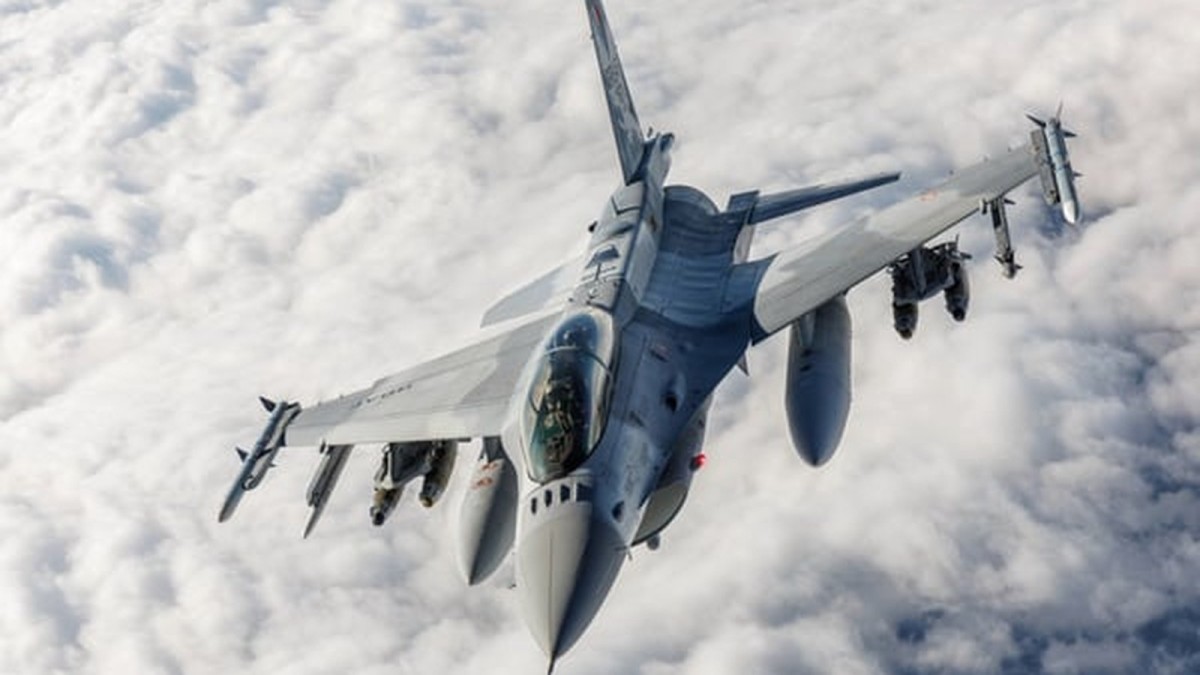
The Republic of China Air Force’s long‑awaited arrival of two F‑16C/D Block 70 fighters marks the culmination of a two‑decade procurement saga that has been shaped as much by geopolitics as by Taiwan’s own strategic recalibrations. While the Block 70’s advanced avionics and extended service life represent a tangible upgrade for the ROCAF, the aircraft’s practical role must be understood against the backdrop of Taiwan’s evolving defence doctrine, its constrained air‑base infrastructure, and the broader U.S.–China arms‑sale framework that has dictated the island’s fighter options since the 1970s.
Historical Roots of Taiwan’s Fighter Shortfall
In the 1970s, Taiwan’s air‑combat fleet—comprised mainly of F‑100 Super Sabres and F‑104 Starfighters—was rapidly becoming obsolete. The United States, while willing to cooperate on the co‑production of upgraded F‑5E/F fighters, regarded additional F‑5s as insufficient for long‑term defence needs. The 1978 request for F‑16s was rejected outright, leaving Taiwan to rely on F‑4 Phantoms and further F‑5 deliveries. That same year, Washington announced the impending shift of diplomatic recognition to Beijing and gave the formal one‑year notice required to terminate the U.S.–ROC Mutual Defense Treaty, a move that effectively closed the door on any major new fighter sale despite the 1979 Taiwan Relations Act’s commitment to provide “arms of a defensive character.”
The early 1980s saw a pattern of calibrated refusals. Even as President Ronald Reagan’s campaign rhetoric was favourable to Taiwan, the administration declined requests for higher‑performance aircraft such as the F‑16/79, opting instead for the lower‑cost F‑5E/F and the transfer of used West German F‑104s. The Third Communiqué of 1982, in which Washington pledged to keep arms sales to Taiwan at “recent levels” and to gradually reduce them, cemented a policy of restraint that persisted through successive administrations.
The Turn of the 1990s: A Brief Opening
The end of the Cold War altered the strategic calculus. In September 1992, President George W. Bush approved the sale of 150 F‑16A/B aircraft, a decision justified in part by China’s acquisition of Russian Su‑27 fighters. Domestic political considerations also played a role; the sale was announced in Texas, aligning with General Dynamics’ production base and the broader goal of sustaining U.S. aerospace employment. This marked the first substantive infusion of modern Western fighters into the ROCAF, signalling a brief window in which Washington was willing to enhance Taiwan’s air‑defence capabilities beyond the F‑5 platform.
Nevertheless, the approval of the 1992 F‑16 batch did not resolve the underlying dilemma of how Taiwan could sustain fighter operations under the threat of a massive PLA missile barrage. The experience of the 1990s highlighted the vulnerability of fixed air bases, a concern that would shape procurement debates for the next three decades.
From Upgrades to New Block 70s: The 2000s‑2020s Policy Tug‑of‑War
From 2006 onward, Taiwan’s push for 66 new F‑16C/D Block 70 aircraft repeatedly stalled. The Obama administration, wary of Taiwan’s defence budgeting constraints and broader cross‑Strait stability, opted instead to approve a major upgrade of 145 existing F‑16A/Bs rather than fund a fresh acquisition. This approach reflected a cautious U.S. stance that sought to balance Taiwan’s need for modernised capability with the desire to avoid provoking Beijing.
In March 2018, Defence Minister Yen Teh‑fa publicly suggested that future aircraft should possess short‑take‑off‑and‑landing (STOL) capability, naming the F‑35B as a possible candidate. The interest in STOL fighters stemmed from the recognition that Taiwan’s conventional air‑base network—though bolstered by hardened underground shelters—remained vulnerable to the PLA’s precision‑strike capacity. By the end of 2019, however, the Trump administration approved the sale of the Block 70 F‑16s, a decision that aligned with a broader U.S. policy shift toward more robust support for Taiwan amid rising tensions in the Indo‑Pacific.
Strategic Rationale Behind the Block 70 Acquisition
The Block 70 variant offers a suite of modern avionics, an upgraded radar, and the ability to integrate advanced weapons, extending the service life of Taiwan’s fighter fleet into the 2030s. Yet the aircraft’s relevance is tempered by the strategic reality that Taiwan cannot match the People’s Republic of China’s air‑power on a system‑for‑system basis. The PLA’s growing inventory of long‑range precision‑strike missiles and its capacity to target air‑base infrastructure means that any fighter fleet, however modern, will face the risk of being “trapped on the ground.”
Consequently, the Block 70s are expected to serve a dual purpose: they will replace aging airframes and provide a more capable platform for air‑defence missions, while also acting as a deterrent signal of continued U.S. support. Their deployment will likely be integrated with Taiwan’s broader “hardening” strategy, which emphasises underground shelters, road‑runway dispersal, and rapid relocation of assets to mitigate the risk of a pre‑emptive strike.
Evolution of Taiwan’s Defence Doctrine: From “Hard ROC” to Asymmetric Resilience
Since the late 2000s, Taiwan’s defence planning has shifted from a conventional “Hard ROC” concept—focused on fortifying bases and denying a quick PLA victory—to a more nuanced emphasis on force preservation, resilience, and asymmetric capability. Admiral Lee Hsi‑ming’s Overall Defence Concept, launched in 2017, amplified this shift by prioritising survivability and the ability to fight a protracted, attritional conflict. Procurement patterns of the 2020s reflect this doctrine: significant funding has been allocated to mobile, truck‑based anti‑ship missiles, HIMARS rocket launchers, anti‑tank guided weapons, and mobile surface‑to‑air missile systems.
These asymmetric assets complement the Block 70 fighters by providing a layered defence that does not rely solely on fixed air‑bases. The integration of mobile missile systems, for example, allows Taiwan to threaten PLA naval forces and create “anti‑access/area‑denial” (A2/AD) zones, thereby complicating any amphibious or missile‑based invasion plans. The Block 70s, equipped with modern air‑to‑surface and air‑to‑air weapons, can operate from dispersed airfields and roadways, extending the reach of Taiwan’s A2/AD network.
Lessons from Ukraine: Dispersal and Concealment as Force Multipliers
The 2022‑2023 Russian invasion of Ukraine demonstrated that a modern air force can maintain operational capability despite severe attacks on its main bases, provided it adopts a strategy of dispersal and concealment. Ukraine’s air force survived by relocating aircraft to secondary airfields, road strips, and concealed shelters, thereby preserving a portion of its combat power. Taiwan’s own practice of operating from roadways and maintaining an extensive network of hardened underground shelters mirrors this approach, suggesting that the Block 70s could be employed in a similar “survival‑first” posture.
By learning from Ukraine’s experience, Taiwan can refine its air‑defence doctrine to focus on rapid relocation, decentralized command and control, and the use of mobile launch platforms. The Block 70’s modern avionics and data‑link capabilities will be essential for maintaining situational awareness across a dispersed fleet, enabling coordinated strikes and defensive actions even when individual units are operating from austere locations.
Future Outlook: Balancing Capability, Cost, and Strategic Risk
While the arrival of the Block 70s is a tangible upgrade, the broader strategic picture remains fraught. Taiwan’s defence budget must accommodate not only the acquisition of new fighters but also the continued development of mobile missile systems, cyber‑defence, and the hardening of critical infrastructure. The United States’ willingness to supply advanced platforms like the Block 70 reflects a continued commitment to Taiwan’s security, yet each new sale is weighed against the risk of escalating cross‑Strait tensions.
In the coming years, Taiwan is likely to pursue a hybrid approach: integrating the Block 70s into a dispersed, survivable air‑force structure while expanding its asymmetric missile and air‑defence assets. This strategy seeks to maximise the deterrent effect of modern fighters without over‑relying on them as the sole line of defence against a numerically superior PLA. The Block 70s, therefore, matter not only as advanced aircraft but as a component of a broader, multi‑layered defence architecture that reflects Taiwan’s pragmatic adaptation to an increasingly complex security environment.
This article was produced with AI-assisted research and editorial support. Reporting is based on the source material cited below. Sources: The Diplomat; thediplomat.com; Global1.News (03 October 2026).
By Kenji Tanaka, Staff Writer
What's Your Reaction?
 Like
0
Like
0
 Dislike
0
Dislike
0
 Love
0
Love
0
 Funny
0
Funny
0
 Wow
0
Wow
0
 Sad
0
Sad
0
 Angry
0
Angry
0

Japan Correspondent at Global1.News. Tokyo-based voice covering Japanese politics, technology, economy, and culture. Tracks the intersection of tradition and innovation in one of the world's most dynamic societies.












Comments (0)