
Tiny image sparks big backlash in Nikon photo contest
When the Nikon Small World In Motion contest announced its 2026 winner, the buzz was supposed to be about a tiny, glowing video of cilia dancing inside a child's airway.
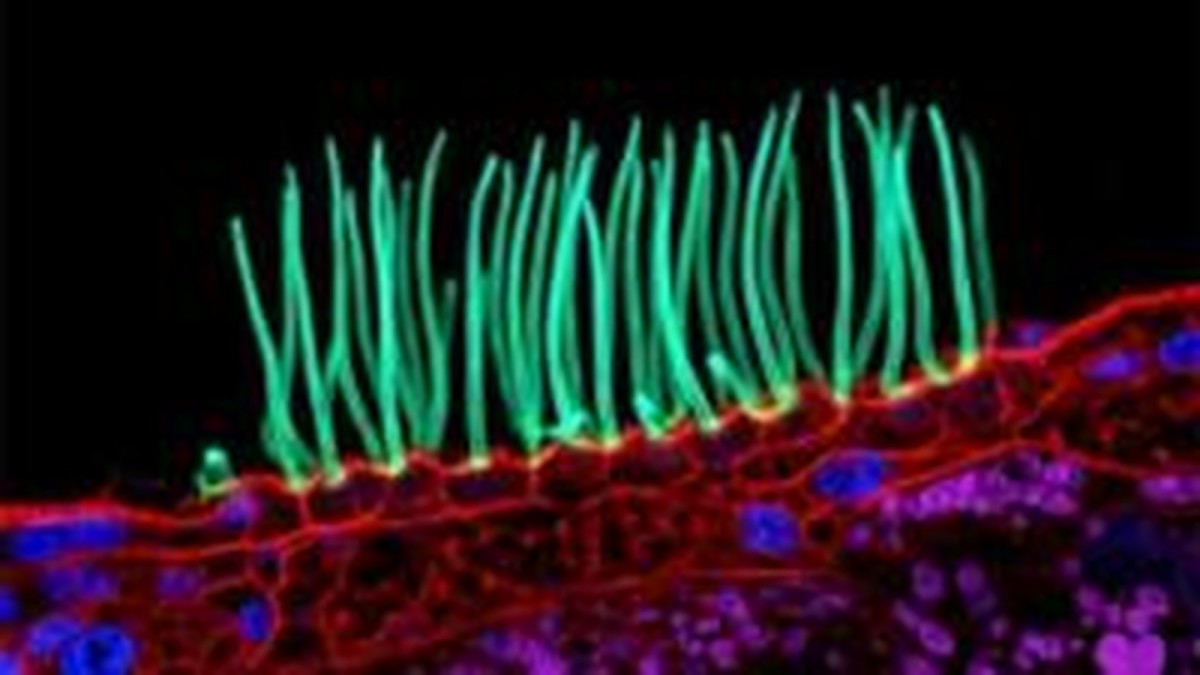
When the Nikon Small World In Motion contest announced its 2026 winner, the buzz was supposed to be about a tiny, glowing video of cilia dancing inside a child's airway. Instead, the spotlight has shifted to a heated debate over AI’s role in scientific imaging, the integrity of prize‑winning research, and what the fallout means for everyday scientists who rely on such contests to showcase their work.
The contest and the contested win
Nikon’s Small World In Motion competition, a staple of the microscopy world for the past fifteen years, invites researchers to submit photos and videos captured through powerful microscopes. The prize—$3,000 (£2,250) plus the cachet of a global platform—has become a coveted badge of honor for lab‑bound visual storytellers.
This year’s top entry was a short video submitted by Dr Ning Xu of Tsinghua University. Xu’s footage purported to reveal the motion of hair‑like cilia inside the airways of a child suffering from a rare disease. The clip, brightened with artificial colours—a standard practice in microscopy—was praised for its visual impact and scientific relevance, earning it the top spot amid a field of technically sophisticated submissions.
AI enters the frame
Shortly after the announcement, a wave of criticism erupted from fellow scientists who questioned whether AI tools had been used beyond the contest’s permissible limits. While Xu publicly denied breaking any rules, he admitted to employing AI “to distinguish and visualize features in the reconstructed grayscale images.” He insisted, “AI was not used to generate the experimental movie, the cilia, or their motion.”
The crux of the dispute lies in the contest’s rule that generative AI cannot be used to create content, only to process it. The bright artificial colours, while allowed, are typically applied manually via stains and dyes. By using AI for feature enhancement, Xu stepped into a gray area that other entrants felt compromised the fairness of the competition.
Scientific community pushes back
Critics quickly marshaled technical observations. Edward Phelps, an associate professor at Florida University, noted that some structures in the video seemed to “pop in and out of existence” and that the cilia “appear from nowhere.” His comments hinted at anomalies that didn’t align with known cellular behaviour.
Ian Donovan, a PhD student at UT Southwestern Medical Centre, pointed to a watermark in the source image that, in his view, signalled AI generation. Two former judges for the contest also voiced doubts, suggesting the footage might not be a pure microscope capture. Their collective concerns underscore a broader unease about AI’s capacity to subtly alter scientific data without clear disclosure.
Nikon’s response and the investigation
In the face of mounting pressure, Nikon has maintained that, “At this time, we don’t see that any rules were violated.” The company said Xu has been “respectfully complying” with its investigation and has supplied additional technical documents for review. Nikon’s stance reflects a cautious approach, opting to let the evidence speak before making a definitive ruling.
The contest’s governing board has yet to issue a formal decision, but the ongoing probe highlights the growing need for clearer guidelines around AI‑assisted image processing in scientific competitions. As the investigation proceeds, the outcome will likely set a precedent for how future entries are vetted.
What the prize means to scientists
Beyond the cash prize, the recognition from Nikon carries significant weight in the scientific community. Dr Patrick Hickey, who placed fifth in the 2026 contest, explained that the award’s value lies in its ability to bring lab work into the public eye. “If you spend a lot of your time in a dark room looking down a microscope, it’s really nice to be able to show people and to show the public,” he said.
Hickey also emphasized the artistic dimension of microscopy, noting that many scientific images possess “abstract and artistic qualities.” This blend of science and art makes contests like Small World a rare platform where researchers can reach audiences far beyond their own disciplines, turning technical data into visual narratives that capture imagination.
The stakes for everyday researchers
For the thousands of scientists who submit to Nikon’s contest each year, the controversy raises practical concerns. If AI‑enhanced images are deemed acceptable, the playing field could tilt toward labs with access to advanced computational tools, marginalizing those who rely on traditional microscopy techniques.
Conversely, a strict ban on AI could stifle legitimate advances in image processing that improve clarity and insight. The balance between preserving scientific integrity and embracing technological progress is delicate, and the outcome of this case will likely influence how researchers approach data visualization in the coming years.
Looking ahead: the broader AI‑ethics conversation
The Nikon dispute is part of a larger, ongoing conversation about AI’s place in scientific research. As generative models become more capable, the line between enhancement and fabrication blurs. Institutions, journals, and competitions are now forced to draft explicit policies that define acceptable use.
While Nikon awaits the results of its internal review, the episode serves as a cautionary tale for the research community. Transparency about AI tools, clear documentation of image processing steps, and open dialogue with peers will be essential to maintain trust. For the public, the controversy underscores that stunning visuals—no matter how beautiful—must be backed by rigorous, verifiable science.
This article was produced with AI-assisted research and editorial support. Reporting is based on the source material cited below. Sources: BBC Technology; bbc.co.uk; Global1.News (03 October 2026).
By Nova Chen, Staff Writer
What's Your Reaction?
 Like
0
Like
0
 Dislike
0
Dislike
0
 Love
0
Love
0
 Funny
0
Funny
0
 Wow
0
Wow
0
 Sad
0
Sad
0
 Angry
0
Angry
0

Trend Reporter at Global1.News. Based in San Francisco, tracking the stories crossing from social platforms, forums, and community discussions into mainstream news — tech breakthroughs, cultural shifts, and world events that real people are engaging with right now.














Comments (0)