
Ethiopia and Eritrea Sever All Diplomatic Ties as Blasts Reach the Capital
Ethiopia closed its embassy in Asmara and expelled ten Eritrean diplomats; Eritrea severed all diplomatic ties in response. Overnight blasts were heard in Addis Ababa as fighting widened in northern Ethiopia.
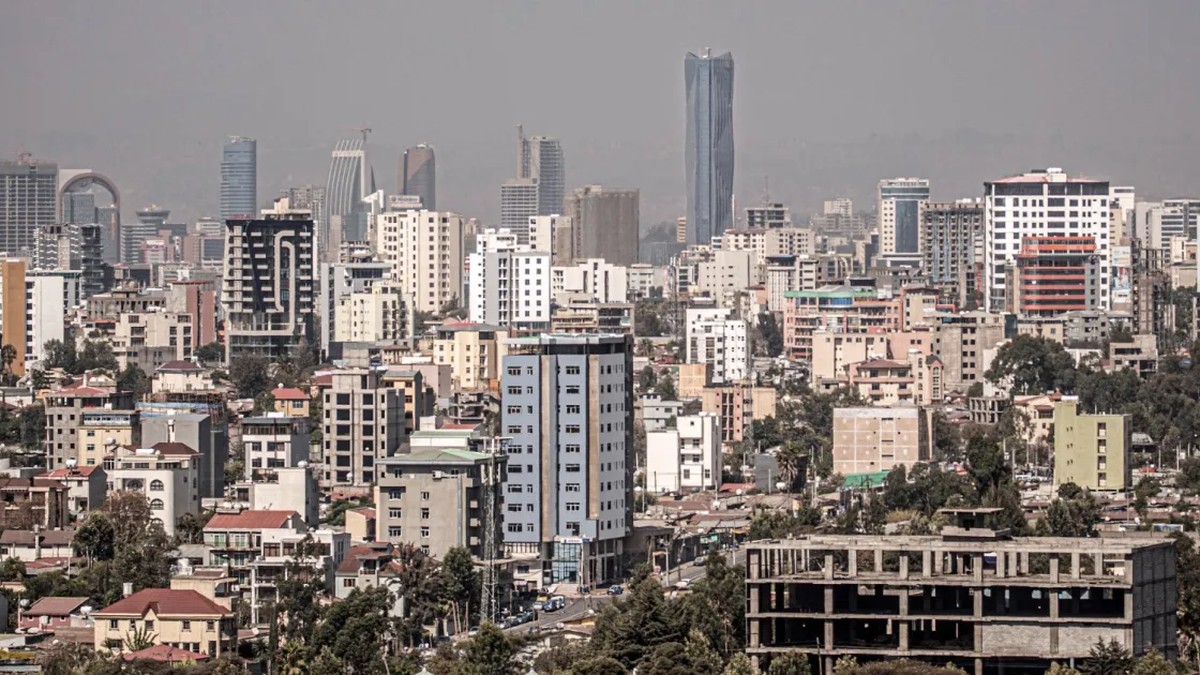
Ethiopia closed its embassy in Asmara and ordered ten Eritrean diplomats out of the country on Thursday, accusing them of threatening national security. Eritrea answered within hours by severing all diplomatic ties and warning of "negative corollaries." It is the worst confrontation between the two neighbours since a 2018 peace agreement ended two decades of war — and it landed the same night explosions were heard in the Ethiopian capital.
Ethiopia and Eritrea Sever All Diplomatic Ties as Blasts Reach the Capital
Addis Ababa, Ethiopia — Ethiopia's Foreign Ministry announced on Thursday that it had "decided to close its Embassy in Asmara, Eritrea, in response to Eritrea's direct and indirect acts of hostility and belligerence against Ethiopia." In the same statement, posted to its X account, Addis Ababa declared ten Eritrean diplomats persona non grata, accused them of "involvement in activities that pose a direct threat to Ethiopia's national security," and gave them 48 hours to leave the country. The ten were not named. They included the charge d'affaires and others accredited to the African Union. Eritrea's Ministry of Foreign Affairs responded late on Thursday by severing "all diplomatic ties with Ethiopia," and its information minister, Yemane Gebremeskel, told Reuters the expulsions amounted to the closure of Eritrea's own embassy in the Ethiopian capital.
The Break, in Three Statements
Three documents, issued within hours of each other, took Ethiopia and Eritrea from an uneasy peace to no relations at all. Ethiopia's Foreign Ministry statement ordered the Asmara embassy shut and gave the ten diplomats 48 hours to leave. The African Press Agency reports Ethiopia accused the ten of breaching the Vienna Convention on Diplomatic Relations. Eritrea's Foreign Ministry then said on X: "Eritrea has no option but to reciprocate in kind and sever all diplomatic ties with Ethiopia with all the negative corollaries that this entails." Its ministry called the allegations "astounding." DW reports Eritrea's information minister went further, describing the situation as a "declaration of war" by Ethiopia. Reuters names the minister Yemane Gebremeskel and DW renders the name as Yemani Meskel; the quotes carried by both are the same. AFP reports the severance is the worst confrontation between the two nations since the 2018 agreement formally ended twenty years of war.
A Night of Blasts in the Capital
Explosions were heard overnight in Addis Ababa, including near Ethiopia's military headquarters, hours after the diplomatic announcements were set in motion. The BBC reports the blasts came close to the headquarters of the intelligence service, and that a resident nearby said the explosion was loud enough to trigger car alarms. A source linked to the opposition alliance told Reuters it had carried out several drone strikes in the capital, including some targeting the military's headquarters. Three diplomatic sources, speaking on condition of anonymity, confirmed the blasts. Witnesses said no damage was visible near the military base. Ethiopian authorities have not confirmed what caused the explosions, and there have been no official reports of casualties or significant damage. Hours before the blasts, the National Intelligence and Security Service imposed an indefinite ban on drone flights over the capital and surrounding areas, citing the need to protect senior officials, important infrastructure and public events. If the claim of responsibility is confirmed, it would be the first known drone attack by anti-government forces on Addis Ababa, which sits hundreds of kilometres from the front lines in Tigray, Amhara and Afar.
What Addis Ababa Says Eritrea Did
Ethiopia's case rests on a single allegation: that Eritrea is backing the armed alliance fighting its government, together with Sudan and Egypt. All three countries deny it. Addis Ababa described Eritrea's conduct as "hostility and belligerence" and said the ten diplomats named as persona non grata had put national security at risk — a charge it says justified closing the embassy altogether. Eritrea's ministry called the claims "astounding" and said "In reality, it is Ethiopia which has been pursuing an agenda of incessant hostility." Conflict monitor ACLED says rebel forces have previously used drones to target airbases and airports elsewhere in the country, though opposition forces had not previously been known to use armed drones. The Associated Press, citing security sources, reported three blasts after the government imposed the drone ban.
What Asmara Says Back
Eritrea's counter-accusations are broader than the allegations against it. Its Foreign Ministry said Addis Ababa had waged war against Eritrea to win access to the Red Sea, and accused Ethiopia of hosting, training and arming Eritrean opposition groups to stoke internal conflict. Eritrea has rejected the accusation that it supports the Tigray People's Liberation Front and the wider rebel alliance, and its information minister told Reuters that Addis Ababa's action meant Asmara's own embassy in Ethiopia could no longer function. The two statements do not overlap on a single point of fact — each side says the other is the aggressor — and neither government has signalled it will step back from the position it published on Thursday.
The Fighting Behind the Rupture
Fighting resumed in northern Ethiopia in late September, the most serious escalation since the 2020-2022 civil war, and is concentrated in three regions: Tigray, Amhara and Afar. The force opposing the government is the Ethiopian Peoples' Forces Alliance for Survival, led by the TPLF and including the Amhara Fano militia and the Oromo Liberation Army, formed with the declared aim of toppling Prime Minister Abiy Ahmed's government. Al Jazeera's bureau chief in Ethiopia, Mohammed Taha Tawakel, reported that pro-government forces have taken several towns and closed to within about 40km of the regional capital, Mekelle. A pro-government militia, the Tigray Peace Forces, said on Thursday it had captured Maychew, about 75km south of Mekelle, alongside the federal army, while government forces also took Alamata and recaptured Erebti in Afar. Tawakel reported that rebel forces still hold what he described as a "strong rear link with Eritrea" along the border, and that some residents have begun fleeing towards Amhara and Afar.
Egypt and Sudan Are Now in the Room
The rupture did not stay bilateral. Ethiopia also declared an Egyptian diplomat persona non grata and ordered him out within 48 hours, according to the state-run Ethiopian Broadcasting Corporation and two sources with knowledge of the matter. Egypt's state-affiliated Al Qahera News, citing a senior Egyptian source, said Cairo responded in kind, expelling an Ethiopian embassy counsellor and giving him 48 hours to leave. Al Qahera News quoted an Egyptian official calling Ethiopia's move "regrettable and unjustified." Egypt's Foreign Ministry spokesman put Cairo's position in a sentence: "Reciprocity is the currency of diplomacy." Ethiopia has also accused Sudan of backing the alliance; Sudan denies it, and in turn accuses Ethiopia of supporting the paramilitary force it is fighting in its own civil war. Ahmed Soliman, a senior research fellow at Chatham House's Africa programme, told Al Jazeera the two conflicts "have become more interconnected," with each government accusing the other of harbouring and equipping its opponents.
How a Nobel Peace Prize Became a Closed Embassy
In 1962 Ethiopia annexed Eritrea. An armed independence struggle led by Eritrea's current president, Isaias Afwerki, secured independence in 1993, and the two countries fought a border war from 1998 to 2000. When Abiy Ahmed came to power in 2018 he moved to end that hostility, and Ethiopia reopened its embassy in Asmara as part of a rapprochement that helped him win the 2019 Nobel Peace Prize. During the 2020-2022 civil war, Eritrea fought alongside Ethiopia's federal government against the TPLF. But Eritrea was not a party to the Pretoria Agreement that ended the fighting in November 2022, and relations soured quickly afterwards. The deal was never fully implemented: in May the TPLF pushed out the interim administration it had created, in June the TPLF and Ethiopia's main opposition parties boycotted national elections won by Abiy's ruling party, and airstrikes have been reported in Tigray since August.

The Red Sea Question Nobody Will Drop
Behind the diplomatic language sits a dispute over water and coastline. Ethiopia has been landlocked since Eritrea's independence in 1993 and has insisted for years that secure sea access is vital to its economy and its security. Abiy has said repeatedly that Ethiopia has a right to sea access; Asmara has said it fears Addis Ababa will try to take the Eritrean port of Assab by force. Eritrea's Foreign Ministry now frames the embassy closure and the expulsions as part of that same campaign. Analysts say Eritrea has been providing rebel forces access to its Red Sea coastline, giving the otherwise isolated Tigray region a supply route. Al Jazeera reported that rebel forces retain a strong rear link with Eritrea along the border — the single fact that ties the land dispute, the battlefield and the collapsed embassy together.
What Analysts Fear Comes Next
Three analysts gave Al Jazeera three versions of the same warning. Laura Hammond, professor in development studies at SOAS University of London, said the risks of the conflict spreading "are already playing out in terms of Eritrea's support for the TPLF and the Alliance for Survival," and that there is "a strong possibility that Eritrea will become more involved in the conflict on the ground inside Tigray if it continues much longer." Martin Plaut, an analyst specialising in the Horn of Africa, said the situation is "extremely tense and it would only require a spark to ignite a conflagration that could engulf" Ethiopia and Eritrea, as well as neighbouring Sudan. Edward Bach, a senior Africa analyst at the risk intelligence firm Verisk Maplecroft, said the opposition's ability to strike Addis Ababa would be "a political game-changer," undercutting any government suggestion that the capital is untouched and eroding the federal army's edge in the air.
The Question Now: Who Can Broker a Pause?
The African Union Commission called on Ethiopia, Eritrea and Egypt to exercise maximum restraint and to "address their differences through established diplomatic channels and peaceful dialogue," in a statement issued late on Thursday. African leaders gather in Cairo on Friday for the Egypt-Africa Summit, the first major diplomatic forum since the crisis erupted, though no regional or outside power has yet stepped forward to broker talks. Amhara Region President Arega Kebede told DW that "the ongoing bloodshed cannot be a sustainable answer to the region's problems," and urged community and political figures to take a larger role in mediation. Israel's Foreign Ministry has advised its citizens against travel to Tigray, Amhara, Afar and the Danakil Desert; it has not issued a warning against Addis Ababa itself. Ethiopia is reportedly preparing to withdraw more than 3,000 troops from Somalia and redeploy them to the north, according to Bloomberg.
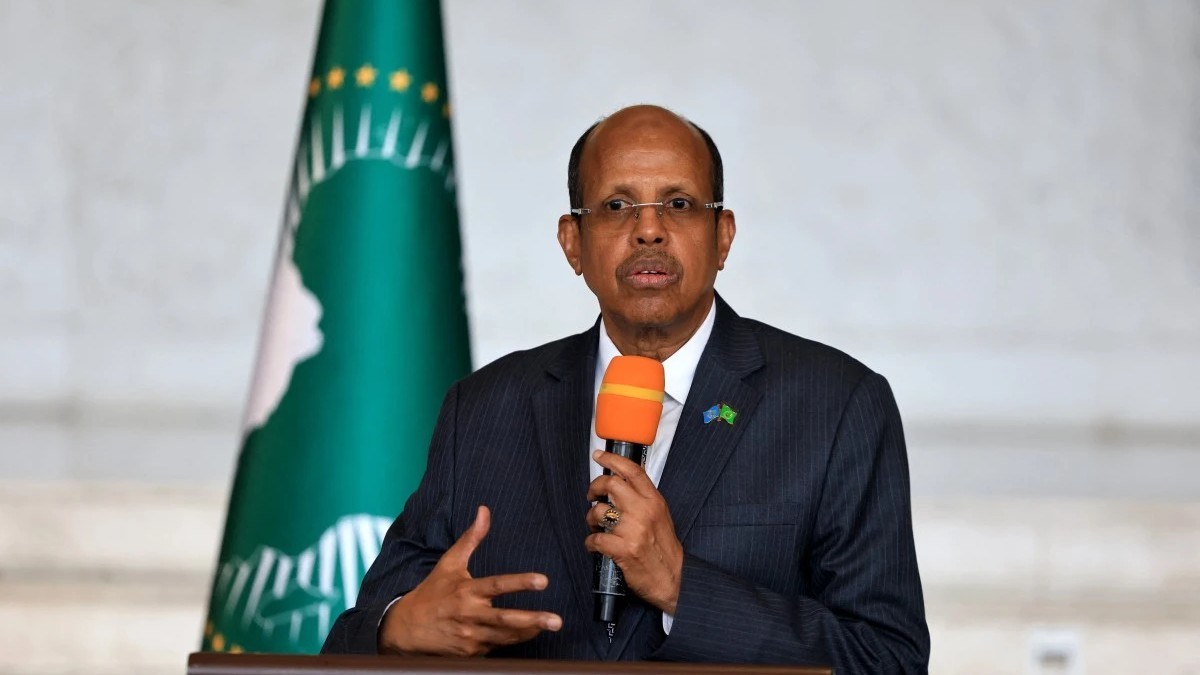
This article was produced with AI-assisted research and editorial support. Sources: Reuters, Associated Press, Agence France-Presse, BBC, Al Jazeera, DW, APA, Arab News and ynetnews.
By Jessica Ali, Staff Writer
What's Your Reaction?
 Like
0
Like
0
 Dislike
0
Dislike
0
 Love
0
Love
0
 Funny
0
Funny
0
 Wow
0
Wow
0
 Sad
0
Sad
0
 Angry
0
Angry
0

Editor-in-Chief at Global1.News. Atlanta-based journalist who cuts through the BS and tells it like it is. Lead anchor, host, and the voice you hear when the spin stops and the truth starts.















Comments (0)