
Eyes on AI as factor in Alberta referendum
Alberta’s upcoming referendum on constitutional reforms and the possibility of secession has become a testing ground for how artificial‑intelligence tools shape public debate.
Alberta’s upcoming referendum on constitutional reforms and the possibility of secession has become a testing ground for how artificial‑intelligence tools shape public debate. A report from the Media Ecosystem Observatory, a Toronto‑based research initiative, highlights the growing reliance on AI chat‑bots and search engines to answer voters’ questions about taxes, pensions and the fiscal impact of an independent province. While the technology can quickly summarise complex policy issues, officials warn that the answers can shift from day to day, reflecting changes in underlying data rather than any real‑world shift in facts. The implications for the Oct. 19 vote—and for future Canadian elections—are now under close scrutiny.
AI answers are fluid, not factual
According to Aengus Bridgman, director of the Media Ecosystem Observatory, a simple query to Google’s AI Overview or OpenAI’s ChatGPT about whether taxes would rise in an independent Alberta can produce different responses on different days. “It’s not because any of the underlying reality has changed,” Bridgman said, noting that the models draw on constantly updating data sets. This volatility raises concerns that voters may be guided by the most recent algorithmic output rather than a stable, evidence‑based analysis.
The report underscores that AI‑generated answers are only as reliable as the sources they draw from. Elections Alberta has cautioned that chat‑bots and search engines “are not official sources of election information and frequently cite incorrect information sources.” The agency’s warning reflects a broader anxiety that the “garbage in, garbage out” principle could undermine the integrity of the referendum if citizens rely on AI without cross‑checking with verified data.
The referendum as a case study in the influencer era
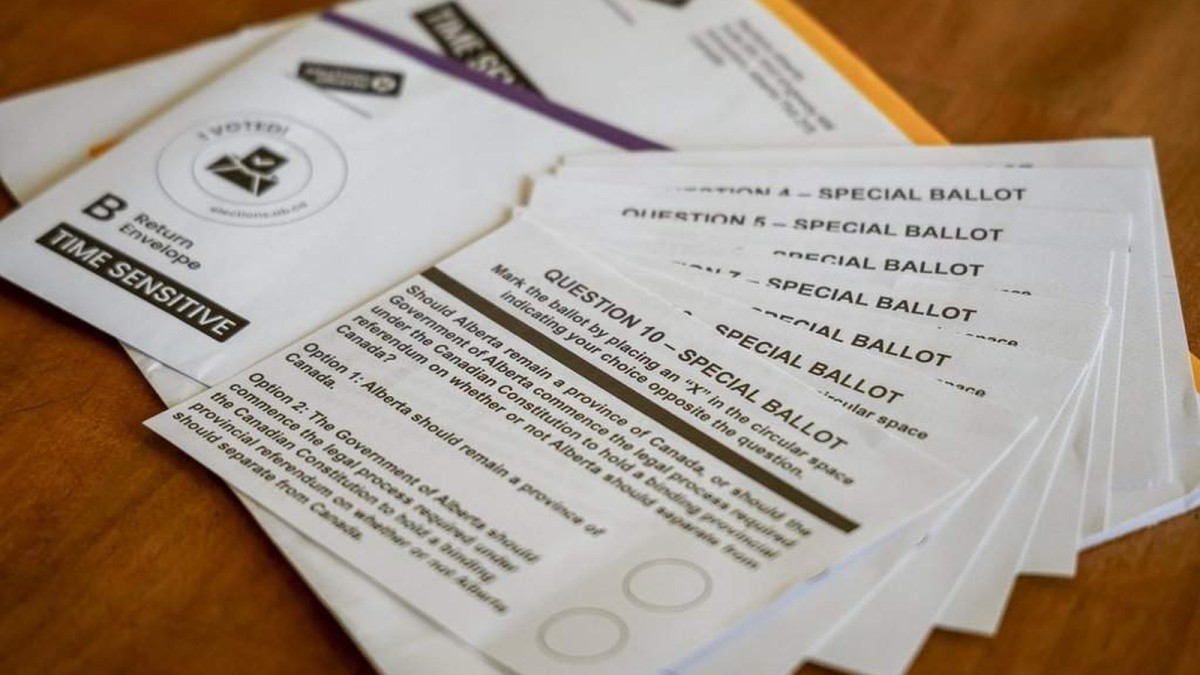
Alberta voters will face ten questions, including a second, binding referendum on whether to leave the Canadian Confederation. The Media Ecosystem Observatory’s study treats this vote as a “case study of what a democratic vote looks like squarely in the influencer era.” It finds that online influencers have amassed relevance and engagement at the expense of traditional news outlets and elected officials, a trend that mirrors the broader shift in Canadian media consumption.
Bridgman observes that social‑media platforms and AI tools have dramatically broadened the scope of the separation debate. Yet he also notes that the same technologies make it harder to track the flow of information. The rapid spread of AI‑generated content, combined with the sheer volume of influencer‑driven posts, creates a complex information environment that challenges both regulators and voters.
Pro‑separation voices dominate online, despite polling
The Observatory’s analysis reveals a disproportionate presence of pro‑separation influencers compared with federalist accounts. While public polls indicate a large majority of Albertans intend to remain in Canada, the online discourse is skewed toward separation. Bridgman suggests this imbalance may stem from a perception among separatist voices that traditional media do not adequately represent their views.
Many of these pro‑separation accounts also employ AI tools to generate content, amplifying their reach. The study notes an “uptick in content about Alberta separation produced in other countries, including the United States,” though it stops short of confirming coordinated foreign interference. Instead, it points to foreign actors seeking financial profit from the high view counts such content garners.
Academic warnings about AI‑driven misinformation
University of Alberta political‑science professor Blair Attard‑Frost, who chairs the AI initiative at the Canadian Institute for Advanced Research, warns that the current wave of AI‑generated information poses a “new wave of media literacy” challenges. She likens the situation to the early 2000s, when the rise of search engines sparked a surge in information‑campaigns and a corresponding need for media‑literacy education.
Attard‑Frost describes AI tools as “deceptive products” marketed as intelligent aids, yet capable of delivering incomplete or misleading answers. She stresses that many voters could be making decisions based on “incomplete, inaccurate, false or misleading information” about the consequences of separatism, underscoring the urgency of bolstering public understanding of AI’s limits.
Government response: traditional media and printed booklets
Alberta Premier Danielle Smith has defended the province’s approach to voter education, saying the government has turned to “traditional media” and direct outreach. The administration recently launched a television ad campaign and mailed out booklets that outline the ten referendum questions and provide context for the first nine, which focus on expanding provincial authority over constitutional reform and financial guardrails for newcomers.
Smith emphasised that the government is “making sure that Albertans know exactly what the questions are and some of the context for them.” The booklet, however, has drawn criticism for its presentation of data without full context, a point that opposition leaders have seized upon as evidence of partisan influence.
Opposition criticism of the government’s information campaign
Alberta Opposition NDP Leader Naheed Nenshi has accused the Smith government of using the booklet to “put its thumb on the scale.” He argues that the material presents uncontextualised figures—such as the claim that temporary residents cost Alberta taxpayers $1 billion a year in health‑care and education—without explaining the methodology behind the numbers or noting that temporary workers must be employed and pay taxes.
Nenshi contended that the booklet’s focus on the first nine questions, while remaining silent on the tenth, effectively tells voters how to answer. He characterised the campaign as “propaganda” and labelled the $4 million‑costly publication as “garbage,” suggesting it undermines the principle of direct democracy the referendum is meant to embody.
Looking ahead: safeguarding future elections
OpenAI and Google have not responded to requests for comment on the Media Ecosystem Observatory’s findings. Nevertheless, OpenAI’s own May blog post, cited by the report, notes that 2024 marked the first major election year after generative AI became widely available, and the company has been building safeguards to protect elections worldwide. The statement underscores the growing recognition that AI’s role in democratic processes is no longer peripheral.
As Alberta prepares for its Oct. 19 vote, the convergence of AI, social‑media influencers and traditional political campaigning presents a complex challenge for regulators, scholars and the public. The Media Ecosystem Observatory’s study provides an early glimpse of how AI can shape electoral discourse, while also highlighting the need for robust media‑literacy initiatives and transparent, verifiable information sources. How effectively Canada navigates this evolving landscape will shape not only the outcome of Alberta’s referendum but also the health of democratic dialogue across the nation.
This article was produced with AI-assisted research and editorial support. Reporting is based on the source material cited below. Sources: Global News Canada; globalnews.ca; Global1.News (03 October 2026).
By Alex Thompson, Staff Writer
What's Your Reaction?
 Like
0
Like
0
 Dislike
0
Dislike
0
 Love
0
Love
0
 Funny
0
Funny
0
 Wow
0
Wow
0
 Sad
0
Sad
0
 Angry
0
Angry
0

Canada Correspondent at Global1.News. Based in Toronto, covering Canadian politics, energy, trade, and US-Canada relations. Provides the Canadian perspective on North American and global affairs.















Comments (0)