
Byron Donalds Wins Florida GOP Primary for Governor, Poised to Make History
Byron Donalds, a US congressman of Jamaican and Panamanian heritage, has won Florida's Republican gubernatorial primary with 48 per cent of the vote, setting up a historic November bid to become the state's first Black governor against Democrat David Jolly.
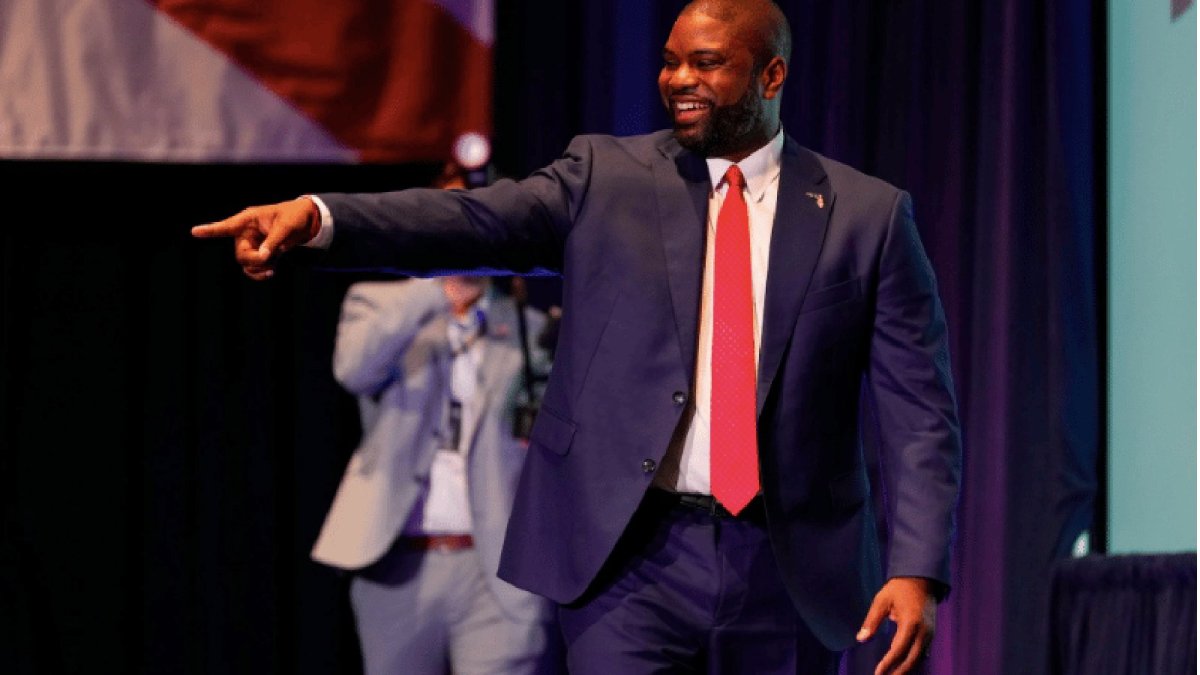
It is a moment that has Caribbean communities from Brooklyn to Port of Spain, and from Miramar to Montego Bay, talking with a mixture of pride and political fascination. Byron Donalds, a United States congressman of Jamaican and Panamanian heritage, has won the Republican nomination for Governor of Florida, setting the stage for a November showdown that could see him become the state’s first Black governor.
The victory, secured on Tuesday, August 18, 2026, was no narrow squeak. Donalds took 48 per cent of the vote in a crowded Republican primary field of eleven candidates, a decisive win that underscores the organisational muscle and financial firepower behind his campaign. He now faces Democrat David Jolly, a former Republican congressman who left the party during President Donald Trump’s first term, in the general election scheduled for November 3, 2026.
For those of us in the Caribbean diaspora, this is more than just another American election cycle. Florida is home to one of the largest Caribbean-American populations in the United States, a vital gateway for travel, trade, remittances, and even hurricane-season migration. The prospect of a man with roots in our region occupying the governor’s mansion in Tallahassee carries symbolic weight that resonates far beyond the Sunshine State’s borders.
A Brooklyn-Born Son of the Diaspora
Byron Lowell Donalds was born on October 28, 1978, in Brooklyn, New York, and raised in a single-parent household. His heritage is a blend of Jamaican and Panamanian lineage, a background that speaks to the rich, interwoven tapestry of Caribbean migration to the United States. Growing up in the borough that has long been a landing point for Caribbean families, Donalds’s journey from those Brooklyn streets to the halls of Congress is one that many in our community can recognise and take pride in.
He has represented Florida’s 19th congressional district, which covers Southwest Florida including Naples, since 2021. Now 47 years old, Donalds has carved out a prominent role in national Republican politics, frequently appearing as a surrogate for the party’s messaging on economic opportunity, education, and public safety. His political rise has been steady, but this gubernatorial bid represents his most significant test yet.
Donalds lives in Naples with his wife Erika and their three sons. His personal story—of rising from modest beginnings to the cusp of a state’s highest office—is one he has woven throughout his campaign, appealing to voters who see in him a reflection of the American dream, albeit through a distinctly Caribbean lens.
The Primary Battle and the Trump Factor
The Republican primary was always going to be a bruising affair, with a field that included Lieutenant Governor Jay Collins, former Florida House Speaker Paul Renner, and businessman James Fishback. But Donalds entered the race with a significant advantage: the endorsement of President Donald Trump, who has made Florida his adopted home state. That backing, combined with a record-setting fundraising operation, allowed Donalds to dominate the airwaves and out-organise his opponents.
His 48 per cent showing against ten other candidates is a testament to the strength of that coalition. It also signals that the Trump wing of the Republican Party remains firmly in control in Florida, a state that has shifted decisively toward the GOP over the past decade. For Donalds, the challenge now is to translate that primary success into a general election victory, where the electorate is broader and the dynamics are different.
On the Democratic side, David Jolly emerged victorious with 61 per cent of the vote over five opponents. Jolly’s political trajectory is unusual: he served as a Republican congressman from Florida’s 13th district but broke with the party during Trump’s presidency, becoming a vocal critic. His pivot to the Democratic Party and his success in the primary reflect a segment of Florida voters who are hungry for an alternative to the current Republican dominance.
A Historic November Election
The general election on November 3, 2026, is now set. If Donalds prevails, he would make history as Florida’s first Black governor, a milestone that would reverberate across the nation and the Caribbean. It would also mark a continuation of Republican control in Tallahassee, extending a drought for Democrats that has now lasted more than 27 years. Florida last elected a Democratic governor in 1994, when Lawton Chiles won a second term. Chiles died in office in December 1998, and Democrats have not won the governor's mansion since.
Outgoing Governor Ron DeSantis, who is term-limited, has been a towering figure in Florida politics and a national conservative leader. Donalds has positioned himself as a natural successor, promising to continue many of the policies that have defined the DeSantis era while adding his own emphasis on economic growth and educational reform. For Caribbean voters in Florida, the question is whether Donalds’s heritage will translate into policies that address their specific concerns, from immigration pathways to small business support and disaster preparedness.
The stakes are high, and the campaign will undoubtedly be intense. Florida is a state that has become a bellwether for national politics, and the outcome of this race will be closely watched not only in Washington but also in capitals across the Caribbean, where the state’s policies on trade, tourism, and hurricane response have direct implications.
Caribbean Candidates and Community Impact
While Donalds’s victory is the headline, it is worth noting that other Caribbean-heritage candidates in Florida’s 2026 primaries did not fare as well. According to reports from the Jamaica Gleaner and News Americas Now, several Jamaican-rooted and Caribbean-heritage hopefuls fell short in their respective races, making Donalds the exception rather than the rule. This underscores the challenges that Caribbean-American politicians still face in breaking through, even in a state with a substantial Caribbean population.
For the Caribbean community in Florida, the election is about more than just representation. Florida is a key hub for Caribbean travel and trade, with Miami serving as a major gateway for flights, cargo, and remittances to and from the region. The state’s policies on hurricane preparedness and disaster response are critical for Caribbean nationals who migrate seasonally or permanently, and for families who rely on remittances sent from Florida back home to Trinidad, Jamaica, Barbados, and Guyana.
There is also the matter of cultural connection. Carnival season in Miami, the vibrant soca and calypso scenes, and the deep-rooted traditions of Caribbean food, music, and faith are all part of Florida’s social fabric. A governor who understands these communities from the inside could bring a different perspective to issues like cultural preservation, small business development, and community safety.
What This Means for the Wider Caribbean
Beyond the borders of Florida, Donalds’s candidacy is being watched with keen interest across the Caribbean. For many in the region, the success of a Caribbean-heritage politician in a major U.S. state is a source of pride and a reminder of the diaspora’s growing political clout. It also raises questions about how a Governor Donalds might engage with the Caribbean on issues like trade agreements, climate change, and regional security.
The Caribbean has long navigated a complex relationship with the United States, balancing economic dependence with a desire for sovereign partnership. A Florida governor with Jamaican and Panamanian roots could potentially serve as a bridge, fostering closer ties between the state and the region. However, it remains to be seen how his policy positions, particularly on immigration and trade, would align with the interests of Caribbean nations.
There is also the symbolic power of his candidacy for young Caribbean-Americans. Seeing someone who shares their heritage on the cusp of such a high office can inspire a new generation to engage in politics and public service. It challenges the notion that Caribbean voices are peripheral to American political life and affirms that our community’s contributions are integral to the nation’s story.
The Road Ahead
As the campaign now moves into its final months, the focus will shift to the issues that matter most to Florida voters: the cost of living, housing affordability, education, and public safety. Donalds will need to broaden his appeal beyond the Republican base to win over independents and moderate Democrats, while Jolly will seek to paint the congressman as too closely aligned with the national party’s more controversial positions.
For the Caribbean community, the hope is that the conversation will also include the issues that affect them directly. From the affordability of flights and remittance fees to the treatment of Caribbean nationals in the U.S. immigration system, there is much at stake. The diaspora is watching, and the community’s vote could prove decisive in a state where margins can be tight.
November 3, 2026, will be a day of reckoning. Whether Byron Donalds makes history as Florida’s first Black governor or David Jolly ends the Republican stranglehold on the governor’s mansion, the outcome will shape the state’s trajectory for years to come. For the Caribbean, it is a moment of both pride and possibility, a reminder that our region’s influence extends far beyond our shores.
By Sharon Sahatoo, Staff Writer
This article was produced with AI-assisted research and editorial support. Sources: Caribbean360, The New York Times, Florida Phoenix, USA Today, Jamaica Gleaner, News Americas Now, news agency reports.
What's Your Reaction?
 Like
0
Like
0
 Dislike
0
Dislike
0
 Love
0
Love
0
 Funny
0
Funny
0
 Wow
0
Wow
0
 Sad
0
Sad
0
 Angry
0
Angry
0

Caribbean Correspondent at Global1.News. Based in Port of Spain, Trinidad, covering Caribbean politics, economy, energy, climate, and culture. Amplifying the voices and stories of the Caribbean region.











Comments (0)