
Iran-Oman Hormuz Deal Advances as Trump Pushes Truce
A proposed Iran-Oman agreement would give Tehran control over ships entering the Gulf through the Strait of Hormuz, with Iran seeking transit fees of 5-7 percent while Trump pushes truce talks and Houthis strike Saudi tankers in the Red Sea. Regional power balance hangs in the balance.
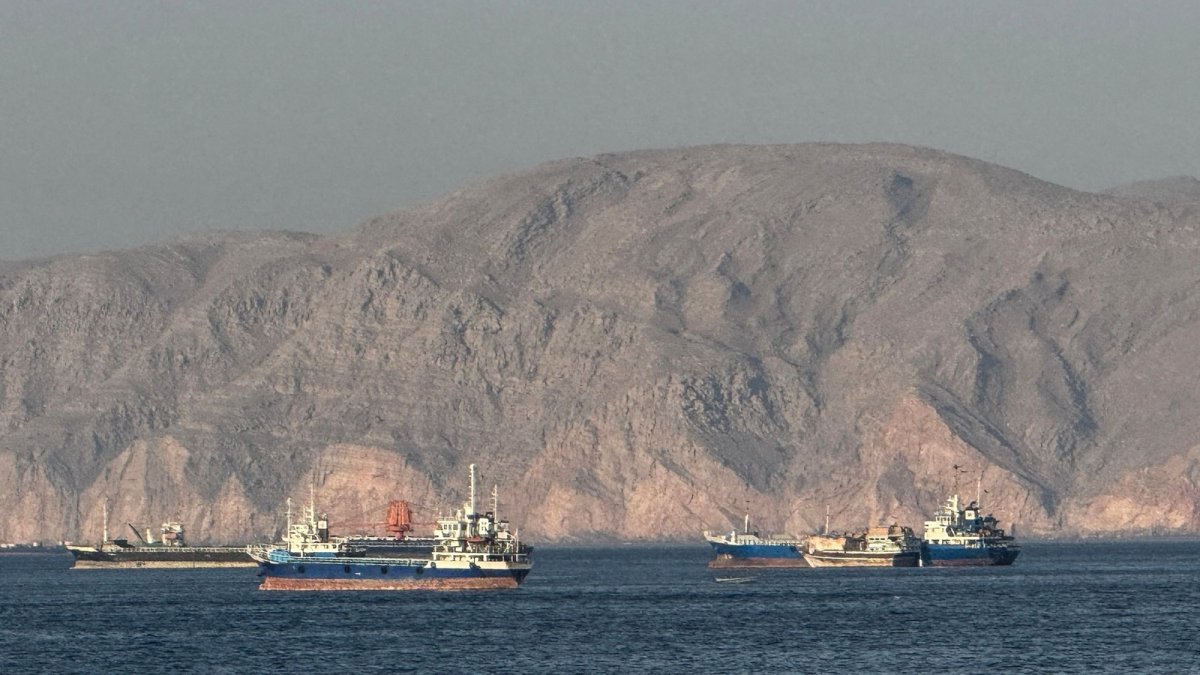
The proposed Iran-Oman agreement would grant Tehran control over vessels entering the Gulf via the Strait of Hormuz, according to senior regional and Iranian sources — a development that would mark a historic shift in the balance of power at the world's most important energy chokepoint. Negotiations are advancing alongside U.S. President Donald Trump's diplomatic push to end the war that began on February 28, even as Yemen's Iran-aligned Houthis extend their blockade of Saudi tankers in the Red Sea.
Iran-Oman Hormuz Deal Advances as Trump Pushes Truce
Beirut, Lebanon – Aug. 5, 2026 — A proposed agreement between Iran and Oman would give Tehran control over ships entering the Gulf through the Strait of Hormuz, according to senior regional and Iranian sources who spoke to Reuters. "The concession has already been made regarding some form of control over Hormuz," one of the regional sources told Reuters.
The other regional source said there were still details to be determined about how "control" would be defined, with Gulf negotiators insisting regional countries supervise inspections of ships and that any payment of fees be voluntary. The senior Iranian source said the text of an agreement already on the table envisioned Iran having control of ships heading into the Gulf through the strait, with one of the main sticking points being what role Iran would also have over ships heading in the opposite direction.
The Deal Taking Shape
Iran's Foreign Ministry spokesperson Esmaeil Baghaei described the negotiations between Tehran and Muscat as "professional" and "moving forward." "The two sides had reached a mutual understanding on the geographical parameters of the route under discussion," he said, adding that if third parties did not obstruct the process, a joint statement between the two countries containing the main considerations and key points of understanding was in the final stages of review and drafting.
State media reported that talks with Oman over transit through the strait were positive and continuing, focused on establishing safe shipping lanes. Baghaei said the route being negotiated was aimed at ensuring the sovereign rights and national security of both Iran and Oman. Tehran has long demanded a say over the Strait of Hormuz, which it says it should share with Oman on the opposite shore, but it rejected an Omani proposal last week that would have allowed shared oversight and the collection of voluntary fees from ships.
Tehran's Price: Control and Fees
According to the senior Iranian official, Iran is seeking fees of between 5 percent and 7 percent of the price of cargoes from ships using the strait. Oman is discussing smaller fees of around 3 percent, while Washington wants no fees at all. Making any fees voluntary, at least nominally, could be a way out of the impasse — although an implied threat of Iranian attacks could mean shippers would be unlikely to risk transit without paying.
"Talks are continuing, but it is too early to say that a deal with Oman has been finalised," the senior Iranian source said. Another Iranian source was blunter: "The devil is in the details. A single tweet from Trump could cause the whole thing to collapse." Baghaei said there was no plan for the foreign minister or the parliament speaker, who have been leading negotiations on Iran's part, to travel to Qatar or Pakistan during the weekend.
Trump's Balancing Act
President Donald Trump has claimed his administration held "very good discussions" with Iran all day Tuesday, raising hopes for a possible quick end to the conflict. Trump told Fox News' "@ Night with Trace Gallagher" programme that talks were "moving along nicely" and that an "all-day negotiation" had taken place. The Strait of Hormuz "is going to be open very soon," Trump added. "If they back out again, they are going to get hit really hard."
Axios, citing two regional sources and a U.S. official, reported that the United States and Iran are closing in on an interim agreement to reopen the strait with the agreement of Oman, which controls part of the waterway, and that Washington was aiming for an announcement Wednesday. Trump and Qatar's Emir, Sheikh Tamim bin Hamad Al Thani, discussed efforts to narrow differences between Washington and Tehran during a phone call Tuesday, Qatar's Emiri office said. Over the weekend, Trump cited the negotiations as the reason for calling off plans for "massive attacks" on Iran — a pattern he has repeated throughout the war.
The Red Sea Front: Houthis and Saudi Tankers
Yemen's Iran-backed Houthis claimed Wednesday that they struck a Saudi oil tanker off Yanbu in the Red Sea, continuing their maritime blockade of the kingdom. This was the eighth Saudi oil tanker targeted since the start of the blockade on July 22, a Houthi military spokesman said. "The group successfully targeted the Saudi oil tanker 'Wafa' in the northern Red Sea, off the coast of Yanbu, with a number of ballistic missiles," Yahya Saree said in a video statement.
The Houthis declared they will escalate attacks in the northern Red Sea because Saudi Arabia is diverting its oil tankers there from the south in response to their blockade. The blockade has threatened top oil exporter Saudi Arabia's ability to get its supplies to the world following Iran's parallel closure of the Strait of Hormuz, cutting off the kingdom's only other maritime route.
With Hormuz effectively shut, the Saudi port of Yanbu has become the main exit point for Saudi oil, and the Bab al-Mandeb Strait a crucial transit route connecting the Red Sea to the Indian Ocean and, via the Suez Canal, the Mediterranean. Saudi seaborne crude exports via Bab el-Mandeb surged eightfold between March and mid-July 2026 compared with the same period in 2025, according to data from maritime tracker Kpler, reaching nearly 100 million barrels in June alone compared with 7 million barrels in February.
Regional Power Shift
An agreement that gives Iran any control over access to the strait would mean the war launched by the United States and Israel resulted in a major shift in the balance of regional power in Tehran's favour. Before the war, the strait was freely open to all ships with no fees. Months of U.S. military efforts, including a two-week campaign of strikes in July, have not broken Iran's grip on the waterway. U.S. commanders advised Trump in July that they were running low on supplies of some munitions, and Reuters reported Tuesday that the U.S. Army had used up nearly all of its long-range precision missiles.
The human cost continues to mount. The United Nations' International Maritime Organization has reported at least 17 deaths of seafarers from 64 incidents in the Strait of Hormuz since the war started on February 28. In all, Iran has reported more than 3,400 deaths since the U.S. and Israel launched the war, while the United States has reported 18 military personnel dead.
What Happens Next
Oil prices edged lower on Wednesday after ticking higher following the Houthi strike on the Saudi-flagged tanker, the latest attack on Middle East shipping to disrupt global energy supplies. Crude prices have plunged over the past two days after Trump called off fresh attacks on Iran citing talks he said could end the conflict. At a briefing in New York, deputy U.N. spokesperson Farhan Haq said the United Nations had received no first-hand information about a possible reopening of the Strait of Hormuz, but added: "We certainly encourage the parties to move forward with any effort to have a negotiated solution to the issue."
Iranian state media, citing an informed source, said an agreement with Oman on the strait — which normally carries about a fifth of global oil and liquefied natural gas shipments — will be delayed "as long as the United States continues to threaten Iran." Qatar had earlier said mediators were making progress in efforts to end the conflict, even after Tehran denied that talks were underway.
Regional Implications
The combination of an Iran-Oman framework for Hormuz transit and the Houthi blockade in the Red Sea creates parallel pressures on Saudi oil export routes that could force lasting adjustments in Gulf energy logistics. For Tehran, the potential to collect fees of 5 to 7 percent while sharing oversight with Oman represents a concrete gain in leverage over a waterway that previously operated without such controls. Washington faces the challenge of accepting limited Iranian influence without appearing to reward the blockade strategy that has already produced 17 seafarer deaths across 64 incidents.
Qatar's mediation role alongside Oman highlights how smaller Gulf states are positioning themselves to manage tensions between larger powers. The outcome will determine whether shipping through these chokepoints remains open to all vessels or becomes subject to selective fees and inspections that favour certain regional actors — changes that could reshape alliances as countries compete for reliable energy access amid the ongoing confrontation between Iran and its neighbours.
By Malik Hassan, Staff Writer
This article was produced with AI-assisted research and editorial support. Reporting is based on sources cited in the article.
What's Your Reaction?
 Like
0
Like
0
 Dislike
0
Dislike
0
 Love
0
Love
0
 Funny
0
Funny
0
 Wow
0
Wow
0
 Sad
0
Sad
0
 Angry
0
Angry
0

Middle East Correspondent at Global1.News. Based in Beirut, covering politics, conflict, energy, and society across the Middle East. Brings context and depth to a region often reduced to headlines.















Comments (0)