
Aramco CEO: Hormuz Closure Is 'Largest Oil Supply Shock in History'
The escalating US-Iran conflict has placed the Strait of Hormuz at the center of Middle East energy security calculations, intertwining Gulf diplomacy with broader regional rivalries and global supply chain vulnerabilities. As tensions persist into their sixth month, actors from Riyadh to Beijing weigh the risks of prolonged disruption against opportunities for strategic repositioning.
The escalating US-Iran conflict has placed the Strait of Hormuz at the center of Middle East energy security calculations, intertwining Gulf diplomacy with broader regional rivalries and global supply chain vulnerabilities. As tensions persist into their sixth month, actors from Riyadh to Beijing weigh the risks of prolonged disruption against opportunities for strategic repositioning. This dynamic underscores how chokepoint crises can reshape alliances and accelerate diversification across the energy landscape.
Hormuz Crisis: Aramco Flags Historic Oil Supply Shock
Riyadh, Saudi Arabia – August 5, 2026 —
The Unprecedented Closure of the Strait of Hormuz
The US-Iran conflict that began in late February 2026 has now reached approximately day 158, resulting in the effective closure of the Strait of Hormuz. This waterway normally carries about 20 percent of global oil supply, equivalent to roughly 20 million barrels per day. Trade flows through the strait have fallen to one-tenth of pre-conflict levels.
Historical precedents underscore the strait's perennial vulnerability. The 1973 oil embargo, the 1979 Iranian revolution, and the 1980-88 Iran-Iraq Tanker War each demonstrated how even partial interruptions at this chokepoint could cascade into global price spikes. During the Tanker War, attacks on more than 500 vessels forced insurers to levy war-risk premiums that doubled shipping costs for Gulf crude. The 1990-91 Gulf War and the 2019 Abqaiq attacks further illustrated the fragility of concentrated export infrastructure, lessons that now inform current contingency planning.
Strategic calculus for Iran centers on preserving leverage through control of the strait, while Oman positions itself as a neutral mediator with direct access to both sides. Saudi Arabia, the UAE, and other Gulf producers weigh the costs of prolonged disruption against the benefits of accelerated diversification. The United States and its European allies seek rapid de-escalation to protect energy security, whereas China and India, both heavily dependent on Gulf crude, quietly urge restraint through back-channel diplomacy.
Strategic Calculus
Iran's primary objective remains the retention of asymmetric leverage over global energy flows, using the strait as a pressure point to deter further sanctions or military action while avoiding full-scale escalation that could invite direct strikes on its own export infrastructure. Its leverage derives from geographic control and the ability to threaten shipping without committing large naval assets, though this is tempered by domestic economic fragility and the risk of internal unrest if revenues collapse entirely. Saudi Arabia seeks to safeguard its market share and fiscal stability by accelerating alternative routes and pressing for de-escalation, leveraging its spare capacity and pipeline networks to demonstrate resilience while using diplomatic channels to isolate Iranian hardliners. The kingdom's position is strengthened by its role in OPEC+ coordination and long-standing security ties with Washington, yet prolonged closure risks undermining Vision 2030 timelines that depend on steady revenue inflows.
The United States aims for swift restoration of open navigation to protect allied economies and global markets, employing naval presence and sanctions enforcement as leverage while balancing domestic political pressures against deeper entanglement. Its influence stems from military superiority in the region and coordination with European partners on secondary sanctions, though over-reliance on force risks pushing Gulf states toward greater autonomy. Oman pursues a mediator role to enhance its regional stature and secure economic concessions, capitalizing on its neutral reputation and direct lines to Tehran without the baggage of larger powers. Its leverage is limited to facilitation rather than enforcement, relying on quiet diplomacy that has historically yielded incremental confidence-building steps.
China and India both prioritize uninterrupted crude imports to fuel industrial growth, applying quiet pressure through economic partnerships and energy investment offers that encourage restraint from all parties. Beijing's leverage includes substantial offtake agreements and Belt and Road financing that Gulf producers value, while New Delhi draws on its growing defense and trade ties with Gulf states to advocate for stability. Europe focuses on preventing secondary inflation and supply shortages, using diplomatic and financial tools to support de-escalation but lacking direct military reach in the Gulf. Collectively these actors illustrate a multipolar environment where no single power can dictate outcomes, forcing negotiated pathways that balance immediate energy needs against longer-term strategic positioning.
Quantifying the Largest Oil Supply Shock in History
Saudi Aramco President and CEO Amin H. Nasser told Al Arabiya Business that the crisis has removed 2.6 billion barrels of crude from global supplies. The world loses more than 100 million barrels for every week the waterway remains closed. The World Bank Commodity Markets Outlook described the event as the largest oil market shock in history, with Brent crude briefly surging past $120 in the spring.
Concrete data points place the scale in perspective. The strait normally accommodates 20-21 million barrels per day of crude plus substantial LNG volumes, including Qatar's roughly 77 million tonnes per year. Previous chokepoint disruptions, such as the 2019 attacks on Saudi facilities, removed far smaller volumes and were resolved within weeks. OPEC+ spare capacity, led by Saudi Arabia's approximately 3 million barrels per day and the UAE's 1 million barrels per day, offers only partial mitigation when the primary maritime artery is severed. Additional analysis shows that even if alternative supplies from the Americas or Africa ramp up, logistical bottlenecks in tankers and refining configurations limit rapid substitution, extending the adjustment period well beyond initial projections.
Second-order effects already appear in elevated shipping insurance rates and inventory drawdowns across Asia. Replenishing depleted stocks at an average rate of 2.1 million barrels per day would require up to 18 months even after partial restoration, according to Nasser. These dynamics highlight how the shock transmits through financial markets, with futures curves steepening and hedging costs rising for importers.
Aramco's Strategic Rerouting to Yanbu
Aramco has rerouted supplies via the East-West Pipeline to the Red Sea port of Yanbu. The company continues exporting around 5 million barrels per day from Yanbu despite the conflict. This infrastructure has provided critical flexibility for Saudi energy exports during the disruption.
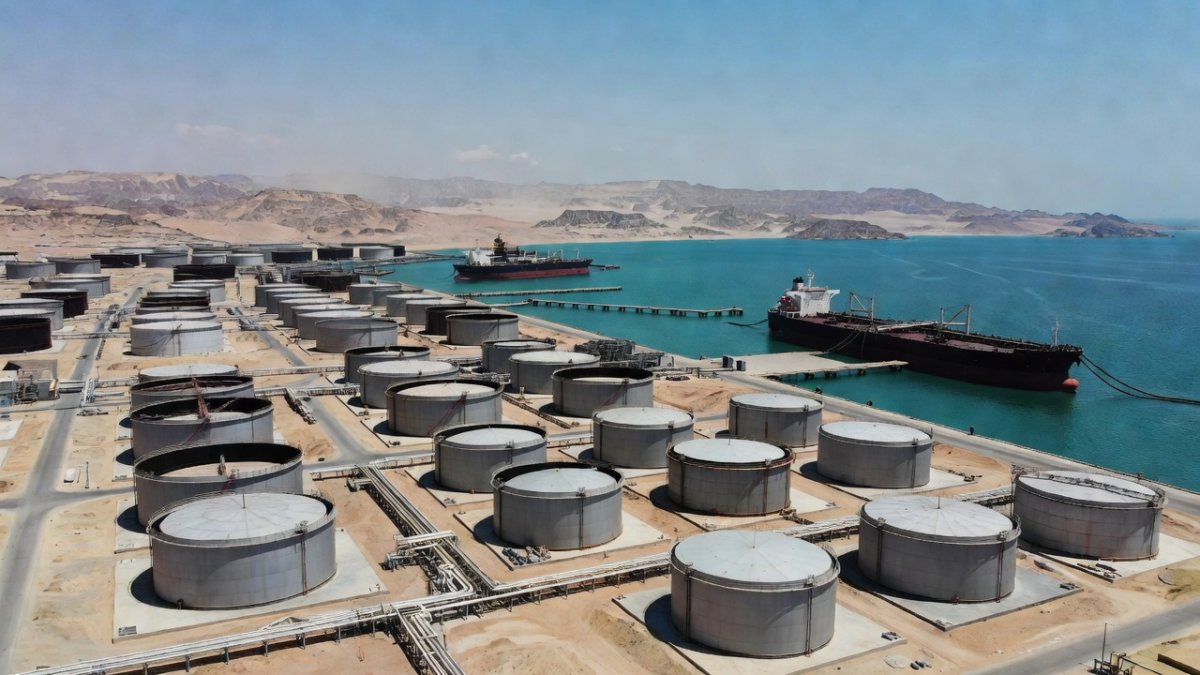
The East-West Pipeline, with a capacity exceeding 5 million barrels per day, links eastern oil fields to Yanbu on the Red Sea, bypassing Hormuz entirely. This route gained renewed importance after the 2019 Abqaiq attacks exposed eastern seaboard vulnerabilities. Gulf sovereign wealth funds have long financed such redundancy as part of broader energy security strategies. Expanded utilization of this corridor also demonstrates how prior investments in resilience now yield operational advantages, allowing sustained exports even as Hormuz remains contested.
Record Profits Despite Regional Turmoil
Aramco reported strong financial results amid the crisis. Q2 2026 net profit rose 44 percent to $32.69 billion compared with $22.67 billion a year earlier, slightly above the Q1 figure of $32.54 billion. First-half 2026 net income reached $65.2 billion versus $48.7 billion in the first half of 2025, supported by revenue of $263.7 billion.
Higher realized prices offset volume constraints, illustrating how supply shocks can temporarily bolster producer revenues even as they strain global markets. Vision 2030 diversification efforts continue, yet elevated energy income provides fiscal breathing room for non-oil investments. This revenue surge also enables accelerated funding for green energy initiatives and downstream expansions that position Aramco for a post-shock recovery.
Oil Price Fluctuations in the Wake of the Crisis
Brent crude settled at $80.66 on August 4, down $3.11, while WTI closed at $76.76, down $3.58. On August 5, Brent slipped toward the $75-80 range as hopes for a Hormuz reopening strengthened, producing weekly losses beyond 10 percent.
These movements reflect both immediate relief from diplomatic signals and lingering uncertainty over inventory levels. The 2022 Russia-Ukraine energy shock offers a recent parallel, where initial price spikes gave way to volatility as alternative supplies were mobilized. Market participants continue to monitor tanker tracking data and diplomatic statements for signs of durable stabilization.
Diplomatic Breakthrough Between Iran and Oman
On August 5, 2026, Iran and Oman reached an understanding on geographic coordinates for a shipping route through the Strait of Hormuz. Iran's Foreign Ministry spokesperson Esmaeil Baghaei stated that a joint announcement is being finalized, provided there is no third-party interference.
The agreement represents a narrow but meaningful confidence-building measure. Oman has historically mediated Gulf disputes, leveraging its geographic position and relations with Tehran. Any reopening would still require verification mechanisms to reassure commercial operators. Observers note that implementation timelines remain uncertain and subject to broader political developments.
Ripple Effects on Global Food Security
Nasser warned that the impact extends beyond energy to global food security, noting disruptions to grain and fertilizer shipments that rely on the same maritime routes. These secondary effects threaten supply chains far from the Gulf.
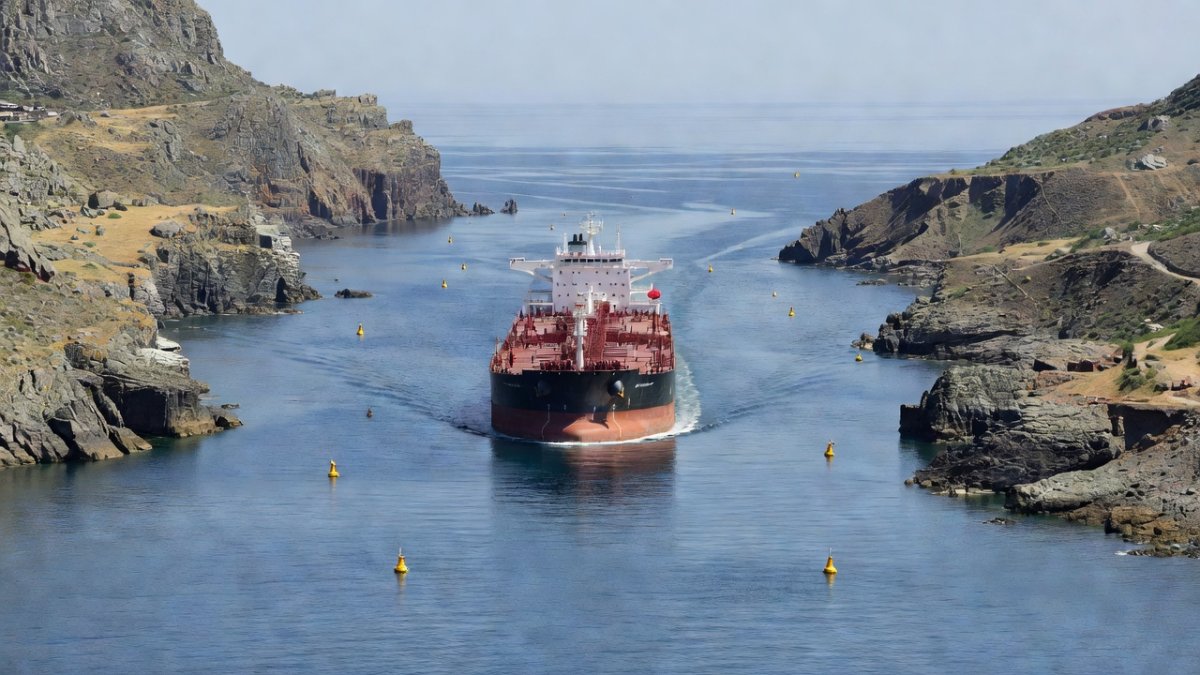
Countries in South Asia and East Africa, already sensitive to fertilizer price swings, face compounded risks. The 1973 embargo similarly triggered global food inflation, demonstrating how energy chokepoints can transmit shocks across sectors. Additional modeling suggests that sustained high energy costs could raise agricultural input expenses by double-digit percentages in import-dependent nations, amplifying food price pressures over multiple seasons.
Saudi Arabia's Push for De-escalation
Saudi Foreign Minister Prince Faisal bin Farhan has actively pressed for de-escalation. US President Trump has also pushed for a truce and set deadlines, reflecting shared interest in restoring stability to energy markets.
Riyadh balances assertive energy policy with diplomatic outreach to limit economic damage and maintain its role in global markets. Gulf allies share this priority, recognizing that prolonged volatility undermines both fiscal planning and regional stability. Coordinated messaging from multiple capitals reinforces the urgency of restoring predictable trade flows.
The Role of Great Power Competition in the Gulf
The conflict occurs against a backdrop of great power competition, with Gulf states accelerating diversification plans while navigating US-Iran tensions. Arab-Israeli normalization efforts continue in parallel, though energy security remains the immediate priority for regional actors.
Chinese and Russian energy diplomacy has intensified, offering alternative financing and offtake arrangements that complicate traditional alliance structures. India, which imports significant volumes from the Gulf, monitors developments closely to safeguard its energy security. These overlapping interests create a crowded diplomatic field where incremental agreements must navigate multiple veto points.
Impact on Diversification and Sovereign Wealth Strategies
Gulf sovereign wealth funds have redirected portions of elevated revenues toward non-oil assets, yet the current shock underscores the limits of rapid diversification. Vision 2030 projects in Saudi Arabia and parallel programs elsewhere remain dependent on stable energy income for their timelines. Sustained high prices provide short-term windfalls but also expose the vulnerability of relying on volatile commodity cycles for long-term structural reforms.
Regional Implications
The Hormuz closure has forced Gulf producers to accelerate alternative export routes and highlighted the strategic value of pipelines such as the East-West link. Iran seeks to preserve leverage through control of the strait while Oman positions itself as a mediator. Saudi Arabia balances assertive energy policy with diplomatic outreach to limit economic damage and maintain its role in global markets. If implemented, any reopening agreement would still require up to 18 months at an average rate of 2.1 million barrels per day to replenish depleted inventories, according to Nasser. Even partial restoration of flows would ease immediate pressure but leave lasting effects on inventory levels and price volatility across the region and beyond.
By Malik Hassan, Staff Writer
This article was produced with AI-assisted research and editorial support. Reporting is based on sources cited in the article.
What's Your Reaction?
 Like
0
Like
0
 Dislike
0
Dislike
0
 Love
0
Love
0
 Funny
0
Funny
0
 Wow
0
Wow
0
 Sad
0
Sad
0
 Angry
0
Angry
0
Middle East Correspondent at Global1.News. Based in Beirut, covering politics, conflict, energy, and society across the Middle East. Brings context and depth to a region often reduced to headlines.












Comments (0)