
Moscow's New Melting Pot: Why Western Influencers Are Selling Russia as a Conservative Haven
In a recent BBC News report, the broadcaster's Global Story team examined a growing and politically charged phenomenon: prominent Western influencers, including Andrew Tate, Candace Owens and the British activist Tommy Robinson, have spent this summer visiting Russia, presenting it as a defender of the traditional conservative values they say are in decline at home.
In a recent BBC News report, the broadcaster's Global Story team examined a growing and politically charged phenomenon: prominent Western influencers, including Andrew Tate, Candace Owens and the British activist Tommy Robinson, have spent this summer visiting Russia, presenting it as a defender of the traditional conservative values they say are in decline at home.
Moscow's New Melting Pot: Why Western Influencers Are Selling Russia as a Conservative Haven
London, United Kingdom – 5 August 2026 — The BBC's investigation into why some Westerners are moving to Russia comes at a moment when the Kremlin is actively courting the Western right, with a dedicated "shared values" visa programme, state-media appearances and a planned village for conservative émigrés near Nizhny Novgorod. Moscow says thousands have applied; independent figures suggest a far more modest trickle.
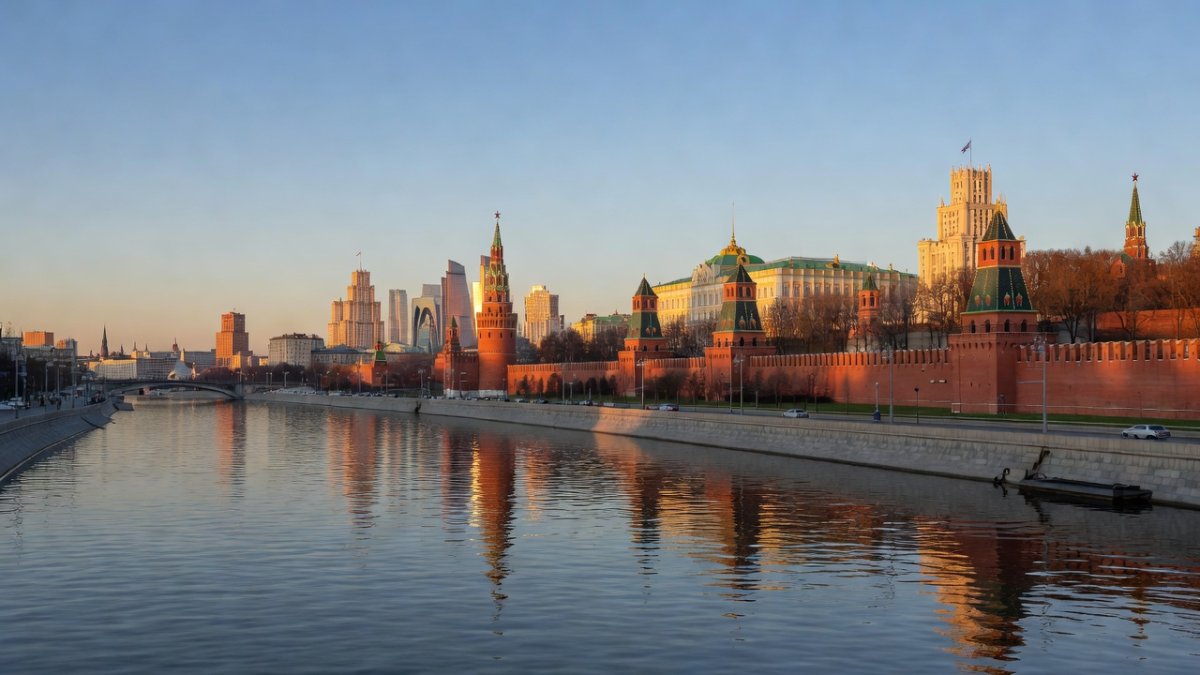
A Conservative Haven? The Influencer Summer in Moscow
In a recent BBC News report, the broadcaster's Global Story podcast spoke to the BBC's Dan Hardoon, whose documentary "The Russian Dream" follows Westerners who have actually relocated to Russia, and to Russia expert Mark Galeotti, host of the podcast In Moscow's Shadows. The episode, released this week, frames the influencer visits as part of a deliberate Kremlin project to cast Russia as the standard-bearer of "traditional spiritual and moral beliefs" — the exact phrase Russia uses in its special "shared values" visa, created two years ago to ease residency for Westerners who claim to share those values.
The summer's guest list reads like a who's who of the Western culture wars. Andrew Tate and his brother Tristan, the manosphere influencers facing human trafficking charges in Romania and rape charges in Britain, were welcomed to Moscow with bread and salt, the traditional Russian ceremony reserved for honoured guests. Candace Owens, the right-wing podcaster and former Trump ally, toured the Kremlin and Red Square, called Moscow "a magnificent city" and described the city as clean and safe. Tommy Robinson, the British far-right anti-Islam activist, has also featured in the Kremlin's outreach orbit.
The St Petersburg International Economic Forum provided the backdrop for much of this outreach. SPIEF opened on 3 June this year with officials saying they expected 20,000 guests from more than 100 countries. Ukrainian drone strikes on Russian oil infrastructure sent plumes of black smoke over the city during the event. Candace Owens gave an interview with RT host Rick Sanchez in which she referred to lingering "Cold War hangover" attitudes in the West. The Tate brothers filmed themselves in Moscow but did not attend the forum itself, focusing instead on separate appearances that highlighted their reception by Russian hosts.
The "Shared Values" Visa: Putin's Open Door
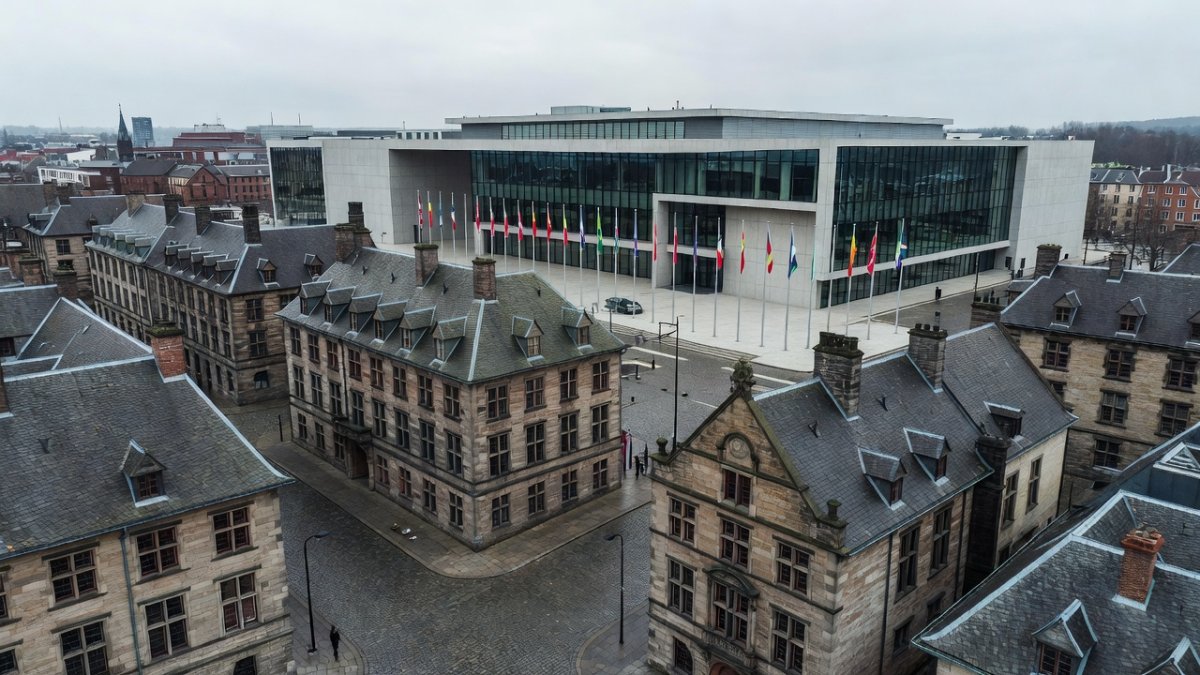
At the centre of the Kremlin's pitch is the "shared values" visa, signed into being two years ago. The scheme, formally aimed at foreigners who reject what Moscow calls the "decadence" of Western society, offers accelerated residency to citizens and permanent residents of 47 countries, including the United States, Germany and France. Late last year, Russia removed a six-month physical-presence requirement for golden visa holders, further lowering the barrier for would-be migrants. Russian officials have claimed thousands of Westerners applied for the scheme.
The planned village near Nizhny Novgorod is intended for Western families described as fleeing the woke West. Moscow's own figures show just over 2,000 people had actually made the move by the end of last year. The Moscow Times observed that the village, like the forum itself, functions more as a story than a destination. The programme forms part of a broader push that includes Russian citizenship for figures like actor Steven Seagal, now a Russian Foreign Ministry special representative for humanitarian ties with the United States and Japan.
The Kremlin's Soft-Power Calculus
The timing of the influencer courtship is not accidental, analysts say. The visits culminated around the St Petersburg International Economic Forum in early June, at a moment when President Vladimir Putin was seeking a publicity boost: Ukrainian drone strikes were disrupting critical logistics routes, gas supplies were constricted in the oil-rich country, and there were reports of Russians lining up at petrol pumps for hours. "They want the propaganda value of implying that there's some kind of economic thaw between the United States and Russia, which is not really the case," Michael Kimmage, director of the Kennan Institute at the Wilson Center, told NBC News.
RT, the state broadcaster sanctioned by the US Treasury for its campaign to recruit unwitting American influencers in support of their malign influence campaign, hosted Owens and ran a booth with provocative cocktail names. Rodney Mims Cook Jr., chairman of the US Commission of Fine Arts, was presented by Russian state media as part of the first official American delegation in nearly a decade, though Washington denied sending one. Scott Ritter, the former US Marine intelligence officer convicted in a child sex offence sting, now works as a regular RT contributor.
Who Actually Moves? The Numbers Behind the Narrative
For all the propaganda value, the tangible migration remains small. Moscow's own figures put the number of Westerners who had actually relocated under the shared values programme at just over 2,000 by the end of last year — a rounding error in a country of more than 140 million people. Experts suggest the gap between official claims of thousands of applications and the modest number of arrivals reflects both the practical obstacles of moving to a country under sweeping Western sanctions and the reality that most applicants never follow through.
Dan Hardoon's documentary "The Russian Dream" follows families who left the US, Britain and other Western countries, including conservative Christians and large families seeking what they describe as traditional community and religious freedom. The movement has roots in a small but vocal subculture of Western conservatives who see Russia as a refuge. Russia's designation of The Moscow Times as an "undesirable" organization shows how the Kremlin treats independent voices inside the country.
Practical obstacles substantially limit these moves. Western sanctions complicate financial transfers, banking restrictions hinder access to funds, and the closure of many consular services deters potential migrants — all of which helps explain why actual arrivals lag far behind the volume of official applications reported by Moscow.
Western Warnings and Legal Shadows
The US State Department continues to advise Americans not to travel to Russia for any reason, citing terrorism, unrest, wrongful detention and other risks, and warning that the risk of wrongful detention of US citizens remains high. Russian authorities have in the past detained American citizens on what US officials describe as trumped-up charges in order to exchange them. The influencers' legal situations in the West also shadow their Russian sojourns: the Tate brothers face human trafficking charges in Romania and rape charges in Britain, while their hosts in Moscow have shown little interest in those proceedings.
Observers note the irony that the same figures who condemn Western liberal values are embracing a country whose courts and security services operate under Kremlin control, and where the independent press has been criminalized. Owens's representative said she paid for her own travel and has not taken money from Russia, while critics point out the value of the platform and access Moscow provides. The guests did not come to be converted, but to meet one another, exchange contacts and carry home the message that Russia is open.
Analysis — A Mirror, Not a Destination
The deeper story is less about migration than about the Kremlin's evolving soft-power strategy. The Soviet Union once exported a forward-looking image that the world debated until its collapse; contemporary Russia, analysts argue, has no vision of its own left to export. What it offers instead is a mirror to the West's culture warriors — a room in which people who share the same grievances can gather, recognise themselves in one another, and leave feeling larger than they are. The anti-woke politics, the anti-migrant rhetoric, the vaccine scepticism: none of it originated in Russia. They are grievances imported from Western culture wars, repackaged in Moscow and reflected back to the audiences they came from.
The network the Kremlin convenes is real, and so is the validation it provides. Russia treats these figures not as fringe opinions but as matters of state policy. The shared values programme is likely to remain a fixture of Russian statecraft, and the influencers' visits are unlikely to stop as long as both sides find them useful. For ordinary Russians, the spectacle offers little: the war's cost is measured in queues at petrol stations and black smoke over St Petersburg, while the Kremlin's newest guests sip cocktails and take selfies in Red Square.
By Irina Volkov, Staff Writer
This article was produced with AI-assisted research and editorial support. Reporting is based on sources cited in the article.
What's Your Reaction?
 Like
0
Like
0
 Dislike
0
Dislike
0
 Love
0
Love
0
 Funny
0
Funny
0
 Wow
0
Wow
0
 Sad
0
Sad
0
 Angry
0
Angry
0

Russia/Eastern Europe Correspondent at Global1.News. Covering Russian politics, energy, security, and the shifting dynamics of the post-Soviet space. Provides clear-eyed analysis on one of the world's most opaque regions.









Comments (0)