
Swiss president to visit Thailand for talks on trade, investment
Swiss President Guy Parmelin is set to arrive in Bangkok this week for a three‑day official visit, answering Prime Minister Anutin Charnvirakul’s invitation to deepen ties between our two nations.
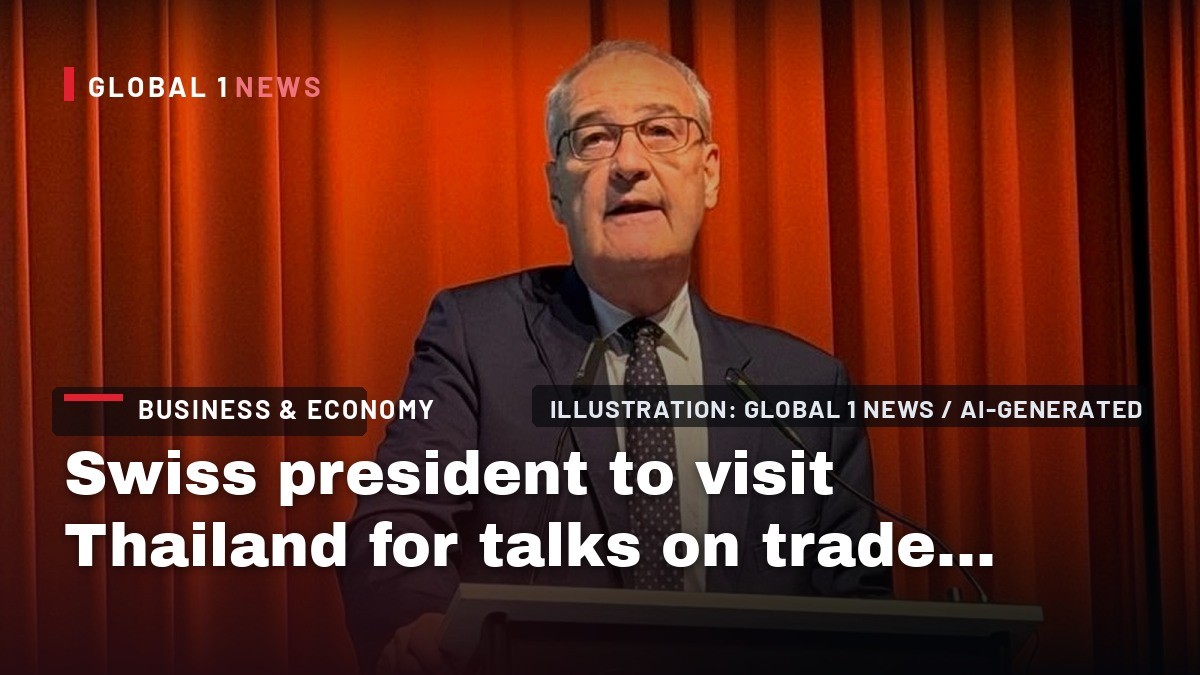
Swiss President Guy Parmelin is set to arrive in Bangkok this week for a three‑day official visit, answering Prime Minister Anutin Charnvirakul’s invitation to deepen ties between our two nations. The timing is symbolic: it coincides with the International Monetary Fund and World Bank Group’s annual meetings in the Thai capital and marks the 95th anniversary of diplomatic relations with Switzerland. After more than two decades since the last presidential visit in 2004, the delegation’s presence signals a renewed enthusiasm for cooperation in trade, investment and technology, areas that could shape Thailand’s future growth and the wellbeing of ordinary Thai families.
Welcoming the Swiss delegation
On 15 October, President Parmelin will be greeted at Government House in a ceremony led by Prime Minister Anutin. The event will be followed by bilateral talks, a joint press conference and an official luncheon, providing a formal backdrop for both leaders to outline shared priorities. Accompanying the Swiss president is a business delegation, underscoring the commercial focus of the trip and the desire to translate diplomatic goodwill into concrete projects.
Government spokesman Aekkapop Phianphiset emphasized that stronger ties with Switzerland are seen as a gateway to broaden Thailand’s economic horizons. He highlighted that cooperation in trade, investment, technology and human‑resource development can create new opportunities for Thai people, especially in regions where jobs are scarce and young talent seeks pathways to the future.
Trade and the EFTA‑Thailand free‑trade pact
The core of the agenda will be the Thailand‑European Free Trade Association (EFTA) Free Trade Agreement, which already provides a framework for reduced tariffs and smoother market access. Both sides are expected to discuss ways to deepen the pact, making it easier for Swiss firms to invest in Thai manufacturing, agribusiness and tourism, while Thai exporters gain better entry to European markets.
For Thai farmers and artisans, such enhancements could mean higher demand for products like rice, fruits and handicrafts that carry the spirit of our villages. By linking local supply chains to Swiss quality standards, the partnership may help preserve traditional livelihoods while raising incomes, a goal that resonates with Buddhist values of community support and shared prosperity.
Science, technology and innovation
Beyond tariffs, the talks will explore collaboration in science and technology. Switzerland’s reputation for precision engineering and research aligns with Thailand’s ambition to become a regional hub for innovation. Joint projects could involve renewable‑energy research, digital‑health platforms and advanced manufacturing techniques.
Such cooperation is likely to involve Thai universities and vocational institutes, offering students and apprentices exposure to Swiss expertise. This exchange of knowledge not only builds human capital but also reflects the Buddhist principle of lifelong learning, encouraging Thai youth to pursue skills that serve both personal growth and national development.
Human‑resource development and education
Human‑resource development was singled out by the spokesperson as a pillar of the partnership. The expectation is that Swiss companies will bring training programmes, scholarships and on‑the‑job learning opportunities to Thai workers. In return, Thailand can showcase its rich cultural heritage, inviting Swiss delegates to experience local customs, festivals and the warmth of Thai hospitality.
These exchanges can foster mutual respect and understanding, reinforcing the spirit of “mai pen rai” – a Thai ethos of openness and adaptability. When Thai employees gain exposure to Swiss work culture, they bring back practices that can improve productivity and workplace harmony, benefiting the broader community.
Climate action and sustainable development
Climate action features prominently on the agenda, reflecting both nations’ commitments to the Paris Agreement. Switzerland’s leadership in clean‑energy technologies offers Thailand pathways to accelerate its own green transition, from solar farms in the northeast to electric‑vehicle infrastructure in Bangkok.
Integrating sustainable practices aligns with Buddhist teachings on interdependence and caring for the Earth. By collaborating on climate projects, Thailand can protect its rivers, forests and coastal zones, ensuring that future generations inherit a healthier environment.
Regional cooperation within ASEAN
While the bilateral focus is clear, the discussions will also touch on regional dynamics. Thailand’s role within ASEAN and its ties to neighboring countries provide a platform for Swiss companies to access a wider market. The Swiss delegation may explore how to support ASEAN‑wide initiatives, from digital connectivity to cross‑border trade facilitation.
Such multilateral cooperation can enhance Thailand’s standing as a bridge between Europe and Southeast Asia, reinforcing the country’s reputation as a stable, welcoming hub for international business. This aligns with the Buddhist principle of “sangha” – community working together for common benefit.
Looking ahead: opportunities for Thai people
In the words of the government spokesman, the partnership with Switzerland is not merely a diplomatic gesture but a chance to create tangible opportunities for Thai citizens. By expanding trade, fostering innovation, and investing in human capital, the relationship aims to boost the country’s competitiveness on the global stage.
For the everyday Thai, this could translate into more jobs, better training, and access to high‑quality Swiss products and technologies. As the two nations celebrate nearly a century of friendship, the hope is that the outcomes of this visit will be felt in bustling markets, quiet villages and the hearts of people who value harmony, progress and shared prosperity.
This article was produced with AI-assisted research and editorial support. Reporting is based on the source material cited below. Sources: Khaosod English; khaosodenglish.com; Global1.News (14 October 2026).
By Ann Srisawat, Staff Writer
What's Your Reaction?
 Like
0
Like
0
 Dislike
0
Dislike
0
 Love
0
Love
0
 Funny
0
Funny
0
 Wow
0
Wow
0
 Sad
0
Sad
0
 Angry
0
Angry
0

Southeast Asia Correspondent at Global1.News. Based in Bangkok, covering Thai and Southeast Asian politics, economy, technology, and culture. Deep regional perspective on one of the world's most dynamic regions.














Comments (0)