
India Drops Terror Charges Against Seven Recently Arrested Foreign Nationals
The case, involving an American citizen and six Ukrainian nationals, highlights the delicate balance India must maintain between security concerns in its volatile northeastern frontier and the diplomatic pressures exerted by key partners such as the United States.
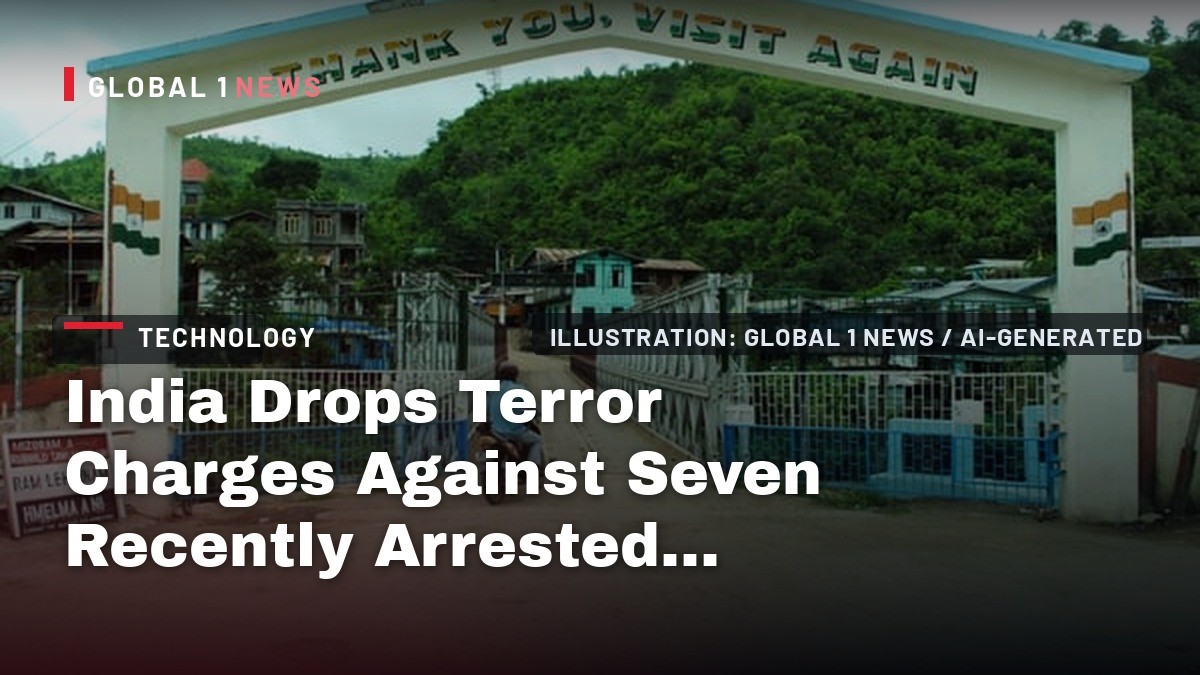
The Indian government’s decision to downgrade the legal footing of seven recently arrested foreign nationals—from the stringent anti‑terrorism provisions of the Unlawful Activities Prevention Act (UAPA) to the comparatively milder Immigration and Foreigners Act (IFA)—has sparked a fresh round of diplomatic speculation and domestic political debate. The case, involving an American citizen and six Ukrainian nationals, highlights the delicate balance India must maintain between security concerns in its volatile northeastern frontier and the diplomatic pressures exerted by key partners such as the United States. It also underscores the growing strategic significance of drone technology in the cross‑border insurgencies that have long plagued the India‑Myanmar border region.
Background of the arrests and initial charges
In March 2026, the National Investigation Agency (NIA) arrested seven foreign nationals—U.S. citizen Matthew Aaron Van Dyke and Ukrainian citizens Hurba Petro, Slyviak Taras, Ivan Sukmanovskyi, Stefankiv Marian, Honcharuk Maksim, and Kaminskyi Viktor—across different locations in India. At the time of arrest, the NIA booked them under section 18 of the UAPA, a provision that addresses conspiracy to commit terrorist activities and the organization of terror camps. This initial charge placed the suspects under a legal regime that mandates a 180‑day investigation period during which the accused remain in custody, with bail only possible if a chargesheet is not filed within that window.
The NIA’s allegations centered on the suspects’ alleged illegal entry into Mizoram without the required Protected Area Permit or Restricted Area Permit, followed by an unauthorized crossing into Myanmar. According to the agency, the group conducted training sessions for Myanmar’s ethnic armed organizations (EROs) in drone warfare and jamming technology, suggesting a broader conspiracy that linked Indian insurgent groups with foreign actors. The agency emphasized that the UAPA probe remained ongoing, even as the legal footing shifted.
Shift to immigration charges and legal implications
Six months after the arrests, the government announced that the seven foreigners would now be charged under sections 21 and 23 of the Immigration and Foreigners Act. These sections address illegal entry and violations of visa conditions, offenses that carry a maximum imprisonment term of up to three years. Government sources cited to the media explained that the shift was motivated by the fact that the immigration‑related violations had already been established during the investigation, making the IFA charges more appropriate at this stage.
The downgrade from UAPA to IFA has practical consequences. Under the IFA, the suspects are no longer bound by the 180‑day investigative deadline that applies to terrorism cases, potentially allowing for a longer pre‑trial detention without the same procedural safeguards. However, the penalties are less severe, and the legal narrative shifts from a terrorism framing to one of immigration infractions, which may affect public perception and diplomatic negotiations.
Diplomatic pressures and domestic political fallout
Speculation quickly arose that the United States exerted pressure on New Delhi to secure the release of its citizen. Reports indicated that Van Dyke’s family had appealed to the U.S. government for diplomatic intervention, a move that fed into broader narratives of American influence on Indian internal matters. The opposition Congress party seized on the episode, accusing the ruling BJP of capitulating to U.S. demands and compromising national security in the process.
While the source material does not confirm direct diplomatic communications, the timing of the charge downgrade—coinciding with the family’s outreach and heightened media attention—has reinforced the perception of external pressure. This dynamic illustrates the growing complexity of India’s foreign policy, where bilateral ties with major powers must be weighed against domestic security imperatives and political optics.
Strategic context: drones, border permits, and insurgent activity
The NIA’s narrative links the suspects’ activities to the proliferation of drone technology among Myanmar’s resistance groups. Drones have become a pivotal tool in the ongoing civil war, employed by both the Myanmar military and various ethnic armed organizations. According to the agency, the foreign nationals arrived in Myanmar’s border camps to demonstrate drones and jamming equipment, with the intention of supplying these tools in the coming months.
The report also notes that supply routes from Thailand and China have been disrupted, prompting resistance groups to seek alternative sources. This vacuum may have created a market niche that the seven foreigners attempted to fill, potentially motivated by profit rather than ideological alignment. The broader implication is that the India‑Myanmar border is increasingly vulnerable to illicit technology transfers, a concern that has prompted Indian authorities to tighten permit regimes for foreign visitors to sensitive border districts.
Regional security concerns and precedent cases
India’s northeastern states, particularly Mizoram, have long been sensitive zones due to their proximity to conflict‑prone areas of Myanmar. The requirement for Protected Area Permits or Restricted Area Permits reflects the government’s effort to monitor and control cross‑border movement. Violations can lead to imprisonment of up to three years, as stipulated under the IFA.
Recent statements by Mizoram’s Chief Minister Lalduhoma in 2025 highlighted the scale of foreign presence in the state, noting that around 2,000 foreigners had visited the region, with several crossing into Myanmar to provide military training. The arrest of a Belgian journalist in Mizoram the previous year, who was later acquitted, further illustrates the delicate balance between security enforcement and civil liberties in the border states. These incidents collectively underscore the Indian government’s intent to deter foreign adventurism that could exacerbate insurgent activity along the frontier.
Potential motivations and unanswered questions
The source material suggests multiple possible motivations behind the suspects’ presence in the border region. While the NIA posits a “larger conspiracy” involving Indian insurgent groups, other analysts have noted that the foreigners may have been primarily driven by commercial interests—seeking to profit from the sale of drones to resistance groups after traditional supply channels were disrupted. Additionally, the possibility that the individuals were gathering intelligence on Myanmar’s resistance groups on behalf of foreign agencies remains open, though unconfirmed.
These divergent hypotheses point to a broader ambiguity surrounding the true nature of the operation. The lack of concrete evidence linking the suspects to an organized terrorist plot against India, as reported in earlier coverage, complicates the legal and diplomatic calculus. The ongoing UAPA probe, as affirmed by the NIA, suggests that authorities are still examining the depth of any terrorist connections, even as the immigration charges proceed.
Implications for future policy and regional stability
The handling of this case will likely influence India’s future approach to foreign nationals operating in its border regions. By opting for immigration charges rather than terrorism accusations, the government may be signaling a preference for a narrower legal framing that avoids the political fallout of labeling foreign actors as terrorists. However, the decision also raises concerns about whether the legal response adequately deters illicit technology transfers that could destabilize neighboring conflict zones.
From a diplomatic standpoint, the episode illustrates the delicate interplay between India’s strategic partnership with the United States and its domestic security priorities. Continued scrutiny from opposition parties and civil society may pressure the government to adopt a more transparent and consistent policy regarding foreign nationals in sensitive areas. As drone technology becomes increasingly accessible, India may need to strengthen its regulatory mechanisms, enhance cross‑border intelligence sharing with Myanmar, and possibly revisit the permit system to better monitor and control the flow of advanced equipment that could fuel insurgencies on both sides of the border.
This article was produced with AI-assisted research and editorial support. Reporting is based on the source material cited below. Sources: The Diplomat; thediplomat.com; Global1.News (16 September 2026).
By Kenji Tanaka, Staff Writer
What's Your Reaction?
 Like
0
Like
0
 Dislike
0
Dislike
0
 Love
0
Love
0
 Funny
0
Funny
0
 Wow
0
Wow
0
 Sad
0
Sad
0
 Angry
0
Angry
0

Japan Correspondent at Global1.News. Tokyo-based voice covering Japanese politics, technology, economy, and culture. Tracks the intersection of tradition and innovation in one of the world's most dynamic societies.















Comments (0)