
A local network of implants uses your body as the wiring
Georgia Tech researchers have unveiled a bold new way to make medical implants talk to each other—by turning the human body itself into a wiring harness.
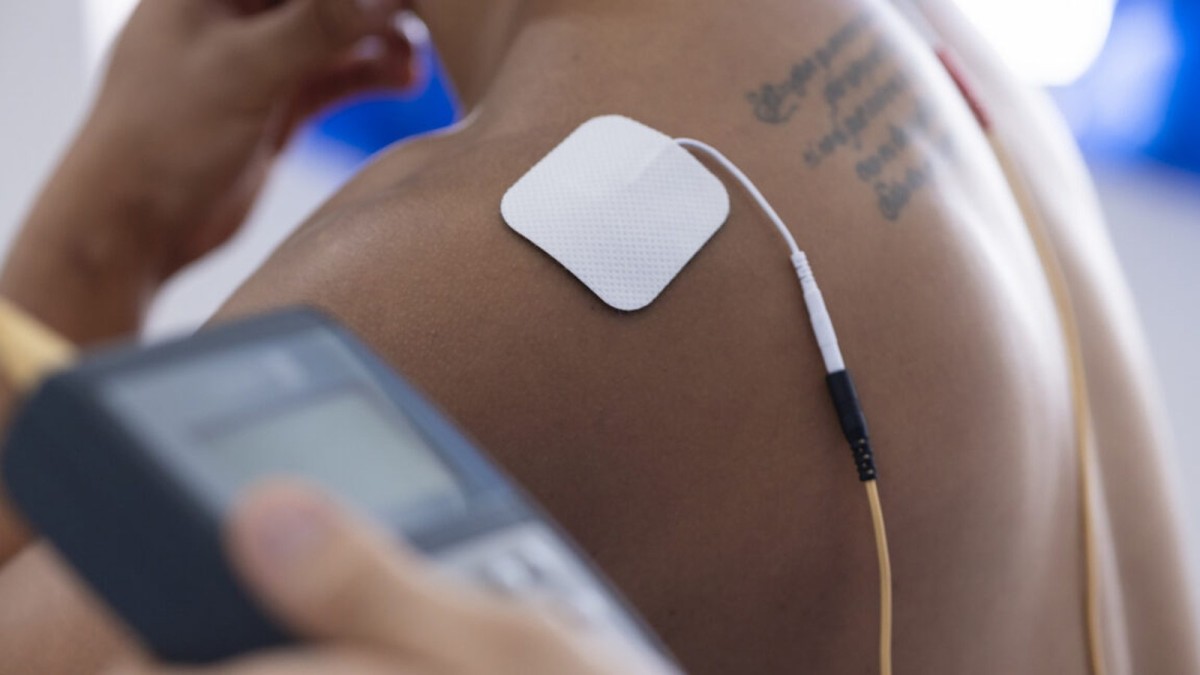
Georgia Tech researchers have unveiled a bold new way to make medical implants talk to each other—by turning the human body itself into a wiring harness. The system, dubbed SWANS (Smart Wireless Autonomous Networking System), sidesteps the power‑hungry, short‑range radio protocols that dominate today’s in‑body devices, and replaces them with low‑energy voltage pulses that travel through tissue much like the body’s own nervous system. The result is a network that can coordinate dozens of tiny, syringe‑injectable implants while extending battery life well beyond what Bluetooth or NFC can achieve.
Why the radio road is a dead end for implants
Most contemporary implants—pacemakers, insulin pumps, neurostimulators—communicate via Bluetooth Low Energy or near‑field communication. Alex Abramson, a Georgia Tech engineer and co‑author of the study, says those standards are fundamentally mismatched to the human body. First, power consumption spikes dramatically when a Bluetooth stack is kept in an active state. The paper notes that activating Bluetooth can slash an implant’s battery life by up to 90 percent, a trade‑off that makes frequent, millisecond‑scale responses untenable.
Second, radio waves attenuate heavily in flesh. Abramson reports that Bluetooth and NFC signals lose strength after traveling just one centimeter through tissue. The need for an antenna compounds the problem: commercial Bluetooth modules require a device at least five millimeters wide, whereas many modern implants are designed to be injected through a syringe at three millimeters or less. The size and power constraints together force most devices to operate in isolation, limiting the potential for coordinated therapy.
Turning tissue into a conductor
SWANS draws inspiration from the nervous system’s own method of signaling. Neurons transmit information by shuttling sodium and potassium ions across membranes, creating voltage differences that travel through the body’s conductive fluids. Abramson’s team replicated that principle with a simple voltage‑pulse approach. A wearable hub—essentially a flexible circuit board—generates electric fields up to 12 volts. Those fields spread radially through the surrounding tissue, reaching any implant within range.
Each implant contains a tiny transistor switch, a resistor, and optionally a capacitor. By tuning the resistor’s value and the capacitor’s charge time, the researchers can set a unique threshold for each device. Only implants that see a pulse meeting both the correct voltage magnitude and duration will activate, much like hearing one’s name in a crowded room. This selective gating allows dozens of implants to coexist without cross‑talk, while keeping each device’s circuitry ultra‑simple and power‑lean.
Hardware that fits through a needle
The SWANS architecture splits intelligence between the wearable hub and the implanted nodes. The hub houses the processor, battery, and decision‑making algorithms, leaving the implants to act as passive receivers and actuators. A typical SWANS implant measures 3 × 1.1 × 17 mm and can be delivered through a 6‑gauge needle—small enough for outpatient injection. Inside, the implant carries a battery, a pair of receiving pads, a transistor switch, and either a sensor (such as a temperature probe) or an actuator (like a nerve stimulator).
To bridge the skin’s poorly conductive outer layer, the system uses a patch of stainless‑steel microneedles that inject the hub’s pulses directly into the tissue. This bypasses the need for an external antenna and ensures that the electric field reaches the deeper layers where the implants sit. By offloading the heavy lifting to the wearable, the implants remain tiny, inexpensive, and capable of lasting many months on a single micro‑battery.
Bench‑top and animal proof‑of‑concept
The team validated SWANS across a range of biological media. In ex‑vivo tests, they placed the wearable on chicken breasts and pork bellies—tissues that combine fat, muscle, bone, and skin. A single 10‑volt pulse generated a detectable voltage gradient extending more than 30 centimeters across the tissue and reaching depths of over 14 centimeters, roughly ten times the coverage achieved by Bluetooth or NFC.
In live rats, the system proved capable of routing signals throughout the body regardless of implant location. The hub could sit on the animal’s stomach while an implant on the back responded, and vice‑versa. The researchers demonstrated a closed‑loop control loop: strain sensors on a rat’s forelimb triggered a limb‑specific pulse that traveled to an implant on the opposite hind leg, stimulating the sciatic nerve and causing a precise twitch. They also built a temperature‑relay where a sensor detecting a fever above 40 °C (104 °F) passed a signal to a second implant, illustrating how SWANS can cascade alerts between body sites.
Safety and power savings
Because the pulses fall within the voltage range already used by pacemakers and neurostimulators, the team did not anticipate major safety concerns. Over a two‑month rat study, scar tissue up to a millimeter thick formed around the implants—a typical foreign‑body response—but the communication remained reliable when the voltage was modestly increased within safe limits. Importantly, the pulses did not inadvertently trigger nearby nerves, alter cardiac electrical activity, or increase cell death beyond what standard needle insertions cause.
Power consumption is where SWANS shines. The passive nature of the implants means they draw almost no energy while listening. The authors report battery life extending more than 15 times compared to Bluetooth or NFC equivalents. This dramatic improvement could translate into multi‑year implant lifespans, reducing the need for surgical battery replacements and lowering long‑term healthcare costs.
Limitations and the road ahead
SWANS is not a universal data‑pipe for high‑bandwidth applications. Abramson acknowledges that the system is designed for low‑rate, event‑driven messages—temperature alerts, activation triggers, or simple sensor readings—not for streaming video or complex telemetry. The need to calibrate voltage thresholds for each individual’s anatomy also adds a layer of personalization before deployment.
Human trials have yet to commence, though the team mentions promising preliminary work in larger animals. Scaling the technology will require addressing deeper tissue attenuation, ensuring consistent pulse delivery across varied body compositions, and navigating regulatory pathways for multi‑implant networks. Nevertheless, the concept opens a new frontier for coordinated, minimally invasive therapeutics—imagine a suite of injectable drug‑delivery capsules that talk to each other, or distributed nerve stimulators that synchronize without bulky external hardware.
Implications for the future of medical IoT
If SWANS or similar tissue‑based networking approaches reach clinical maturity, the landscape of implantable medicine could shift dramatically. Current implant ecosystems are siloed; a pacemaker talks only to its own programmer, an insulin pump to a dedicated handset. A unified, low‑power network could enable holistic, body‑wide monitoring and therapy, where a single wearable hub orchestrates a chorus of micro‑implants delivering precise drug doses, adjusting stimulation patterns, or flagging early signs of infection.
Such integration would also alleviate the power bottleneck that has long hampered implant innovation. By offloading computation and communication to an external hub, designers can shrink implants further, lower costs, and extend longevity. That, in turn, could democratize access to advanced therapies, especially in resource‑limited settings where surgical battery replacements are impractical.
This article was produced with AI-assisted research and editorial support. Reporting is based on the source material cited below. Sources: Ars Technica; arstechnica.com; Global1.News (01 October 2026).
By Jessica Ali, Staff Writer
What's Your Reaction?
 Like
0
Like
0
 Dislike
0
Dislike
0
 Love
0
Love
0
 Funny
0
Funny
0
 Wow
0
Wow
0
 Sad
0
Sad
0
 Angry
0
Angry
0

Editor-in-Chief at Global1.News. Atlanta-based journalist who cuts through the BS and tells it like it is. Lead anchor, host, and the voice you hear when the spin stops and the truth starts.















Comments (0)