
SpaceX describes surgical intervention before launch of latest crew mission
SpaceX’s latest crew launch was a textbook case of “keep the lights on at any cost” – a four‑person crew lifted off from Cape Canaveral on a Falcon 9, but only after the company performed a literal piece‑of‑surgery on the Dragon’s propulsion line.
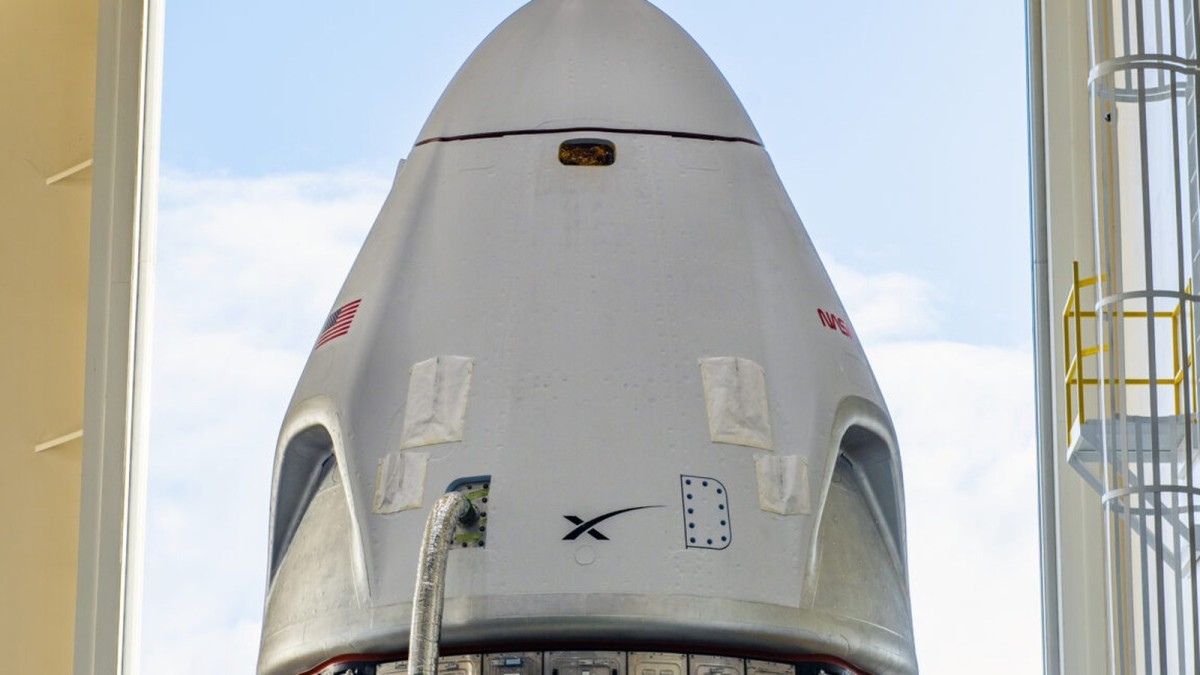
SpaceX’s latest crew launch was a textbook case of “keep the lights on at any cost” – a four‑person crew lifted off from Cape Canaveral on a Falcon 9, but only after the company performed a literal piece‑of‑surgery on the Dragon’s propulsion line. The fix, cutting into a propellant line loaded with nitrogen tetroxide and welding a new valve in place, was a bold move that tells a story about risk, reliability, and the economics that independent hosting providers should be watching closely.
Why the valve swap mattered more than the launch itself
The delay that pushed the launch from mid‑September to early October wasn’t a scheduling hiccup; it was a forced response to an oxidizer leak in Dragon’s control thrusters. SpaceX chose to cut into the line while the spacecraft was still loaded with propellant – a maneuver never done before on an assembled Dragon. That decision avoided a much longer ground‑outage, but it also exposed how tightly the company is clinging to its contract obligations while its broader business priorities shift elsewhere.
For a provider that runs its own data centre and hosting platform, the lesson is clear: “fix‑on‑the‑fly” may keep a ship sailing, but it also signals a fragile margin of error. When a critical component fails, the cost of a rapid, high‑risk fix can balloon – not just in labor, but in the downstream risk to uptime and safety. In the hosting world that translates to the temptation to patch a failing server or network link without a proper root‑cause analysis, hoping to keep the service alive while the real problem festers.
The economics behind SpaceX’s crew flights
SpaceX’s Crew‑Dragon contract with NASA now sits at roughly $5.9 billion for 17 missions, a figure dwarfed by the company’s projected revenue streams from Starlink, Starship, and orbital data centres. The article notes that the $946 million extension for three more crew flights is “a drop in the bucket” next to those other lines. That tells us the crew program is a marginal profit centre, kept alive mainly to meet contractual obligations and maintain a foothold in the NASA market.
Independent hosting firms face a similar calculus when they chase high‑margin “premium” services (like managed Kubernetes or AI inference) while their core hosting business is a volume play. The premium services can subsidise the bulk, but if the market shifts – say, a new hyperscaler undercuts pricing – the premium line can become a liability if it’s not truly profitable on its own.
Reliability under pressure: the “surgical” fix and its implications
The valve replacement required cutting into a line loaded with nitrogen tetroxide, a toxic oxidizer, and then welding it back together. SpaceX engineers described it as “physically went in and actually cut the valve out of the line… welded in place, and then we actually re‑welded a new valve in place.” That level of hands‑on intervention, while impressive, underscores a deeper issue: the hardware was not robust enough to avoid a leak in the first place.
From a hosting perspective, this is akin to a data centre operator having to hot‑swap a power distribution unit while servers are still drawing load. It works, but it’s a sign that the original design or quality control missed something. The real risk is not the patch itself, but the hidden wear that could cause another failure down the line. Independent providers need to audit their own “valves” – be they network switches, power supplies, or software dependencies – before they become emergency surgery cases.
Operational lifespan and the end‑of‑life dilemma
SpaceX is winding down both Crew Dragon and the Falcon 9 as they approach the midpoint of their operational life. The article notes that the fleets are “well beyond halfway through their operational life” and that the company has nine more Crew Dragon flights in its backlog. This is a classic end‑of‑life scenario: hardware that’s still functional but no longer the focus of R&D investment.
Hosting operators face the same crossroads when legacy servers or networking gear reach the end of their prime. The temptation is to keep squeezing life out of them because they still work, but without fresh investment they become a liability. The prudent move is to plan migration paths well before the hardware hits the halfway mark, ensuring a smooth transition to newer, more efficient platforms.
The human factor: crew composition and risk perception
The crew for this mission – led by Jessica Watkins, the first Black woman to command a spacecraft – included a veteran astronaut, a Marine Corps pilot, and two international partners from Canada and Russia. Their diverse backgrounds highlight how NASA and SpaceX rely on a mix of experience and international collaboration to mitigate risk. Watkins, with prior long‑duration flight experience, was the only veteran on the mission, underscoring the reliance on seasoned personnel to handle unexpected issues.
In the hosting world, the equivalent is having senior engineers who have seen the system through multiple cycles. When a crisis hits – like a sudden surge that overwhelms a load balancer – it’s the seasoned staff who can make the right call, not a junior who might resort to a quick‑fix that later blows up. Investing in talent retention is as critical as any hardware upgrade.
Contract dynamics and future uncertainty
SpaceX’s contract extension for Crew‑13 was the latest in a series of multibillion‑dollar deals that keep the company tethered to NASA. Yet the article points out that the “recent contract extension may be the last,” and that Bill Gerstenmaier, SpaceX’s VP of build and flight reliability, declined to confirm a hard cutoff. This uncertainty mirrors the volatility of long‑term service contracts in the hosting industry.
If a major client decides not to renew, a provider that has built a significant portion of its revenue on that contract can be left scrambling. The prudent strategy is diversification – spreading risk across multiple customers and service lines, and not banking on a single marquee contract to sustain the business.
Actionable takeaways for independent hosting founders
First, treat any “valve” failure as a symptom, not a one‑off event. Conduct thorough root‑cause analyses and consider whether the underlying architecture needs a redesign rather than a patch. Second, keep an eye on the operational lifespan of your core assets; plan migrations before you hit the halfway point to avoid being stuck with aging equipment that no longer receives support. Third, diversify revenue streams so that a single contract or premium service does not become a make‑or‑break scenario. Fourth, invest in senior talent who can navigate crises without resorting to risky shortcuts. Finally, maintain transparency with customers about risk and mitigation strategies – a practice that builds trust and can be a differentiator against the hyperscaler crowd that often hides behind generic SLAs.
SpaceX’s “surgical” valve swap may have saved the launch, but it also laid bare the fragility of a system that’s being run past its prime while the company’s eyes are on bigger, more lucrative ventures. For us in the hosting trenches, the message is simple: don’t let a short‑term fix become a long‑term liability. Keep your hardware healthy, your talent sharp, and your business diversified, and you’ll stay in orbit even when the big players change course.
— Allan Ali, Founder
This article was produced with AI-assisted research and editorial support. Reporting is based on the source material cited below. Sources: Ars Technica; arstechnica.com; Global1.News (03 October 2026).
By Allan Ali, Global1.News
What's Your Reaction?
 Like
0
Like
0
 Dislike
0
Dislike
0
 Love
0
Love
0
 Funny
0
Funny
0
 Wow
0
Wow
0
 Sad
0
Sad
0
 Angry
0
Angry
0

Publisher of Global1.News. Automation architect, systems builder, and the guy making sure the truth gets published.















Comments (0)