
Pakistan Suspends Imran Khan's Party-Governed Province Under Emergency Rule
Pakistan's president suspended the PTI-led government of Khyber Pakhtunkhwa and declared a state of emergency under Articles 232 and 234, naming a governor-led advisory council for six months after the cabinet accused the province of disengaging from counterterrorism.
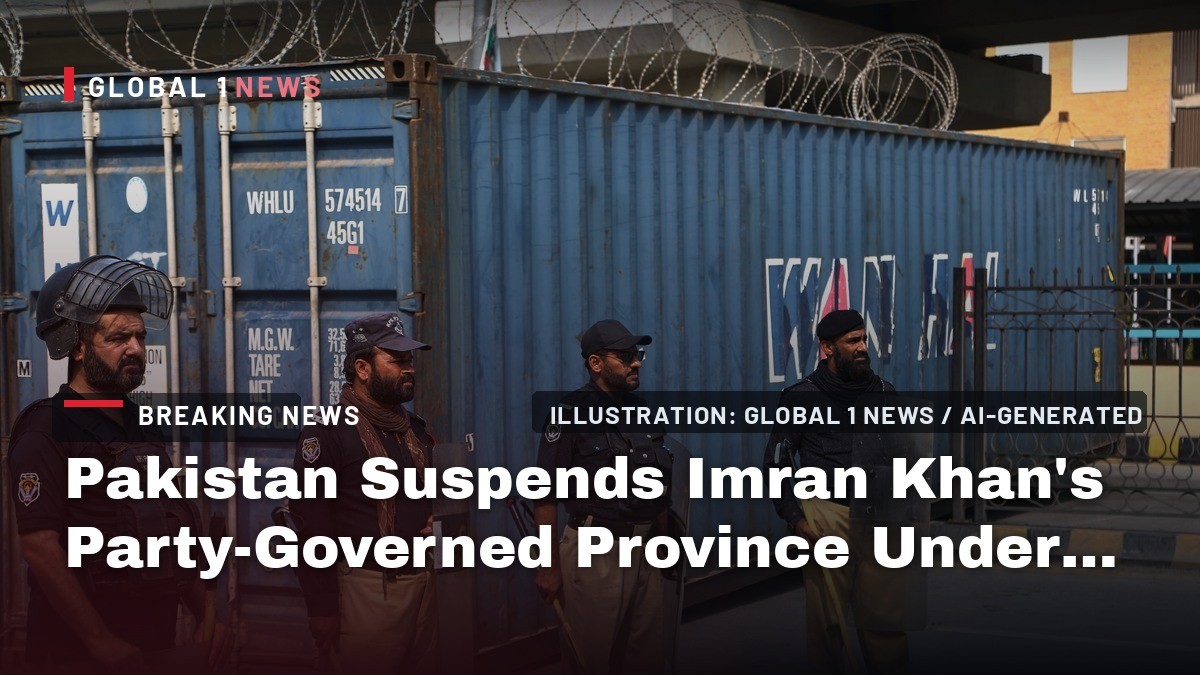
Pakistan's president declared a state of emergency in Khyber Pakhtunkhwa on Sunday and suspended the provincial government run by imprisoned former prime minister Imran Khan's party, hours after his cabinet accused that government of walking away from the fight against militancy. By evening the province was under its governor, its chief minister was reported detained, and the only province Khan's party governed was no longer his party's to run.
Pakistan Suspends Imran Khan's Party-Governed Province Under Emergency Rule
Islamabad, Pakistan - October 11, 2026 - President Asif Ali Zardari issued the proclamation under Articles 232(1) and 234(1) of the Constitution, acting on the advice of Prime Minister Shehbaz Sharif following a federal cabinet meeting earlier in the day, according to the Associated Press. The measures place Khyber Pakhtunkhwa under the authority of Governor Faisal Karim Kundi, who represents the federal government. Law Minister Azam Nazeer Tarar told a news conference in Islamabad that the governor will take charge with an advisory council, and that the arrangement will initially be in place for six months.
A Province Taken Over in a Single Afternoon
Zardari's office issued a statement saying he had approved the recommendations made by the cabinet, and in a social media post the president said he had approved those recommendations, Reuters reported. Information Minister Attaullah Tarar announced an 11-member advisory council that will run provincial affairs under the governor. The Nation reported on 11 October that the proposed emergency setup also includes a 50-member development council. The interior ministry said it would deploy troops in the province, which borders Afghanistan and has suffered an increasing number of militant attacks in recent months, the Associated Press reported. Reuters noted separately that the president's office did not specify how the province would be administered.
The Government's Case: 'Deliberate Disengagement'
The cabinet, chaired by Sharif, took note of what Sharif's office described as the "provincial government's deliberate disengagement from the fight against terrorism," according to the Associated Press. Sharif told the cabinet: "The security forces and citizens had been under attack for the last two years. We can't just act a silent spectator." Interior Minister Mohsin Naqvi said the situation was so grave that residents would not be seen coming out of their houses after evening in some districts, Reuters reported. Naqvi said delays in decision-making and poor coordination between Islamabad and the provincial government had allowed militants to gain ground, and accused the provincial government of neglecting counterterrorism while focusing on securing Khan's release, the Associated Press reported. Law Minister Tarar said militant violence in the province had increased by 196% in recent years. Islamabad accuses neighbouring Afghanistan of harbouring militants who launch attacks inside Pakistan, and says Khan's party has sympathised with the Taliban in Kabul and their affiliates at home. Both the Afghan Taliban and Khan's party deny it.
What the Security Data Actually Shows
The figures officials cite measure different things over different periods. The Pakistan Institute for Conflict and Security Studies, an Islamabad-based think tank, recorded 225 militant attacks across Pakistan in September, the highest monthly total in 12 years and a third consecutive monthly rise from 199 in August, according to The Nation on 2 October. Those attacks caused 259 deaths and 242 injuries. Militant attacks and security-force operations together left at least 545 people dead in September, including 103 security forces personnel, 81 civilians and 346 militants, and 72 people were kidnapped in militant incidents, the highest monthly figure in a decade. For the first nine months of 2026 the think tank recorded 1,232 militant attacks across Pakistan and 3,629 deaths, among them 591 security forces personnel and 550 civilians. The South Asia Terrorism Portal put KP's terrorism-related fatalities for the same nine months at 1,702, against 1,570 a year earlier. Defence Minister Khawaja Asif said on 5 October that KP had recorded nearly 6,200 terrorist incidents over two years, claiming around 1,200 lives. A white paper issued on 28 September by the prime minister's coordinator, Ikhtiar Wali Khan, and the MNA Samar Haroon counted 680 attacks in the province between January and September, against 508 in the same period of 2025.
The Man Who Still Fills the Streets
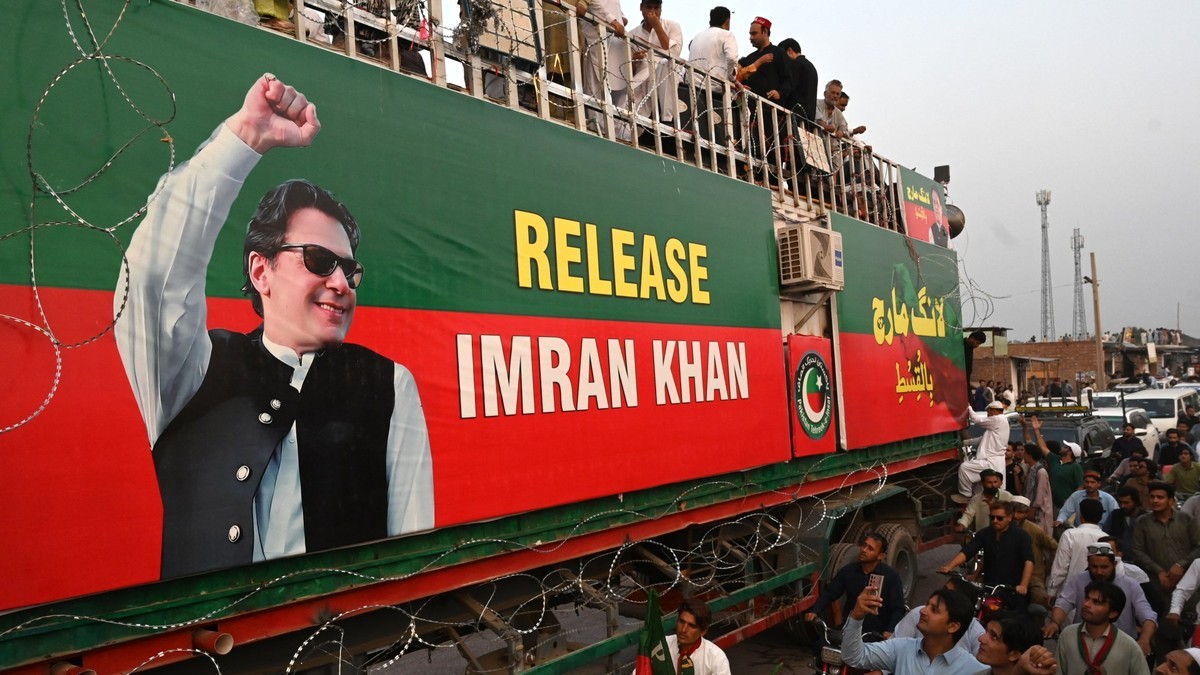
Imran Khan is Sharif's main political rival and has been imprisoned since 2023 on corruption and other charges that he and his party say are politically motivated, the Associated Press reported. He has been jailed for more than three years and is 74 years old. Despite that, he retains a substantial and passionate support base, according to Al Jazeera. His supporters say the military rigged the February 2024 parliamentary election against him, an allegation the military denies, Reuters reported. Besides his release, his party has demanded his transfer to a hospital and permission for his family to visit him. Sharif's government says Khan is in good health and receives regular family visits, but maintains that meetings with the imprisoned former leader cannot be used for political purposes, the Associated Press reported.
The March That Forced the Decision
Khan's party, Pakistan Tehreek-e-Insaf, has been rallying for several days to pressure the government for his release, threatening to march on the capital. The march was originally scheduled for 27 September but was postponed until 4 October to allow talks between the government and the party leadership, Al Jazeera reported. The government said it would not allow the march to enter Islamabad, erecting barriers of shipping containers to block the main access routes. Those containers, placed along key routes since last month, have disrupted traffic and forced residents in the capital and neighbouring Rawalpindi to take lengthy detours, the Associated Press reported. The province's chief minister, Sohail Afridi, urged supporters on Saturday to prepare to march, having launched the protest campaign last week and led marches through several districts. Ahead of the planned march, authorities detained three of Khan's sisters and hundreds of party activists, Reuters reported, and one of Afridi's close aides said restrictions had been placed on his movements.
The Arrests and the Claims Around Them
Shortly after the proclamation, KP Information Minister Shafi Jan said Chief Minister Sohail Afridi had been arrested and called on people across the province to gather in Peshawar, Dawn reported via the Express Tribune and Republic World. PTI lawmaker Junaid Akbar said Afridi had been arrested along with the party's president in the province, Al Jazeera reported. India Today reported that Afridi, whom it described as a former chief minister, and provincial party president Junaid Akbar were detained, and that another former chief minister, Ali Amin Gandapur, was placed under house arrest. Khan's party said Afridi and his former cabinet members were detained, the Associated Press reported. Neither the federal government nor the police had issued a statement confirming the detentions. Police detained several of Khan's supporters overnight, and additional police and security forces were deployed to prevent unrest; no protests were reported after the suspension.
'A Coup Disguised as Emergency'
Khan's spokesperson Zulfiquar Bukhari condemned the suspension, calling it a "disguised coup" and a "ridiculous decision," the Associated Press reported. He said the provincial government was the only one with a genuine popular mandate after the February 2024 parliamentary elections. "Now that little bit of democracy is also gone," he said in a statement. Bukhari added: "This will only lead to further bloodshed, instability and collateral damage," saying there had always been room for talk but the decision showed negotiations were never the government's intention, Reuters reported. Afridi had warned of mass mobilisation if governor rule were imposed; The Nation recorded him under the headline "Defiant CM Afridi keeps marching as Centre weighs emergency in KP" on 10 October. The government's case rests on what Sharif's office called deliberate disengagement from counterterrorism. Khan's party calls it the removal of an elected government.
The Constitutional Question Parliament Must Answer
Article 232(1) allows the president to issue a Proclamation of Emergency if he is satisfied a grave emergency exists in which the security of Pakistan, or any part of it, is threatened by war, external aggression or internal disturbance beyond the power of a provincial government to control. A proviso requires a resolution from that province's assembly for an emergency imposed over internal disturbances of that kind, and a further proviso requires that if the president acts on his own, the proclamation be placed before both houses of parliament for approval by each house within ten days. Article 234(1) allows the president, on receipt of a report from the governor, to assume or direct the governor to assume all or any functions of the provincial government other than the provincial assembly, and to declare that the assembly's powers be exercised by parliament. It does not permit the president to take over powers vested in a high court. It is not yet clear whether the provincial assembly passed such a resolution, or by what date parliament must approve the proclamation.
The Only Province Khan's Party Governed
Khyber Pakhtunkhwa was the only province Khan's party governed, and the measures remove it from power there. Political analyst Azeem Chaudhry said the emergency gave Governor Faisal Karim Kundi the powers of the provincial chief executive, and that the provincial assembly and Afridi's cabinet were also suspended, the Associated Press reported. The province borders Afghanistan and has absorbed an increasing share of Pakistan's militant violence. Pakistan has seen a surge in attacks in recent years, much of it blamed on the Tehrik-e-Taliban Pakistan, a separate group but a close ally of the Afghan Taliban, who returned to power in neighbouring Afghanistan in 2021. Islamabad has repeatedly accused Afghanistan's Taliban government of providing sanctuary to TTP militants, an allegation Kabul denies. The federal government's case is that the provincial administration would not, or could not, confront that threat. Khan's party rejects the charge.
What Comes Next
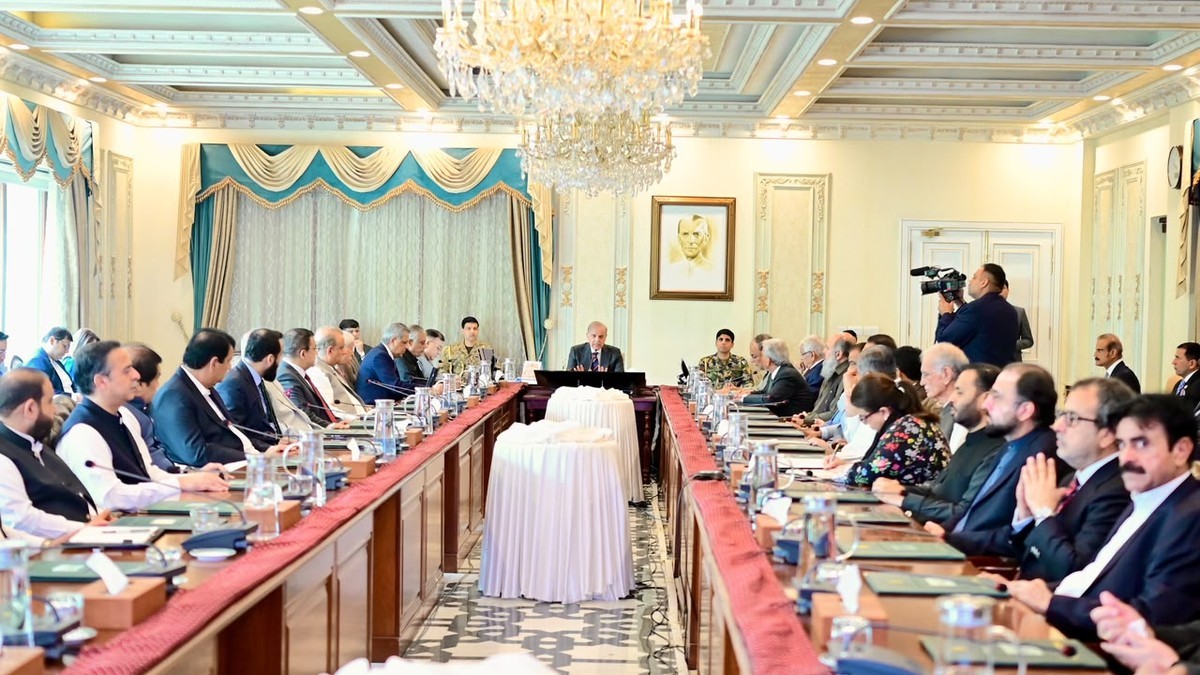
President Zardari and Prime Minister Sharif agreed in principle on Saturday to move towards imposing emergency in the province, subject to parliamentary approval, The Nation reported on 11 October. Participants agreed to convene separate sessions of the National Assembly and the Senate on Tuesday, 13 October, to debate the matter. Attorney General Mansoor Usman Awan briefed those present on the legal and constitutional options. The meeting at Aiwan-e-Sadr was attended by Deputy Prime Minister and Foreign Minister Ishaq Dar, Interior Minister Mohsin Naqvi, Law Minister Tarar and Federal Minister Ahad Cheema, among others. Governor Kundi and Interior Minister Naqvi called on Zardari late on Saturday and briefed him on the security situation. The advisory council is to run provincial affairs under the governor for an initial six months, with troops deploying to the province.
By Jessica Ali, Staff Writer
This article was produced with AI-assisted research and editorial support. Sources: the Associated Press, Reuters, Al Jazeera, Dawn, The Nation and India Today.
What's Your Reaction?
 Like
0
Like
0
 Dislike
0
Dislike
0
 Love
0
Love
0
 Funny
0
Funny
0
 Wow
0
Wow
0
 Sad
0
Sad
0
 Angry
0
Angry
0

Editor-in-Chief at Global1.News. Atlanta-based journalist who cuts through the BS and tells it like it is. Lead anchor, host, and the voice you hear when the spin stops and the truth starts.









Comments (0)