
Petra Power looks to modernize energy for data centers and defense vehicles
Petra Power is trying to rewrite the rulebook on how data centers and defense vehicles get their juice. The technology that skips the middle‑man Petra’s core product is a solid‑oxide fuel cell, a kind of ceramic device that converts chemical energy directly into electrical energy.
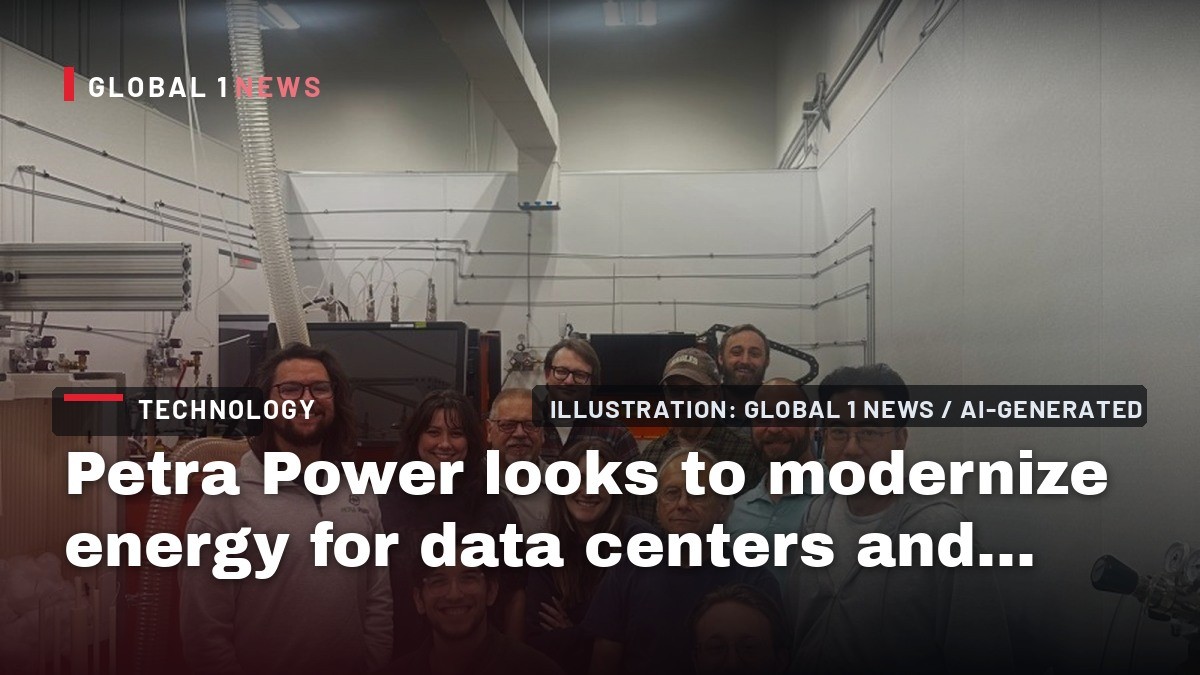
Petra Power is trying to rewrite the rulebook on how data centers and defense vehicles get their juice. The San Francisco‑based startup, founded in 2017, builds solid‑oxide fuel cells – ceramic units that pull electricity straight from fuels like natural gas without the messy combustion chain that powers most generators today. In a world where AI workloads are chewing through ever more megawatts, Petra’s pitch is simple: a tighter, cleaner, cheaper power source that can slide into the cramped, heat‑sick spaces where traditional generators struggle.
The technology that skips the middle‑man
Petra’s core product is a solid‑oxide fuel cell, a kind of ceramic device that converts chemical energy directly into electrical energy. Founder Aaron Goodman explains that conventional generators “take fuel, create explosions, generate heat, turn that into motion, then into electricity,” a cascade that loses a lot of energy along the way. By contrast, Petra’s cells “take the electrons directly off of the fuel,” stripping away the combustion step and, in theory, delivering “much, much more efficient” power.
Goodman emphasizes that the efficiency boost isn’t just a brag‑worthy tech spec – it translates into lower fuel bills and a smaller physical footprint. The cells are compact and lightweight, meaning they can fit into tighter spaces and reduce the cooling load that plagues data centers and armored vehicles alike. While the article doesn’t give a precise efficiency rating, the narrative frames the technology as a way to cut “significant” fuel costs for customers who burn through energy at scale.
Who Petra is courting: data centers and the Pentagon
Petra’s go‑to markets are two of the biggest power hogs on the planet: hyperscale data centers and the U.S. Defense Department. Goodman says the company is already talking to “neoclouds and other infrastructure providers a few steps down from the hyperscaler crowd.” Those are the mid‑tier cloud operators that sit just below the giants like Amazon, Microsoft and Google, but still run massive server farms that need reliable, cheap electricity.
On the defense side, Petra is positioning its fuel cells as auxiliary power units for land vehicles – essentially a backup battery that can keep onboard systems humming when the main engine is off. The technology is still in testing, and no live vehicle has yet carried a Petra cell, but the startup has already secured “nearly $9 million in contracts from the Defense Department.” Those contracts signal early validation and a foothold that could expand if the government decides the cells meet its performance and reliability thresholds.
Roadmap to market: 2028 pilots, 2029 full‑scale production
Goodman sketches a clear timeline for scaling. The first deployments with the mid‑tier cloud partners are slated for 2028, with full‑scale production aimed for 2029. That cadence gives Petra a window to refine the hardware, prove the cost savings in real‑world settings, and lock down larger deals with the hyperscalers that remain “an ICP [ideal customer profile] for us.”
The timeline also aligns with broader industry pressures. As AI models grow larger and more compute‑intensive, data center operators are scrambling for power solutions that can keep costs down while meeting sustainability goals. Petra’s promise of a “more efficient and environmentally friendly” alternative could make the 2028‑29 window a sweet spot for early adopters looking to differentiate themselves in a crowded market.
Funding the fuel‑cell dream
Petra’s financial picture is modest but promising. The startup has a lean team of about 15 people, a size that lets it stay agile while it pilots its technology. The $9 million in defense contracts is the only concrete dollar amount mentioned, and it serves as both revenue and validation. There’s no mention of venture capital rounds or external investors in the source, so the focus stays on the government contracts as the primary cash flow source.
Goodman’s comments suggest the company is still in a “growth” phase, looking to translate those early contracts into a larger pipeline. The fact that Petra was selected for TechCrunch’s Startup Battlefield 200 – a showcase of promising early‑stage companies – adds a layer of credibility and exposure that could help attract additional capital or strategic partners as the 2028 pilot window approaches.
Why the fuel‑cell angle matters to ordinary users
For most people, the idea of a ceramic fuel cell might sound like something out of a sci‑fi lab, but the downstream effects could be tangible. Data centers power everything from streaming video to the AI assistants that schedule our meetings. If Petra’s cells can shave fuel costs for those facilities, the savings could ripple down the supply chain, potentially lowering cloud‑service fees or keeping subscription prices stable.
On the defense side, more efficient auxiliary power could extend the operational time of military vehicles without needing larger fuel tanks, meaning lighter, more maneuverable platforms. While the average citizen isn’t likely to see a Petra‑powered tank on the street, the broader implication is a military that can field equipment with a smaller logistical footprint – a factor that can influence everything from procurement budgets to the speed of deployment in crisis zones.
Challenges ahead: scaling, certification and competition
Petra’s path is not without hurdles. Scaling a solid‑oxide fuel cell from prototype to mass production involves mastering high‑temperature ceramics, ensuring long‑term reliability, and meeting rigorous safety standards – especially for defense applications. The company admits it has “no firm” deals with hyperscalers yet, meaning the biggest potential customers are still in the conversation stage.
Moreover, the fuel‑cell market is heating up with legacy energy firms and other startups racing to commercialize similar tech. Petra will need to prove not just that its cells are efficient, but that they are cost‑effective over the full lifecycle, from installation to maintenance. The upcoming 2028 pilots will be a critical proving ground; success could lock in long‑term contracts, while setbacks could push the timeline further out.
What’s next for Petra Power and the broader energy‑tech landscape
As the article notes, Petra’s first real‑world deployments are slated for 2028, with full production in 2029. That timeline puts the startup at the cusp of a broader shift in how high‑density compute and mobile power are sourced. If the fuel cells deliver on the promise of “significant” fuel‑cost savings and a smaller footprint, they could become a staple in the next generation of data center design and military logistics.
For now, Petra remains a small team with a big ambition, riding the wave of AI‑driven energy demand. The next few months will see the company showcase its tech at events like the TechCrunch Startup Battlefield 200 in San Francisco, a platform that could attract the strategic partners needed to bridge the gap between prototype and production. Whether Petra can turn its ceramic cells into a mainstream power source will depend on how quickly it can move from lab to field, but the stakes – lower energy bills for cloud users and lighter, more autonomous military vehicles – make the watchlist worth a close eye.
This article was produced with AI-assisted research and editorial support. Reporting is based on the source material cited below. Sources: TechCrunch; techcrunch.com; Global1.News (11 October 2026).
By Nova Chen, Staff Writer
What's Your Reaction?
 Like
0
Like
0
 Dislike
0
Dislike
0
 Love
0
Love
0
 Funny
0
Funny
0
 Wow
0
Wow
0
 Sad
0
Sad
0
 Angry
0
Angry
0

Trend Reporter at Global1.News. Based in San Francisco, tracking the stories crossing from social platforms, forums, and community discussions into mainstream news — tech breakthroughs, cultural shifts, and world events that real people are engaging with right now.














Comments (0)