
Afghanistan and the BLA’s Evolving Capabilities
In the wake of the United Nations Security Council monitoring report released in August 2026, which documented the Balochistan Liberation Army’s (BLA) access to U.S.
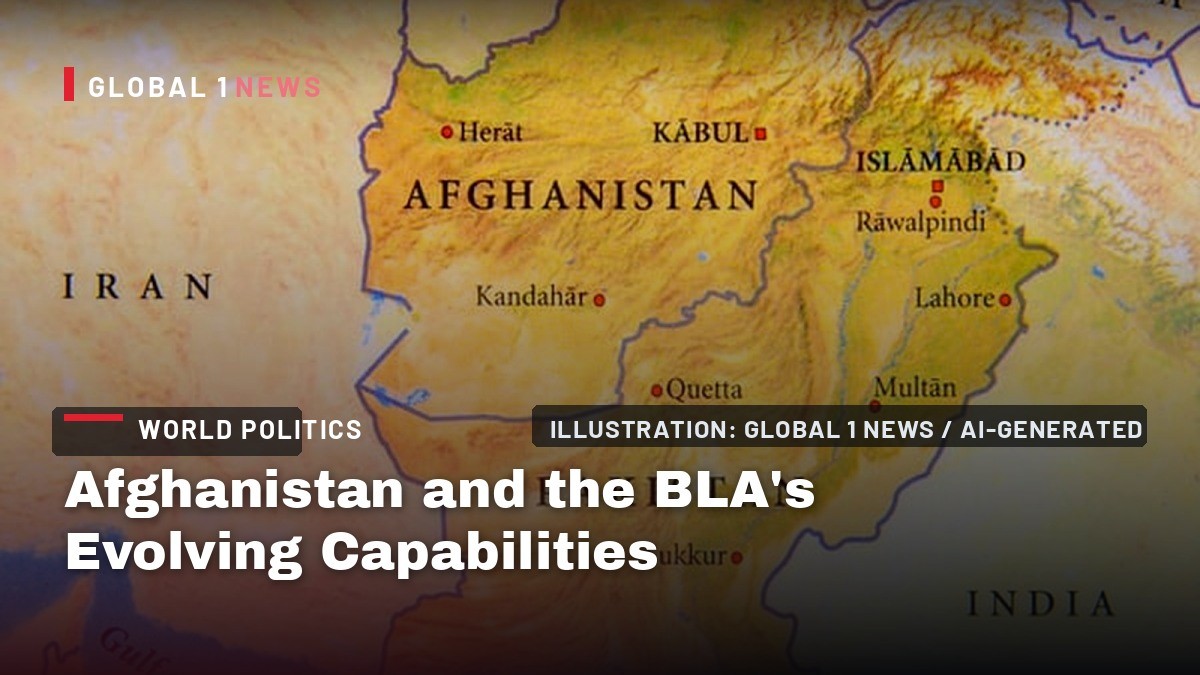
In the wake of the United Nations Security Council monitoring report released in August 2026, which documented the Balochistan Liberation Army’s (BLA) access to U.S. and NATO‑origin equipment in Afghanistan, analysts have turned their attention to the strategic calculus underlying the group’s evolving capabilities. The reported meeting in Kandahar in August—chaired by Taliban governor Mullah Shirleen and attended by representatives of the BLA, the Tehreek‑e‑Taliban Pakistan (TTP), al‑Qaida in the Indian Subcontinent (AQIS), and networks linked to Hafiz Gul Bahadur—offers a concrete illustration of how the BLA seeks to leverage Afghanistan’s porous security environment to offset mounting pressure from Pakistani military operations. This article examines the operational implications of that engagement, situates it within the broader geopolitics of the Afghanistan‑Pakistan border, and evaluates policy options for Islamabad and Kabul.
Contextualizing the Kandahar Dialogue
The Pakistani military’s public statement on 1 October 2026, issued by spokesperson Lt. Gen. Ahmad Sharif Chaudhry, framed the Kandahar gathering as a coordination forum for manpower and operations against Pakistani security forces. While Afghan officials denied that such a meeting occurred, the claim aligns with a pattern of cross‑border militant interaction that has intensified since the resumption of cross‑border strikes in February 2026. The United Nations monitoring report, which noted the presence of M4 and M16 rifles, reconnaissance drones, night‑vision devices, and thermal equipment among BLA assets, underscores the material incentives for the BLA to cultivate Afghan‑based linkages.
Beyond material support, the meeting’s composition—featuring TTP personnel and AQIS operatives—suggests a convergence of insurgent interests across the Durand Line. The presence of Hafiz Gul Bahadur’s network, rooted in North Waziristan, further illustrates how the BLA is reaching into established militant supply chains that have historically facilitated the flow of arms and fighters between Afghanistan and Pakistan.
Operational Enhancements Evident in the January 2026 Offensive
The BLA’s coordinated attacks on 31 January 2026 across Quetta, Gwadar, Noshki, and Panjgur marked a notable escalation in both geographic scope and tactical sophistication. While casualty figures remain contested—Pakistan’s military reported 18 civilian and 15 security‑force deaths, whereas the BLA claimed 84 security personnel killed—the operation demonstrated the group’s capacity to conduct simultaneous assaults over a wide area. Crucially, the United Nations report linked the BLA’s use of drones and urban‑warfare training to facilities in Afghanistan, indicating that the Kandahar dialogue may have translated into concrete operational support.
A February 2026 assessment further confirmed the BLA’s deployment of drones, satellite communications, and U.S.-made weapons, some of which were traced to equipment left behind in Afghanistan. Although the assessment cautioned that not all such materiel necessarily originated from Afghan stockpiles—commercial channels also exist—the documented overlap reinforces the argument that Afghanistan functions as a conduit for advanced capabilities that the BLA previously lacked.
Afghanistan’s Role as a Sanctuary and Supply Hub
Historically, Pakistan has accused the Taliban government of providing sanctuary to anti‑Pakistani militants. The Kandahar meeting, if verified, would illustrate a shift from passive sheltering toward active facilitation of recruitment, training, and logistical support. The United Nations report’s observation that BLA members trained alongside TTP personnel in drone and urban‑warfare techniques at Afghan facilities underscores a deepening of operational interdependence.
Afghan intelligence’s alleged assurances—offering manpower, weapons, and logistical assistance from TTP and AQIS networks—highlight a strategic calculus: by supporting the BLA, Afghanistan can exert pressure on Pakistan without direct confrontation, leveraging the BLA’s grievances over Baloch marginalization to destabilize its western neighbor.
Comparative Analysis of Iranian Versus Afghan Supply Channels
While the BLA also maintains a presence in Iran’s Sistan‑Baluchestan province, the evidence for Iranian material support remains tenuous. Pakistan’s January 2024 strikes in the province targeted alleged BLA and Balochistan Liberation Front (BLF) sites, yet the BLF denied any Iranian hideouts, and no concrete proof of Iranian arms transfers has emerged. In contrast, the United Nations monitoring report provides explicit documentation of Afghan‑based equipment and training, establishing a more direct link between Afghanistan and the BLA’s capability set.
This distinction is critical for policy formulation. If Iranian involvement is limited to providing a geographic haven, whereas Afghan involvement includes tangible materiel and expertise, Pakistan’s counter‑terrorism posture must prioritize Afghan border coordination and diplomatic engagement with Kabul to disrupt the flow of resources.
Implications for Regional Security Dynamics
The alleged involvement of AQIS—a transnational jihadist organization—introduces an additional layer of complexity. AQIS’s presence at the Kandahar meeting suggests that the BLA’s operational network is intersecting with broader extremist currents that extend beyond the South Asian theater. This convergence raises the specter of a “contagion effect,” whereby the BLA could adopt tactics and ideologies from global jihadist actors, potentially amplifying the threat to both Pakistan and regional stability.
Moreover, the reported role of Indian intelligence in facilitating the Kandahar gathering, though denied by India, reflects the persistent suspicion that external powers may be exploiting insurgent groups as proxies. While such claims require rigorous verification, they underscore the necessity for Islamabad to adopt a multidimensional security strategy that addresses both state and non‑state actors across the Afghan‑Pakistani frontier.
Policy Recommendations for Islamabad
Given the evidence of Afghan‑based support, Pakistan’s response must integrate diplomatic, security, and development components. First, sustained engagement with the Taliban government is essential to negotiate mechanisms that limit the movement of militants and materiel across the border. Second, enhancing joint border‑monitoring initiatives—potentially under the auspices of the Shanghai Cooperation Organization or the United Nations—could improve real‑time intelligence sharing on TTP and BLA activities.
Third, counterterrorism operations should be calibrated to avoid exacerbating local grievances in Balochistan. As the source material notes, addressing the “security, economic and political concerns of Baloch communities” can diminish the recruitment pool for insurgent groups. A comprehensive approach that couples targeted strikes—such as the airstrikes reported in Helmand, Kunar, Kandahar, Paktia, and Khost—with development assistance for Baloch regions would mitigate the risk of further radicalization.
Policy Recommendations for Kabul
Afghanistan faces a delicate balancing act. While the Taliban government seeks to assert sovereignty and resist external pressure, it also benefits from leveraging militant groups as bargaining chips in its relationship with Pakistan. Nonetheless, the United Nations report’s findings on equipment transfers and training implicate Kabul in the proliferation of arms that contravene international non‑proliferation norms.
To reduce international scrutiny and avoid escalation, the Taliban could adopt a policy of limited cooperation with Pakistan on border security, focusing on the containment of TTP elements that operate independently of Afghan state structures. By demonstrating a willingness to curtail the flow of weapons and fighters—particularly those linked to the BLA—Kabul could secure diplomatic concessions and aid, while preserving its strategic leverage.
Future Monitoring and Research Priorities
Three indicators will be pivotal in assessing the durability of Afghanistan’s support for the BLA: (1) independent verification of the Kandahar meeting, (2) continued United Nations monitoring of equipment and training linkages, and (3) the scale and sophistication of BLA operations, especially the use of drones and coordinated multi‑site attacks. Scholars at the Asan Institute for Policy Studies and the Korea Development Institute (KDI) have highlighted the importance of longitudinal data collection on cross‑border militant networks, a methodology that can be adapted to the South Asian context.
In sum, the convergence of militant actors in Kandahar reflects a broader pattern of insurgent groups exploiting the security vacuum left by the Afghan‑Pakistani conflict. While the BLA’s operational enhancements are evident, the precise extent of Afghan facilitation remains to be conclusively established. A nuanced, evidence‑based approach—anchored in diplomatic engagement, targeted security measures, and socio‑economic development—offers the most viable pathway to mitigate the BLA’s growing threat and to stabilize the volatile frontier that has long been a flashpoint in Northeast Asian geopolitics.
This article was produced with AI-assisted research and editorial support. Reporting is based on the source material cited below. Sources: The Diplomat; thediplomat.com; Global1.News (12 October 2026).
By Prof. David Park, Staff Writer
What's Your Reaction?
 Like
0
Like
0
 Dislike
0
Dislike
0
 Love
0
Love
0
 Funny
0
Funny
0
 Wow
0
Wow
0
 Sad
0
Sad
0
 Angry
0
Angry
0

East Asia/Technology Correspondent at Global1.News. Seoul-based voice covering Korean politics, technology, business, and culture. Analyzes how technology and geopolitics intersect across East Asia.














Comments (0)