
Artificial intelligence and social integration paradox
Migration across the Middle East and beyond continues to be shaped by a triad of forces: the push of conflict, climate and repression; the pull of economic opportunity; and the ever‑tightening web of great‑power rivalry that frames regional mobility.
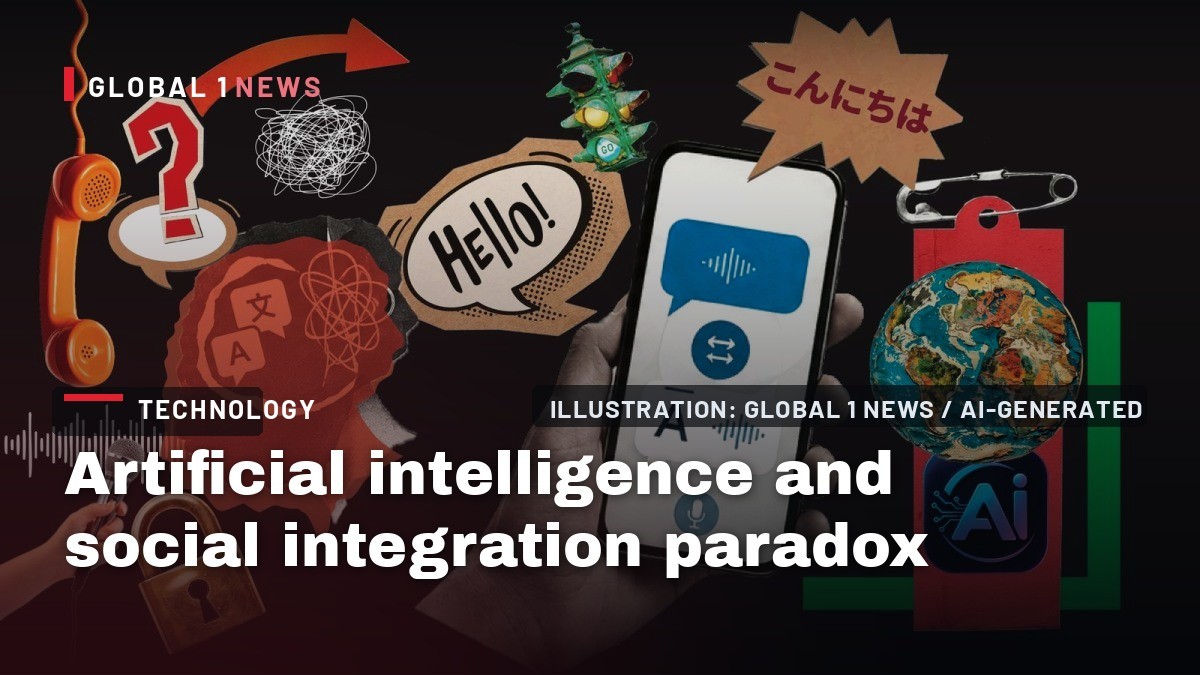
Migration across the Middle East and beyond continues to be shaped by a triad of forces: the push of conflict, climate and repression; the pull of economic opportunity; and the ever‑tightening web of great‑power rivalry that frames regional mobility. Whether forced or voluntary, migrants confront a suite of psychological, economic and social hurdles as they strive to rebuild their lives in unfamiliar societies. Central among these hurdles is language, a barrier that has long dictated the depth of a newcomer’s integration. Recent advances in artificial intelligence (AI) – particularly in real‑time translation – promise to reshape that dynamic, offering both relief and new complexities for social cohesion.
The enduring weight of language in migrant adaptation
For newcomers, limited proficiency in the host country’s language hampers communication, restricts access to education and health care, and narrows pathways to employment. The source material emphasizes that language barriers “negatively affect the migrant’s ability to express themselves, build social relationships, access education and health care, participate in the labor market, and understand the society in which they live.” Consequently, language has traditionally been a gatekeeper to both economic stability and social belonging.
Beyond the practical impediments, language carries cultural codes – humor, politeness norms, and collective memories – that shape how individuals perceive and are perceived within a society. Learning a language, therefore, is not merely a technical skill but an immersion into the host culture’s worldview, a process that naturally creates opportunities for interaction, mistake‑making and mutual assistance.
AI breakthroughs: From translation apps to live speech‑to‑speech
Recent technological strides have begun to erode the linguistic wall. The article notes that AI‑powered real‑time translation systems now enable instant communication without shared language, and that written and spoken content can be rendered into other tongues within seconds. A concrete illustration comes from Cologne‑based DeepL, which earlier this month introduced live speech‑to‑speech translation technology, a development described as a potential “turning point for both artificial intelligence and the world of language.”
These tools are already entering everyday life. A viral video shows a Turkish beauty‑salon owner in the United States conversing with a Spanish‑only customer using AI translation, underscoring how migrants can now navigate daily interactions with far less linguistic preparation.
Economic implications for migrants and host societies
The source material points to “significant new global business opportunities” for small enterprises that previously could not afford translation services, suggesting that AI could lower cost barriers and expand market access. For migrants, the practical benefit is clear: reduced need for language proficiency can ease entry into the labor market, enable smoother transactions with health‑care providers, and simplify bureaucratic procedures.
However, the article also hints at a paradox. While AI may cut costs and broaden opportunities, it does not address the deeper cultural integration that language learning traditionally facilitates. The economic advantage of functional communication may coexist with a lingering gap in social belonging.
From functional communication to superficial interaction
AI’s ability to translate speech in real time means that migrants can accomplish essential tasks – shopping, medical appointments, official paperwork – without mastering the host language. Yet the source warns that “opportunities for organic contact with that culture may also remain limited.” The distinction drawn is between mere transactional exchanges and the richer, more nuanced relationships forged through shared linguistic experiences.
When migrants rely on devices to bridge the language gap, the process of learning – with its inevitable errors, questions and collaborative moments – is bypassed. This bypass may inadvertently diminish the “spaces for human contact” that arise naturally in language classrooms, community centres and informal conversations.
Cultural transmission and the limits of AI translation
Language is a vessel for collective memory and cultural meaning. The article stresses that AI can deliver “near‑perfect accuracy” in translating sentences, yet it cannot “internalize, on behalf of the user, the cultural associations behind that sentence, the collective memory it carries, or the meaning it holds within the speaker’s own social world.” Thus, while AI can convey information, it cannot substitute for the lived experience of cultural immersion.
This limitation is especially salient in the Middle East, where linguistic nuance often intertwines with religious, tribal and historical identities. A migrant who can ask a doctor for a prescription in Arabic via AI may still miss the subtleties of bedside etiquette, the symbolic weight of certain phrases, or the social cues that signal trust and belonging.
Potential social repercussions in host societies
Host communities may experience a shift in how they engage with newcomers. If migrants can function without learning the local language, the impetus for host citizens to provide language assistance or to engage in cultural exchange may diminish. The source material suggests that “a reduced need to learn the local language could make migrants’ relationships with the host society more functional, yet also more superficial.” This functionalism could reinforce parallel societies, where interaction remains confined to service exchanges rather than deeper communal bonds.
Moreover, the perception that AI can replace language learning might influence policy. Governments could deprioritise integration programmes that focus on language acquisition, assuming technology will fill the gap. Yet, as the article argues, the “challenging process of learning a language can itself create opportunities for social interaction,” implying that policy choices could inadvertently curtail avenues for genuine integration.
Looking ahead: Balancing technology with cultural integration
In the coming years, AI translation is set to become more accurate and neutral, expanding its reach across sectors and geographies. While this evolution promises to ease everyday hardships for migrants – from navigating health services to conducting business – it also raises a strategic question for the region: how to harness the convenience of AI without sacrificing the cultural cohesion that underpins stable societies?
Policymakers, NGOs and community leaders might consider a hybrid approach: leveraging AI to alleviate immediate linguistic barriers while still encouraging language learning as a pathway to deeper integration. Initiatives could pair AI tools with cultural orientation programmes, ensuring that migrants not only understand instructions but also grasp the social contexts behind them. In doing so, the Middle East can turn the AI‑driven paradox into an opportunity – using technology to open doors, while still inviting newcomers to step through and engage with the cultural fabric of their host societies.
This article was produced with AI-assisted research and editorial support. Reporting is based on the source material cited below. Sources: Daily Sabah Middle East; dailysabah.com; Global1.News (11 October 2026).
By Malik Hassan, Staff Writer
What's Your Reaction?
 Like
0
Like
0
 Dislike
0
Dislike
0
 Love
0
Love
0
 Funny
0
Funny
0
 Wow
0
Wow
0
 Sad
0
Sad
0
 Angry
0
Angry
0

Middle East Correspondent at Global1.News. Based in Beirut, covering politics, conflict, energy, and society across the Middle East. Brings context and depth to a region often reduced to headlines.













Comments (0)