
Burnham Confirms Russia Interfered in Brexit - the First UK Prime Minister to Say It
Andy Burnham has become the first sitting British prime minister to say Russia interfered in the 2016 Brexit referendum, telling a podcast he received a "clear answer" that Moscow was involved - while offering no evidence and warning voters in France and Germany of the same threat.
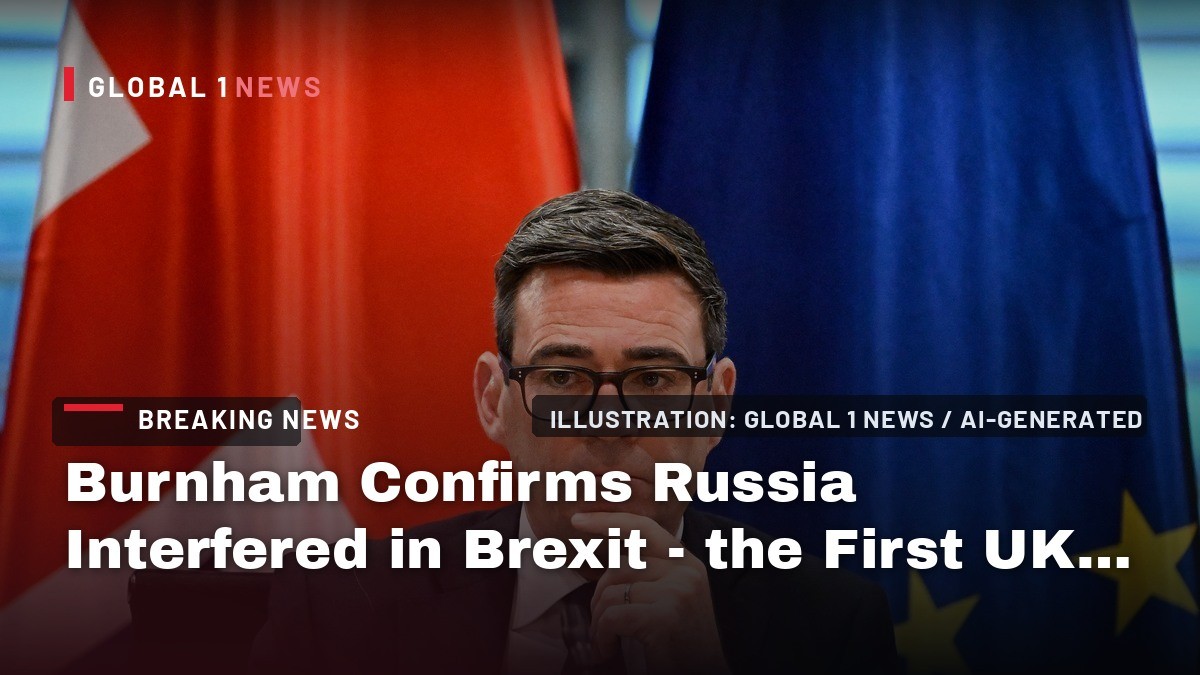
Andy Burnham has said it is "clear" that Russia interfered in Britain's 2016 referendum on European Union membership — becoming the first sitting British prime minister to put the Kremlin on the record over the vote that took the country out of the bloc.
Burnham Confirms Russia Interfered in Brexit — the First UK Prime Minister to Say It
London — The prime minister said he asked the question in his first days in Downing Street and was given a direct answer. He supplied no evidence, named no source and pointed to no document. Within hours, both sides of Britain's decade-old Brexit divide were arguing over what that answer actually means.
What the Prime Minister Said
Burnham made the remark in an interview with The Rest Is Politics podcast, excerpts of which were released on Sunday. The full episode is due on Monday.
"I asked the question coming to Downing Street: was there interference in the 2016 referendum from Russia?" he said. "And I've had the clear answer that yes, there was."
He framed the disclosure as a matter of public record rather than a legal finding. "These things are important now to put clearly on the record, and I believe, help voters in Germany and France understand that some of this politics is instigated via our enemies, namely Russia," he said.
Burnham also said Britain had been "too much on the back foot" on the subject, meaning voters had not been informed "sufficiently about the extent to which people are seeking to disrupt the political process from overseas". He did not spell out how he believed Russia interfered, and gave no detail on what evidence the answer rested on.
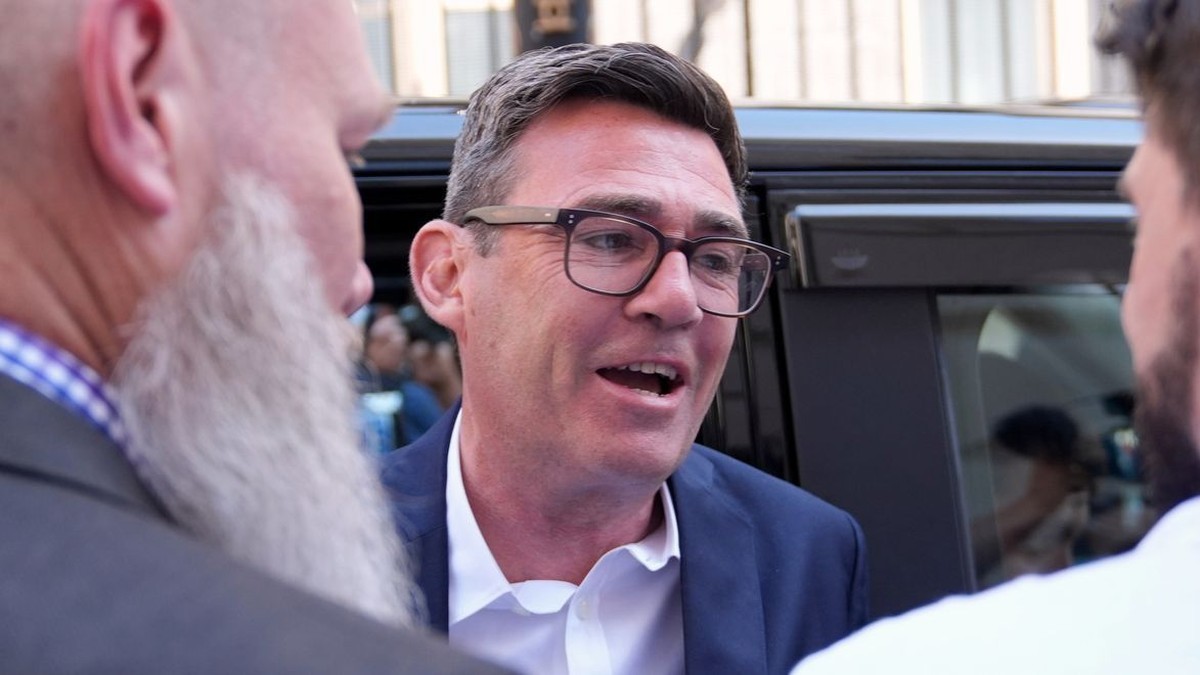
The Question He Asked on Day One
The significance rests on timing as much as content. Burnham took over as prime minister in July, replacing Keir Starmer, and says the question about 2016 was one of the first he put to his advisers once he was inside Number 10.
That framing matters because successive governments had declined for years to confirm publicly what British authorities knew about the Kremlin's possible role. The Observer, whose own reporting first surfaced concerns about a series of meetings between Russian officials and senior figures at the Leave.EU campaign, wrote that Burnham's remarks "open up the possibility of greater government transparency" over the allegations.
Britain voted 52 per cent to 48 per cent to leave the EU in June 2016, a result that plunged the country into its biggest political crisis since the Second World War. Burnham has since argued that departure failed to deliver on the Leave campaign's pledge of "taking back control," and instead left the United Kingdom weaker both economically and on immigration.
The Report That Stopped Short
The nearest thing Britain has to a formal conclusion is a 2020 report by Parliament's Intelligence and Security Committee. It was heavily redacted before publication, and it did not deliver the verdict Burnham has now delivered.
According to the Observer, the committee said it was unable to reach a conclusion on the referendum because: "We have not been provided with any post-referendum assessment of Russian attempts at interference."
The committee went further and asked for exactly that assessment to be carried out, with an "unclassified summary" to be made public. The request was rejected by the Boris Johnson-led government of the time. What the committee did find was that ministers had failed to fully assess the impact Russian state-run media and "troll" accounts could have had on the EU referendum.
Johnson's Answer, and the Decade It Defined
Burnham's position is a direct reversal of the one taken by his Conservative predecessor. Boris Johnson, who campaigned to leave the EU, said in 2020 that there was no evidence of Russian interference in the referendum.
In the same year, however, the then-Conservative government stated that it was "almost certain that Russian actors sought to interfere" in the 2019 general election — drawing a line between one ballot it accepted had been targeted and another it did not.
Russia has long denied meddling in the Brexit vote, casting Britain as a country gripped by "anti-Russian hysteria". After the 2020 committee report, the Russian foreign minister dismissed it out of hand and called it "Russophobia", while a Kremlin spokesman said Russia did not meddle in other countries' elections.
What the Committee Found About Scotland
The same 2020 report did reach a firm finding on one ballot. It concluded that the Kremlin had sought to influence Scotland's 2014 independence referendum, in which voters rejected independence.
The distinction is revealing. The committee could say that Russia tried to act in Scotland and that it could not say whether Russia acted in the EU referendum — not because the threat was dismissed, but because the government had never commissioned the assessment that would have settled it.
Burnham's remark effectively closes that gap with a political statement rather than a published document. That is the strongest criticism his opponents can make of it, and it is one his own interview concedes: he offers an answer, not an appendix.
The Warning to France and Germany
Burnham did not confine the remark to Britain's past. He aimed it squarely at two European electorates facing far-right parties, telling voters in Germany and France that "some of this politics is instigated via our enemies, namely Russia".
The timing is pointed. On Sunday, France's left held a primary that Raphaël Glucksmann won with 66 per cent of the vote. Germany, meanwhile, has seen recent regional election successes for the far-right Alternative for Germany, known as the AfD.
Burnham described the exchange with German Chancellor Friedrich Merz, whom he met in Berlin last week. He said Merz told him the AfD is "clearly linked to Russia — funded, I believe." Burnham added: "There is certainly misinformation, disinformation that is emanating from Russia into German politics."
Merz, the AfD and the Funding Question
The funding claim is the sharpest single element of the interview, and it is attributed to Merz rather than asserted by Burnham as an established fact. No figure, mechanism or source was offered for it.
It lands against a backdrop of hardening official language across Europe. Britain's own intelligence agencies believe Russia continues to spread disinformation to undermine public trust, alongside cyberattacks, sabotage and espionage. They describe the problem as worsening, and increasingly aided by artificial intelligence.
Vijay Rangarajan, head of the UK Electoral Commission, told MPs earlier this year that Russian deepfake videos had been "used extensively in elections around the world," adding: "There is no reason to assume Britain would be an exception." BBC Verify has separately tracked Russian-linked campaigns that used AI to fabricate videos impersonating journalists and news organisations covering Ukraine — including a fake news site claiming Ukrainian President Volodymyr Zelensky had bought a mansion owned by King Charles at a discounted price.
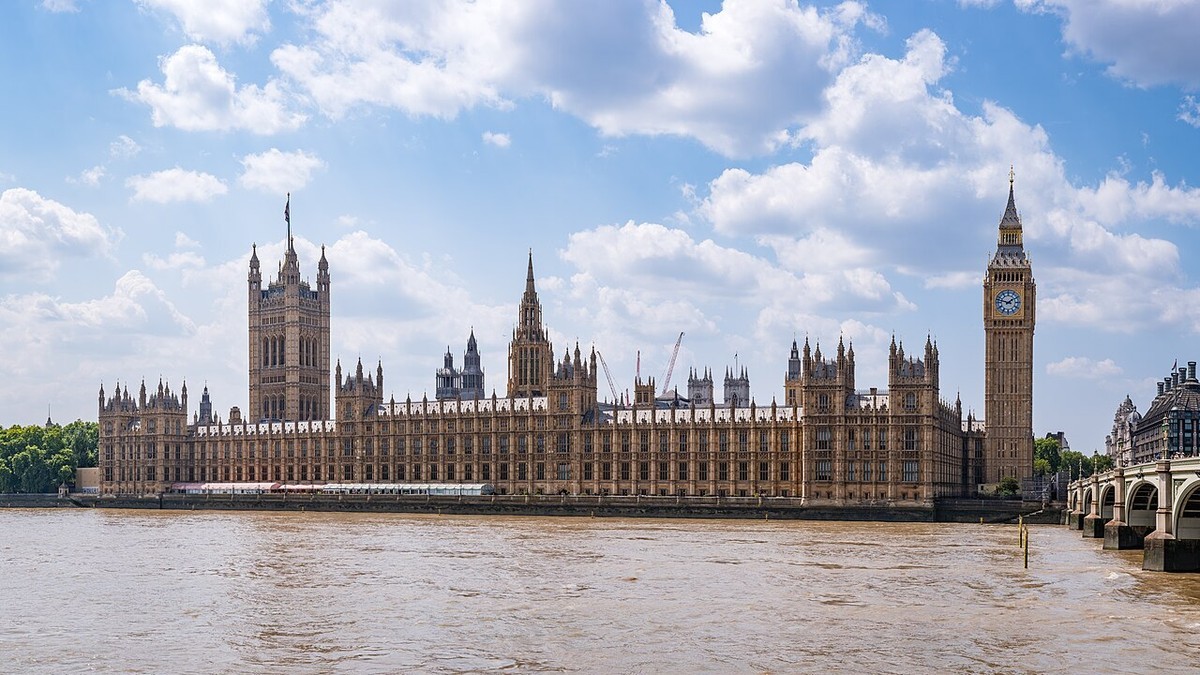
The Money Trail and the Denials
The allegations Burnham is now endorsing have a documented paper trail, and a documented set of denials.
In 2018, the Observer revealed that leaders of the Leave.EU campaign had held multiple meetings with high-ranking Russian officials between November 2015 and 2017, and had travelled to Moscow in February 2016. No wrongdoing is suggested on the part of the Leave.EU figure Arron Banks or any other campaign figure.
Banks, who became the biggest single donor to the Brexit cause, has repeatedly denied any involvement with Russian officials or that Russian money played any part in the campaign. Questioned over the "true source" of £8m loaned to Leave.EU, he told the BBC: "There was no Russian money and no interference of any type. I want to be absolutely clear about that. The money came from Rock Services, which was a UK limited company."
The Electoral Commission investigated and referred the matter to the National Crime Agency, which found "no evidence" of criminal offences. Banks threatened to sue the Commission for defamation in October 2019; the two sides settled the following year.
The Silence From Moscow
Russia's response has been silence rather than rebuttal. The embassy in London did not immediately respond to a request for comment, and the Kremlin has not addressed the specific claim.
That absence is consistent with a decade-long pattern. Moscow has repeatedly denied interfering in another country's elections or referendums, and has framed Western allegations as a symptom of hostility rather than a description of Russian conduct. A Kremlin spokesman has previously said Russia does not meddle in other countries' elections at all.
Because Burnham gave no operational detail, there is little for Moscow to rebut in specifics — no named operation, no named agency, no named platform. The dispute is currently between a prime ministerial statement and a blanket denial, with no public evidentiary record between them.
How the Two Sides Reacted
Britain Unbound, a pro-Brexit campaign group, called the comments "another crude attempt to undermine the legitimacy of the decision that the British people made in 2016," adding that "it is also insulting to suggest that voters were so easily duped."
Richard Kilpatrick of the pro-EU European Movement UK said the public confirmation of long-held suspicions mattered. Naomi Smith of Best for Britain said restoring EU membership is the only option that could begin to repair the damage.
Why This Lands Now, and What Comes Next
Burnham's Brexit remark does not sit in isolation. It arrives alongside a sustained attempt to reopen the country's relationship with Brussels.
Last month he argued the UK should reconsider its options with the EU, including rejoining, and said he could campaign on the issue at the next general election. At Labour's annual conference he set out plans to seek political consensus on Britain's future relationship with the bloc, leaving open the possibility that rejoin could sit in a future manifesto.
Public opinion has moved with him. YouGov's tracker has shown a majority saying Britain was wrong to leave since mid-2022, and the "Bregret" camp reached 60 per cent last month — its highest level on record. EU officials have welcomed the change in tone, and France and Spain have spoken positively about closer ties. Professor Iain Begg of the London School of Economics remains sceptical, arguing rejoining would reopen deep divisions and likely take years.
In Downing Street's only official comment, a spokesperson declined to discuss the nature of the prime minister's briefing but said: "National security is the first duty of any government — we are focused on ensuring our citizens and our institutions are protected from foreign powers and their proxies seeking to threaten lives and undermine our democratic values."
What remains unresolved is the one thing that would settle the argument: the assessment the 2020 committee asked for and never received. Until a British government publishes one, the question of what Russia did in 2016 rests on whose answer the public chooses to believe — a prime minister's briefing, a predecessor's denial, or a committee that said it was never told.
By Jessica Ali, Staff Writer
This article was produced with AI-assisted research and editorial support. Sources: Reuters, The Associated Press, BBC News, The Observer, The Independent, DW, Al Jazeera, France 24, Dawn, and The National.
What's Your Reaction?
 Like
0
Like
0
 Dislike
0
Dislike
0
 Love
0
Love
0
 Funny
0
Funny
0
 Wow
0
Wow
0
 Sad
0
Sad
0
 Angry
0
Angry
0

Editor-in-Chief at Global1.News. Atlanta-based journalist who cuts through the BS and tells it like it is. Lead anchor, host, and the voice you hear when the spin stops and the truth starts.









Comments (0)