
Mum's last words to son before he went missing in Colombia
When a mother’s last conversation with her son ends in a promise to speak again, the silence that follows can feel like a wound that never heals. The sudden break: An earthquake and a missing call Just days after their final conversation, an earthquake struck another part of Colombia.
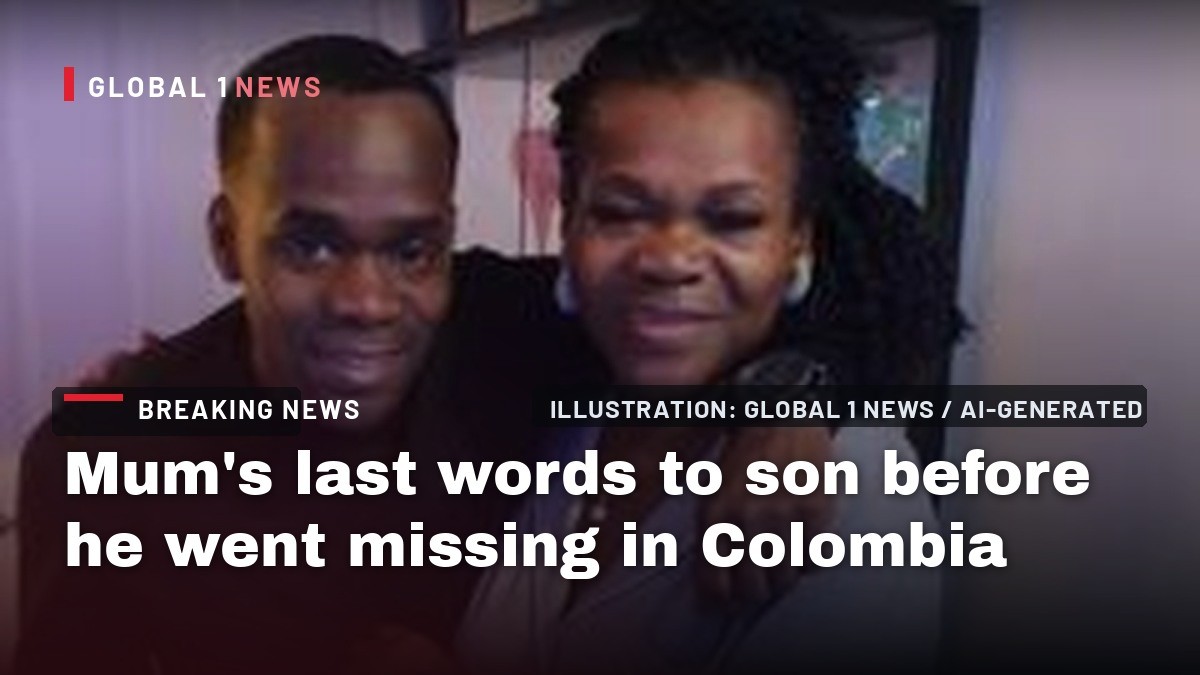
When a mother’s last conversation with her son ends in a promise to speak again, the silence that follows can feel like a wound that never heals. Nylva McKie‑Williams, a resident of Manchester’s Whalley Range, has been living that anguish since her son, Anton Green, vanished in Colombia two months ago. His disappearance, reported to Greater Manchester Police on 10 August, has unfolded against a backdrop of bureaucratic inertia, distant diplomatic assurances, and a community’s desperate search for answers.
From Manchester to Medellín: A life built on bridges
Anton Green, 43, left the familiar streets of Whalley Range more than two and a half years ago, seeking a new chapter in South America. Though the source material does not detail his motivations, his regular weekly calls home suggest a strong tie to his family and a desire to keep his British roots close, even while living abroad. His brother, former Manchester United youth defender Ro‑Shaun Williams, and family friend footballer Marcus Rashford have both spoken of Anton as a “family friend,” underscoring the personal networks that span continents.
These connections became a lifeline when the call on 6 August—his last known contact—ended with the simple, hopeful promise: “We will speak at the weekend.” The abrupt silence that followed was “so unlike him,” Nylva says, highlighting how deeply Anton’s routine communication was woven into the family’s sense of normalcy.
The sudden break: An earthquake and a missing call
Just days after their final conversation, an earthquake struck another part of Colombia. While the source material does not link the quake directly to Anton’s disappearance, the timing amplified his mother’s unease. The natural disaster underscored the fragility of life in a country where infrastructure can be unpredictable, and it added a layer of urgency to a family already grappling with the loss of contact.
When Anton’s calls stopped, Nylva’s first instinct was to reach out to the British embassy and to Greater Manchester Police. The police logged his case on 10 August, but the mother feels the response has been muted, describing her son as “forgotten” and the family’s support as “little.” This sentiment reflects a broader frustration felt by many families of expatriates who find themselves navigating foreign legal systems with limited assistance.
Diplomatic promises versus on‑the‑ground realities
The Foreign, Commonwealth and Development Office (FCDO) issued a brief statement, noting that they are “supporting the family of a British man reported missing in Colombia and are in touch with local authorities.” While reassuring in tone, the statement offers no concrete actions, leaving the family to wonder how diplomatic channels translate into tangible progress.
Similarly, Greater Manchester Police (GMP) confirmed they have “dedicated officers” maintaining contact with Nylva and promised to relay any overseas updates. However, the source material does not indicate any substantive leads emerging from these communications, reinforcing the mother’s plea for the case to be treated as a priority rather than “just another name in the missing system.”
A local ally: The “rock” who reached the General Attorney’s Office
Amid institutional delays, a man living in Colombia stepped forward, becoming what Nylva describes as a “rock” and a “godsend.” He took the initiative to contact the General Attorney’s Office, prompting a “movement” in the case. While the source material does not elaborate on the specifics of this movement, it signals that local legal mechanisms can be activated when someone with knowledge of the system intervenes.
This development offered a glimmer of hope: “We’re now getting a bit of feedback as to actually what they’re doing,” Nylva says. The feedback, though vague, suggests that the General Attorney’s Office is at least aware of the case and may be allocating resources, a step forward from the earlier perception of bureaucratic neglect.
The role of public figures: Rashford’s appeal and media attention
Marcus Rashford, a high‑profile footballer, has publicly joined the appeal for Anton’s safe return. By labeling Anton a “family friend” and lending his platform to the cause, Rashford amplifies the story beyond Manchester’s local news cycles, potentially pressuring authorities to act. The source material notes Rashford’s involvement but does not detail any specific actions he has taken beyond the public appeal.
Media coverage, such as the BBC North West Tonight interview with Nylva, also brings national attention to the case. This exposure can be a double‑edged sword: it raises awareness but can also create a narrative that pressures diplomatic channels without necessarily delivering concrete investigative resources on the ground.
Understanding the Colombian context: Safety, crime, and displacement
While the source material does not delve into the specifics of Anton’s whereabouts or activities in Colombia, it is important to contextualize the environment in which he disappeared. Colombia’s recent history is marked by internal displacement, organized crime, and occasional natural disasters, all of which can complicate missing‑person investigations. The fact that an earthquake occurred shortly after his last call illustrates the country’s vulnerability to sudden crises that can disrupt communication networks and hinder rapid response.
Moreover, the involvement of the General Attorney’s Office hints at a legal pathway that may be necessary for any substantive search, especially if criminal elements are suspected. However, without further details, the family’s hope rests on the slow grind of bureaucratic processes rather than any immediate rescue operation.
Looking ahead: What families need and what can change
Nylva’s plea is clear: “I want him to be found and I would like the [British] embassy, the police, Interpol [to] make it a priority.” Her words capture a broader demand for coordinated, cross‑border mechanisms that can respond swiftly when a citizen goes missing abroad. The current response, as outlined in the source material, leans heavily on statements of support rather than actionable steps.
For families like the McKie‑Williamses, the path forward may hinge on sustained pressure from both local allies in Colombia and public figures in the UK. Continued media coverage, diplomatic follow‑ups, and perhaps the involvement of Interpol could transform the case from a lingering “unknown” into a focused investigation. Until then, the silence that followed that hopeful weekend promise remains a stark reminder of how fragile connections can become when distance and bureaucracy intersect.
This article was produced with AI-assisted research and editorial support. Reporting is based on the source material cited below. Sources: BBC News Latin America; bbc.co.uk; Global1.News (11 October 2026).
By Elena Vasquez, Staff Writer
What's Your Reaction?
 Like
0
Like
0
 Dislike
0
Dislike
0
 Love
0
Love
0
 Funny
0
Funny
0
 Wow
0
Wow
0
 Sad
0
Sad
0
 Angry
0
Angry
0

Latin America Correspondent at Global1.News. Based in Mexico City, covering politics, economics, energy, and culture across the region. Brings an on-the-ground perspective to stories spanning from the Rio Grande to Patagonia.










Comments (0)