
Sask. trans rights supporters rally across province against Bill 137
The rallies, organised by local activist groups including The Red Bear Party and Queer Momentum, highlighted concerns that the legislation has created unsafe environments for transgender and gender‑diverse youth and has broader implications for sexual‑health education across the province.
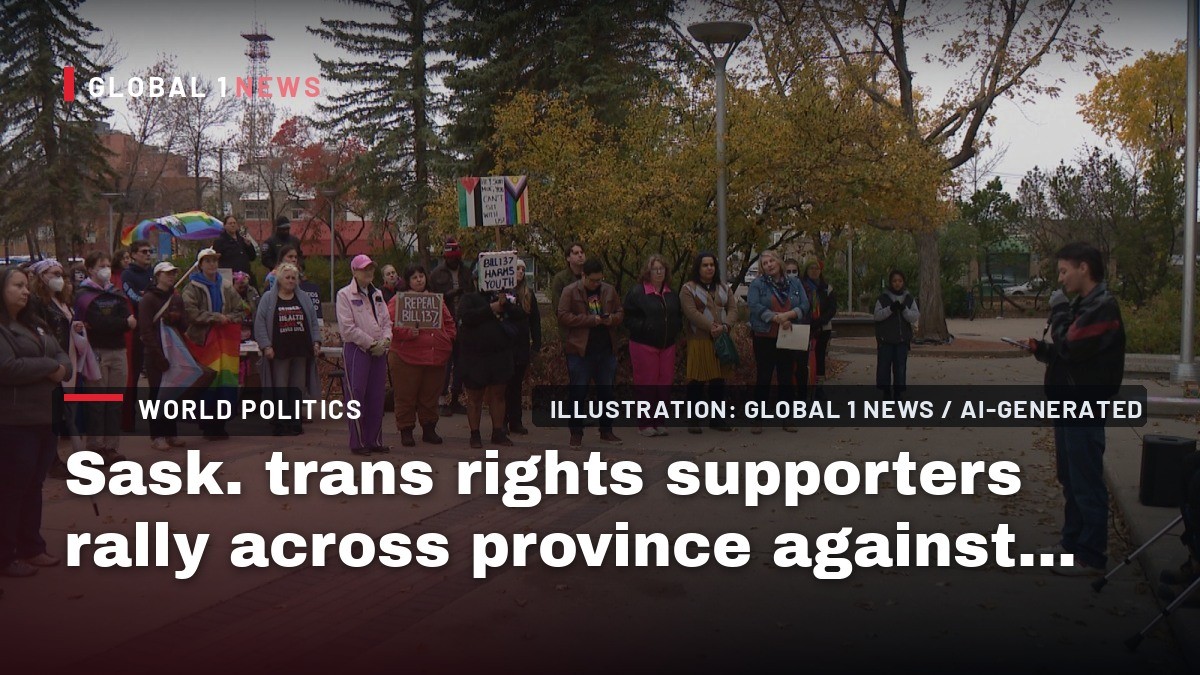
Hundreds of people gathered in Saskatoon’s city hall and the provincial legislature in Regina on Saturday to demand the repeal of Saskatchewan’s Bill 137, a law that bars children under 16 from using a name or pronoun that differs from the one assigned at birth unless a parent gives consent. The rallies, organised by local activist groups including The Red Bear Party and Queer Momentum, highlighted concerns that the legislation has created unsafe environments for transgender and gender‑diverse youth and has broader implications for sexual‑health education across the province.
What Bill 137 Requires and Its Immediate Impact
Bill 137, passed three years ago, stipulates that minors under the age of 16 cannot be addressed by a name or pronoun that differs from the one on their birth certificate unless a parent explicitly consents. The law also grants parents the ability to opt their children out of sexual‑health classes and bars third‑party sexual‑health organisations from delivering instruction in schools. By invoking the Notwithstanding Clause, the Saskatchewan government insulated the statute from Charter challenges, effectively pre‑empting constitutional scrutiny.
The immediate effect, as described by rally participants, is a climate of fear and exclusion for transgender youth. “I’ve heard a lot of things from various trans youth that they don’t feel like it’s safe to try and be themselves at school,” said Thios Mwunvaneza, a co‑organiser of the Saskatoon rally. The sentiment echoed across both cities, with activists warning that the law not only limits personal expression but also curtails access to comprehensive sexual‑health education at a time when many young people are navigating complex health decisions.
Voices from the Front Lines: Youth and Community Leaders Speak Out
Speakers at the rallies stressed the personal toll of the legislation. Blake Tait, co‑chair of Saskatoon Pride, highlighted the ongoing trauma experienced by both trans youth and adults who endured similar restrictions in earlier decades. “It’s re‑traumatising trans adults who are living in this province and dealt with things similar to what the bill enforces while they were growing up,” Tait said, underscoring the inter‑generational impact of the policy.
Other community figures, such as Nathaniel Teed—the first openly gay MLA in Saskatchewan—called for a rapid repeal, arguing that the law erodes trust between families, educators and students. “We need to build a better relationship with our kids and with our teachers and our parents in our province,” Teed said, reinforcing the rally’s call for a more inclusive and supportive educational environment.
Political Stakes: Opposition Parties and Legal Challenges
The opposition New Democratic Party (NDP) has positioned the repeal of Bill 137 as a central campaign promise. NDP leader Carla Beck announced that, should her party form government after the next provincial election, it would move to overturn the law within the first 100 days of taking office. This pledge reflects a broader strategy to align Saskatchewan’s policies with the federal government’s stance on LGBTQ+ rights and to restore provincial legislation to a framework that respects Charter protections.
Beyond the political arena, a legal challenge is pending before the Supreme Court of Canada. UR Pride and other intervenors have raised questions about the province’s use of the Notwithstanding Clause to shield Bill 137 from constitutional review. The outcome of that hearing could set a precedent for how provincial governments may employ the clause to circumvent Charter rights, a matter of national relevance given recent debates in other jurisdictions.
Health Implications: Sex Education Under Threat
Bill 137’s restrictions on sexual‑health education have drawn particular criticism from health advocates. By allowing parents to opt their children out of sex‑education classes and by prohibiting third‑party educators—many of whom are specialists in up‑to‑date sexual‑health information—the law potentially widens gaps in knowledge about safe practices and disease prevention. “Kind of embarrassing for the province with the highest rates of syphilis and HIV to be letting kids have less access to sex ed,” Mwunvaneza remarked, linking the legislation to broader public‑health concerns.
The exclusion of third‑party educators, who often bring specialised expertise, may leave schools reliant on curricula that lack the depth and cultural relevance needed to address the realities of diverse student populations, including Indigenous youth and newcomers to Canada. The rally’s speakers warned that this could exacerbate health disparities, particularly in rural and remote communities where school resources are already stretched.
Comparative Context: How Saskatchewan’s Approach Differs Nationally
Across Canada, most provinces have moved toward policies that affirm the rights of transgender students to be addressed by their chosen names and pronouns, often without requiring parental consent. Saskatchewan’s reliance on the Notwithstanding Clause places it at odds with the broader national trend toward inclusivity and with recent federal commitments to protect LGBTQ+ rights under the Charter.
The legal challenge to Bill 137 may therefore become a litmus test for the balance of provincial autonomy versus federal Charter guarantees. If the Supreme Court were to find the use of the Notwithstanding Clause unjustified, it could compel Saskatchewan to amend the law, aligning it with practices in provinces such as Ontario and British Columbia, where schools have adopted policies that support gender‑affirming practices.
Community Response and Future Mobilisation
The rallies in Saskatoon and Regina demonstrated a coordinated effort among local advocacy groups, LGBTQ+ organisations and supportive community members. Organisers highlighted the need for continued public pressure, not only on the provincial government but also on the courts, to ensure that the voices of affected youth are heard. “It’s really important that we continue speaking out on the harms of Bill 137,” Mwunvaneza said, urging ongoing activism.
Looking ahead, activists plan to sustain momentum through town‑hall meetings, social‑media campaigns and partnerships with national organisations. The goal is to keep the issue in the public eye, particularly as the next provincial election approaches, and to ensure that any legal proceedings receive widespread attention.
What Comes Next: Legislative, Judicial and Public Pathways
In the short term, the most immediate avenue for change lies in the political promise made by the NDP. Should the party secure a majority in the next election, the pledged repeal within 100 days would involve drafting new legislation that removes parental consent requirements and restores access to third‑party sexual‑health educators. This legislative shift would also need to be accompanied by policy guidance for schools to implement inclusive practices effectively.
Simultaneously, the Supreme Court hearing will determine whether Saskatchewan’s use of the Notwithstanding Clause can withstand constitutional scrutiny. A ruling against the province could force an immediate amendment of Bill 137, regardless of the election outcome, and would reaffirm the primacy of Charter rights in matters of gender identity and health education.
For families, educators and youth across Saskatchewan, the coming months will be a period of heightened attention to how these legal and political processes unfold. The rallies have made clear that the community is prepared to advocate vigorously for a more inclusive and health‑focused educational environment, reflecting a broader Canadian commitment to protecting the rights and wellbeing of all students.
This article was produced with AI-assisted research and editorial support. Reporting is based on the source material cited below. Sources: Global News Canada; globalnews.ca; Global1.News (11 October 2026).
By Alex Thompson, Staff Writer
What's Your Reaction?
 Like
0
Like
0
 Dislike
0
Dislike
0
 Love
0
Love
0
 Funny
0
Funny
0
 Wow
0
Wow
0
 Sad
0
Sad
0
 Angry
0
Angry
0

Canada Correspondent at Global1.News. Based in Toronto, covering Canadian politics, energy, trade, and US-Canada relations. Provides the Canadian perspective on North American and global affairs.













Comments (0)